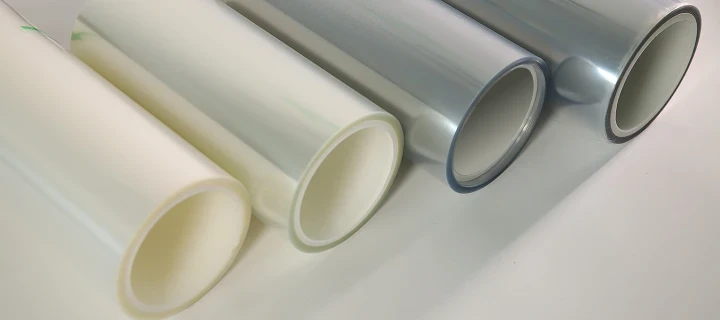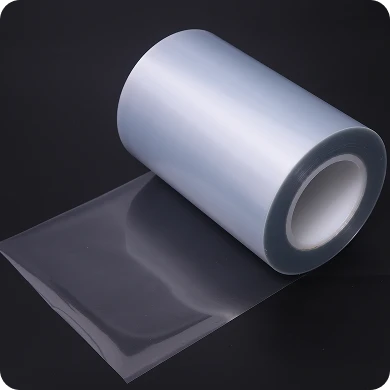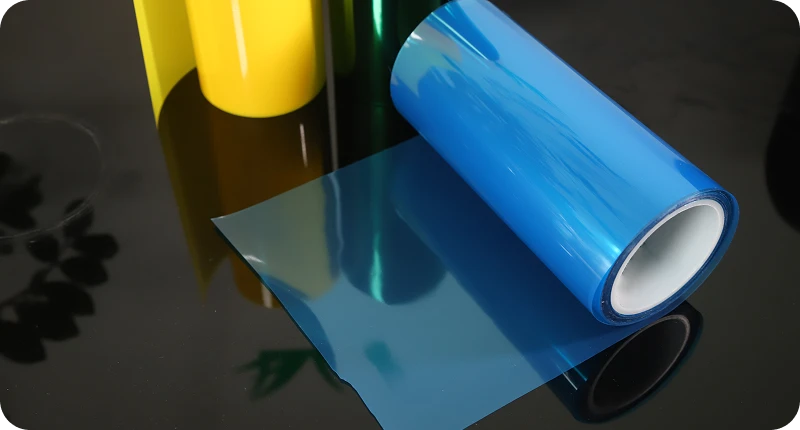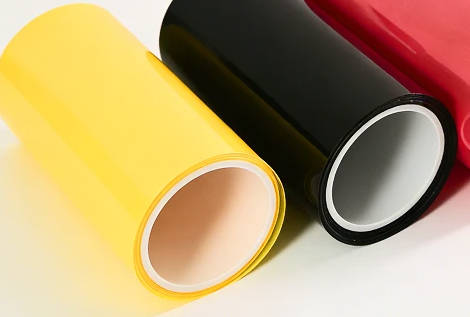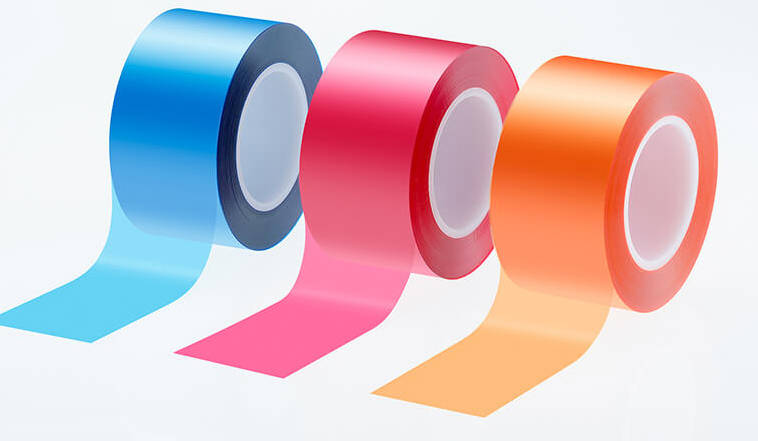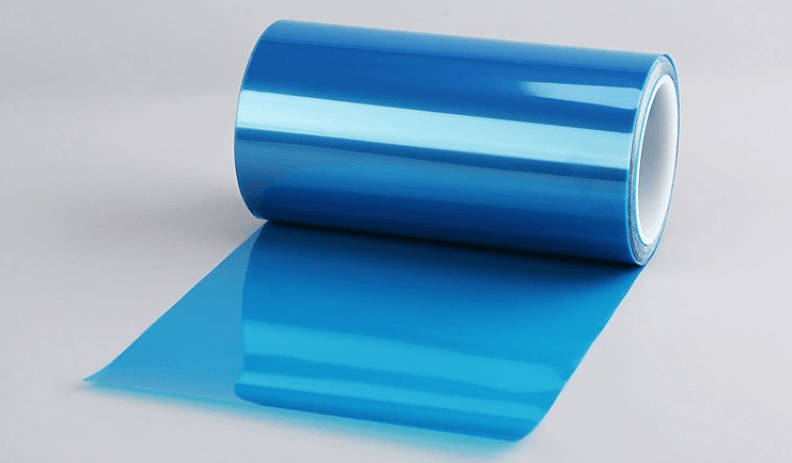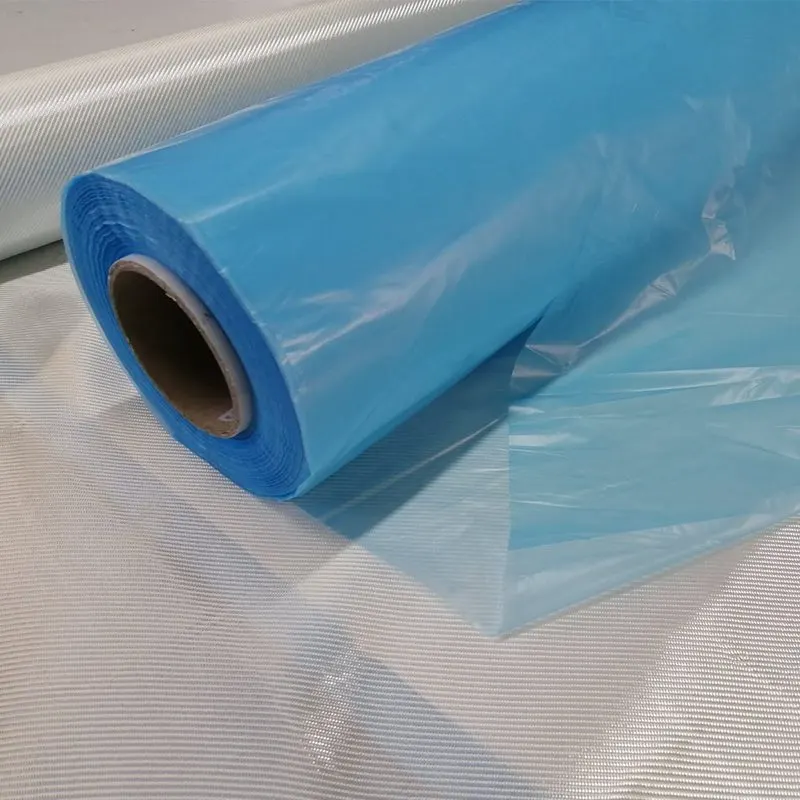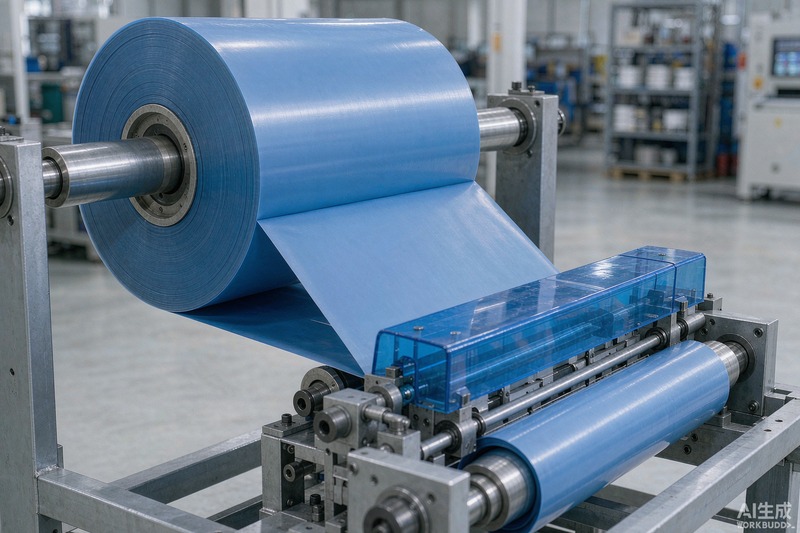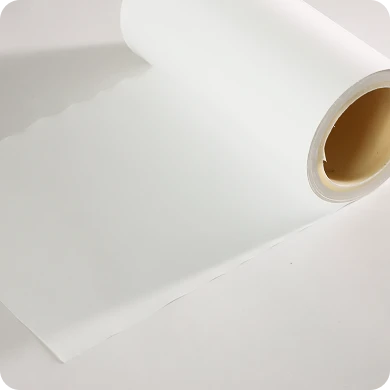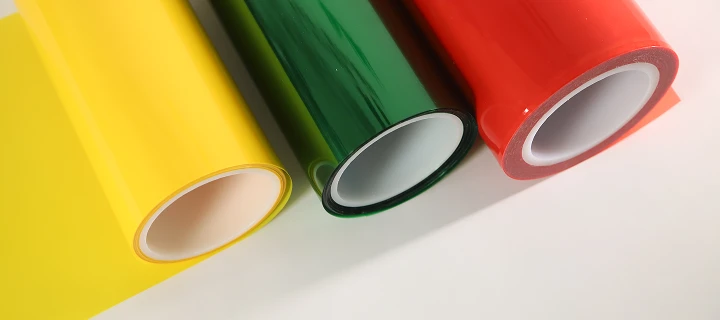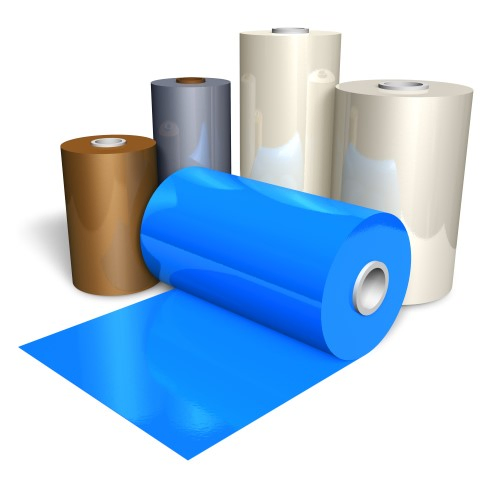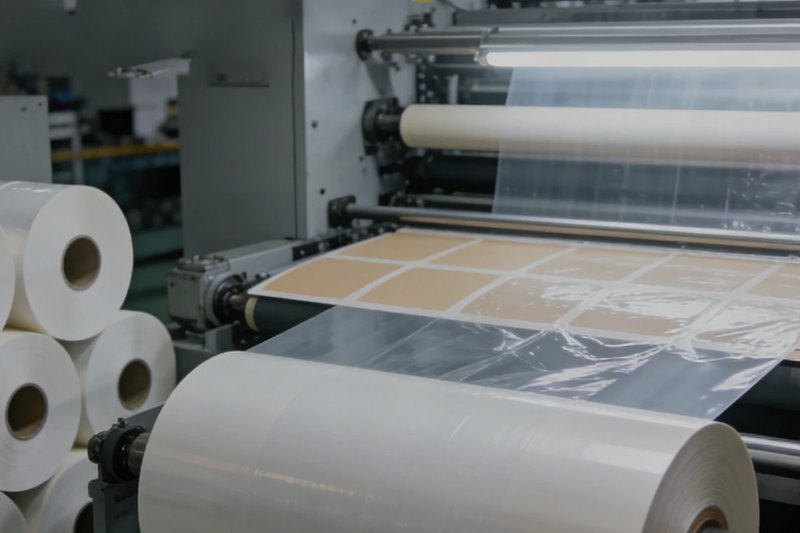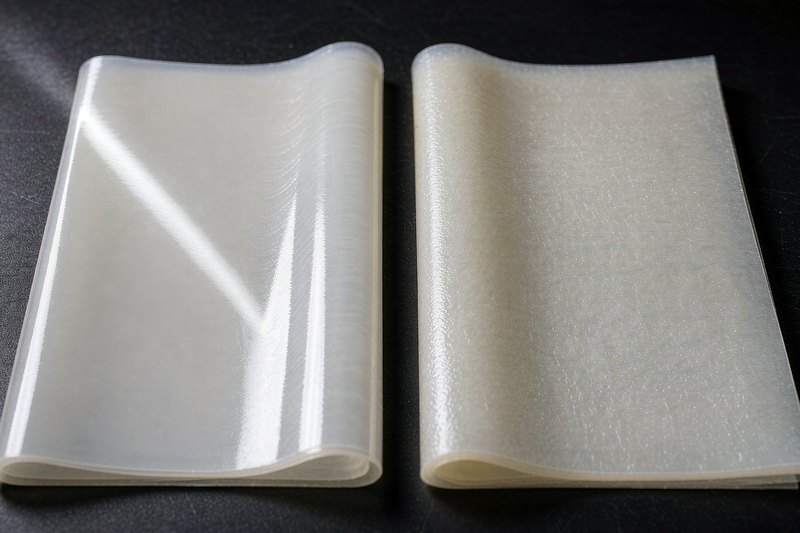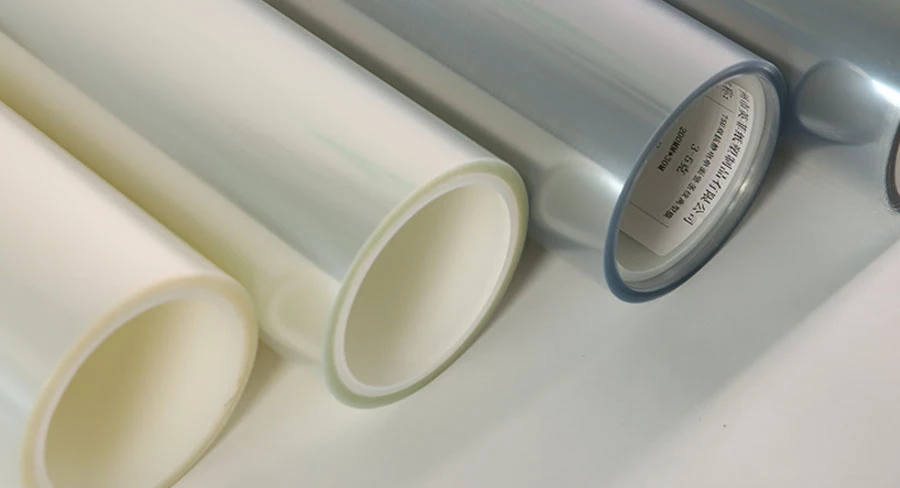
To choose the right release film, start by confirming your adhesive type, application process, release force target, film substrate, thickness, coating side, temperature exposure, roll size, and converting requirements. A suitable release film should protect the adhesive or sticky material while allowing clean, controlled, and consistent peeling during production or final use.
Release film is widely used in labels, tapes, protective films, medical adhesive products, electronics materials, foam products, rubber processing, composites, die-cut parts, and industrial packaging. Although it may look like a temporary backing material, it can strongly affect coating quality, adhesive stability, slitting performance, die-cutting accuracy, storage reliability, and customer experience.
Many release film problems happen because buyers only specify “PET release film” or “silicone release film” without defining the actual working conditions. In real production, release film selection should consider the complete application: adhesive chemistry, coating method, peeling requirement, machine speed, temperature, humidity, tension, liner thickness, surface cleanliness, and final product structure.
This guide explains how to choose release film from the key perspectives of material, thickness, release force, silicone coating, width, temperature resistance, and supplier capability.
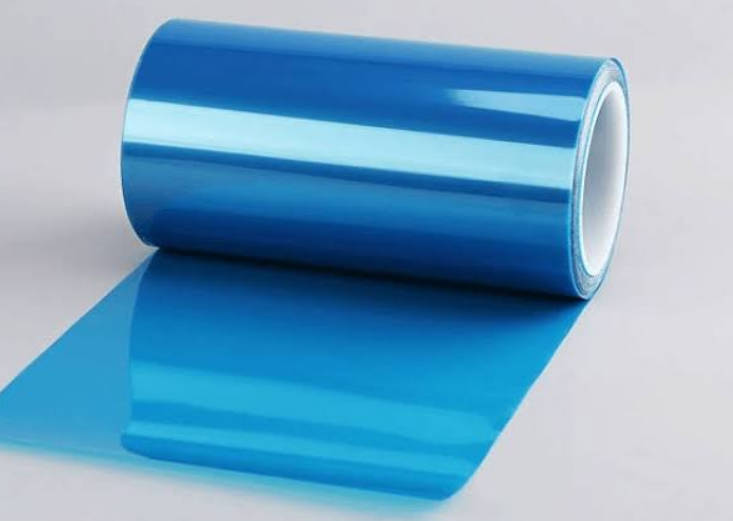
What Is Release Film?
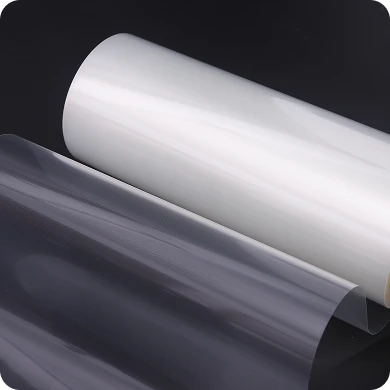
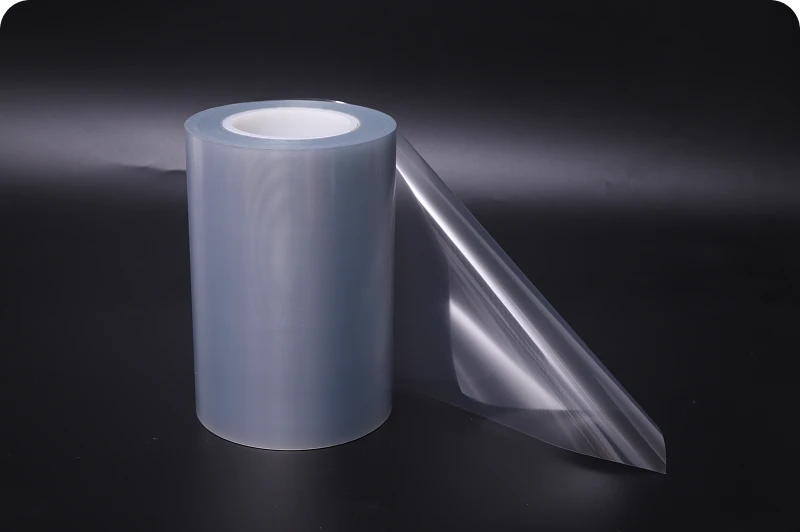
Release film is a functional film material coated with a release layer, commonly silicone or another low-surface-energy coating. It is designed to prevent adhesives, rubber, resin, foam, or other sticky materials from permanently bonding to the liner.
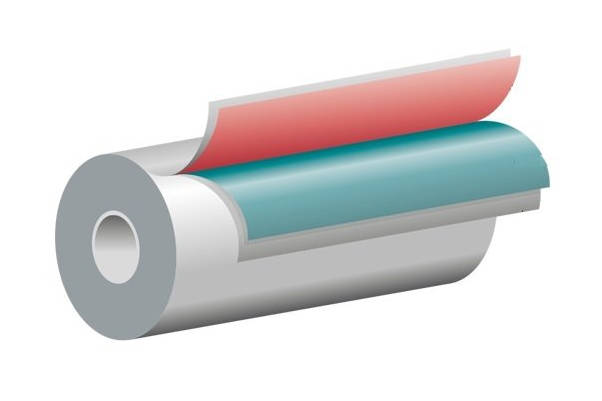
A typical release film structure includes:
| Layer | Function |
| Base film substrate | Provides thickness, strength, stiffness, flexibility, heat resistance, and dimensional stability |
| Surface treatment | Improves coating anchorage or functional performance |
| Release coating | Provides controlled peeling from adhesive or sticky materials |
| Optional backside treatment | Supports anti-static, printing, lamination, or special handling requirements |
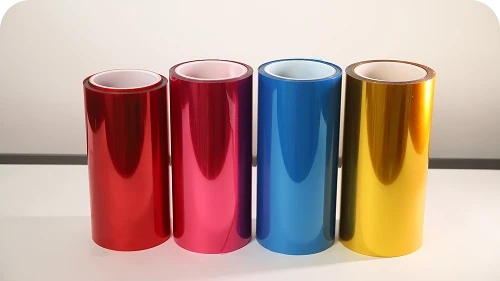
Common base films include PET, PE, PP, BOPP, and specialty films. The release coating may be applied on one side or both sides, depending on the product structure.
The base film determines mechanical and thermal behavior, while the release coating determines peeling performance.
This is why release film selection cannot be based on material name alone. A PET release film with the wrong release force may still fail. A PE release film with suitable flexibility may work better than PET in certain soft or conformable applications.
Why Release Film Selection Matters
Release film is directly involved in coating, lamination, slitting, rewinding, die-cutting, storage, transport, and final application. If the release film is not suitable, the product may fail even when the adhesive and main substrate are correct.
Common problems caused by poor release liner selection include:
| Problem | Possible Cause | Impact |
| Difficult peeling | Release force too high | Adhesive deformation, slow production, poor user experience |
| Premature liner separation | Release force too low | Label lifting, tape defects, product contamination |
| Adhesive transfer | Coating mismatch or aging issue | Surface defects and customer complaints |
| Wrinkles or curling | Poor dimensional stability or wrong tension | Low converting yield |
| Poor die-cutting accuracy | Film too soft or thickness mismatch | Misalignment and edge defects |
| Roll blocking | Wrong release coating or storage condition | Difficult unwinding |
| Static and dust attraction | Surface cleanliness or anti-static issue | Defects in electronics or optical applications |
The right release film should match both the adhesive system and the actual production process, not just the final product name.
For B2B buyers, this means that a release film used for labels may not automatically work for protective films, medical adhesives, or electronics die-cut materials.
Step 1: Define the Application First
The first step in release film selection is to define the application. Different industries require different film properties.
| Application | Key Release Film Requirement |
| Pressure sensitive labels | Stable release force, die-cutting support, smooth dispensing |
| Adhesive tapes | Roll stability, controlled unwinding, adhesive compatibility |
| Protective films | Clean peeling, surface smoothness, adhesive protection |
| Medical adhesives | Cleanliness, stable peeling, controlled release, regulatory consideration |
| Electronics die-cut parts | Dimensional stability, low contamination, precision converting |
| Foam tapes | Thickness support, differential release, stable slitting |
| Rubber or resin processing | Strong release surface, heat and pressure resistance |
| Composite processing | Temperature resistance and clean separation |
Before contacting a supplier, buyers should be able to answer one question clearly: what material will the release film contact, and how will it be removed?
Step 2: Choose the Right Film Substrate
Release film substrates differ in strength, flexibility, heat resistance, clarity, and cost. The most common choices are PET, PE, PP, and BOPP.
| Film Substrate | Main Features | Suitable Applications |
| PET release film | High strength, good dimensional stability, good heat resistance, smooth surface | Electronics, tapes, labels, protective films, precision die-cutting |
| PE release film | Soft, flexible, good elongation, cost-effective in many cases | Flexible adhesives, medical or hygiene products, low-temperature applications |
| PP release film | Good balance of flexibility, cost, and surface quality | General labels, packaging, tapes, industrial liners |
| BOPP release film | Good clarity, smoothness, and light weight | Packaging labels, decorative films, clear applications |
| Specialty release film | Customized performance | High-temperature, anti-static, fluorosilicone, optical, or technical applications |
PET Release Film
PET release film is often used when dimensional stability, tensile strength, smoothness, and temperature resistance are important. It is commonly selected for precision die-cutting, electronics materials, protective films, adhesive tapes, and label applications.
PET is usually a good starting point when:
- The process involves web tension.
- The product requires accurate dimensions.
- The liner must stay flat during die-cutting.
- The application requires higher temperature resistance.
- Surface cleanliness and smoothness are important.
- Visual inspection through the liner is useful.
PE Release Film
PE release film is softer and more flexible. It can be suitable for applications where conformability, softness, and cost are important. However, PE usually has lower dimensional stability and heat resistance than PET, so it should be tested carefully in high-temperature or precision processes.
PE may be suitable when:
- The final product is soft or flexible.
- The process temperature is not high.
- High elongation is helpful.
- Cost sensitivity is important.
- The liner does not need high dimensional precision.
PP and BOPP Release Film
PP and BOPP release films can offer a balance between film clarity, flexibility, and cost. They may be suitable for packaging-related labels, general adhesive products, and applications where PET performance is not required.
Step 3: Select the Right Thickness
Release film thickness affects handling, stiffness, die-cutting, roll diameter, cost, and machine compatibility.
A thicker film usually provides better stiffness and handling, while a thinner film can reduce material usage and roll volume. However, thinner does not always mean better. If the film is too thin, it may wrinkle, stretch, tear, or create handling problems.
| Thickness Consideration | Why It Matters |
| Machine tension | Thin films may stretch or wrinkle under high tension |
| Die-cutting depth | Thickness affects cutting control and liner protection |
| Roll diameter | Thicker film increases roll volume |
| Handling stiffness | Thicker film may be easier to peel and handle |
| Cost target | Thinner film may reduce material cost if performance is sufficient |
| Application precision | Stable thickness supports consistent converting |
Choose release film thickness based on converting performance and product handling, not only material cost.
For precision die-cutting and automatic production, thickness tolerance and flatness are especially important. Buyers should confirm both nominal thickness and allowable variation.
Step 4: Define the Release Force
Release force is one of the most important specifications in release film selection. It determines how easily the adhesive or sticky material separates from the film.
Release force is usually described as easy, medium, tight, or custom release. Some products require differential release, meaning each side of the liner has a different release force.
| Release Level | Typical Use |
| Easy release | Light adhesive products, simple peeling applications |
| Medium release | General tapes, labels, protective films |
| Tight release | Aggressive adhesives or products needing strong holding stability |
| Differential release | Double-sided tapes, transfer adhesives, multi-layer laminates |
| Custom release | Specialty adhesives, medical, electronics, or technical products |
If release force is too high, peeling may be difficult and adhesive may transfer or deform. If release force is too low, the liner may separate too early during slitting, die-cutting, storage, or transport.
The correct release force should be tested with the actual adhesive, aging condition, processing temperature, and peeling method.
Step 5: Choose One-Side or Double-Side Silicone Coating
Release film can be coated on one side or both sides. The choice depends on the product structure.
| Coating Type | Description | Typical Use |
| One-side release film | Release coating on one surface only | Labels, protective films, single adhesive surfaces |
| Double-side release film | Release coating on both sides | Double-sided tapes, transfer adhesives, interleaving |
| Differential release film | Different release force on each side | Products requiring controlled transfer sequence |
| Non-silicone release film | Uses alternative release chemistry | Silicone-sensitive applications |
One-side release film is enough when only one adhesive surface needs protection. Double-side release film is required when both sides may contact adhesive or sticky materials.
Differential release is important for double-sided tapes and transfer adhesives. One side must release first while the other side holds the adhesive until the next processing step.
Step 6: Check Adhesive Compatibility
Release film performance depends heavily on adhesive chemistry. A liner that works with one adhesive may fail with another.
Common adhesive types include:
| Adhesive Type | Release Film Consideration |
| Acrylic adhesive | Commonly used with silicone release coatings |
| Rubber adhesive | May require stronger release control due to high tack |
| Hot melt adhesive | Heat and pressure can affect release behavior |
| Silicone adhesive | Often requires fluorosilicone or specialty release coating |
| Medical adhesive | Requires clean, stable, and application-specific release |
| Removable adhesive | Release must avoid premature lifting or adhesive damage |
| High-tack adhesive | May need tight or customized release coating |
If the adhesive is aggressive, soft, thick, or temperature-sensitive, sample testing is necessary before bulk purchasing.
Step 7: Consider Temperature Resistance
Temperature resistance matters if the release film will pass through drying ovens, hot lamination, curing, thermal pressing, heat sealing, or high-temperature storage.
PET release film is often preferred for applications requiring better heat resistance and dimensional stability. PE release film may work well in low-to-medium temperature applications but may soften or deform under excessive heat.
Important temperature questions include:
| Question | Why It Matters |
| What is the maximum processing temperature? | Determines substrate suitability |
| How long is the film exposed to heat? | Short and long exposure behave differently |
| Is web tension applied during heating? | Tension increases deformation risk |
| Will the film be stored in hot conditions? | Aging may change release performance |
| Is thermal stability critical after die-cutting? | Important for precision parts |
Step 8: Confirm Width, Roll Size, and Slitting Quality
Release film is usually supplied in rolls. Roll specification affects production efficiency and compatibility with coating, laminating, slitting, and die-cutting machines.
Buyers should confirm:
| Roll Specification | What to Check |
| Roll width | Must match production line or converting process |
| Width tolerance | Important for automatic equipment |
| Roll length | Affects changeover frequency |
| Core size | Must fit machine shaft |
| Roll diameter | Must match equipment capacity |
| Winding direction | Important for one-side release structures |
| Joint allowance | Critical for continuous production |
| Edge quality | Reduces dust, web breaks, and defects |
| Packaging | Protects film from dust, moisture, and deformation |
Poor slitting can cause edge burrs, dust, telescoping rolls, wrinkles, or web breaks. For high-speed or cleanroom-related applications, roll quality should be treated as a core requirement.
Step 9: Evaluate Surface Cleanliness and Static Control
Surface cleanliness is important for electronics, optical films, medical adhesives, protective films, and high-gloss products. Dust, particles, scratches, silicone transfer, or static attraction can cause defects.
Some applications may require:
- Clean surface packaging
- Anti-static treatment
- Low particle level
- Smooth surface quality
- Controlled silicone transfer
- Optical inspection compatibility
- Protective outer packaging for rolls
For standard tapes or labels, basic cleanliness may be enough. For electronics and optical applications, higher surface control may be required.
Release Film Selection Guide by Application
| Application | Recommended Starting Point |
| General labels | PET, PP, or paper-based release liner depending on process |
| Clear labels | PET or BOPP release film |
| Industrial tapes | PET release film or customized silicone release film |
| Double-sided tapes | Differential release film |
| Protective films | PET or PE release film depending on precision and flexibility |
| Medical adhesive products | PE, PET, or specialty release film after testing |
| Electronics die-cut parts | PET release film with stable release force |
| Foam tapes | PET or differential release film |
| High-temperature processing | PET release film or specialty film |
| Silicone adhesive products | Fluorosilicone or specialty release film |
Common Mistakes When Choosing Release Film
Mistake 1: Choosing Only by Film Material
PET, PE, and PP are only substrate names. The release coating, release force, thickness, and adhesive compatibility are equally important.
Mistake 2: Ignoring Release Force Aging
Release force may change after storage, heat, pressure, or long transport. Buyers should test initial and aged release performance.
Mistake 3: Using Easy Release for Every Application
Easy release may seem convenient, but it can cause premature separation in tapes, labels, and die-cut parts. Some products require medium or tight release.
Mistake 4: Forgetting Winding Direction
For one-side release film, winding direction matters. If the release side faces the wrong direction, the material may not work in the production line.
Mistake 5: Not Testing with Actual Adhesive
Sample testing must use the actual adhesive and process conditions. Testing with a different adhesive may give misleading results.
How to Work With a Release Film Supplier
A qualified supplier should help you match substrate, thickness, release force, coating side, and roll specification to your process.
When contacting a supplier, provide:
| Information | Why It Helps |
| Application industry | Helps identify common material structures |
| Adhesive type | Determines release coating compatibility |
| Required release force | Helps select easy, medium, tight, or custom release |
| Film material preference | PET, PE, PP, BOPP, or custom |
| Thickness requirement | Affects handling and die-cutting |
| Coating side | One-side, double-side, or differential release |
| Processing temperature | Determines thermal stability requirements |
| Converting method | Slitting, die-cutting, laminating, coating, or sheeting |
| Roll size | Ensures machine compatibility |
| Cleanliness requirement | Important for electronics, optical, and medical products |
Yingfei provides release film materials for adhesive products, labels, tapes, protective films, medical materials, electronics applications, and industrial converting processes.
You can also visit Yingfei Liner to learn more about release liner material options for different B2B applications.
Practical Release Film Buying Checklist
Before placing a release film order, use this checklist:
| Selection Item | What to Confirm |
| Application | Label, tape, protective film, medical, electronics, foam, rubber, or industrial use |
| Adhesive type | Acrylic, rubber, silicone, hot melt, removable, or permanent adhesive |
| Film substrate | PET, PE, PP, BOPP, or specialty film |
| Thickness | Nominal thickness and tolerance |
| Release force | Easy, medium, tight, differential, or custom |
| Release side | One-side or double-side coating |
| Temperature exposure | Processing and storage temperature |
| Surface requirement | Standard, clean, anti-static, optical, or high-smoothness |
| Roll specification | Width, length, core, diameter, winding direction |
| Converting process | Coating, lamination, slitting, die-cutting, sheeting |
| Test requirement | Initial release, aged release, adhesive transfer, machine trial |
| Supplier support | Sampling, customization, slitting, quality inspection |
FAQ
1. How do I choose release film for adhesive products?
Choose release film based on adhesive type, release force, film substrate, thickness, coating side, processing temperature, roll size, and converting method. The film should be tested with the actual adhesive and production process before bulk use.
2. What is the best material for release film?
There is no single best material for all applications. PET release film is often used for dimensional stability and heat resistance. PE release film is useful for flexibility and softness. PP and BOPP may be suitable for general or packaging-related applications.
3. What release force should I choose for release film?
The right release force depends on the adhesive, product structure, converting process, and final application. Easy release is suitable for light peeling needs, while medium or tight release may be needed for tapes, labels, aggressive adhesives, or roll stability.
4. Should I choose one-side or double-side release film?
Choose one-side release film when only one adhesive surface needs protection. Choose double-side or differential release film for double-sided tapes, transfer adhesives, or products where both sides contact sticky materials.
5. Why is PET release film used for die-cutting?
PET release film offers good dimensional stability, tensile strength, smoothness, and thickness consistency. These properties help support accurate die-cutting and reduce stretching, misalignment, and liner deformation.
6. Can release film be customized?
Yes. Release film can often be customized by substrate, thickness, release force, coating side, surface treatment, anti-static performance, roll width, roll length, and packaging format.
7. What information should I provide to a release film supplier?
Provide application, adhesive type, film substrate, thickness, release force target, one-side or double-side coating requirement, processing temperature, roll size, converting method, and testing conditions.
Conclusion
Choosing the right release film requires more than selecting PET, PE, or silicone coating. A suitable release film must match the adhesive system, release force requirement, thickness, coating side, temperature exposure, roll specification, converting method, and final application.
For precision die-cutting, electronics, protective films, and high-temperature processes, PET release film is often a strong starting option. For soft, flexible, or cost-sensitive applications, PE or PP release film may be suitable. For double-sided tapes or transfer adhesives, differential release design may be required.
The most reliable approach is to test release film under real production conditions, including adhesive contact, aging, temperature, pressure, slitting, die-cutting, and final peeling. If you are evaluating release film for labels, tapes, protective films, medical materials, electronics, or industrial applications, Yingfei can help recommend suitable release film structures based on your process and performance requirements.