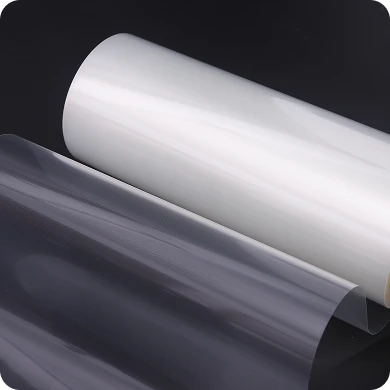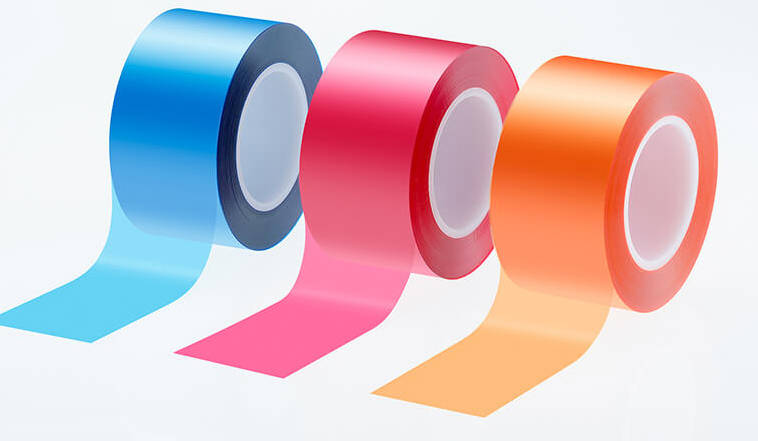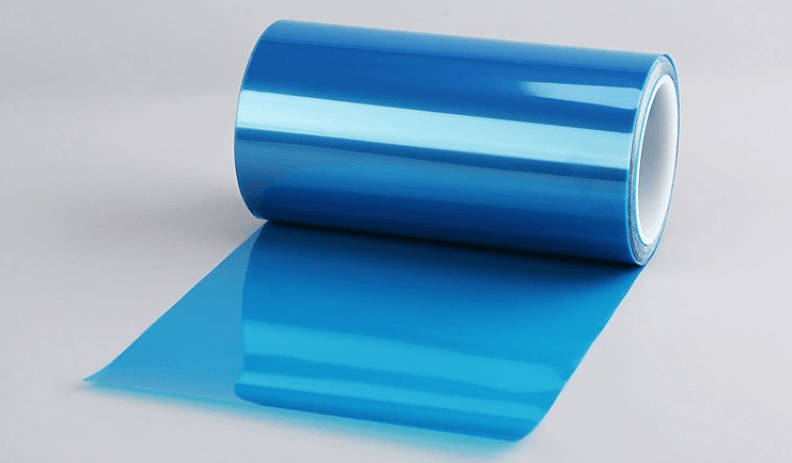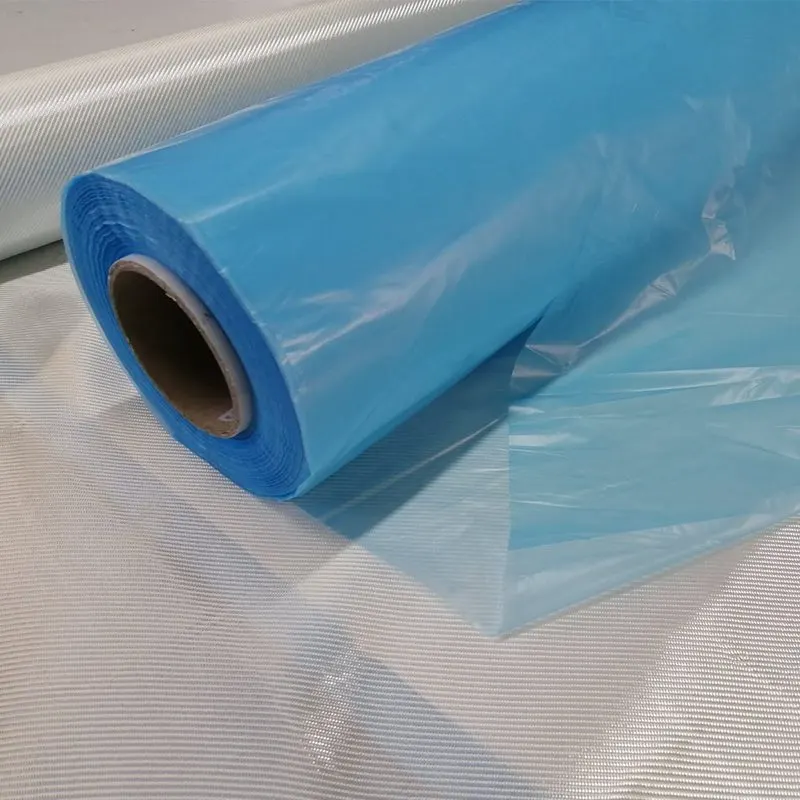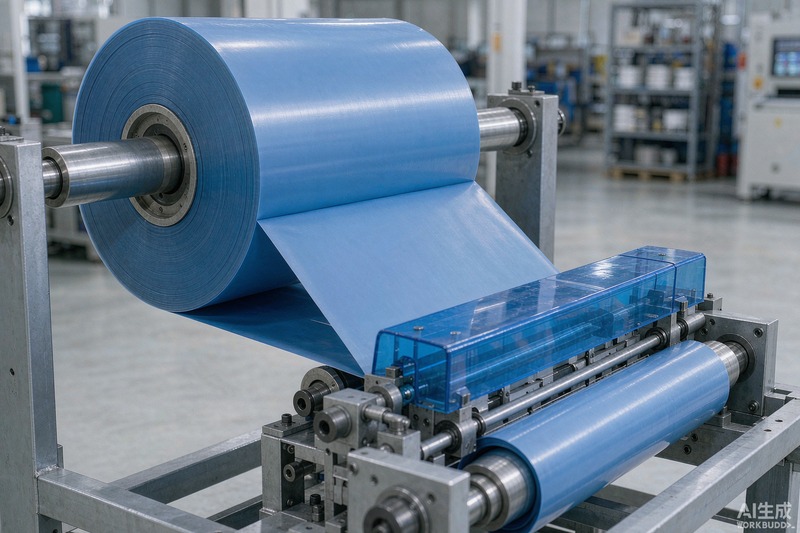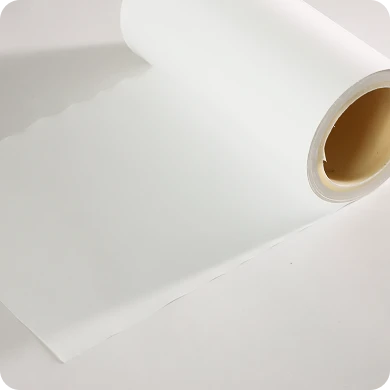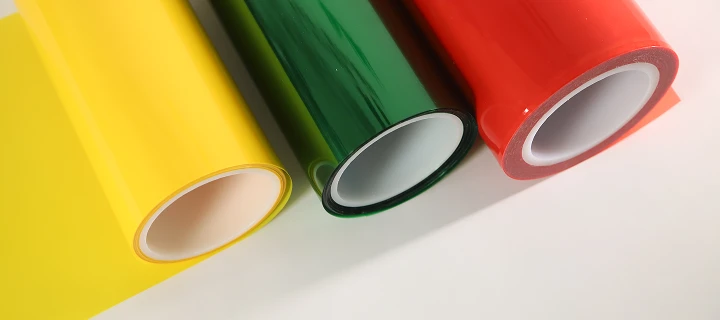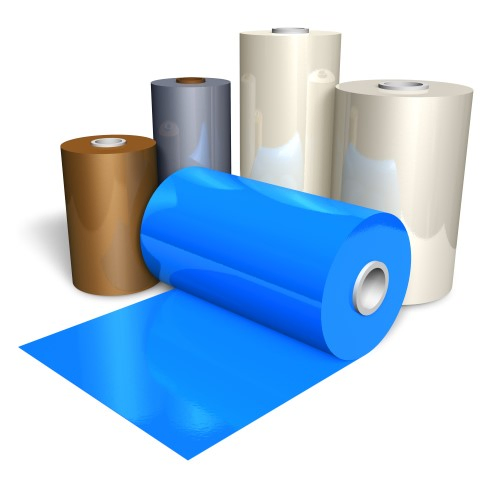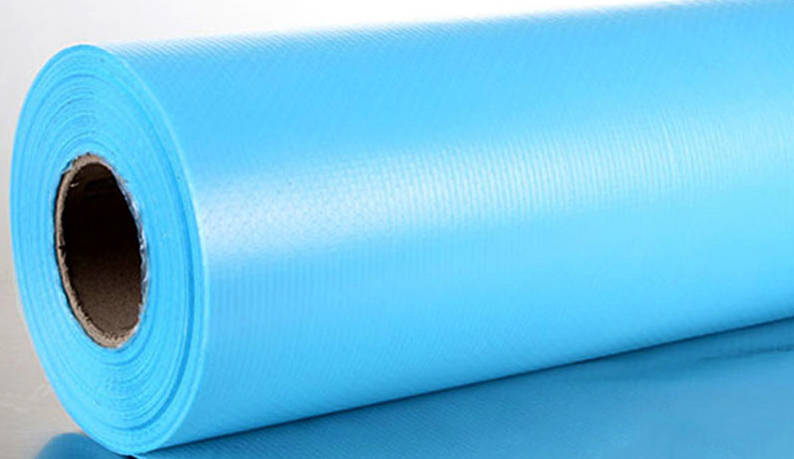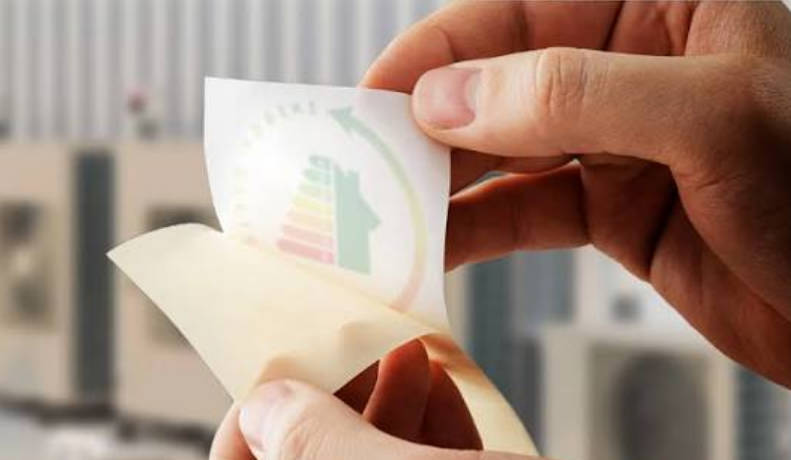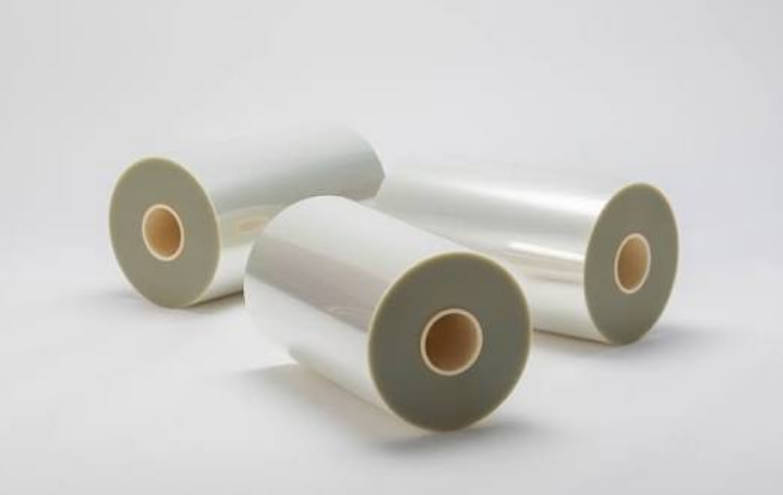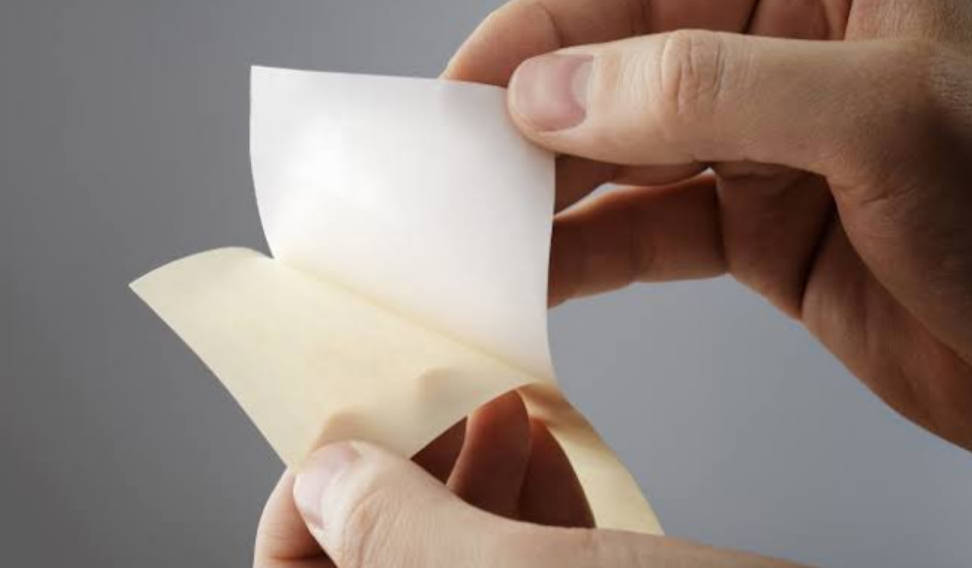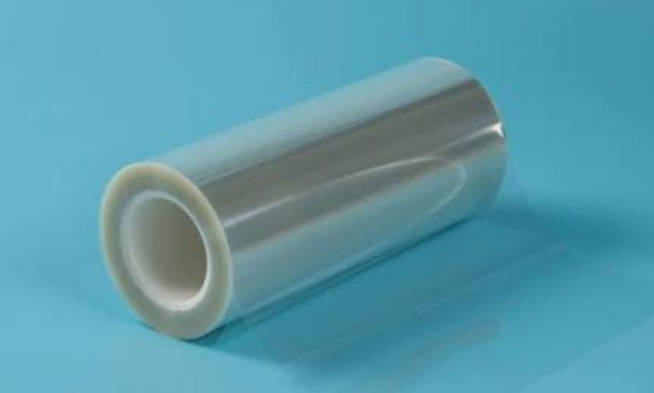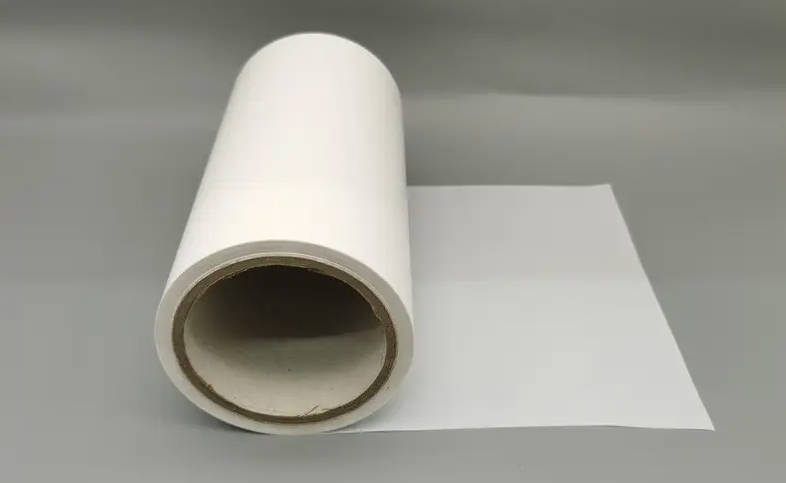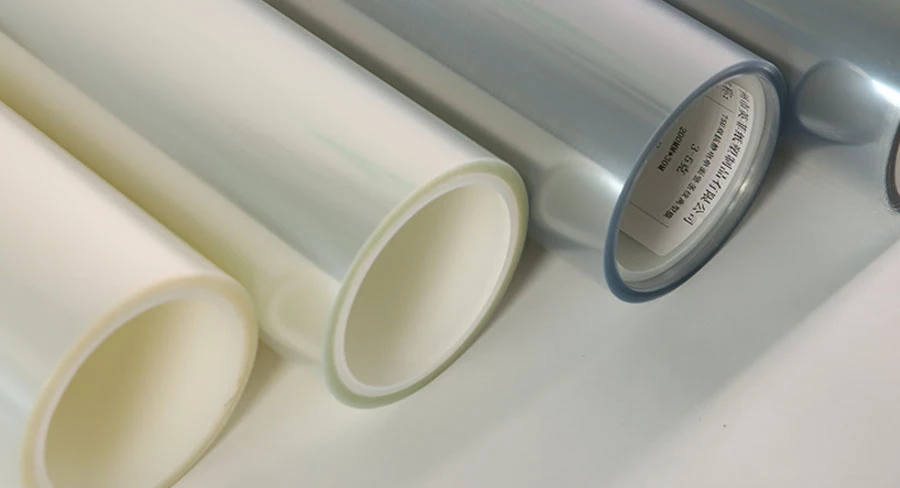
Release film for protective film manufacturing is used as a temporary liner that protects the adhesive layer, supports coating and converting, and allows the protective film to be peeled cleanly before application. In most protective film products, the release film is not the final surface protection layer, but it directly affects adhesive stability, roll quality, die-cutting performance, and user peeling experience.
Protective films are widely used to protect surfaces such as stainless steel, aluminum panels, glass, plastic sheets, display screens, automotive parts, home appliances, flooring, decorative panels, and electronic components. Many of these films use pressure-sensitive adhesives. During production, storage, transportation, and final application, the adhesive side must be protected from dust, blocking, contamination, and accidental bonding. This is where release film becomes important.
A suitable protective film release liner should provide stable release force, good surface smoothness, clean peeling, proper thickness, dimensional stability, and compatibility with the adhesive system. For many protective film manufacturers, PET release liner is commonly evaluated when high flatness, strength, temperature resistance, and process stability are required.
This article explains the role of release film in protective film manufacturing, common material options, key specifications, application scenarios, and practical selection criteria for B2B buyers.
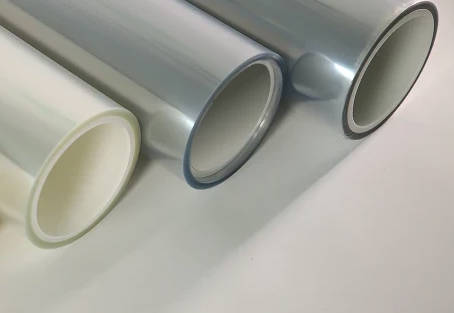
What Is Release Film for Protective Film?
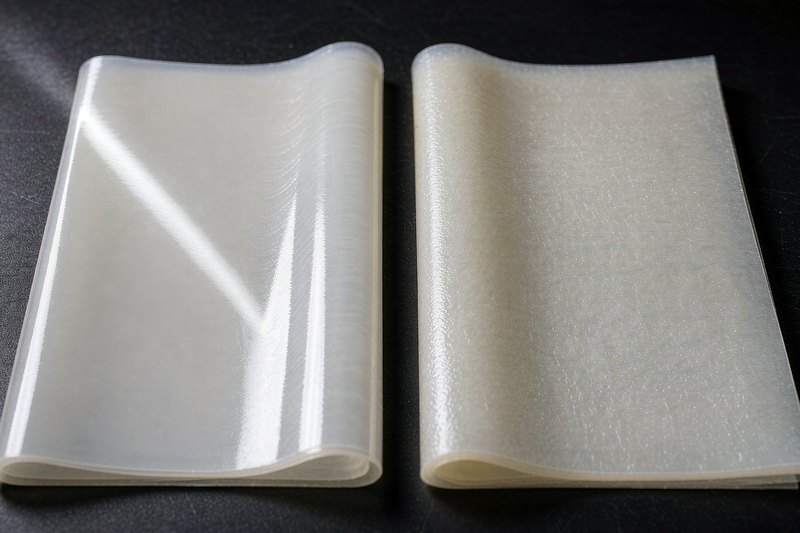
Release film is a functional film material coated with a release layer, usually silicone or another low-surface-energy coating, to prevent adhesives or sticky materials from permanently bonding to the liner. In protective film manufacturing, it is commonly used to cover the adhesive side before the protective film is applied to the target surface.
A typical adhesive protective film structure may include:
| Layer | Function |
| Protective film substrate | Provides surface protection, impact resistance, scratch resistance, or temporary covering |
| Adhesive layer | Allows the protective film to bond to metal, glass, plastic, painted surface, or other substrates |
| Release coating | Controls peeling between adhesive and liner |
| Release film liner | Protects the adhesive and supports converting, storage, and application |
Depending on the product design, the release film may be removed by the end user before application, or it may be used during intermediate processing and removed before lamination.
The main function of release film is to protect the adhesive surface while allowing controlled, clean, and consistent peeling when the liner is removed.
For protective film manufacturers, release film is a process material, but it has a direct influence on production yield and product quality.
Why Release Film Matters in Protective Film Manufacturing
Many buyers focus on the protective film substrate and adhesive formula, but the release liner also plays a critical role. If the release film is not properly selected, several production and quality issues may occur.
| Possible Problem | Liner-Related Cause | Impact on Production |
| Difficult peeling | Release force too high | Slower application, adhesive damage, customer complaints |
| Premature separation | Release force too low | Liner lifting, unstable roll handling, waste |
| Adhesive transfer | Coating incompatibility or poor release stability | Defective protective film surface |
| Wrinkles or curling | Poor dimensional stability or wrong tension control | Roll defects and converting problems |
| Poor die-cutting | Liner thickness or strength mismatch | Edge defects and low yield |
| Dust contamination | Poor cleanliness or liner surface defects | Surface quality problems |
| Roll blocking | Inadequate release surface or storage mismatch | Difficult unwinding and product damage |
In protective film production, the release liner must match the adhesive, coating process, converting method, storage condition, and final application requirement.
A low-cost liner may appear attractive at the purchasing stage, but if it causes coating defects, waste, machine downtime, or customer returns, the total cost can become much higher.
How Release Film Works in the Production Process
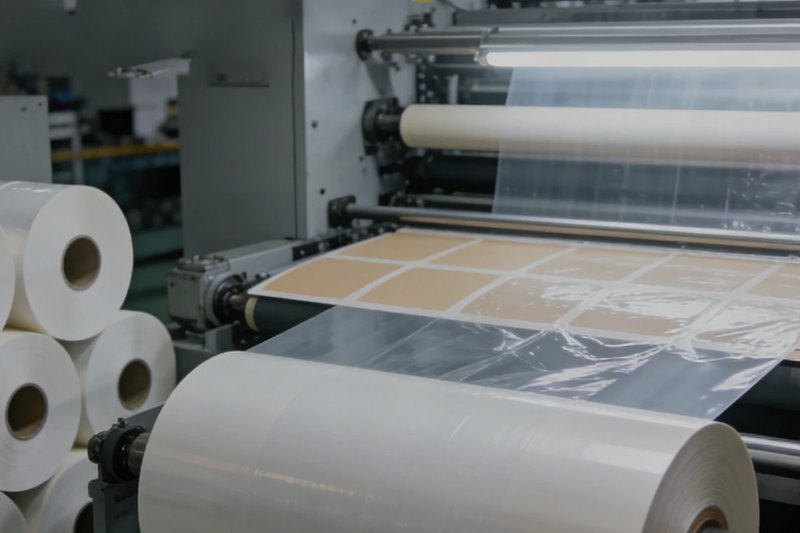
Release film may be used at different stages of protective film manufacturing. The exact role depends on whether the manufacturer produces adhesive protective film, transfer film, die-cut protective components, or surface protection rolls.
1. Adhesive Coating Support
During adhesive coating, the release film can act as a carrier or temporary backing. It must remain stable under web tension, coating pressure, drying temperature, and rewinding. A liner with poor flatness may cause uneven adhesive distribution or coating marks.
For solvent-based, water-based, hot melt, or UV-curable adhesives, the release film should be selected based on temperature exposure, chemical compatibility, and release force stability.
2. Adhesive Surface Protection
After the adhesive layer is applied, the liner prevents the adhesive from contacting dust, air contamination, equipment rollers, or other film surfaces. This is especially important for optical protective films, electronics surface protection films, and high-clarity films.
3. Slitting and Rewinding
Protective films are often slit into different roll widths. The release film must support stable winding, clean edges, and consistent roll tension. If the liner stretches or wrinkles, roll formation becomes unstable.
4. Die-Cutting and Sheet Conversion
For die-cut protective films used in electronics, display screens, automotive components, and appliance panels, liner stability becomes even more important. The release liner must support accurate cutting while preventing adhesive exposure or shifting.
5. Final Peeling and Application
The final user must be able to remove the liner smoothly before applying the protective film. If the liner is too tight, the adhesive may deform. If it is too loose, the liner may separate during transport or storage.
Common Materials Used for Protective Film Release Liners
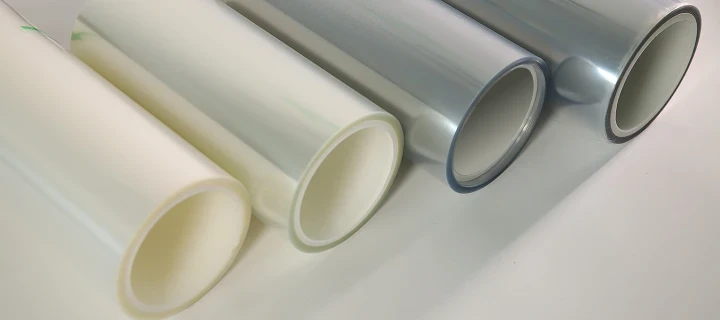
Release film for protective film manufacturing can be made from different substrates. The most common options include PET, PE, PP, and other specialty films.
| Material | Main Features | Typical Use in Protective Film |
| PET release film | High tensile strength, good dimensional stability, smooth surface, better heat resistance | Precision protective films, electronics, optical films, die-cut components |
| PE release film | Soft, flexible, good conformability, cost-effective in many applications | Flexible protective films, low-to-medium temperature applications |
| PP release film | Balanced flexibility and stability, good surface quality | General protective film liners and packaging-related uses |
| BOPP release film | Good clarity and smoothness | Transparent or decorative protective film applications |
| Specialty release film | Customized coating or substrate properties | High-performance industrial or electronics applications |
Among these, PET release liner is commonly used when the protective film manufacturing process requires better dimensional accuracy, flatness, tensile strength, and heat resistance.
PET Release Liner for Protective Film
PET release liner is often selected for demanding protective film applications. PET film has good mechanical strength and dimensional stability, making it suitable for coating, slitting, die-cutting, and precision converting.
Common reasons to choose PET release liner include:
- Better stability under web tension
- Smooth and clean surface
- Good heat resistance in many processing conditions
- Suitable for precision die-cutting
- Good transparency for inspection
- Lower risk of stretching compared with softer films
- Consistent thickness and flatness in many applications
PET release liner is often preferred when protective film production requires clean surface quality, accurate converting, and stable release performance.
For example, protective films used for electronics, display panels, optical sheets, automotive interiors, and precision plastic parts may benefit from PET release liner because these applications usually require cleaner surfaces and better dimensional control.
However, PET is not always necessary. For standard surface protection films, PE or PP release liners may provide enough performance at a lower cost. Buyers should compare performance requirements and total production cost before choosing.
Key Specifications for Protective Film Release Liner
When sourcing release film for protective film manufacturing, buyers should evaluate several technical specifications.
1. Release Force
Release force determines how easily the protective film adhesive separates from the liner. It is one of the most important specifications.
| Release Force Condition | Possible Result |
| Too low | Liner may separate too early during slitting, rewinding, or transport |
| Too high | Difficult peeling, adhesive deformation, or application problems |
| Unstable | Inconsistent user experience and production defects |
| Properly matched | Smooth peeling and stable roll handling |
Release force must be selected according to adhesive type, coating thickness, storage time, application method, and final product structure.
2. Film Thickness
Release film thickness affects stiffness, flexibility, roll diameter, die-cutting performance, and cost. Common protective film applications may use different thicknesses depending on the process.
Thicker liners may provide better handling and stiffness, while thinner liners can reduce material usage and roll volume. However, very thin liners may be harder to handle in some converting processes.
Buyers should not choose thickness only by cost. It should be matched with machine tension, die-cutting depth, roll width, and product handling requirements.
3. Surface Smoothness
Surface smoothness affects adhesive contact and coating appearance. A rough or defective liner surface may transfer marks to the adhesive layer or create uneven release behavior.
For optical, display, and electronics protective films, surface quality is especially important. In these applications, contamination, particles, scratches, or surface defects may reduce product acceptance.
4. Dimensional Stability
Dimensional stability is important during coating, drying, slitting, lamination, and die-cutting. If the liner stretches under tension or deforms under heat, it may cause wrinkles, misalignment, or poor roll formation.
PET release liner is often chosen for better dimensional stability. PE release film may be used when softness and flexibility are more important than high precision.
5. Heat Resistance
Some protective film production processes involve drying ovens, hot lamination, thermal curing, or elevated storage temperatures. In these cases, release film must remain stable under the required temperature range.
PET generally offers better heat resistance than PE in many industrial processes. However, actual performance should always be tested under real production conditions.
6. Cleanliness and Anti-Static Performance
Cleanliness is critical for protective films used in electronics, optical materials, and high-gloss surfaces. Dust, particles, and static attraction can cause surface defects.
Some applications may require anti-static treatment or cleaner film surfaces. Buyers should discuss cleanliness standards and packaging requirements with the supplier.
7. Roll Quality and Slitting Accuracy
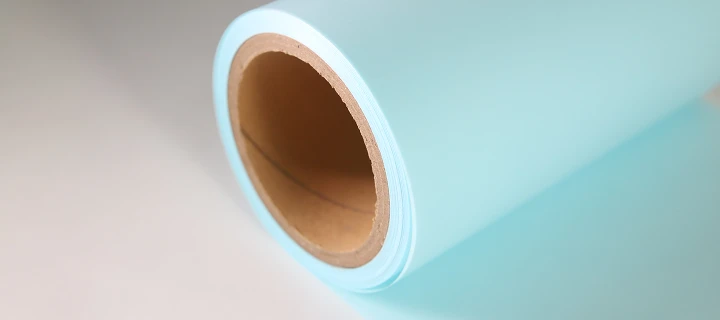
Release film is often supplied in rolls. Roll quality affects production efficiency. Poor winding, telescoping, uneven edges, wrinkles, or dust can cause downtime.
Important roll-related factors include:
| Roll Factor | Why It Matters |
| Roll width tolerance | Affects coating and slitting accuracy |
| Core size | Must match production equipment |
| Roll tension | Affects unwinding and rewinding stability |
| Edge quality | Reduces dust and web breaks |
| Joint control | Important for continuous production |
| Packaging | Protects film from dust and moisture |
Release Film Selection by Protective Film Application
Different protective films require different release liner properties.
| Protective Film Application | Recommended Liner Direction | Reason |
| Electronics protective film | PET release liner | Clean surface and dimensional stability |
| Optical protective film | PET release film | Transparency, smoothness, and low defect requirements |
| Stainless steel surface protection film | PET, PP, or PE release film | Depends on adhesive strength and converting method |
| Aluminum profile protective film | PE or PP release liner | Cost and flexibility may matter |
| Appliance panel protective film | PET or PE release film | Depends on appearance and die-cutting needs |
| Automotive protective film | PET release liner or specialty film | Stability and surface quality are important |
| Construction material protective film | PE or PP release liner | Cost-effective for large-volume use |
| Die-cut protective film parts | PET release liner | Better precision and cutting stability |
For high-value or precision protective films, PET release liner is usually a safer starting point. For large-volume standard protection films, PE or PP release liners may be more economical if they meet performance requirements.
Release Film vs Release Paper for Protective Film
Some protective film manufacturers may compare release film with release paper. The right choice depends on the application.
| Factor | Release Film | Release Paper |
| Surface cleanliness | Generally cleaner, no paper fiber dust | May generate paper dust |
| Transparency | Available in clear options | Usually opaque |
| Moisture resistance | Usually better | Depends on paper and coating |
| Dimensional stability | PET film is strong and stable | Paper may react to humidity |
| Cost | Often higher than paper | Often lower for standard uses |
| Die-cutting precision | Good for precision applications | Suitable for many standard applications |
| Application fit | Electronics, optical, clear, precision protective films | General liners, packaging, some adhesive products |
For protective film manufacturing, release film is often preferred when the final product requires clean appearance, transparent inspection, stable converting, or high surface quality. Release paper may still be used in certain cost-sensitive or less demanding applications.
Common Mistakes When Buying Release Film for Protective Film
Mistake 1: Selecting Only by Lowest Price
A cheaper liner may create higher waste if it causes wrinkles, poor peeling, adhesive transfer, or unstable roll handling. Buyers should evaluate total production cost, not only unit price.
Mistake 2: Ignoring Adhesive Compatibility
Release performance depends on the interaction between the release coating and adhesive. Acrylic, rubber, silicone, and hot melt adhesives may require different release coating systems.
Mistake 3: Using a Standard Liner for Precision Protective Film
Precision die-cut protective films may require better flatness, cleanliness, and dimensional stability. A standard liner may not meet these requirements.
Mistake 4: Not Testing Under Real Production Conditions
Lab samples may not fully reflect coating speed, drying temperature, web tension, die-cutting pressure, storage time, and final application. Production testing is strongly recommended before bulk purchasing.
Mistake 5: Overlooking Roll Quality
Even if the film material is suitable, poor roll quality can cause web breaks, wrinkles, slitting defects, and downtime. Roll packaging and edge quality should be checked carefully.
How to Choose a Release Film Supplier
A qualified release film supplier should understand both material structure and application requirements. Buyers should ask technical questions before placing orders.
| Supplier Evaluation Question | Why It Matters |
| What film substrates are available? | Helps compare PET, PE, PP, and specialty options |
| Can release force be customized? | Ensures compatibility with different adhesives |
| Do you support one-side or double-side release? | Needed for different protective film structures |
| What thickness options can be supplied? | Affects stiffness, cost, and converting |
| Can rolls be slit to custom widths? | Supports production line requirements |
| How is roll quality controlled? | Reduces downtime and waste |
| Can samples be provided for testing? | Allows real production verification |
| What information is needed for recommendation? | Shows technical understanding |
When contacting a supplier, buyers should provide the protective film substrate, adhesive type, coating process, processing temperature, release force target, roll width, thickness requirement, storage condition, and end-use application.
Yingfei provides release film materials for different industrial applications, including adhesive protective film, surface protection products, labels, tapes, and other converting processes.
Practical Buying Checklist
Before sourcing release film for protective film manufacturing, prepare the following information:
| Item | What to Confirm |
| Protective film type | PE, PET, PVC, TPU, optical film, or other substrate |
| Adhesive type | Acrylic, rubber, silicone, hot melt, removable, or permanent |
| Liner material | PET, PE, PP, BOPP, or custom film |
| Thickness | Required liner thickness or stiffness target |
| Release side | One-side or double-side release |
| Release force | Easy, medium, tight, or customized release |
| Surface requirement | Standard, clean, optical, anti-static, or high-smoothness |
| Processing temperature | Coating, drying, lamination, or storage temperature |
| Converting method | Slitting, rewinding, die-cutting, sheeting, lamination |
| Roll specification | Width, length, core size, roll diameter, packaging |
| Application industry | Electronics, automotive, appliance, construction, metal, glass, or plastic |
This information allows the supplier to recommend a more accurate release film structure and reduces the risk of mismatch.
FAQ
1. What is release film used for in protective film manufacturing?
Release film is used to protect the adhesive side of protective film during coating, storage, slitting, die-cutting, transportation, and final application. It allows the adhesive to remain clean while enabling controlled peeling before use.
2. Which release liner is suitable for protective film?
The suitable release liner depends on adhesive type, protective film substrate, processing temperature, die-cutting requirement, and application environment. PET release liner is often used for precision, high-cleanliness, or dimensionally stable applications, while PE or PP liners may be used for standard flexible products.
3. Why is PET release liner used for protective film?
PET release liner is used because it offers good dimensional stability, tensile strength, surface smoothness, and heat resistance in many protective film manufacturing processes. It is suitable for electronics, optical, automotive, and precision die-cut protective films.
4. How do I choose release film for adhesive protective film?
Choose based on adhesive type, release force, film thickness, substrate material, surface cleanliness, processing temperature, roll quality, and converting method. Testing with the actual adhesive and production conditions is recommended before bulk ordering.
5. What happens if the release force is too high or too low?
If release force is too high, peeling may be difficult and the adhesive may deform. If release force is too low, the liner may separate too early during processing, storage, or transportation. Stable release force is important for protective film quality.
6. Is release film better than release paper for protective film?
Release film is often better for protective film applications requiring transparency, cleanliness, moisture resistance, and dimensional stability. Release paper may be suitable for some cost-sensitive or less demanding applications, but it may not provide the same clean surface performance.
7. Can release film be customized for different protective film applications?
Yes. Release film can often be customized by substrate type, thickness, release coating, release force, one-side or double-side release, anti-static treatment, surface smoothness, roll width, and packaging format.
Conclusion
Release film is an important process material in protective film manufacturing. It protects the adhesive surface, supports coating and converting, improves storage stability, and enables clean peeling during final application. The right release film can help reduce defects such as adhesive transfer, liner lifting, wrinkles, contamination, and poor die-cutting performance.
For protective film manufacturers, PET release liner is often suitable for applications requiring better dimensional stability, clean surface quality, heat resistance, and precision converting. PE or PP release film may be suitable for flexible, standard, or cost-sensitive protective film products. The final choice should be based on adhesive system, production process, application industry, roll quality, and real sample testing.
If you are sourcing release film for protective film manufacturing, Yingfei can help evaluate suitable liner structures based on your adhesive type, coating process, thickness requirement, release force target, and end-use application.