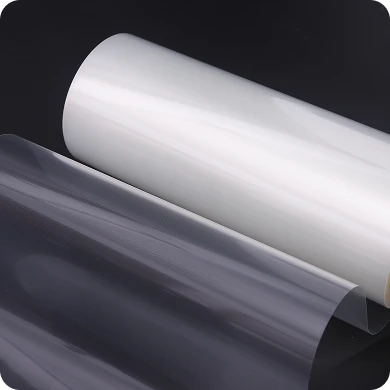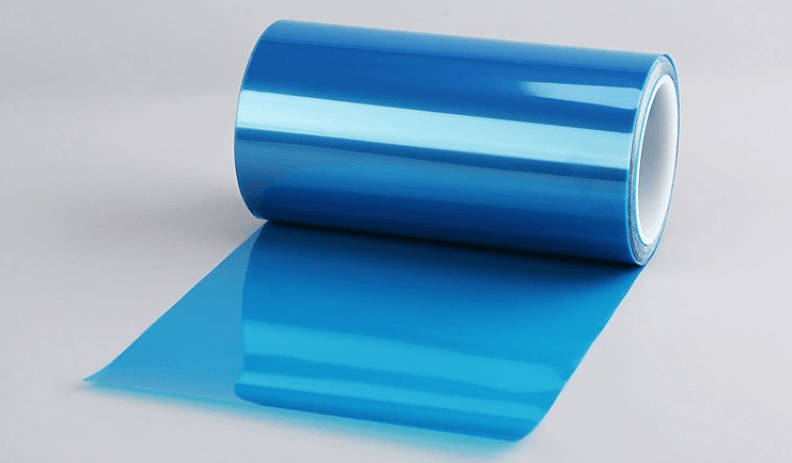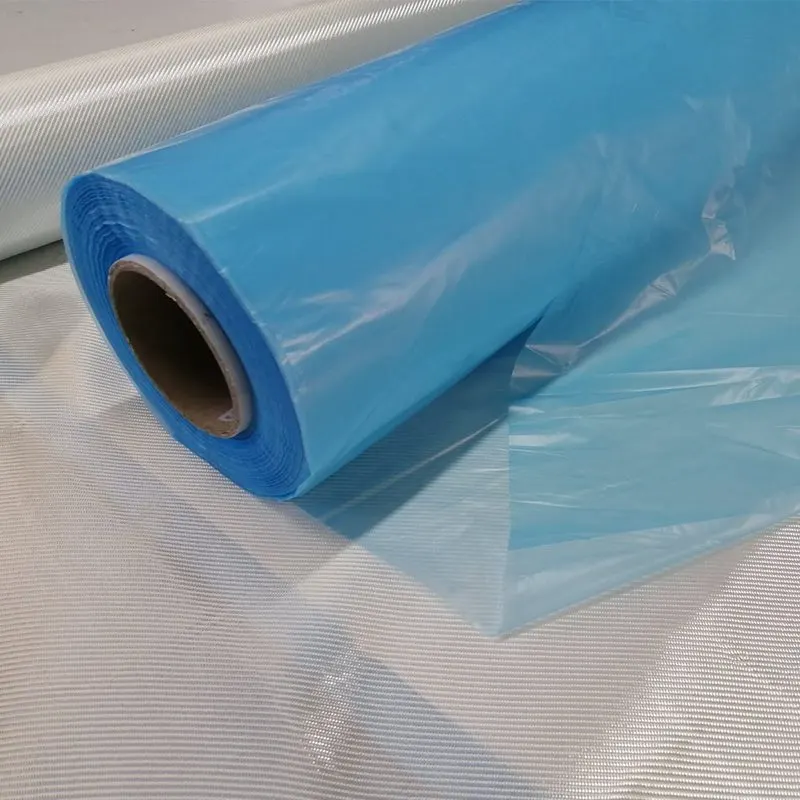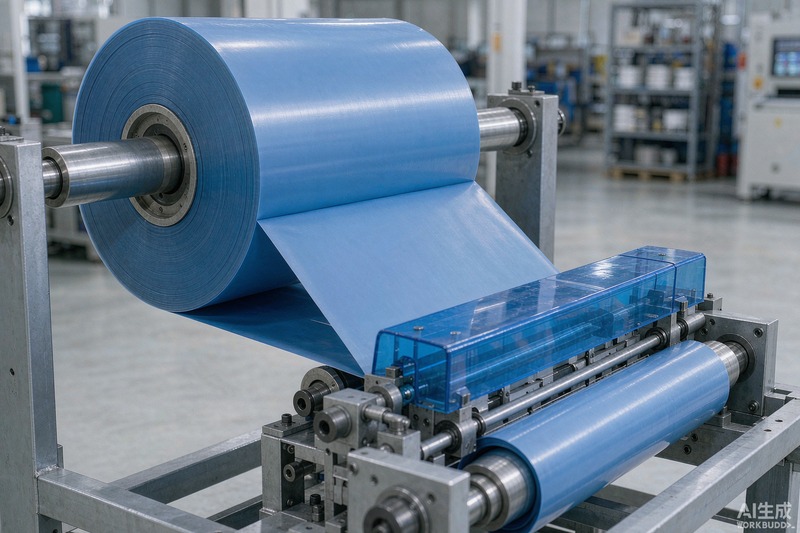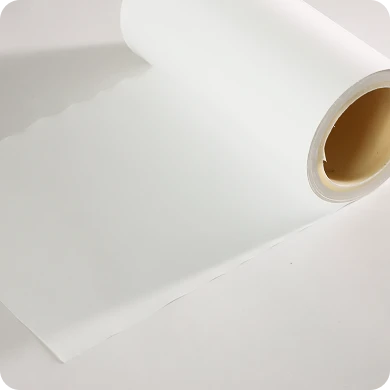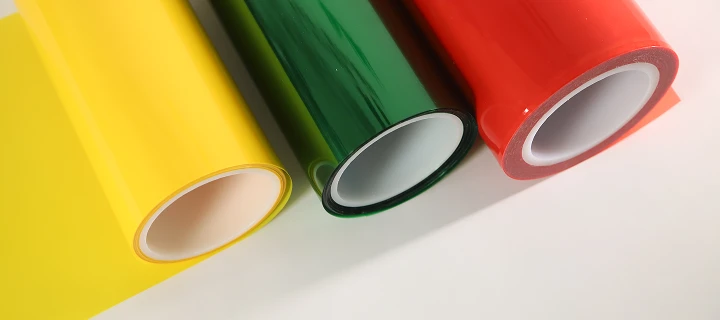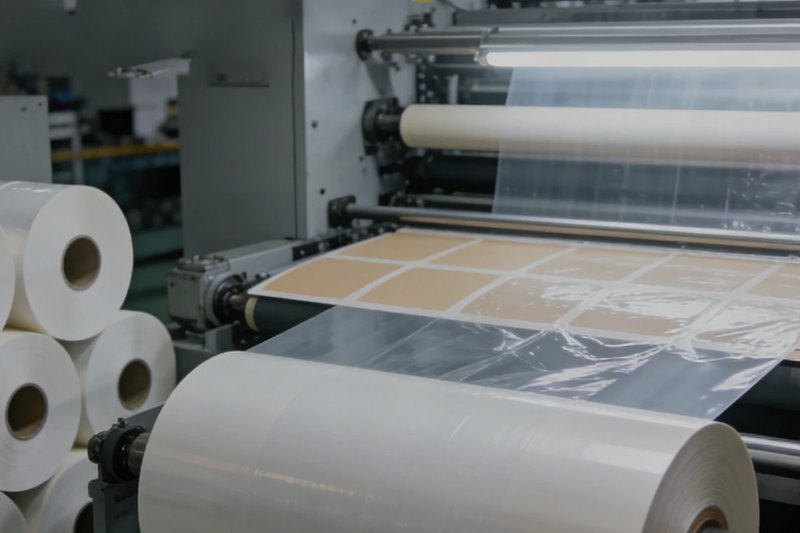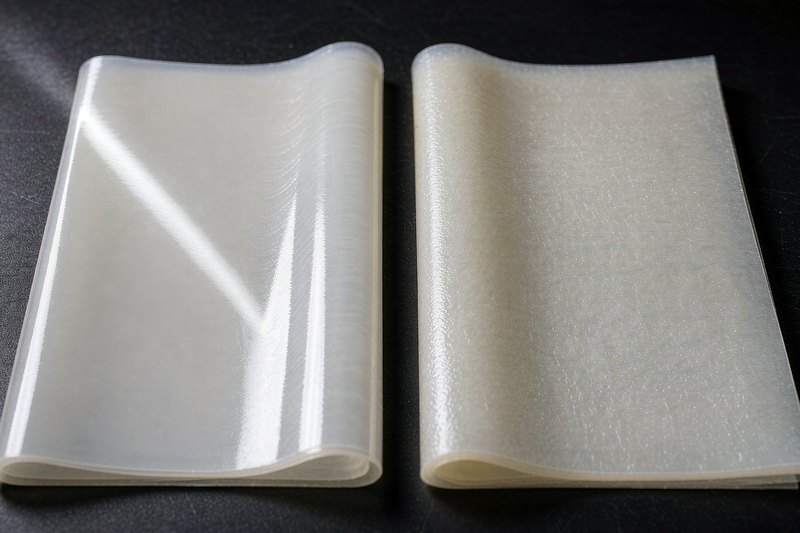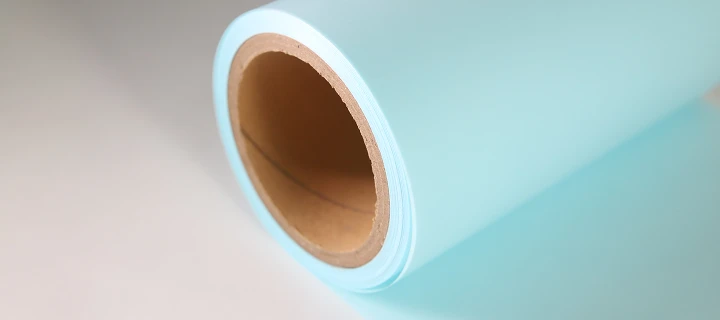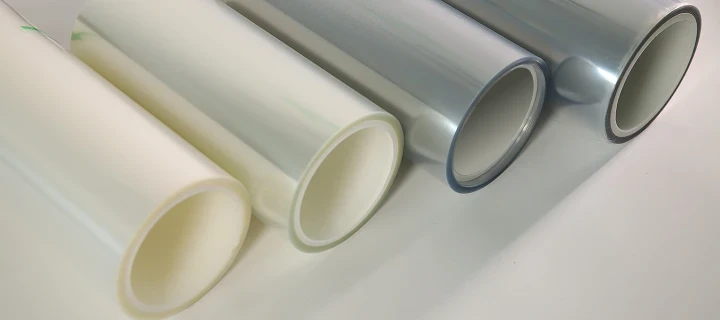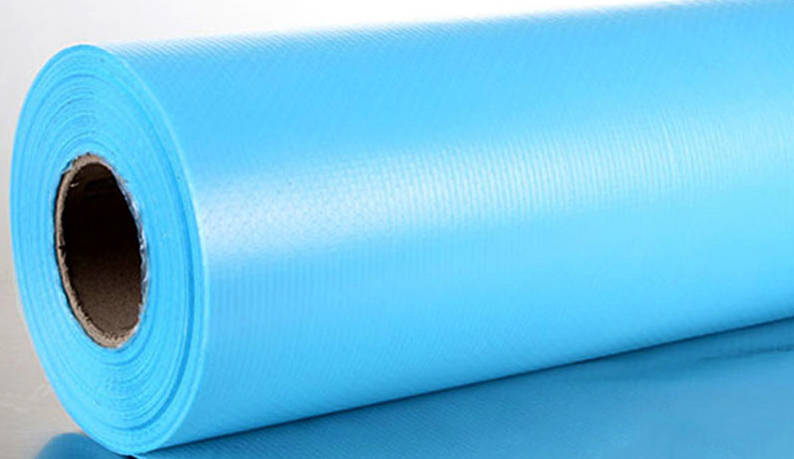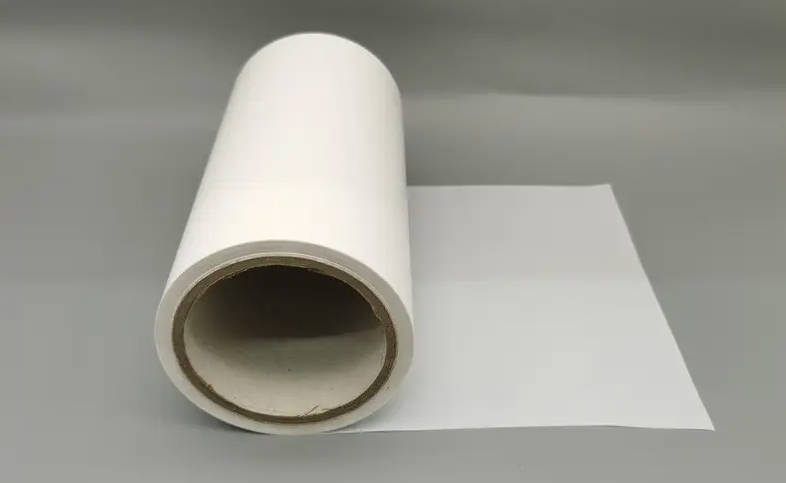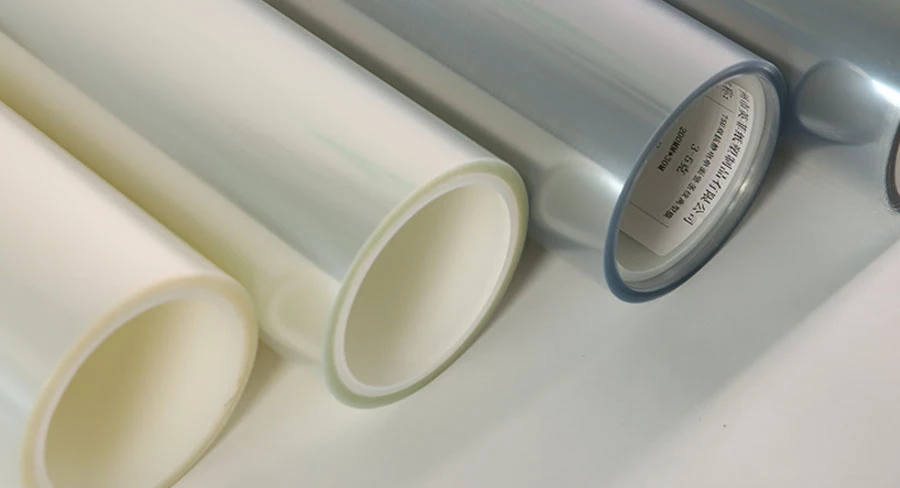
If your application requires higher heat resistance, dimensional stability, tensile strength, and optical clarity, PET release film is usually the better choice. If your application needs better flexibility, higher elongation, softer handling, and lower material cost, PE release film may be more suitable.
For many B2B buyers, the choice between PET release film and PE release film is not only a material question. It directly affects coating quality, adhesive performance, die-cutting accuracy, production efficiency, storage stability, and total cost. Choosing the wrong release liner may lead to wrinkles, curling, poor release force control, adhesive transfer, deformation during heating, or unnecessary material waste.
Both PET and PE can be used as release film substrates, but they behave very differently. PET is a polyester-based film with good strength, stiffness, thermal resistance, and dimensional stability. PE, or polyethylene film, is softer, more flexible, and often more cost-effective for standard or low-to-medium temperature applications.
This guide compares PET release film vs PE release film from the perspective of industrial users. It explains the differences in heat resistance, strength, transparency, flexibility, cost, processing behavior, and application suitability, helping you choose a more appropriate release film solution for your product.
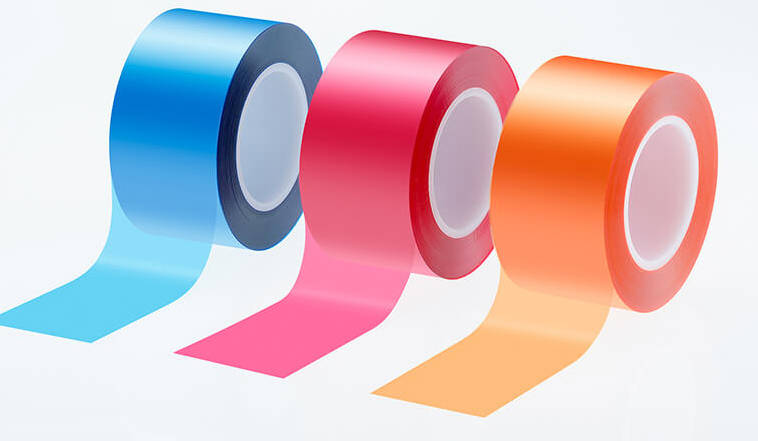
What Is Release Film?
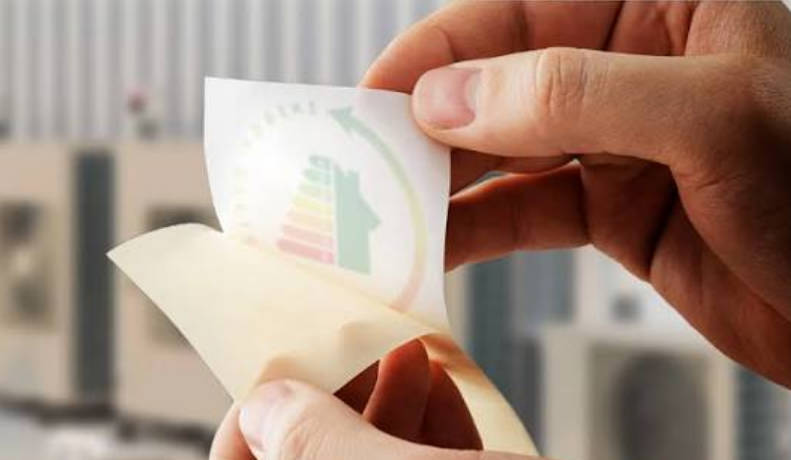
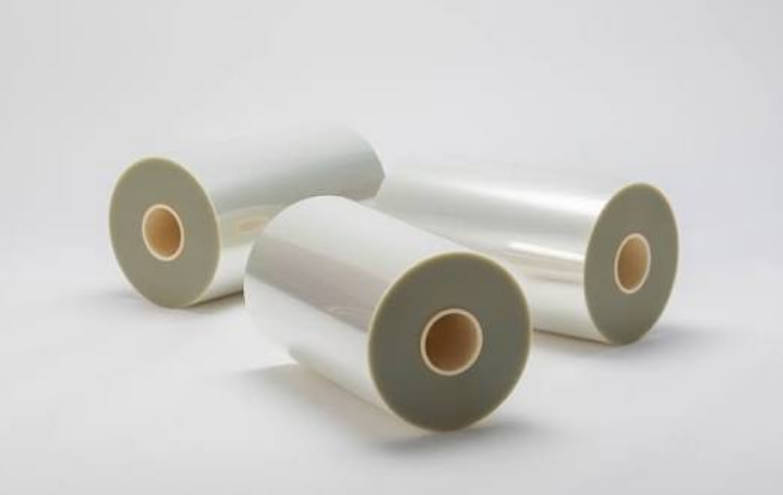
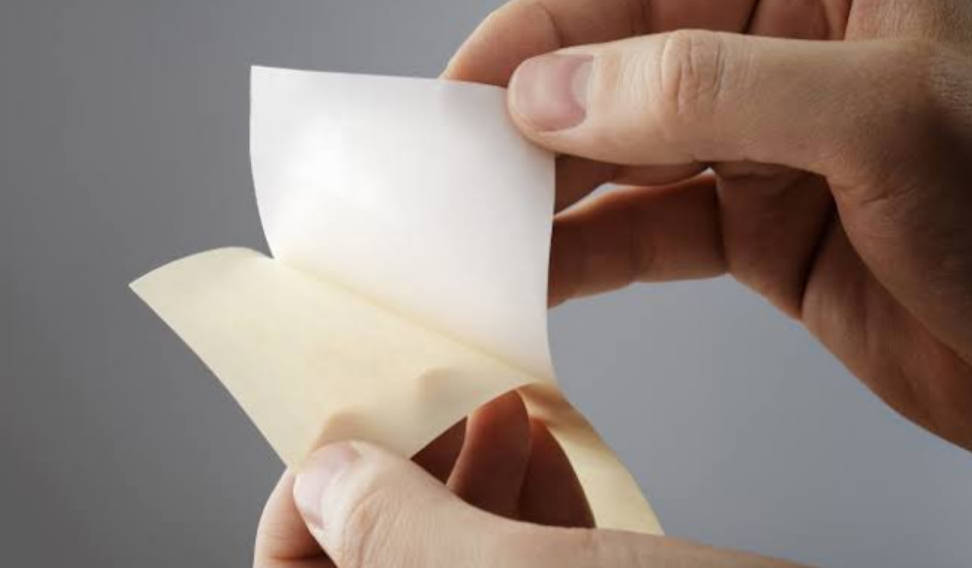
Release film is a functional film material used to prevent adhesives, coatings, rubber, resin, foam, or other sticky materials from permanently bonding to a surface during production, storage, transportation, or final use.
A typical release film includes three key parts:
| Component | Function |
|---|---|
| Base film substrate | Provides mechanical support, thickness, flexibility, heat resistance, and dimensional stability |
| Release coating | Creates a controlled low-surface-energy layer for easy peeling |
| Surface treatment or functional layer | Improves coating adhesion, anti-static performance, printability, or process compatibility |
Common release film substrates include PET, PE, PP, BOPP, and other specialty films. Among them, PET release film and PE release film are two common options for adhesive products, tapes, labels, die-cutting materials, electronics, medical materials, composites, and industrial processing.
The base film determines the mechanical and thermal behavior of the release liner, while the release coating determines how easily the adhesive or material separates from the film.
This means that choosing between PET and PE is not only about release force. You also need to consider how the film behaves during coating, slitting, die-cutting, lamination, heat exposure, storage, and final application.
What Is PET Release Film?
PET release film is made from polyethylene terephthalate film, commonly known as polyester film. It is usually coated with silicone, fluorosilicone, or other release agents on one side or both sides.
PET release film is widely used when an application requires:
- High tensile strength
- Good dimensional stability
- Better heat resistance
- Smooth and flat surface
- Good transparency
- Stable release performance
- Precise converting and die-cutting
Because PET film has good stiffness and stability, it is commonly used in applications where accurate processing is important. Examples include adhesive tapes, protective films, electronic materials, optical films, ceramic capacitors, medical adhesive products, foam tapes, and composite processing.
For companies sourcing release liners for demanding industrial products, PET is often considered a higher-performance substrate. If you are developing products where process accuracy and liner stability are critical, you can explore Yingfei’s release film products for more material options.
What Is PE Release Film?
PE release film is made from polyethylene, usually LDPE, HDPE, or modified polyethylene film. It can also be coated with silicone or other release coatings depending on the required release force and application.
PE release film is often selected when the application requires:
- Good flexibility
- Soft hand feel
- High elongation
- Better conformability
- Moisture resistance
- Lower material cost
- Easy handling in flexible applications
Compared with PET, PE is generally softer and more stretchable. This makes it useful for applications where the liner needs to bend, wrap, deform, or conform to irregular surfaces. PE release liners are commonly used in flexible adhesive products, protective materials, medical products, hygiene materials, rubber processing, foam materials, and some packaging-related applications.
However, PE normally has lower heat resistance and lower dimensional stability than PET. If the process involves heat, tension, precision die-cutting, or tight tolerance requirements, PE must be evaluated carefully before mass production.
Why the PET vs PE Release Film Choice Matters
For many buyers, release film looks like a simple supporting material. In reality, it can influence the stability of the entire production process.
A release film that is too soft may stretch during coating or slitting. A film with poor heat resistance may deform during drying, lamination, curing, or hot pressing. A liner with unstable release force may cause adhesive residue, transfer problems, or uneven peeling. A substrate with poor flatness may affect die-cutting accuracy, especially in electronics and precision adhesive products.
The right release film should match the adhesive system, processing temperature, web tension, converting method, storage condition, and end-use environment.
For B2B users, the wrong material choice can create several problems:
| Problem | Possible Cause | Impact |
|---|---|---|
| Film deformation | Poor heat resistance or excessive web tension | Wrinkles, curling, poor dimensional accuracy |
| Difficult peeling | Release coating mismatch | Slow production, adhesive damage |
| Adhesive residue | Incorrect release force or coating compatibility | Product defects and customer complaints |
| Die-cutting burrs or misalignment | Film too soft or unstable | Lower converting yield |
| Static or dust issues | Inadequate surface control | Contamination in precision applications |
| Excessive cost | Over-specified material | Higher total material cost |
Therefore, the PET vs PE decision should be based on application performance, not only unit price.
PET Release Film vs PE Release Film: Key Differences
The following table gives a practical comparison for industrial buyers.
| Factor | PET Release Film | PE Release Film |
|---|---|---|
| Heat resistance | Higher; suitable for many medium-to-high temperature processes | Lower; better for low-to-medium temperature processes |
| Tensile strength | Higher strength and stiffness | Lower strength but better elongation |
| Dimensional stability | Better stability under tension and heat | More prone to stretching or deformation |
| Flexibility | Moderate; stiffer than PE | Excellent flexibility and softness |
| Transparency | Usually high clarity | Varies by grade; often less clear than PET |
| Surface flatness | Good flatness for precision processing | Softer surface, may be less dimensionally stable |
| Cost | Usually higher than PE | Usually more cost-effective |
| Die-cutting performance | Better for precision die-cutting | Suitable for less demanding or flexible die-cutting |
| Application fit | Electronics, tapes, optical films, labels, composites, precision products | Flexible adhesives, medical, hygiene, rubber, foam, packaging-related uses |
| Main advantage | Stability and performance | Flexibility and cost efficiency |
| Main limitation | Higher cost and less softness | Lower heat resistance and lower dimensional stability |
In simple terms: choose PET release film for stability and precision; choose PE release film for flexibility and cost-sensitive applications.
Heat Resistance: PET Performs Better in Thermal Processes
Heat resistance is one of the most important differences between PET release film and PE release film.
PET has better thermal stability than PE. This makes it more suitable for processes involving drying ovens, hot lamination, thermal curing, composite molding, adhesive coating, or high-temperature storage. PET also keeps its shape better under heat and tension, which is important for maintaining web flatness and dimensional accuracy.
PE can work well in many standard applications, but it is not the preferred option when the film must withstand higher processing temperatures. Because PE softens more easily, it may stretch, shrink, wrinkle, or deform if exposed to excessive heat.
Typical evaluation questions include:
| Question | Why It Matters |
|---|---|
| What is the maximum process temperature? | Determines whether PE can remain stable |
| How long is the film exposed to heat? | Short-term and long-term exposure behave differently |
| Is web tension applied during heating? | Tension can increase deformation risk |
| Is dimensional accuracy required after heating? | PET is usually more stable |
| Is the release film used in hot pressing or curing? | PET is often preferred for demanding thermal processes |
For high-temperature adhesive processing or precision industrial use, PET release film is generally the safer starting point. For low-temperature packaging, flexible lamination, or basic adhesive protection, PE release film may be sufficient.
Strength and Dimensional Stability
PET release film has higher tensile strength and better dimensional stability than PE release film. This is important in continuous production lines where the film is pulled, coated, dried, slit, laminated, rewound, or die-cut.
When a release liner stretches during processing, it can create problems such as:
- Unstable coating thickness
- Poor registration during printing or die-cutting
- Wrinkles during lamination
- Uneven release performance
- Roll deformation after rewinding
- Product size variation
PET’s stiffness helps maintain better control in precision converting. This is why PET release liners are often used in electronics, optical materials, double-sided tapes, foam tapes, and other products that require stable dimensions.
PE, on the other hand, has higher elongation and better flexibility. It can absorb deformation better and is less brittle in soft, flexible applications. This makes it useful when the product needs to bend, wrap, fold, or conform to curved surfaces.
If your production requires tight dimensional tolerance, PET is usually more suitable. If your product requires softness and conformability, PE may be more practical.
Transparency and Appearance
Transparency is another important factor, especially for optical films, protective films, inspection processes, labels, and adhesive products where visual quality matters.
PET release film usually offers better clarity and surface smoothness. This helps operators inspect coating quality, bubbles, dust, adhesive defects, or surface contamination. It is also useful when the release liner must support optical-grade or appearance-sensitive materials.
PE film can be translucent or semi-transparent depending on resin type, thickness, additives, and processing method. Some PE films are clear enough for standard use, but they typically do not provide the same level of optical clarity and dimensional smoothness as PET.
For appearance-sensitive applications, buyers should request actual samples and check:
| Inspection Item | PET Release Film | PE Release Film |
|---|---|---|
| Visual clarity | Usually better | Grade-dependent |
| Surface smoothness | Usually better | Softer and more variable |
| Defect inspection | Easier | May be less clear |
| Optical product compatibility | More suitable | Limited suitability |
| Product appearance control | Better | Depends on application |
If the release film is only used as a temporary protective liner and appearance inspection is not critical, PE may be enough. If visibility, gloss, flatness, or optical consistency matters, PET is generally preferred.
Cost Difference: PE Is Usually More Economical
Cost is one reason many buyers compare PET release film vs PE release film.
PE release film is often more economical than PET. It is widely used in cost-sensitive products where high heat resistance and tight dimensional stability are not required. For large-volume applications, choosing PE can help reduce material cost if it meets performance requirements.
However, lower unit price does not always mean lower total cost. If PE creates wrinkles, deformation, poor die-cutting, adhesive transfer, or production downtime, the actual cost may become higher than using PET.
A practical cost evaluation should include:
| Cost Factor | Why It Matters |
|---|---|
| Film unit price | Direct material cost |
| Coating compatibility | Affects release stability |
| Production speed | Poor liner performance can reduce line speed |
| Waste rate | Wrinkles or deformation increase scrap |
| Die-cutting yield | Dimensional stability affects precision |
| Customer complaint risk | Defects can increase after-sales cost |
| Storage stability | Liner deformation may appear after aging |
For standard products, PE can be a cost-effective option. For high-value products, PET may reduce risk and improve process consistency.
Release Performance: Coating Matters as Much as Film Type
Although PET and PE are different base films, the final release performance also depends heavily on the release coating.
Common release coating options include:
- Silicone release coating
- Fluorosilicone release coating
- Non-silicone release coating
- One-side release coating
- Double-side release coating
- Differential release coating
For pressure-sensitive adhesives, silicone release coatings are commonly used because they provide controlled release and help the adhesive separate from the liner. However, the coating formula must match the adhesive system.
Different adhesives may require different release designs:
| Adhesive Type | Release Film Consideration |
|---|---|
| Acrylic adhesive | Stable release force and clean peeling |
| Rubber adhesive | Good coating anchorage and release balance |
| Silicone adhesive | Fluorosilicone or specialty release coating may be required |
| Hot melt adhesive | Heat resistance and release stability are important |
| Medical adhesive | Cleanliness, biocompatibility-related requirements, and stable release |
| Industrial tape adhesive | Strength, slitting quality, and release control |
This is why buyers should not only ask, “PET or PE?” They should also ask, “What release coating, release force, coating side, thickness, and surface treatment are suitable for my adhesive system?”
At Yingfei Liner, release film selection can be considered according to substrate, coating structure, release level, application process, and converting requirements.
Application Comparison: When to Choose PET or PE
Different industries require different release film properties.
| Application | Recommended Material | Reason |
|---|---|---|
| High-temperature adhesive coating | PET release film | Better heat resistance and dimensional stability |
| Precision die-cutting | PET release film | Better stiffness and registration control |
| Electronics materials | PET release film | Cleaner, flatter, more stable substrate |
| Optical films | PET release film | Better clarity and surface quality |
| Foam tapes | PET or PE | Depends on thickness, adhesive, and converting method |
| Medical adhesive products | PET or PE | PET for precision; PE for softness and conformability |
| Rubber processing | PE or PET | Depends on temperature and release requirement |
| Flexible packaging-related uses | PE release film | Better flexibility and cost efficiency |
| Composite processing | PET release film | Better performance in heat and pressure |
| General adhesive protection | PE release film | Cost-effective if process conditions are mild |
There is no single universal answer. The correct choice depends on performance requirements, not only material name.
How to Choose Between PET Release Film and PE Release Film
A structured selection process can help avoid mistakes.
1. Confirm the Processing Temperature
Start with the maximum process temperature and exposure time. If the release film will pass through an oven, hot press, curing process, or lamination machine, PET should be evaluated first.
If the process is room temperature or low temperature, PE may be enough.
2. Check Dimensional Tolerance
If the film must maintain exact dimensions during coating, printing, die-cutting, or lamination, PET is usually preferred.
If the product is soft and flexible and dimensional tolerance is not extremely strict, PE may work well.
3. Evaluate Adhesive Type
The adhesive system affects release coating selection. Acrylic, rubber, hot melt, and silicone adhesives may require different release formulas.
For silicone adhesive products, standard silicone release film may not be enough. A fluorosilicone or special release coating may be needed.
4. Consider Flexibility and Product Feel
If the final product needs a soft, flexible, conformable liner, PE may be better.
If the liner needs stiffness, flatness, and easy handling, PET is more suitable.
5. Compare Total Cost, Not Only Unit Price
PE may be cheaper, but PET may reduce waste in demanding applications. Buyers should compare full production cost, including scrap rate, converting efficiency, downtime, and quality risk.
6. Request Samples and Test Under Real Conditions
Laboratory data is useful, but real production testing is more reliable. Test the film under actual temperature, tension, speed, adhesive, storage, and peeling conditions.
A reliable release film supplier should be able to support sample evaluation based on your target application.
Common Mistakes When Selecting Release Film
Mistake 1: Choosing Only by Price
Price is important, but choosing the cheapest film can increase production risk. A low-cost liner that wrinkles, stretches, or releases poorly may create more waste.
Mistake 2: Ignoring Process Temperature
Some buyers select PE for cost reasons without considering drying, lamination, or curing temperature. If the process temperature is too high, PE may deform.
Mistake 3: Treating All PET Films as the Same
PET release films can vary in thickness, coating type, release force, anti-static treatment, surface smoothness, and cleanliness. The same applies to PE release films.
Mistake 4: Not Testing with the Actual Adhesive
Release performance depends on the interaction between the release coating and adhesive. A liner that works with one adhesive may not work with another.
Mistake 5: Overlooking Storage Conditions
Temperature, humidity, roll pressure, and storage time can affect release stability, curling, blocking, or adhesive transfer. Buyers should evaluate both production and storage conditions.
Supplier Selection: What to Ask Before Buying
When comparing release film suppliers, ask technical questions instead of only asking for price.
| Question | Why It Matters |
|---|---|
| What base film options are available? | Helps compare PET, PE, and other substrates |
| What release coating options are offered? | Determines adhesive compatibility |
| Can you provide one-side or double-side release? | Important for different product structures |
| What release force range is available? | Affects peeling and production performance |
| What thickness options can be supplied? | Influences strength, flexibility, and cost |
| Can the film be slit to custom width? | Important for converting and production efficiency |
| Can samples be tested before bulk order? | Reduces purchasing risk |
| What information is needed for material recommendation? | Shows supplier’s technical capability |
For B2B buyers, a qualified supplier should understand application conditions, not just provide a generic film. When contacting a supplier, it is helpful to prepare your adhesive type, thickness requirement, release force target, temperature condition, application industry, roll size, and converting process.
PET Release Film vs PE Release Film: Practical Selection Guide
Use the following guide as a quick decision tool.
| Your Requirement | Better Starting Choice |
|---|---|
| High heat resistance | PET release film |
| Precision die-cutting | PET release film |
| Optical clarity | PET release film |
| High tensile strength | PET release film |
| Dimensional stability | PET release film |
| Softness and flexibility | PE release film |
| High elongation | PE release film |
| Cost-sensitive standard use | PE release film |
| Low-temperature processing | PE release film |
| Flexible adhesive products | PE release film |
| Demanding industrial applications | PET release film |
| Simple protective liner use | PE release film |
For most high-performance industrial applications, PET release film is the safer option. For flexible, low-temperature, and cost-sensitive applications, PE release film can be a practical choice.
FAQ
1. What is the main difference between PET release film and PE release film?
The main difference is material performance. PET release film offers better heat resistance, tensile strength, dimensional stability, and clarity. PE release film offers better flexibility, elongation, softness, and cost efficiency.
2. Is PET release film better than PE release film?
PET release film is better for high-temperature, precision, and dimensionally stable applications. PE release film is better for flexible, soft, low-temperature, and cost-sensitive applications. The better choice depends on the process and product requirements.
3. Which release film is better for adhesive tape manufacturing?
For precision adhesive tapes, foam tapes, electronics tapes, and high-temperature coating processes, PET release film is often preferred. For flexible or standard adhesive tape applications, PE release film may be suitable if it meets release and processing requirements.
4. Can PE release liner be used in high-temperature applications?
PE release liner is generally not the first choice for high-temperature processes. It may soften, stretch, or deform under excessive heat. PET release liner is usually more suitable when heat resistance and dimensional stability are required.
5. Why is PET release liner used for precision die-cutting?
PET release liner has better stiffness and dimensional stability, which helps maintain registration accuracy during die-cutting. This reduces the risk of stretching, misalignment, and inconsistent product size.
6. Is PE release film cheaper than PET release film?
In many applications, PE release film is more economical than PET release film. However, buyers should consider total production cost, including waste rate, converting yield, downtime, and quality stability.
7. How do I choose the right release film for my product?
Start by confirming your adhesive type, process temperature, required release force, film thickness, converting method, flexibility requirement, and cost target. Then test PET and PE release film samples under real production conditions.
Conclusion
PET release film and PE release film both play important roles in industrial adhesive and material processing applications, but they are designed for different performance needs.
Choose PET release film when your application requires higher heat resistance, better tensile strength, improved dimensional stability, clearer appearance, and more precise converting performance. Choose PE release film when your product requires softness, flexibility, elongation, and cost efficiency under low-to-medium temperature conditions.
The most reliable way to choose is to match the film substrate, release coating, thickness, and release force to your real application. If you are comparing PET release film vs PE release film for tapes, labels, electronics, medical materials, foam, rubber, or composite processing, Yingfei can help you evaluate suitable release film materials based on your product structure and process requirements.