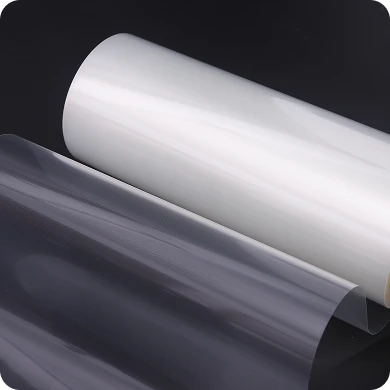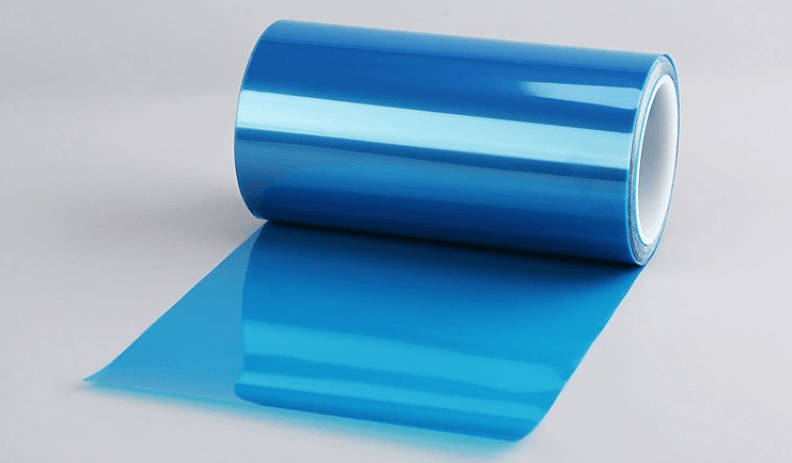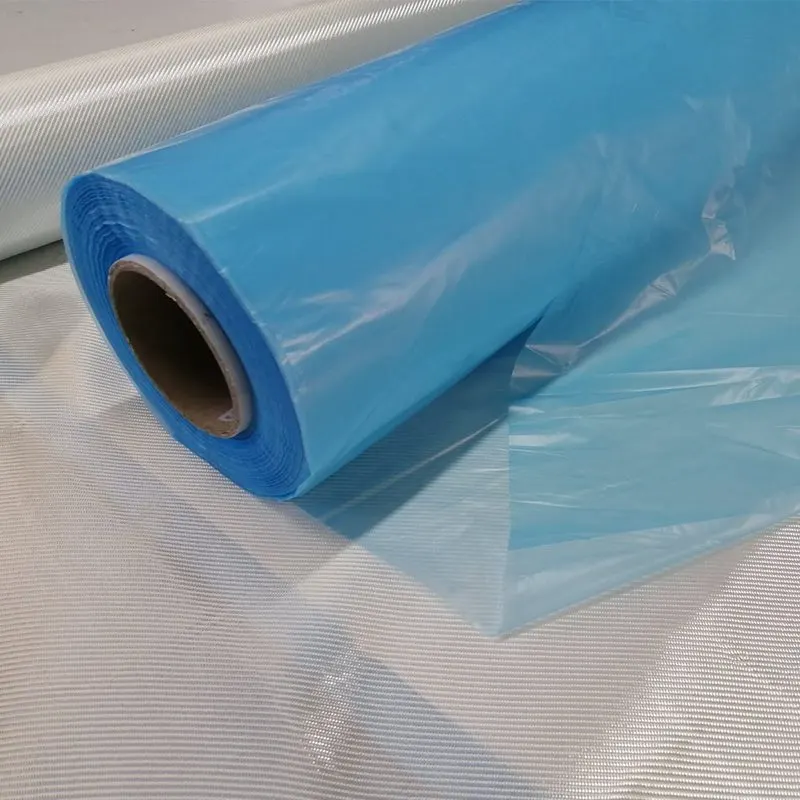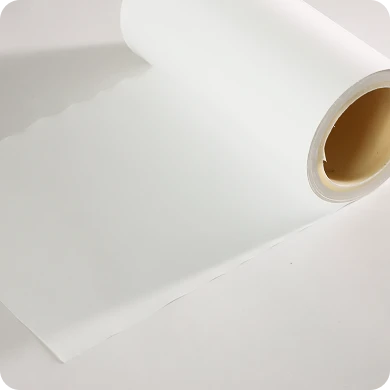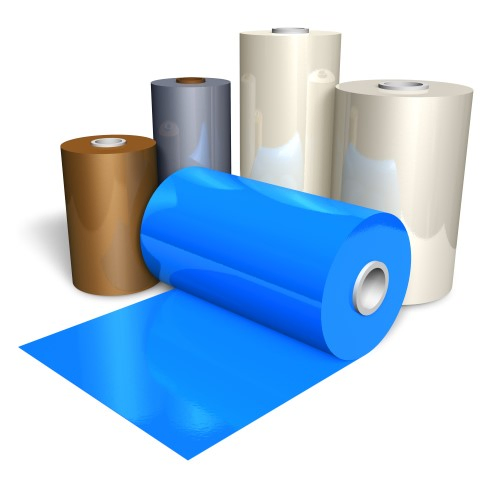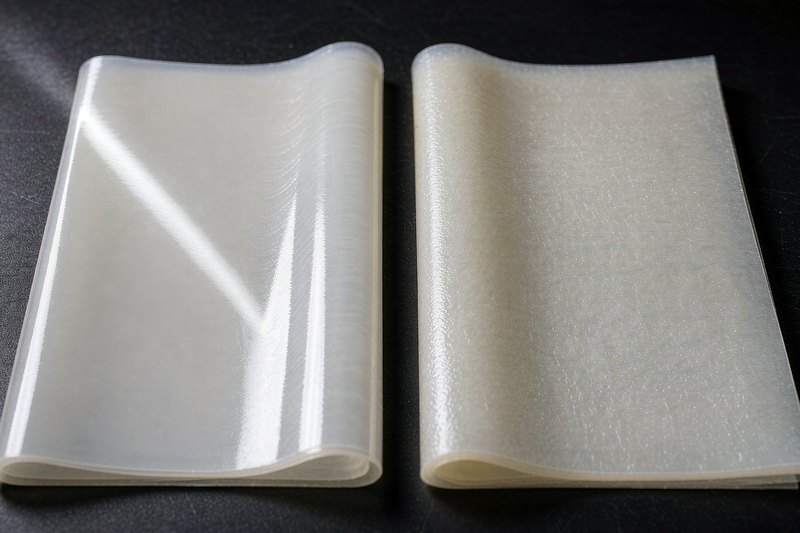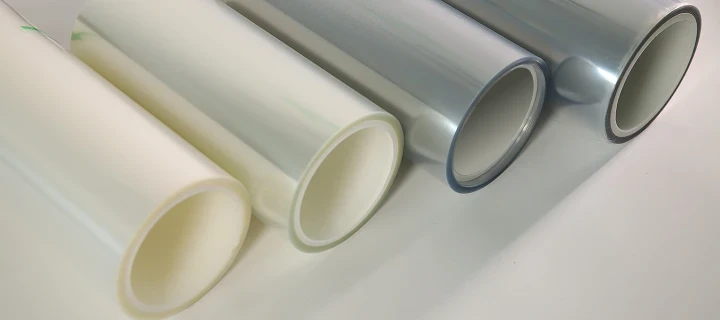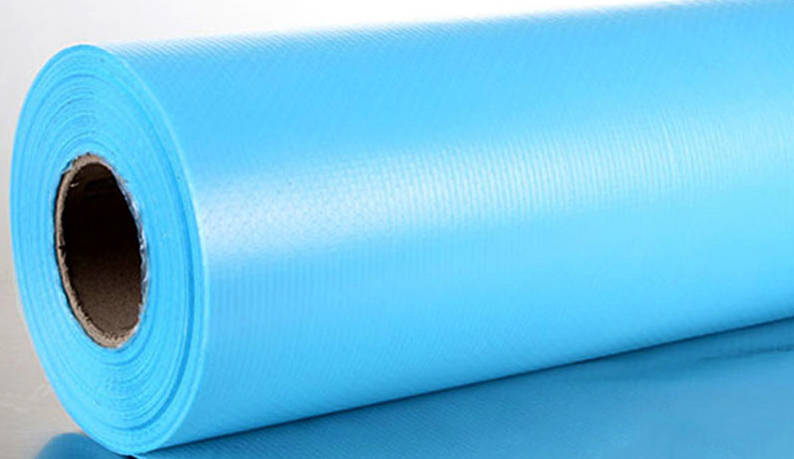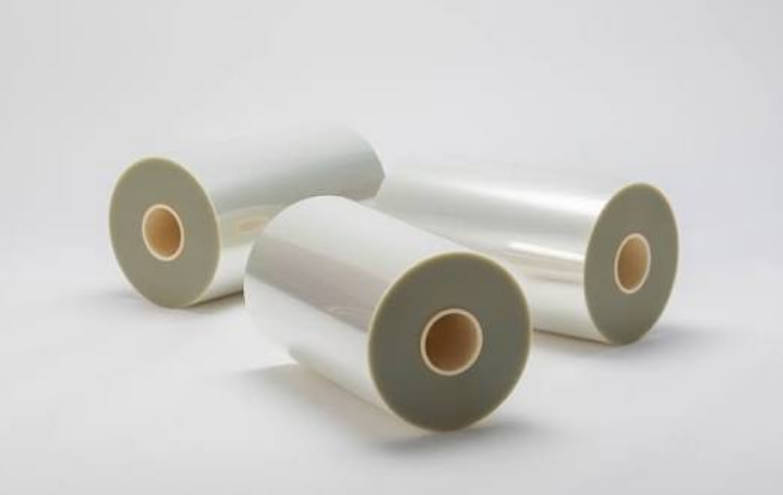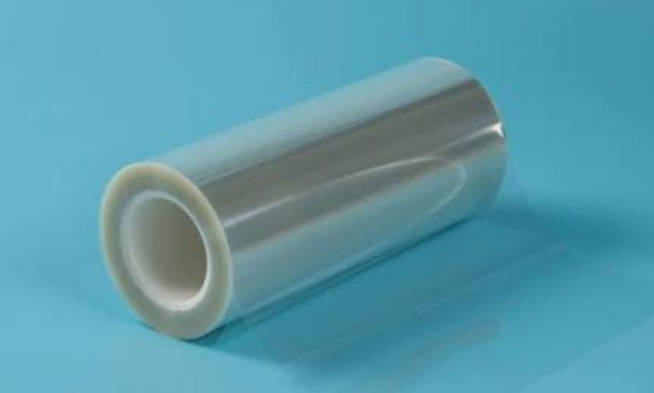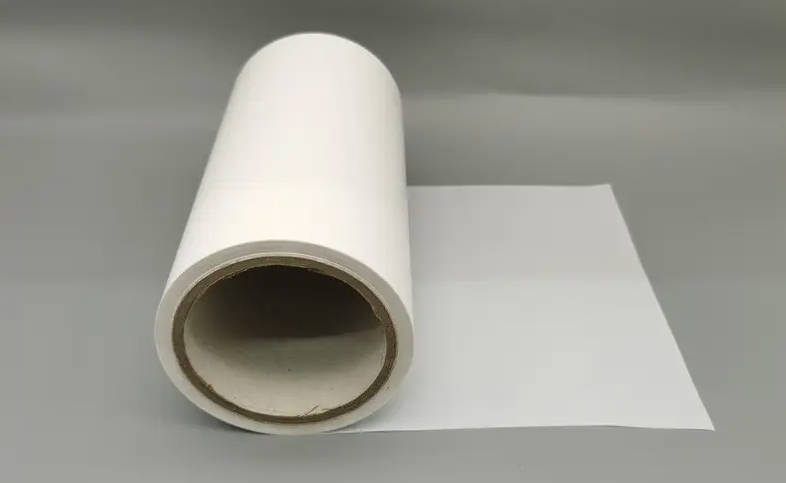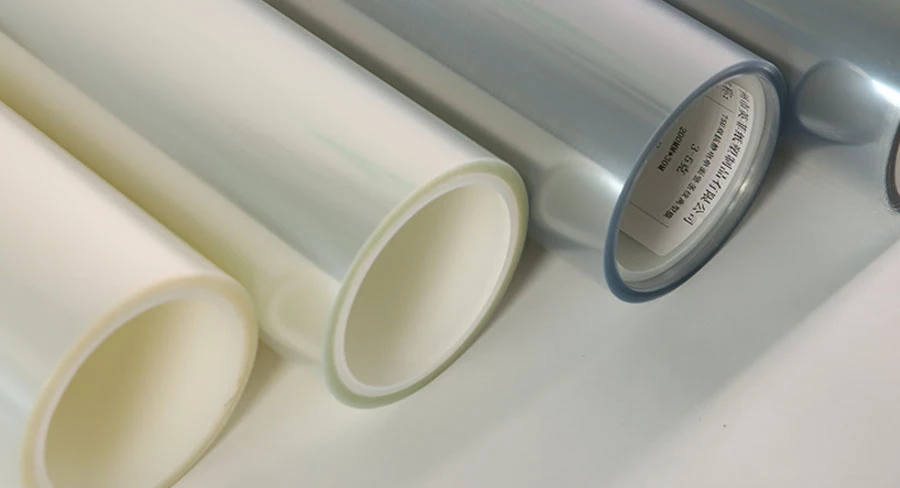
A complete release film roll specification should include film material, thickness, release force, coated side, finished width, width tolerance, roll length, maximum outside diameter, core inside diameter, winding direction, joint allowance, edge quality, and packaging method.
Ordering only by width and thickness is not enough. A technically suitable release film can still cause production problems if the roll is too large for the unwinder, the core does not fit the shaft, the release side faces the wrong direction, or the roll edges are damaged during transportation.
Release film rolls are used in adhesive tape manufacturing, pressure-sensitive labels, protective films, electronics die-cutting, foam products, medical adhesives, composites, and other converting processes. In these applications, roll construction affects web tracking, coating stability, slitting accuracy, lamination, die-cutting, roll changes, storage, and material yield.
This guide explains how to specify a release film roll correctly, with particular attention to width, length, core size, winding, roll quality, packaging, transportation, and incoming inspection.

Why Roll Specifications Matter as Much as Film Performance
Buyers often spend most of their time comparing release force, substrate, and thickness. These are essential, but they describe only the material itself. Production also depends on how that material is converted and delivered as a roll.
A mismatch can create problems before the film even enters the machine.
| Specification Problem | Possible Production Impact |
| Roll is wider than the machine path | Cannot be loaded or requires additional slitting |
| Width tolerance is unstable | Poor web tracking or lamination alignment |
| Core does not fit the shaft | Roll cannot be installed |
| Outside diameter is too large | Interference with guards or unwinding equipment |
| Release side faces the wrong direction | Coating surface cannot contact the intended adhesive |
| Roll is wound too loosely | Telescoping, wrinkles, or shifting layers |
| Roll is wound too tightly | Film deformation or blocking |
| Edges are damaged | Web breaks, particles, or unstable tracking |
| Packaging is insufficient | Dust, moisture, dents, or surface contamination |
The usable product is not simply release film; it is release film converted into a roll that matches the buyer’s equipment and process.
The Essential Release Film Roll Specification
A purchasing specification should be divided into three groups: material properties, roll dimensions, and delivery requirements.
| Specification Group | Information to Confirm |
| Material | Substrate, thickness, release coating, release force, coated side |
| Roll dimensions | Width, tolerance, length, outside diameter, core size |
| Conversion | Slitting, winding direction, joint allowance, edge quality |
| Packaging | Wrapping, end protection, pallet, labels, moisture protection |
| Quality | Inspection method, traceability, sample approval, acceptance criteria |
For a new project, suppliers may also need the adhesive type, processing temperature, machine speed, end application, and estimated order quantity.
1. Release Film Roll Width
Roll width is the finished cross-machine dimension of the supplied film. It must match the buyer’s coating, laminating, slitting, die-cutting, or rewinding equipment.
Release film may be supplied as:
- Jumbo rolls for further slitting
- Wide production rolls
- Narrow slit rolls
- Multiple custom widths from one master roll
- Sheets converted from roll material
How to Determine the Required Width
Start with the actual usable web width required by the machine or product. Then determine whether additional material is needed for edge trimming, registration, clamping, or process waste.
For example, a buyer may need:
- Exact finished product width
- Finished width plus trim allowance
- Several narrow rolls produced from a master roll
- A wider roll for in-house slitting
Width Tolerance
Width tolerance describes the acceptable variation from the ordered width. The appropriate tolerance depends on the equipment and application.
| Application | Width-Control Priority |
| General laminating | Moderate |
| Narrow tape slitting | High |
| Precision die-cutting | High |
| Manual sheet conversion | Moderate |
| High-speed coating | High |
| Large-format industrial liner | Application-dependent |
A small variation may be acceptable for a manually handled process but may create alignment problems on an automated production line.
Specify both the target width and acceptable width tolerance rather than assuming every supplier uses the same standard.
Edge Quality
Width accuracy is not the only slitting requirement. The roll edges should also be inspected for:
- Burrs
- Loose particles
- Crushed edges
- Uneven layers
- Edge waves
- Film fragments
- Adhesive or coating contamination
- Telescoping
Poor edges can cause dust, web breaks, tracking problems, and surface contamination.
2. Release Film Roll Length
Roll length determines how much film is supplied on each core. Longer rolls reduce machine changeovers but increase roll diameter and weight.
When choosing roll length, consider:
- Machine capacity
- Maximum roll weight
- Maximum outside diameter
- Manual or mechanical handling
- Production batch size
- Frequency of roll changes
- Storage space
- Film thickness
- Core strength
A 25μm film and a 100μm film cannot be wound to the same length on the same core while maintaining the same outside diameter. Thicker film builds roll diameter more quickly.
Length Versus Outside Diameter
The relationship can be summarized as follows:
| Change | Typical Effect |
| Increase roll length | Increases outside diameter and weight |
| Increase film thickness | Reduces possible length at the same outside diameter |
| Increase core diameter | Reduces available winding space |
| Reduce roll length | Creates smaller, lighter rolls |
| Use narrower width | Reduces total roll weight |
Buyers should confirm whether the controlling limit is roll length, roll weight, or maximum outside diameter.
Why Declared Length Matters
The purchase order should clarify whether the stated length is:
- Nominal length
- Minimum usable length
- Approximate production length
- Measured total length
- Length excluding damaged material or joints
For high-volume converting, consistent roll length helps with production planning and inventory control.
3. Maximum Roll Outside Diameter
Outside diameter is the total diameter of the wound roll. It must fit the buyer’s unwinding station, machine guards, lifting system, and storage racks.
A roll may meet the required length but still be unsuitable if its diameter exceeds equipment capacity.
Before ordering, confirm:
- Maximum acceptable outside diameter
- Maximum roll weight
- Available loading clearance
- Distance between machine supports
- Unwinder braking capacity
- Whether rolls are manually or mechanically loaded
Roll length should never be confirmed without checking the maximum outside diameter and handling capacity of the equipment.
For export orders, outside diameter also affects carton dimensions, pallet configuration, and container utilization.
4. Release Film Core Size
The core supports the roll and connects it to the unwinding or rewinding equipment. Buyers should distinguish between core inside diameter, core wall thickness, and core length.
Core Inside Diameter
The core inside diameter must fit the machine shaft, expanding chuck, or air shaft. Common industrial core formats may be described in inches or millimeters, but buyers should always provide the exact required dimension.
Do not rely only on terms such as “standard core,” because equipment standards vary between factories.
Core Length
The core length may be:
- Equal to the film width
- Slightly wider than the film
- Recessed relative to the film edge
- Extended for specific handling equipment
The required arrangement depends on the machine and packaging method.
Core Material
Possible core materials include:
| Core Material | Typical Characteristics |
| Paper core | Common, economical, suitable for many applications |
| Plastic core | Moisture-resistant and cleaner for some processes |
| Composite core | Higher strength for demanding rolls |
| Metal core | Used mainly for reusable or specialized systems |
A paper core may be sufficient for many release film rolls. However, heavy rolls, high winding tension, humid storage, or clean-production requirements may need a stronger or different core structure.
Core Strength and Straightness
An unsuitable core can:
- Collapse under winding pressure
- Deform during transportation
- Create an eccentric roll
- Cause vibration during unwinding
- Prevent proper shaft expansion
- Damage the roll ends
The supplier should match core strength to film width, roll length, winding tension, and roll weight.
5. Winding Direction and Release-Side Orientation
Winding direction is critical for one-side-coated release film. The buyer must know whether the release-coated surface should face inward or outward on the finished roll.
Possible instructions include:
- Release side wound inside
- Release side wound outside
- Treated side inside
- Printable side outside
- Differential side A inside
- Differential side B outside
The correct orientation depends on how the roll enters the coating, laminating, or die-cutting machine.
| Product Structure | Winding Requirement |
| One-side release film | Must identify which surface faces inward |
| Double-side release film | Orientation may still matter if sides have different properties |
| Differential release film | Side A and side B must be clearly identified |
| Printable backside film | Printable surface orientation should be stated |
| Anti-static film | Functional side should be identified |
A sample or simple roll-direction diagram can prevent expensive mistakes.
For one-side or differential release films, winding direction must appear on the specification, roll label, and packing list.
6. Roll Joints and Splices
A joint or splice connects two sections of film within one roll. Some applications can accept joints, while high-speed, optical, medical, electronics, or automatic processes may require joint-free rolls.
The purchase order should define:
- Whether joints are allowed
- Maximum number of joints per roll
- Minimum distance between joints
- How joints are marked
- Whether joint sections count toward usable length
- Which tape or joining method is permitted
- Whether the machine must stop at the joint
| Process | Joint Sensitivity |
| Manual sheeting | Often more tolerant |
| General rewinding | Application-dependent |
| High-speed coating | More sensitive |
| Precision die-cutting | Highly sensitive |
| Optical film conversion | Highly sensitive |
| Medical material conversion | Requires controlled specifications |
If joints are permitted, visible flags or labels can help operators identify them before the material enters a critical process.
7. Winding Quality and Roll Hardness
A well-produced roll should unwind smoothly without telescoping, wrinkles, blocking, or excessive tension variation.
Roll Wound Too Loosely
Possible results include:
- Telescoping
- Layer shifting
- Air pockets
- Uneven roll ends
- Transportation damage
- Unstable unwinding
Roll Wound Too Tightly
Possible results include:
- Film stretching
- Core deformation
- Blocking
- Coating damage
- Increased contact pressure
- Release-force changes after storage
Roll hardness should be appropriate for the substrate, thickness, width, length, and coating system.
PET release film generally has good mechanical stability, but poor winding control can still create defects.
8. Release Film Roll Packaging
Packaging protects the release film from dust, moisture, scratches, pressure, impact, and environmental changes during storage and transportation.
A packaging system may include:
- Protective film wrapping
- Moisture-resistant inner wrapping
- End caps or side boards
- Edge protectors
- Individual cartons
- Suspended roll packaging
- Horizontal or vertical pallet arrangement
- Pallet stretch wrapping
- Desiccant where appropriate
- Identification labels
Surface Protection
The exposed film edge and outer layers should be protected from:
- Dust
- Oil
- Water
- Fingerprints
- Scratches
- Silicone contamination
- Packaging abrasion
- Direct sunlight
Sensitive electronics, optical, medical, or high-cleanliness applications may require more controlled wrapping and handling.
End Protection
Roll ends are vulnerable to impact. A dented edge can damage many layers and cause web breaks or tracking problems.
End boards, caps, spacers, or suspended packaging can reduce direct pressure on the roll faces.
Palletization
Pallet configuration depends on roll width, diameter, weight, and transportation method.
| Packaging Method | Consideration |
| Horizontal rolls | Requires support to prevent rolling or flat spots |
| Vertical rolls | Protects circumference but may load the roll edge |
| Suspended rolls | Keeps the roll surface away from direct pressure |
| Carton-packed rolls | Useful for smaller slit rolls |
| Pallet-wrapped rolls | Suitable for grouped export shipments |
The chosen method should prevent movement, crushing, moisture exposure, and edge impact.
9. Export Transportation Considerations
Release film rolls shipped internationally may experience vibration, stacking, temperature variation, humidity, and repeated handling.
Export packaging should account for:
- Ocean or air transport
- Container loading
- Long storage periods
- Humid environments
- Pallet handling
- Customs inspection
- Warehouse stacking
- Multiple transportation stages
Buyers should clarify whether packaging needs to be:
- Suitable for sea freight
- Suitable for air freight
- Fumigation-compliant where applicable
- Moisture-resistant
- Stackable
- Reusable
- Labeled by roll number or production batch
The supplier should not claim that a general domestic package is automatically suitable for a long international shipment.
10. Roll Labels and Traceability
Every roll should carry enough information for warehouse management and quality traceability.
A useful roll label may include:
| Label Information | Purpose |
| Product name or code | Identifies the material |
| Film substrate | Confirms PET, PE, PP, or other material |
| Thickness | Confirms ordered specification |
| Width and length | Supports receiving inspection |
| Release side | Prevents incorrect loading |
| Roll number | Supports individual traceability |
| Batch number | Links the roll to production records |
| Production date | Supports inventory rotation |
| Net and gross weight | Supports logistics and checking |
| Special handling notes | Protects functional surfaces |
For differential release film, both sides should be identified clearly.
11. Custom Release Film Roll Specifications
Custom conversion may include:
- Custom roll width
- Narrow slitting
- Custom length
- Different core sizes
- Maximum outside diameter control
- Release side inside or outside
- One-side, double-side, or differential coating
- Custom roll labels
- Joint-free rolls
- Clean packaging
- Export pallet design
- Sheets instead of rolls
Buyers looking for custom release film specifications should provide equipment and application details before requesting a quotation.
Not every combination is equally practical. Extremely narrow widths, very long rolls, heavy outside diameters, special cores, or strict joint-free requirements may affect minimum order quantity, yield, price, and lead time.
Release Film Roll Specification Example
The following example shows how an RFQ can be structured without assuming universal values.
| RFQ Item | Example Format |
| Application | Double-sided adhesive tape |
| Substrate | PET release film |
| Thickness | Required μm with tolerance |
| Release coating | One-side silicone / differential release |
| Release force | Target grade or test value |
| Finished width | Required mm |
| Width tolerance | Maximum acceptable variation |
| Roll length | Required meters |
| Maximum outside diameter | Machine limit |
| Core inside diameter | Exact mm or inch measurement |
| Core length | Flush, recessed, or extended |
| Winding direction | Release side inside or outside |
| Joints | Not allowed or maximum number permitted |
| Packaging | Individual wrap and export pallet |
| Quantity | Trial volume and estimated annual demand |
This type of inquiry gives the supplier enough information to assess manufacturability and prepare a relevant quotation.
Incoming Inspection Checklist
After receiving the rolls, buyers should inspect the shipment before loading it into production.
Packaging Inspection
Check for:
- Torn wrapping
- Water exposure
- Crushed cartons
- Damaged pallets
- Shifted rolls
- Missing labels
- Dented ends
Dimensional Inspection
Confirm:
- Width
- Roll outside diameter
- Core inside diameter
- Core length
- Roll weight where relevant
- Roll quantity
Roll Quality Inspection
Look for:
- Telescoping
- Loose winding
- Crushed edges
- Wrinkles
- Surface contamination
- Scratches
- Uneven roll faces
- Core deformation
Functional Verification
Depending on the agreement, test:
- Thickness
- Release force
- Release-side orientation
- Adhesive compatibility
- Slitting performance
- Unwinding behavior
- Heat or aging performance
Receiving inspection should verify both the material specification and the physical condition of the delivered roll.
Common Purchasing Mistakes
Specifying Width but Not Tolerance
A supplier may meet the nominal width while delivering variation unsuitable for precision equipment.
Specifying Length but Not Maximum Diameter
The final roll may be too large for the unwinder.
Assuming All Cores Are Standard
The core may not fit the machine shaft even when the film itself is correct.
Ignoring Winding Direction
The functional release surface may face the wrong direction.
Allowing Joints Without Defining the Limit
Unexpected joints can stop production or damage precision products.
Choosing Packaging Only by Cost
Insufficient packaging can damage many layers of valuable material.
Not Identifying the Release Side on the Roll
Operators may load the material incorrectly, especially when the two surfaces look similar.
How to Evaluate a Release Film Roll Supplier
A suitable supplier should be able to discuss both coating performance and roll conversion.
Ask the supplier:
- What master roll widths are available?
- What finished-width tolerances can be controlled?
- What roll lengths and maximum diameters are practical?
- Which core sizes and core materials can be supplied?
- Can the release side be wound inward or outward?
- Are joint-free rolls available?
- How are roll edges inspected?
- Can the supplier provide custom labels and traceability?
- What packaging is used for export shipment?
- Can sample rolls be supplied for machine testing?
- How are damaged rolls or specification deviations handled?
Yingfei provides release film materials for tapes, labels, protective films, electronics, medical adhesive materials, and industrial converting applications, with roll specifications evaluated according to the buyer’s process requirements.
More information about the company’s release liner product direction is available through Yingfei Liner.
Release Film Roll RFQ Checklist
Before requesting a quotation, prepare the following:
| Category | Required Information |
| Application | Tape, label, protective film, electronics, medical, foam, composite, or other |
| Film | Substrate, thickness, release coating, release force |
| Width | Finished width and tolerance |
| Length | Required length per roll |
| Diameter | Maximum acceptable outside diameter |
| Core | Inside diameter, material, wall strength, and length |
| Orientation | Release side inside or outside |
| Joints | Allowed quantity and marking method |
| Conversion | Slitting, coating, laminating, die-cutting, or sheeting process |
| Packaging | Individual wrap, carton, pallet, suspended roll, or export packaging |
| Labels | Product code, batch, roll number, dimensions, and side identification |
| Quantity | Sample, trial order, and expected regular demand |
| Testing | Thickness, release force, roll inspection, and machine trial |
FAQ
1. What specifications are needed for a release film roll?
A complete release film roll specification includes substrate, thickness, release force, coated side, width, width tolerance, length, outside diameter, core size, winding direction, joint allowance, edge quality, and packaging.
2. How do I choose the width of a release liner roll?
Choose the width according to the machine web path, finished product size, trim allowance, and slitting plan. Include an acceptable width tolerance, especially for automatic or precision equipment.
3. What core size is used for release film rolls?
Core size depends on the buyer’s unwinding equipment. Several core diameters are commonly used industrially, but buyers should provide the exact core inside diameter rather than requesting a general “standard core.”
4. Should the release side face inward or outward?
The correct winding direction depends on the production line and product structure. For one-side-coated film, specify whether the release-coated surface must face inward or outward on the roll.
5. How does release film thickness affect roll length?
Thicker film increases roll diameter more quickly. At the same core size and maximum outside diameter, a thicker release film will generally provide less length per roll than a thinner film.
6. Are joints allowed in release film rolls?
Joints may be acceptable in some general processes but unsuitable for high-speed coating, precision die-cutting, electronics, optical, or medical applications. The purchase specification should define whether joints are allowed and how they must be marked.
7. How should release film rolls be packaged for export?
Export packaging should protect the rolls from dust, moisture, edge impact, movement, and compression. Depending on roll size, it may include protective wrapping, end boards, cartons, suspended supports, and secured pallets.
8. What should be checked when receiving release film rolls?
Inspect the packaging, width, core size, outside diameter, winding direction, roll labels, edge condition, telescoping, wrinkles, contamination, and functional properties agreed in the purchase specification.
Conclusion
Release film roll specifications affect both material performance and production efficiency. Width and tolerance determine machine alignment. Roll length and outside diameter affect changeover frequency and equipment fit. Core size controls whether the roll can be installed. Winding direction determines whether the release surface enters the process correctly. Packaging protects the film from contamination and transportation damage.
A reliable purchase order should therefore define the complete roll structure rather than listing only film thickness and width. Buyers should also confirm joint allowance, edge quality, roll labels, traceability, packaging, and incoming inspection requirements.
For custom release film roll specifications, provide Yingfei with the film substrate, thickness, release force, width, length, core size, winding direction, packaging method, and application details so the roll structure can be evaluated against your production requirements.