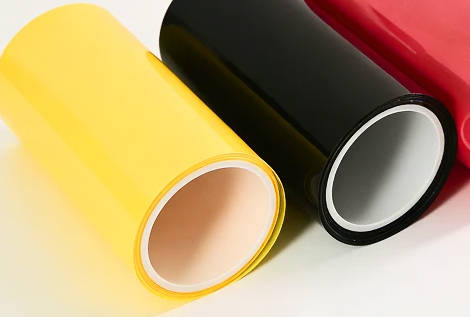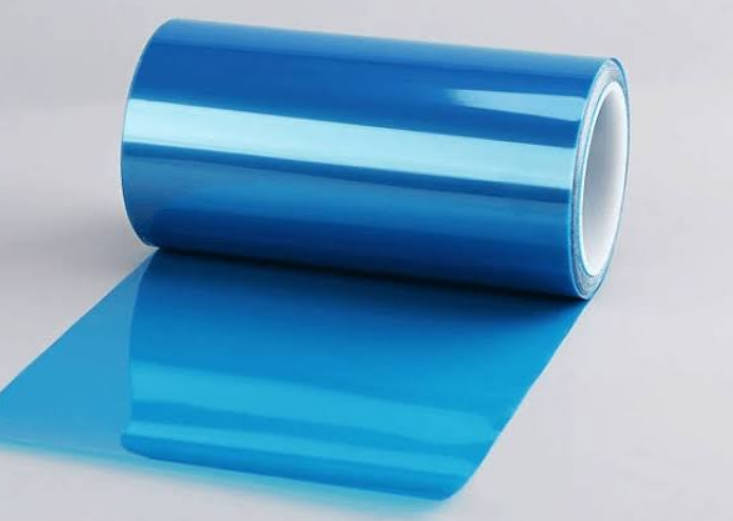
Selecting between a 1:2 and 1:3 differential release ratio in a dual-side Release Film depends on whether your converting line generates enough mechanical stress to exceed the pre-delamination threshold—the point where the tight side loses its grip on the adhesive before the easy side separates cleanly. A 1:2 ratio works well for moderate-speed lamination, thicker substrates, and low-tack adhesives where unwinding tension remains controlled. A 1:3 ratio becomes necessary for high-speed rotary die-cutting, thin or flexible carriers, and high-tack adhesives where peel shock or tight-radius bending would otherwise cause premature separation, tunneling, or liner inversion.
Because static laboratory peel values do not reflect dynamic line forces, engineers must evaluate both the relative ratio and the absolute release force gap between the two coated sides. This guide breaks down how 1:2 and 1:3 ratios behave under converting stress, what drives the pre-delamination threshold, and how to specify and validate a dual-side release film before full-scale production.
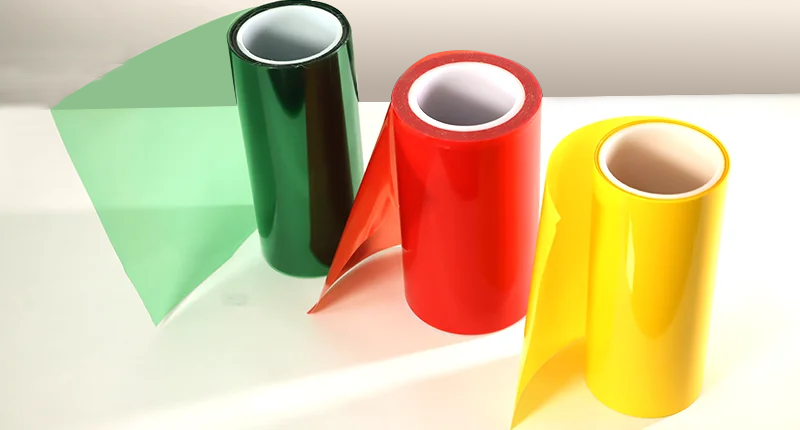
Defining Differential Release Ratios: What 1:2 and 1:3 Mean in Practice
A differential release film is coated with silicone formulations of differing release values on opposite sides of the base carrier—typically polyester (PET) or polyolefin film—creating an easy-release side (primary liner) and a tight-release side (secondary liner). The differential release ratio expresses the mathematical relationship between the peel force required to remove the easy side and the peel force required to remove the tight side under standardized testing conditions, such as FINAT FTM 3 or ASTM D3330 at a 180-degree peel angle and 300 mm/min speed.
- 1:2 Differential Ratio: The tight side requires approximately twice the peel force of the easy side (for example, 10 g/25mm on the easy side paired with 20 g/25mm on the tight side).
- 1:3 Differential Ratio: The tight side requires approximately three times the peel force of the easy side (for example, 10 g/25mm on the easy side paired with 30 g/25mm on the tight side).
Why Absolute Force Delta Matters as Much as the Ratio
Relying solely on a ratio without checking the absolute gram-force separation (delta) can mislead specification decisions. Both a 3 g vs. 6 g pairing and a 25 g vs. 50 g pairing represent a 1:2 ratio, yet their resistance to accidental separation is vastly different:
- Low-Force Zone (e.g., 3 g vs. 6 g): The absolute difference is only 3 g/25mm. Even minor tension spikes during roll unwinding or slitting can overcome that 3 g margin, causing the adhesive to lift off the tight side prematurely.
- Mid-to-High Force Zone (e.g., 25 g vs. 50 g): The absolute difference is 25 g/25mm. That larger mechanical buffer absorbs routine web handling fluctuations, making a 1:2 ratio far more stable in this range than in the ultra-light range.
Anatomy of the Pre-Delamination Threshold
The pre-delamination threshold is the critical mechanical limit at which dynamic separating forces on a converting line exceed the holding force of the tight-release side. When a web crosses this threshold, the adhesive partially or completely detaches from the tight side while the easy side is still being peeled—or even before the roll reaches the die-cutting station.
Four dynamic production variables compress your effective release ratio and push a liner toward pre-delamination:
- Peel Speed Sensitivity: Silicone release force is velocity-dependent. As line speed increases from a laboratory test rate of 300 mm/min to production converting speeds of 30–100+ m/min, the release force of the easy side often climbs faster than that of the tight side. A liner rated at 1:2 on a bench tester can narrow to an effective 1:1.3 ratio at high speed, triggering release inversion where the adhesive stays with the easy side instead of the tight side.
- Winding Tension and Roll Curvature: When double-sided transfer tape or film tape is wound onto a core, the outer liner travels a slightly longer arc than the inner liner. High rewind tension or tight core diameters create shear stress across the adhesive layer, causing the liner to buckle and form air pockets known as tunneling.
- Adhesive Rheology and Mass: Soft, thick, or high-tack pressure-sensitive adhesives (PSAs) deform easily under peel stress. Instead of transferring clean tensile force to separate the easy-release interface, the adhesive stretches, dissipating energy and pulling away from the tight side.
- Carrier Stiffness (Bending Modulus): Thin-gauge carriers (such as 23 μm or 36 μm PET) flex sharply over small idler rollers and tight peel plates. High localized bending stress initiates edge lifting on the tight side if the differential gap is too narrow.
1:2 vs. 1:3 Differential Release Film: Side-by-Side Engineering Comparison
Choosing between 1:2 and 1:3 involves balancing converting security against end-user handling and chemical stability. Increasing the tight-side release force to achieve a 1:3 ratio typically requires adding higher levels of controlled release additives (CRAs)—silicate resins that raise peel resistance—to the tight-side silicone formulation.
When evaluating a 1:3 differential release ratio, engineers should pay particular attention to silicone transfer and release drift. If the tight side relies on an aggressive CRA formulation that is not fully cured, trace silicone oligomers can migrate onto the adhesive surface, reducing final bond strength on low-surface-energy substrates. Working with a manufacturer experienced in differential silicone release film helps ensure both silicone coatings are properly cross-linked and thermally stabilized.
Decision Framework: How to Select the Right Ratio for Your Application
Use the following four-step sequence to narrow down the appropriate differential release ratio before ordering trial rolls:
- Evaluate Adhesive Tack and Coat Weight: Start with the adhesive system. Thin, medium-tack acrylic adhesives (under 50 μm) generally track cleanly on a 1:2 ratio provided the easy side is light enough. High-tack acrylics, synthetic rubber adhesives, and thick transfer tapes (above 80–100 μm) exert higher peel resistance and typically require at least a 1:3 ratio to prevent the adhesive from lifting during matrix stripping.
- Assess Carrier Rigidity and Thickness: Determine whether the tape has an internal carrier (such as PET, tissue, or foam) or is an unsupported transfer adhesive. Unsupported transfer tapes lack internal structural stiffness and concentrate peel stress directly at the tight-liner interface, making a 1:3 ratio the safer baseline.
- Match to Converting Speed and Geometry: Inspect the tightest roller radius and sharpest peel plate angle on your converting line. Flatbed die-cutting and sheet-fed lamination impose lower peel shock and frequently succeed with 1:2. Continuous rotary die-cutting with narrow waste matrices demands 1:3 to keep small die-cut parts anchored to the tight liner while the surrounding waste web is stripped away.
- Verify Final Assembly Ergonomics: Confirm how the end user will remove the tight-side liner. If the converted part is delicate, thin, or applied manually by operators wearing gloves, test whether the tight-side force in a 1:3 construction can be peeled without distorting the die-cut geometry.
Application Selection Matrix
For specialized constructions—such as ultra-light easy release paired with heavy tight release, or combinations requiring customized carrier thicknesses—reviewing custom release film solutions with your supplier allows you to tailor exact gram-force targets rather than relying solely on standard off-the-shelf ratios.
Specifying and Testing Differential Release Film Before Production
A differential ratio specification on paper only protects your line if both buyer and supplier measure release force under identical conditions. Before approving a bulk order of Release Film, confirm the following technical parameters and conduct a structured line trial:
- Align Test Method Variables: Specify the exact test standard (e.g., FINAT FTM 3 or ASTM D3330), test tape used for baseline qualification, dwell time, temperature, humidity, and peel speed. Request high-speed peel curve data (e.g., 10 m/min to 30 m/min) alongside standard 300 mm/min values if your converting line runs at high speed.
- Define Acceptable Tolerance Windows: Confirm the minimum and maximum gram-force limits for both the easy side and the tight side. Verify that the worst-case overlap—the highest possible easy-side value paired with the lowest possible tight-side value within manufacturing tolerances—still maintains a safe differential gap above your pre-delamination threshold.
- Check Subsequent Adhesion (SAS): Require Subsequent Adhesion Strength testing on the adhesive after contact with both the easy and tight silicone surfaces to verify that no silicone transfer degrades final bonding performance.
- Run Accelerated Aging Trials: Store laminated sample rolls at elevated temperature and pressure (subject to your industry’s specific aging protocol) to confirm that release force drift does not narrow the differential ratio over time.
- Establish Side-Identification Controls: On clear PET films, operators cannot visually distinguish the easy side from the tight side by surface appearance alone. Confirm roll winding orientation (easy side wound in vs. wound out) and specify tinting, edge marking, or core labeling with your supplier to prevent reversed lamination on the press.
Key Takeaways
- Ratio vs. Absolute Force Delta: A 1:2 or 1:3 differential release ratio must always be evaluated alongside the absolute gram-force difference between both sides; low-force pairings (e.g., 3 g vs. 6 g) have minimal mechanical buffer against web tension spikes compared to mid-force pairings (e.g., 20 g vs. 40 g).
- Dynamic Speed Shrinks the Margin: Because silicone release force increases non-linearly with peel velocity, high-speed rotary die-cutting can narrow an effective 1:2 ratio toward 1:1.3, triggering pre-delamination or release inversion.
- When to Choose 1:2: Best suited for flatbed die-cutting, wider web lamination, medium-tack adhesives, and applications where effortless secondary liner removal is critical.
- When to Choose 1:3: Necessary for high-speed rotary converting, unsupported transfer adhesives, thick foam tapes, and narrow-matrix waste stripping where tight-side anchoring is critical.
- Tolerance Overlap Verification: Always verify that the upper tolerance limit of the easy side and the lower tolerance limit of the tight side still leave a safe margin above your line’s pre-delamination threshold.
FAQ
Can a 1:2 differential release ratio work for high-speed rotary die-cutting?
In most high-speed rotary die-cutting lines, a 1:2 ratio carries a high risk of pre-delamination unless the absolute release force gap is wide (for example, 25 g vs. 50 g) and the adhesive is thin and low-tack. High-speed matrix stripping generates acute peel shock that increases the easy side’s dynamic release force, making a 1:3 ratio the safer starting point for rotary converting.
Why does pre-delamination happen weeks after lamination even when initial release ratios were 1:3?
Over time, pressure-sensitive adhesives wet out more thoroughly onto both silicone surfaces, and trace silicone or adhesive components may interact. If the easy side experiences faster release force climb during storage than the tight side—or if trapped residual winding stress causes the roll to telescope—the effective differential gap narrows, leading to delayed tunneling or pre-delamination.
How can operators visually tell the easy side from the tight side on a clear PET differential release film?
Visual distinction on clear films is difficult without built-in identification features. Standard industry methods include specifying winding orientation on the core label (such as easy side wound outward), applying a subtle optical tint to the carrier or coating, or requesting edge-printed identification marks. Confirm available identification options directly with your release film supplier.
What is the difference between differential release film and dual-liner systems?
A differential release film uses a single carrier coated on both sides with different release forces, saving material cost and roll thickness in wound double-sided tapes. A dual-liner system uses two separate single-sided release liners sandwiching the adhesive, which allows completely different base materials or thicknesses on each side but increases raw material and lamination complexity.