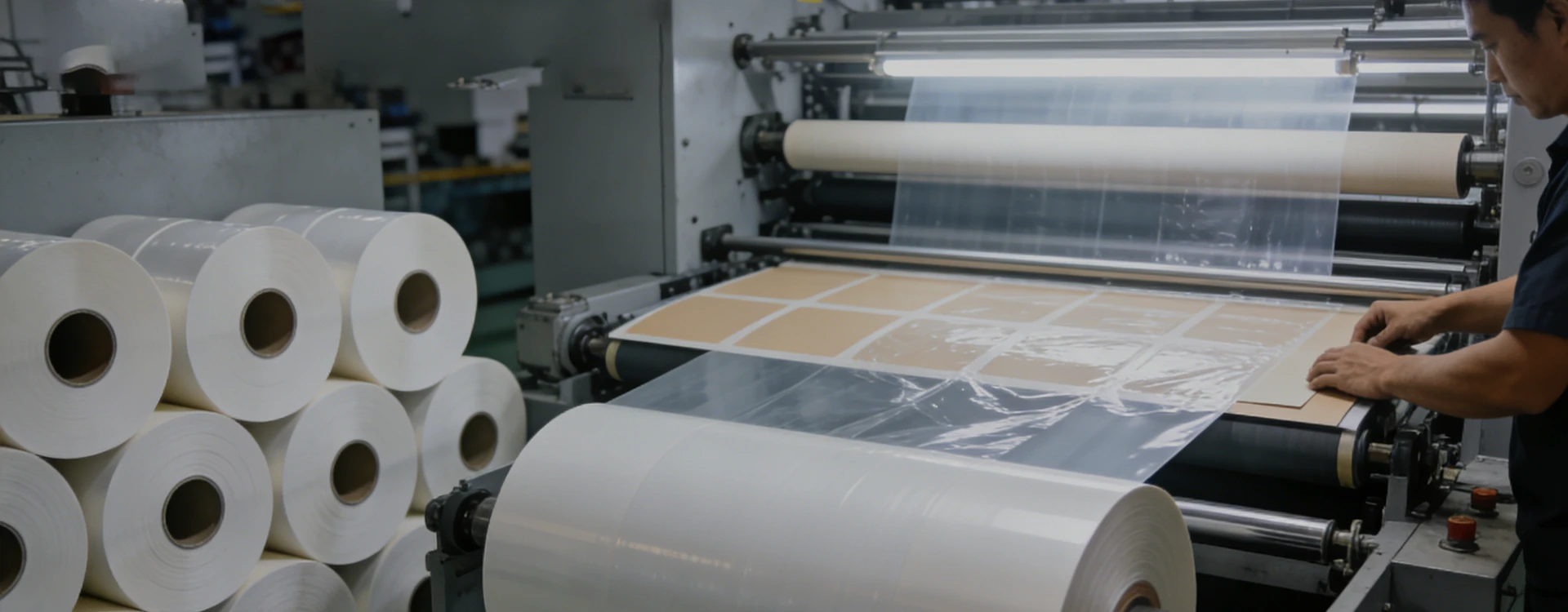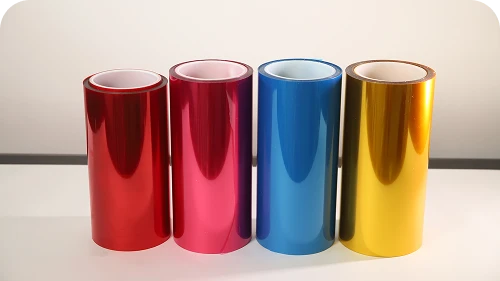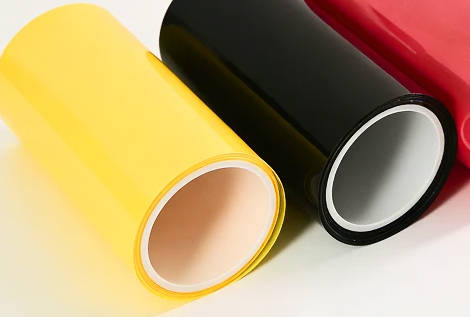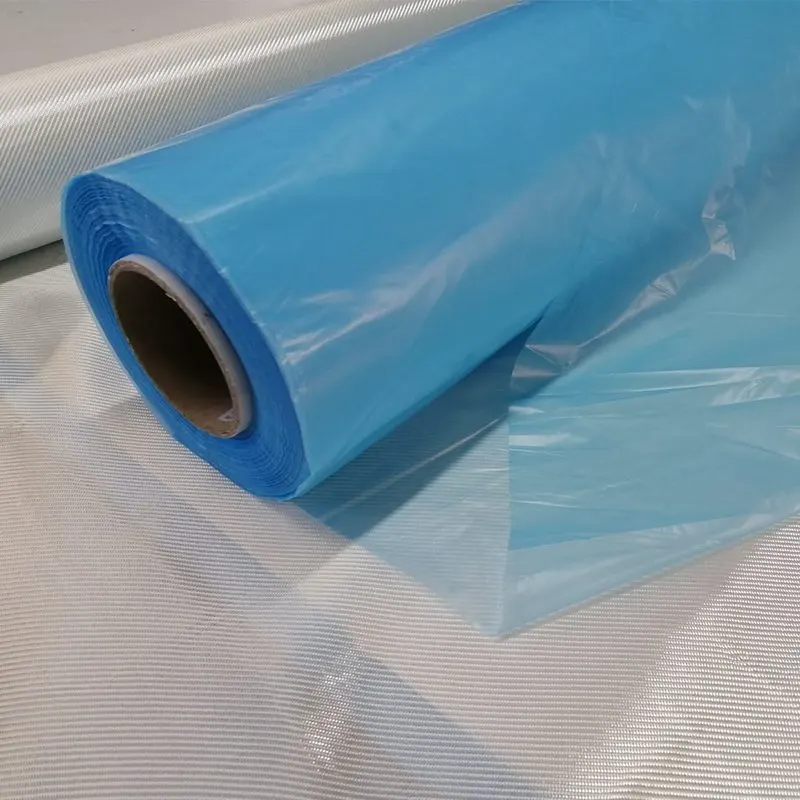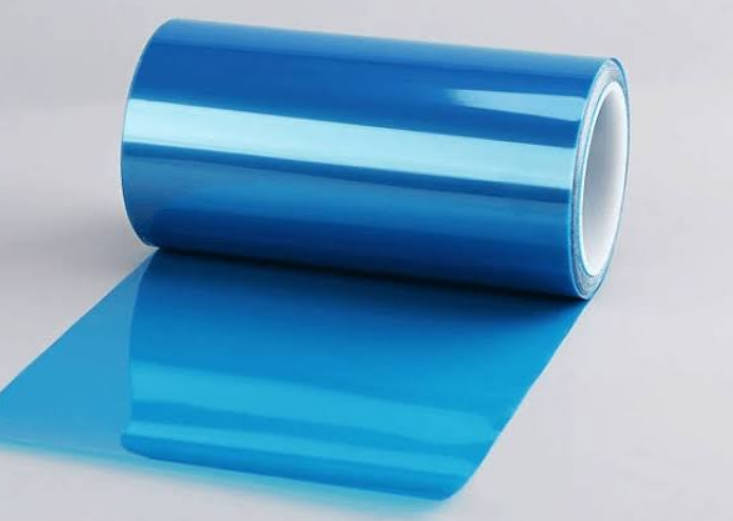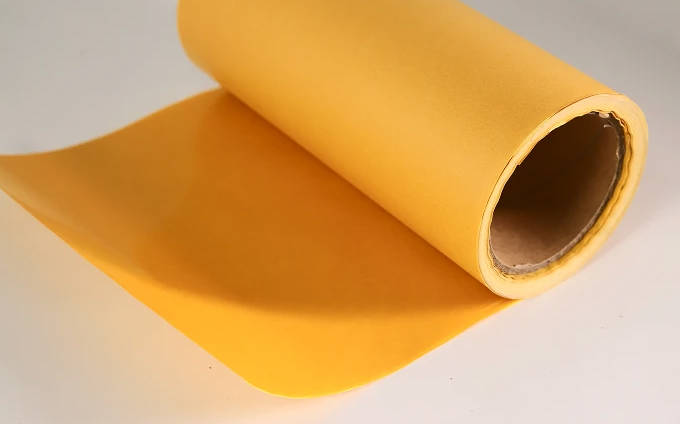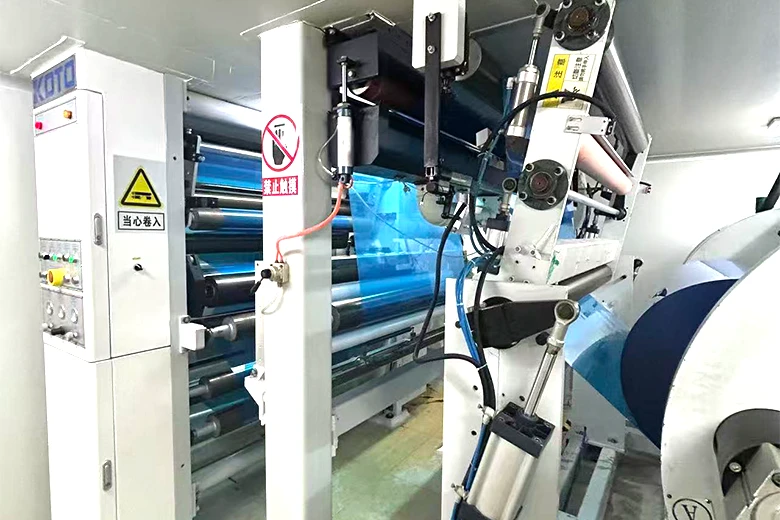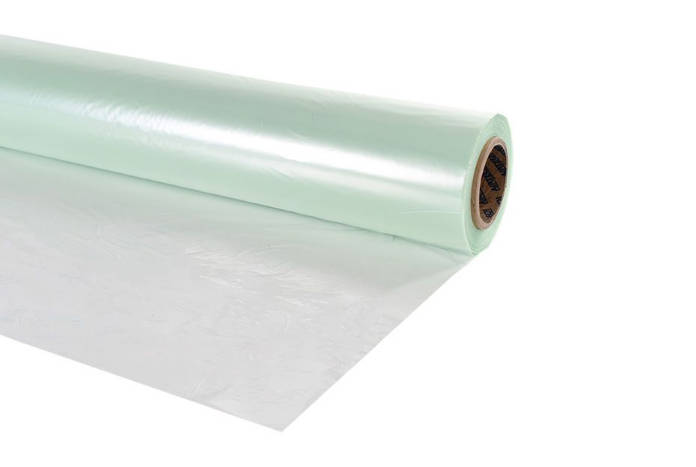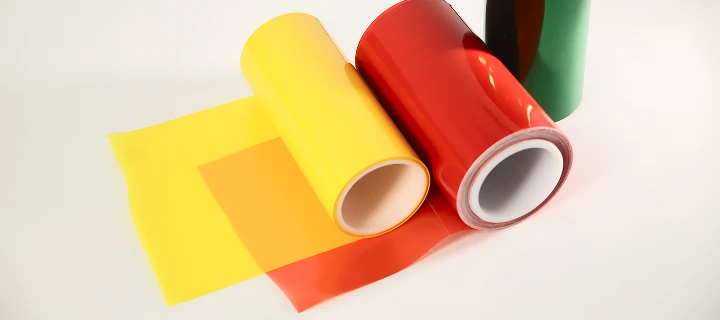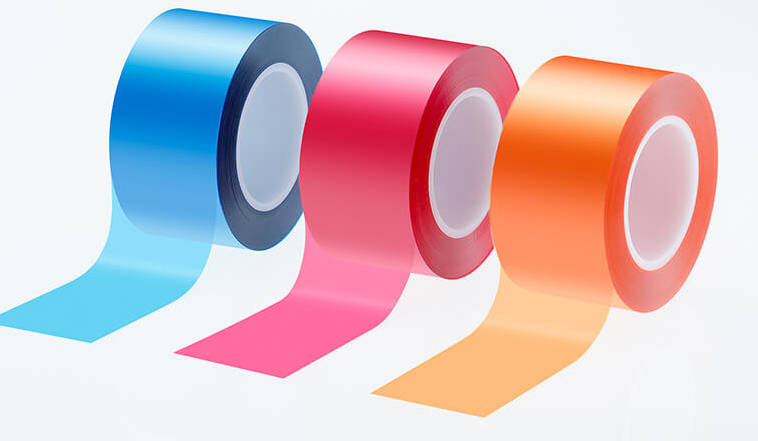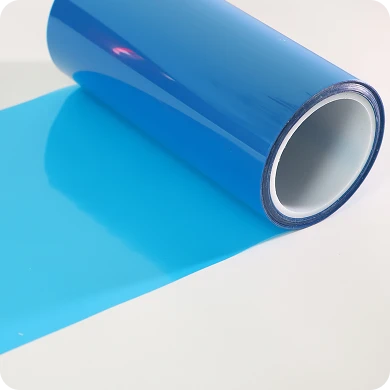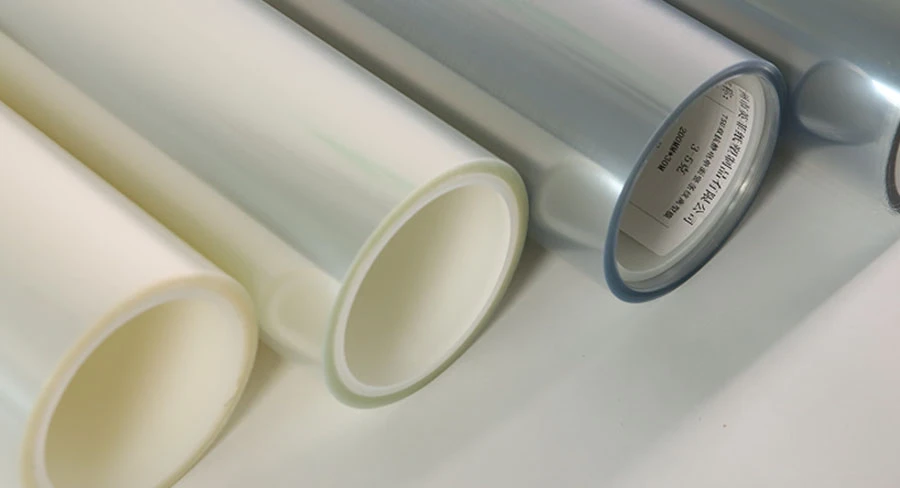
Choosing the right Release Film thickness is an engineering balance between web stability, thermal resistance, die-cutting support, and unit cost. Across industrial converting lines—primarily using polyester (PET) substrates—available gauges span from ultra-thin 12μm carrier films up to rigid 250μm structural liners. Thinner gauges reduce material cost per square meter and maximize roll length, while thicker gauges prevent web stretching, oven shrinkage, and liner cut-through during precision converting.
To select an optimal gauge without over-specifying or causing line failures, buyers and engineers must evaluate three primary factors:
- Mechanical tension and oven heat exposure during silicone or adhesive coating.
- Compressive rigidity required during rotary or flatbed die-cutting.
- Conformability and roll-handling constraints in downstream lamination or molding.
This guide breaks down the 12μm–250μm thickness spectrum into four functional tiers, compares their processing boundaries, and provides a step-by-step selection framework for B2B converting and procurement teams.
Why Release Film Thickness Is a Process Decision, Not Just a Material Cost
In B2B procurement, specifying a thinner liner often appears to be the most direct way to lower square-meter material costs. However, in adhesive coating, lamination, and precision converting, film gauge acts as a structural component of the manufacturing line. When the substrate is too thin for the mechanical or thermal load applied to it, yield losses from web breaks, wrinkling, and scrap quickly outweigh raw material savings.
Conversely, selecting an excessively thick liner increases purchase cost, reduces linear meters per roll—forcing more frequent roll changes and splice downtime—and can impair conformability when laminating onto curved or flexible parts. Evaluating industrial PET Release Film specifications therefore requires balancing physical stiffness against process economics.
| Selection Error | Immediate Line & Converting Impact | Economic & Operational Consequence |
|---|---|---|
| Under-Gauging (Too Thin) | Web necking, longitudinal wrinkling under high tension, thermal distortion in curing ovens, and die-strike cut-through during kiss-cutting. | Higher scrap rates, adhesive transfer onto anvil rollers, unscheduled line stops, and tight tension-control requirements. |
| Over-Gauging (Too Thick) | Excess stiffness during winding, larger minimum core diameter requirements, and poor conformability on contoured substrates. | Higher cost per square meter, fewer linear meters per roll, higher freight weight, and more frequent roll changeovers. |
The 12μm–250μm Gauge Spectrum: Four Functional Tiers
Standard industrial Release Film gauges—commonly manufactured in nominal thicknesses such as 12μm, 19μm, 23μm, 25μm, 36μm, 50μm, 75μm, 100μm, 125μm, 188μm, and 250μm—divide naturally into four functional categories. Each tier serves distinct processing physics and downstream applications.
| Thickness Tier (μm / mil) | Core Mechanical & Thermal Profile | Primary Industrial Applications | Key Processing Limitations |
|---|---|---|---|
| Ultra-Thin 12μm – 25μm (~0.48 – 1.0 mil) | High conformability, low bending stiffness, maximum linear yield per roll, and sensitivity to heat and tension spikes. | MLCC ceramic sheet casting, ultra-thin double-sided tapes, thermal transfer ribbons, and flexible electronics carriers. | Requires precision closed-loop tension control; prone to wrinkling and thermal shrinkage under high oven temperatures. |
| Standard Workhorse 36μm – 50μm (~1.4 – 2.0 mil) | Balanced tensile strength, predictable web tracking, moderate heat resistance, and favorable cost-to-performance ratio. | Pressure-sensitive adhesive (PSA) tapes, industrial labels, medical dressings, and general protective laminations. | Insufficient anvil rigidity for deep or high-pressure kiss-cutting of dense foams and thick adhesive layers. |
| Medium-Heavy 75μm – 100μm (~3.0 – 4.0 mil) | High dimensional stability, strong resistance to die penetration, and flat sheet-like handling after cutting. | Optical clear adhesives (OCA), FPC stiffeners, graphite heat-spreader die-cutting, and multi-pass registration. | Higher square-meter cost; reduced roll length requires more frequent splicing on continuous coating lines. |
| Heavy-Duty 125μm – 250μm (~5.0 – 10.0 mil) | Rigid board-like support, superior surface flatness transfer, and high resistance to mechanical deformation. | Carbon fiber prepreg molding, PCB/CCL hot-press lamination, heavy mastic sheets, and structural composite casting. | Cannot be wound tightly onto small cores; requires larger roll diameters and heavier handling equipment. |
Depending on specific formulation and coating equipment capabilities, YINGFEI supplies silicone-coated substrates across multiple thickness tiers—visit the product page to review YINGFEI’s full range of Release Film gauges and confirm exact stock availability for your target micron specification.
Ultra-Thin Gauges (12μm–25μm): Maximizing Yield and Conformability
Ultra-thin gauges—spanning 12μm, 15μm, 19μm, 23μm, and 25μm—are engineered for processes where liner mass must be minimized or where the carrier film must conform tightly without distorting delicate coated layers.
In multilayer ceramic capacitor (MLCC) manufacturing, 12μm to 25μm PET carriers support ultra-thin ceramic slurry casting while maximizing roll length for uninterrupted production runs. Similarly, ultra-thin double-sided acrylic tapes and micro-electronic transfer adhesives rely on 19μm–25μm liners to keep total laminate thickness low and allow easy dispensing onto compact assemblies.
Line-Readiness Requirements for 12μm–25μm Liners:
- Closed-Loop Tension Control: Unwind and rewind stations must maintain low, uniform web tension; sudden tension spikes cause irreversible necking or longitudinal troughs.
- Roller Alignment and Surface Finish: Even minor idler roller misalignment or surface buildup triggers diagonal wrinkling in films below 25μm.
- Controlled Thermal Profiles: Because thin PET film has low thermal mass, curing oven temperatures and air-impingement velocities must be calibrated to prevent edge curl and cross-web shrinkage.
Standard Workhorse Gauges (36μm–50μm): Balancing Tension Stability and Economics
The 36μm to 50μm range—particularly 36μm (38μm in some regional standards) and 50μm—represents the highest-volume tier across general tape coating and label converting. Stepping up from 25μm to 36μm or 50μm significantly increases cross-directional stiffness, allowing the web to resist air-bar flutter inside hot-air flotation ovens and track cleanly at higher coating speeds.
For standard pressure-sensitive adhesive (PSA) transfer tapes, industrial labels, and hygiene or medical wound-care laminates, 50μm provides ample tensile margin without incurring the material cost penalty of heavy-gauge liners.
| Parameter | 36μm (1.4 mil) Release Film | 50μm (2.0 mil) Release Film |
|---|---|---|
| Cost & Roll Yield | Lower cost per square meter; more linear meters per outer roll diameter. | Slightly higher unit cost; fewer meters per roll than 36μm. |
| Oven & Tension Stability | Suitable for moderate oven temperatures and well-maintained web paths. | Higher resistance to web wander, thermal curl, and tension fluctuations. |
| Die-Cutting Support | Best for thin face stocks and shallow kiss-cuts with tight depth tolerances. | Better tolerance for standard rotary kiss-cutting without liner scoring. |
Medium-Heavy Gauges (75μm–100μm): Precision Die-Cutting and Dimensional Control
When converting shifts from continuous roll coating to multi-station rotary or flatbed die-cutting, 75μm and 100μm liners become essential. During kiss-cutting, the die blade penetrates through the face material and adhesive layer, stopping precisely at the silicone-coated surface of the release liner. A 75μm or 100μm liner acts as a firm, uniform anvil cushion that absorbs minor press deflection without allowing the blade to sever the carrier web.
These gauges also maintain tight dimensional registration during multi-step lamination, such as marrying optical clear adhesives (OCA), shielding films, or synthetic graphite sheets in smartphone and display assembly.
| Precision Converting Application | Recommended Gauge | Primary Functional Reason |
|---|---|---|
| Optical Clear Adhesive (OCA) Converting | 75μm – 100μm | Prevents micro-indentation and orange-peel surface distortion from transferring into the optical adhesive layer. |
| Die-Cut Foam & Thick Rubber Gaskets | 75μm – 100μm | Absorbs high die-cutting compression forces without liner rupture or adhesive squeeze-out deformation. |
| FPC Stiffeners & Electronic Shielding | 75μm – 100μm | Provides flat, sheet-like rigidity for automated pick-and-place vacuum nozzles after part singulation. |
Selecting high-rigidity Release Film for precision die-cutting reduces press setup time and protects expensive rotary dies from premature wear caused by liner bottom-out.
Heavy-Duty Gauges (125μm–250μm): Structural Support and High-Temperature Molding
At 125μm, 150μm, 188μm, and 250μm, a Release Film functions less like a flexible wrapping web and more like a reusable or single-use structural caul sheet. In aerospace and automotive composites, heavy-gauge liners carry tacky carbon fiber or fiberglass prepregs during layup and vacuum-bag molding, preventing resin bleed-through while imparting a smooth surface finish to the cured composite part.
In printed circuit board (PCB) and copper-clad laminate (CCL) manufacturing, thick PET or specialized high-temperature release films separate stacked boards during hydraulic hot-pressing cycles. Heavy gauges are also used as backing carriers for thick bitumen, butyl rubber, and structural vibration-damping sheets where thinner films would wrinkle or tear under product weight.
Handling and Winding Considerations for 125μm–250μm Films:
- Core Diameter Selection: Films at 188μm and 250μm resist tight bending radii; winding them onto standard 3-inch (76mm) cores can induce permanent core-set curl. Using 6-inch (152mm) cores is standard practice.
- Splice Integrity: Heavy-gauge webs exert substantial tension forces at splice joints; high-shear splicing tapes and butt-splicing techniques are required to prevent splice failure during unwinding.
- Sheeting vs. Roll Format: At 250μm, converters frequently sheet the liner into flat pads rather than supplying continuous rolls, depending on downstream press geometry.
Beyond Nominal Thickness: Gauge Tolerance and Co-Factors That Affect Performance
Nominal thickness alone does not guarantee converting consistency. Cross-web gauge variation—commonly referred to as thickness tolerance or profile uniformity—directly affects high-precision converting. If a nominally 50μm liner varies significantly across its width, a rotary die set to a fixed clearance will either fail to cut cleanly through the adhesive in thin zones or score deeply into the liner in thick zones, causing web breaks during matrix stripping. Exact thickness tolerances vary by base film grade and manufacturing standard and should be confirmed with the supplier prior to production trials.
Before finalizing a thickness specification, engineers should evaluate three co-factors alongside gauge:
- Thermal Shrinkage Rate: Base PET films exhibit different machine-direction (MD) and transverse-direction (TD) shrinkage percentages depending on whether they are standard grade or heat-stabilized (low-shrinkage) grade.
- Release Force and Coating Architecture: A thicker film does not alter release force; silicone chemistry must still be matched to the adhesive mass—whether light, medium, tight, or differential (double-sided) release is needed.
- Surface Cleanliness and Optical Clarity: For optical and electronic cleanroom applications, haze levels, defect counts, and anti-static coatings matter just as much as micron thickness.
Step-by-Step Gauge Selection Framework for B2B Buyers
Use the following four-step workflow to narrow down the right thickness tier before requesting trial material:
- Assess Mechanical and Die-Cutting Loads: Determine whether the liner only supports liquid coating and simple slitting (36μm–50μm) or must withstand high-pressure kiss-cutting and automated pick-and-place handling (75μm–100μm+).
- Verify Thermal Exposure and Web Path: Check maximum oven or press temperatures and line tension settings. If thin gauges (12μm–25μm) risk stretching or curling on your existing equipment, step up one gauge tier or specify heat-stabilized base film.
- Evaluate Product Geometry and Winding Needs: Confirm whether the finished laminate must wrap around tight curves (favoring 12μm–36μm) or remain flat as rigid sheets (favoring 100μm–250μm).
- Calculate Total Converting Cost: Compare unit price per square meter against linear meters per roll, changeover frequency, and expected scrap reduction rather than comparing raw film price alone.
B2B RFQ & Sample Request Checklist: When contacting a manufacturer for technical recommendations or trial rolls, prepare the following details:
- Target nominal thickness (in μm or mil) and acceptable tolerance range
- Adhesive chemistry (acrylic, silicone, rubber, hot-melt, or resin prepreg)
- Required release force value (e.g., g/25mm or g/inch) and single- vs. double-sided coating
- Maximum processing temperature and dwell time
- Required roll width, roll length, and core inner diameter (3-inch or 6-inch)
To validate gauge performance directly on your equipment, explore YINGFEI’s Release Film specifications and request sample rolls tailored to your converting line requirements.
Key Takeaways
- Thickness governs process stability, not just price: Selecting a gauge that is too thin causes web stretching, oven shrinkage, and die cut-through, whereas over-gauging inflates material cost and reduces roll length.
- 12μm–25μm maximizes yield and conformability: Ideal for MLCC casting and ultra-thin tapes, provided the converting line has precision low-tension control and tight roller alignment.
- 36μm–50μm is the general-purpose standard: Offers the most practical balance of web tracking stability, heat resistance, and square-meter cost for standard PSA tapes and labels.
- 75μm–100μm anchors precision die-cutting: Provides the compressive anvil rigidity required for kiss-cutting optical adhesives (OCA), foams, and electronic components without liner rupture.
- 125μm–250μm delivers structural support: Built for composite prepreg layup, PCB hot-pressing, and heavy sheet carriers where board-like flatness and larger winding cores are mandatory.
Frequently Asked Questions About Release Film Thickness
How do I convert release film gauge between microns (μm), mils, and gauge?
One mil equals one-thousandth of an inch, which converts to 25.4 microns (μm)—commonly rounded to 25μm in industrial trade—and 100 gauge. Therefore, a 50μm release film is approximately 2.0 mil (200 gauge), a 75μm film is approximately 3.0 mil (300 gauge), and a 100μm film is approximately 4.0 mil (400 gauge). Always specify exact microns (μm) on purchase orders to avoid rounding discrepancies between metric and imperial standards.
Can switching from a 50μm to a 36μm release film reduce my total converting cost?
Yes, down-gauging from 50μm to 36μm reduces square-meter material cost and increases linear meters per roll by roughly 25% to 35% for the same outer roll diameter, cutting splice downtime and freight volume. However, total cost decreases only if your coating oven and unwind tension controls can run 36μm smoothly without causing web wrinkles, edge curl, or increased scrap rates.
What release film thickness is best for kiss-cutting thin foam or double-sided tapes?
A 75μm or 100μm PET release film is generally recommended for kiss-cutting compressible foams and dense double-sided tapes. Because foam compresses under rotary or flatbed die pressure before severing, a thicker, more rigid liner prevents the blade tip from punching through the carrier film or leaving deep anvil impressions that complicate automated part dispensing.
Does thicker PET release film always have lower thermal shrinkage?
No. While thicker PET film resists mechanical stretching and air-bar flutter better inside a curing oven, inherent thermal shrinkage is primarily determined by the base film’s biaxial stretching and heat-setting process during resin extrusion, rather than thickness alone. For high-temperature curing or lamination cycles, specify a low-shrinkage (heat-stabilized) PET grade in addition to choosing an appropriate thickness.