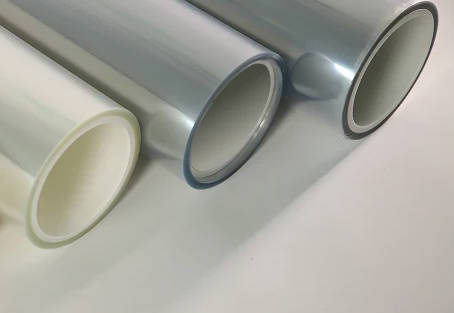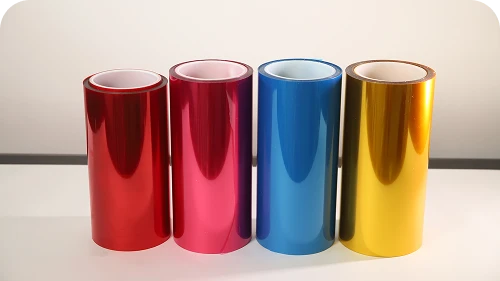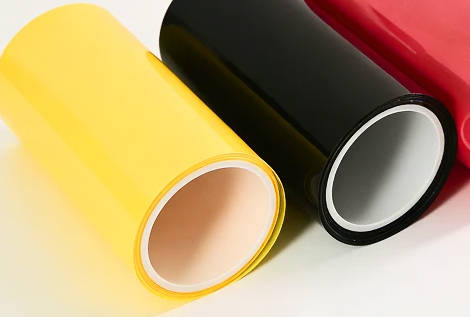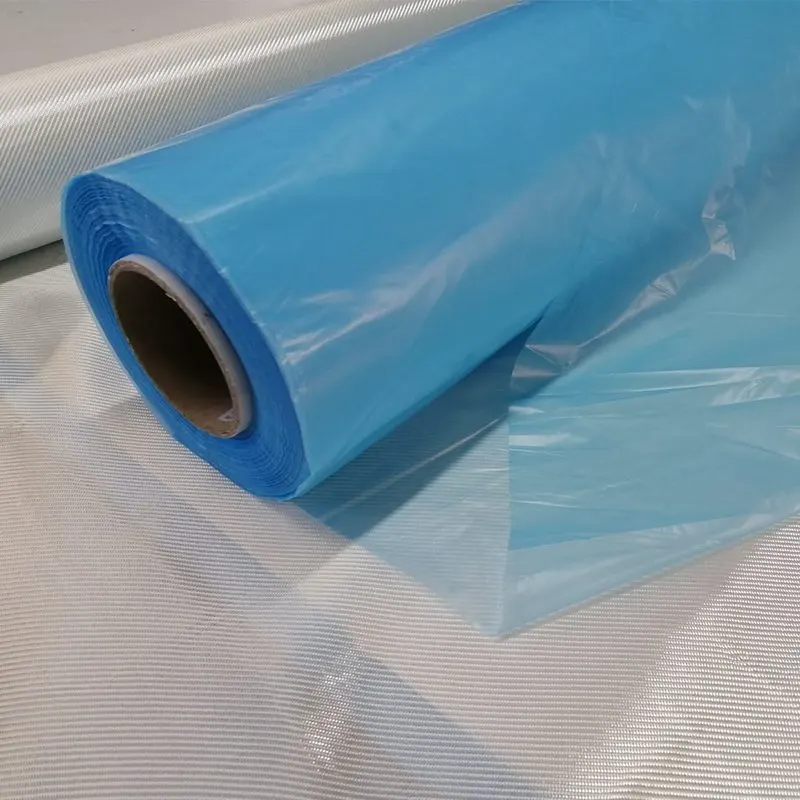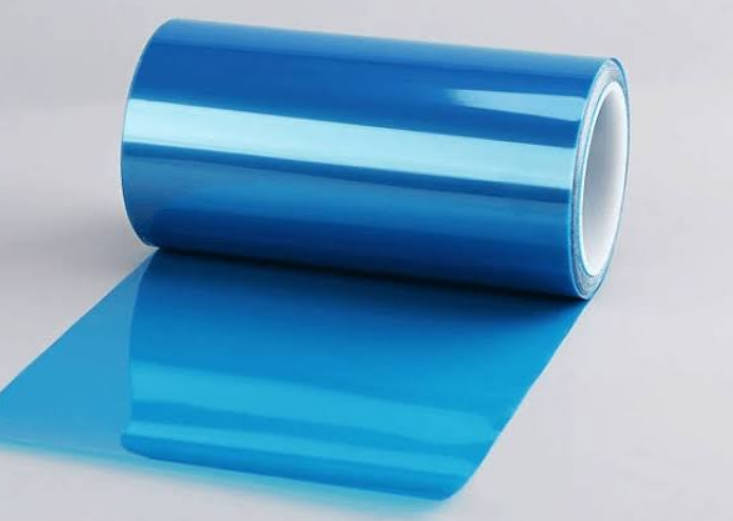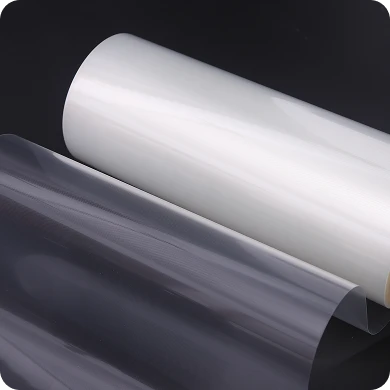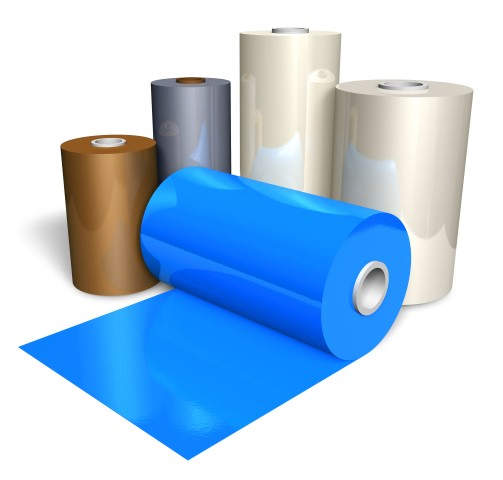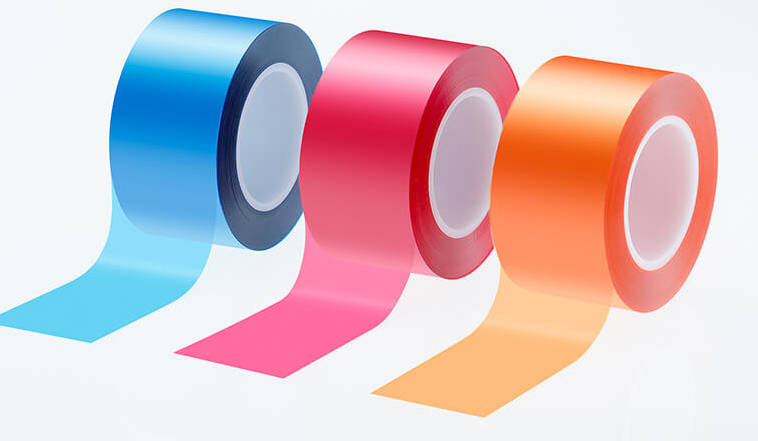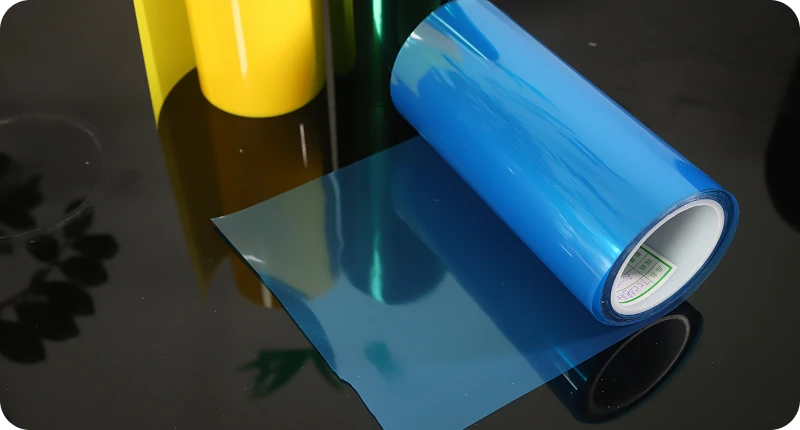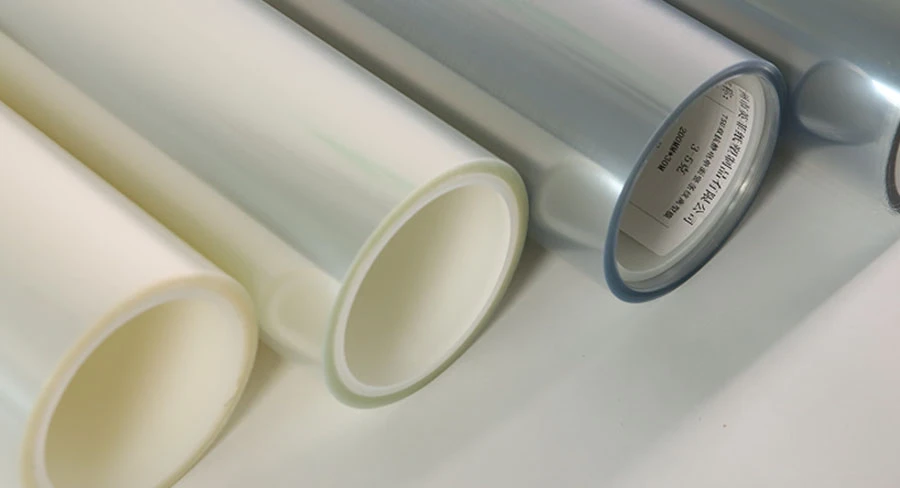
Maintaining print registration accuracy on narrow-web label presses running a Release Film requires reducing baseline web tension compared to paper substrates, isolating thermal expansion inside drying zones, and verifying the liner’s longitudinal tensile modulus and thermal shrinkage before production. Unlike glassine paper, polymeric liners—most commonly polyethylene terephthalate (PET) or polypropylene (PP)—exhibit viscoelastic elongation under sustained pulling forces and dimensional distortion when exposed to UV or hot-air curing heat. When press tension zones are calibrated to match the mechanical limits of the film substrate, converters can prevent progressive registration drift, web wrinkling, and die-cutting misalignment at commercial press speeds.
This technical guide explains how film liners respond to mechanical and thermal stress on narrow-web flexographic and hybrid presses, how to manage tension across individual press zones, which material specifications govern dimensional stability, and how to diagnose registration defects on the pressroom floor.
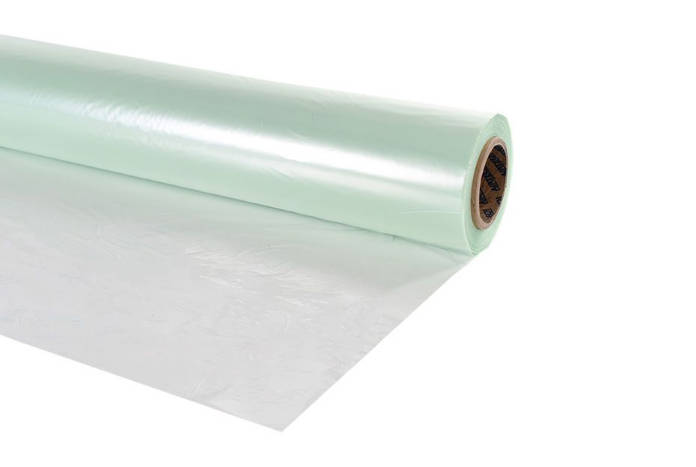
Why Film Liners Behave Differently Under Tension Than Paper Liners
Film liners require lower baseline tension and stricter thermal management than paper liners because synthetic polymers stretch elastically under load and expand when heated, whereas cellulose-based glassine resists elongation until its breaking point. Applying standard paper tension profiles to a PET release liner causes immediate elastic stretching between print stations, leading to color-to-color misregistration and die-cut pitch errors once the web relaxes at the rewind.
Three physical behaviors separate film substrates from paper liners during narrow-web converting:
- Viscoelastic Elongation Under Sustained Load: When a polymeric film is pulled across multiple print decks, it undergoes both immediate elastic stretch and time-dependent creep. If tension exceeds the material’s yield threshold—or if tension fluctuates between stations—the web pitch changes dynamically between the first print unit and the rotary die station.
- Thermal Expansion and Shrinkage: Narrow-web presses subject the web to intense localized heat from UV lamps, LED curing arrays, or hot-air impingement dryers. Polymeric films expand when heated and contract upon cooling. If the film possesses high residual internal stress from manufacturing, heat exposure triggers irreversible thermal shrinkage, permanently shortening the repeat length.
- Low Backside Coefficient of Friction (COF): Film liners feature smooth surfaces that offer significantly less friction against idler rollers and nip rolls than supercalendered paper. Insufficient wrap angles or low nip pressure allow the web to micro-slip across rollers, creating erratic tension feedback and lateral web wander.
| Performance Factor | Paper Liners (Glassine / SCK) | Film Liners (PET / PP Release Film) | Impact on Narrow-Web Registration |
|---|---|---|---|
| Tensile Modulus & Stretch | High stiffness; minimal elastic stretch before sudden web break | Lower modulus (especially PP); prone to gradual elastic elongation under high pull | Excessive tension stretches the repeat length between print stations |
| Thermal Response in Dryers | Minimal thermal expansion; loses moisture and may curl or become brittle | Expands under UV/hot-air heat; shrinks if internal film stress is poorly stabilized | Causes progressive pitch drift between heated curing zones and cooled stations |
| Moisture Sensitivity | Absorbs ambient humidity, causing cross-direction (CD) expansion | Hydrophobic; virtually unaffected by ambient pressroom humidity changes | Film provides superior environmental stability once thermal load is controlled |
| Surface Friction (COF) | Higher surface roughness provides natural grip on idler rollers | Smooth backside increases risk of roller slippage at high speeds | Requires proper nip roller pressure and high-traction roller surfaces |
| Caliper Uniformity | Slight natural fiber thickness variation across the web width | Tight gauge profile when extruded under controlled conditions | Gauge bands in film create localized slack edges (baggy lanes) and wrinkling |
Selecting a substrate engineered with balanced biaxial orientation and thermal stabilization helps minimize these mechanical shifts. Converters evaluating synthetic liners for multi-color work should verify the dimensional stability of commercial Release Film against their specific press dryer temperatures and web path length.
Zone-by-Zone Web Tension Management on Narrow-Web Presses
Effective web tension control on a narrow-web press depends on maintaining a controlled, isolated tension gradient from the unwind stand to the rewind spindle so that disturbances in one zone do not propagate into the print stations. Modern servo-driven presses divide the web path into distinct tension zones, each requiring specific adjustments when running film liners.
1. Unwind Zone: Eliminating Roll-Induced Tension Spikes
The unwind zone establishes the baseline stability of the entire web path. Because film liners have smooth surfaces, poorly wound master rolls can suffer from telescoping, core slippage, or localized slack bands.
- Set Low Initial Pull: Start with the lowest unwind tension necessary to prevent web flutter into the infeed nip. Excessive unwind brake pressure pre-stretches the film before it even enters the first print unit.
- Monitor Roll Diameter Compensation: Ensure the ultrasonic sensor or dancer arm accurately tracks decreasing roll diameter so tension remains constant from the outer wrap down to the core.
2. Infeed and Printing Stations: Balancing Traction Without Elongation
Between the infeed nip and the outfeed nip, the web passes through multiple flexographic, screen, or digital print decks. Registration accuracy relies on keeping the web flat and taut without exceeding its elastic limit.
- Establish a Mild Positive Draw: Maintain a slight, consistent tension increase across the print zone to keep the web registered against the impression cylinders, avoiding abrupt step changes between individual color decks.
- Verify Nip Roller Condition: Check that rubber nip rollers are free of glaze and apply even pressure across the full web width. Uneven nip pressure causes the low-friction film backside to slip on one side, inducing lateral skew.
3. Drying and UV Curing Zone: Managing Heat Load and Web Relaxation
Curing stations represent the highest risk area for registration drift on film liners. Infrared radiation from conventional UV lamps or high-temperature hot-air dryers heats the thin polymeric web rapidly.
- Maximize Chill Roll Contact: Ensure chilled impression drums and cooling rollers operate at their specified setpoint temperatures and maintain full wrap contact to extract heat immediately after each curing lamp.
- Adjust Inter-Station Compensation: On presses equipped with automated electronic shafting or servo registration, verify that thermal expansion inside the dryer is compensated before the web reaches the next print cylinder.
4. Die-Cutting and Rewind Zone: Isolating Mechanical Shock
Rotary die-cutting and matrix stripping generate cyclical mechanical shocks and sudden tension drops.
- Isolate the Die Station: Use a dedicated pacing nip between the last print station and the rotary die unit so die-cutting vibration does not feed backward into the print zone.
- Apply Taper Tension at Rewind: Program a gradual reduction in rewind tension (taper tension) as the finished roll diameter builds. Winding film liners too tightly crushes the lower layers, causes adhesive ooze at the label edges, and deforms the roll core.
Key Release Film Properties That Govern Registration Stability
Pressroom adjustments alone cannot compensate for a liner that lacks structural consistency. When specifying a Release Film for narrow-web label printing, engineers and buyers should evaluate four core material parameters that directly govern web handling and registration repeatability.
- Base Film Polymer and Caliper (Thickness): PET (polyester) is the industry standard for high-precision narrow-web registration because it offers significantly higher tensile modulus and heat resistance than polypropylene (PP) or polyethylene (PE) films. Thicker gauges provide greater resistance to longitudinal stretching and lateral wrinkling, whereas thinner gauges maximize roll length and reduce material cost—requiring tighter press tension control. Exact gauge selection depends on the press configuration and label application requirements.
- Longitudinal (MD) Tensile Modulus and Yield Strength: Tensile modulus measures how strongly the film resists stretching when pulled in the machine direction. A higher MD modulus allows the web to carry the tension required for crisp registration without undergoing elastic elongation or permanent necking.
- Thermal Shrinkage (MD and TD): Heat-stabilized PET liners undergo specialized thermal annealing during film manufacturing to relieve internal molecular stress. Low thermal shrinkage in both the machine direction (MD) and transverse direction (TD) prevents the web from contracting during multi-pass UV or hot-air drying.
- Silicone Cure and Backside Surface Characteristics: Incomplete silicone curing can cause release agent transfer (silicone migration) onto press rollers, reducing roller traction and causing unpredictable web slippage. Similarly, consistent backside surface roughness ensures predictable friction across non-driven idler rollers.
Evaluating high-tensile Release Film specifications before scheduling a press run helps confirm that the substrate’s mechanical limits align with the press’s minimum controllable tension threshold.
Troubleshooting Registration Drift and Web Distortion: Symptom-to-Cause Matrix
When registration drift or web distortion occurs during a production run, operators must determine whether the root cause lies in the press tension loop or the incoming roll of release film. Use the diagnostic matrix below to isolate common pressroom defects.
| Observed Defect | Likely Press / Tension Cause | Likely Film Liner Cause | Corrective Action |
|---|---|---|---|
| Progressive Longitudinal (MD) Repeat Elongation | Outfeed or rewind tension set too high relative to infeed; excessive dryer heat softening the film | Liner caliper is too thin for the required press pull, or base polymer lacks sufficient MD tensile modulus | Reduce overall web tension; verify chill roll cooling temperature; test a higher-modulus or thicker PET liner |
| Erratic Color-to-Color Registration Jumping | Glazed or worn nip rollers allowing micro-slippage; dancer arm sticking or hunting | Silicone transfer contaminating rollers, or inconsistent backside coefficient of friction (COF) | Clean all nip and idler rollers with appropriate solvent; check nip pressure balance; verify silicone cure quality |
| Longitudinal Wrinkles or Troughs (Fluting) | Misaligned idler rollers; excessive tension across a long unsupported web span | Cross-web thickness variation (gauge bands) or baggy lanes in the master roll | Check roller parallelism; shorten unsupported spans; inspect incoming roll profile for localized slack zones |
| Lateral Web Wander / Edge Weaving | Uneven nip pressure across the web width; web guide sensor gain set too aggressively | Telescoped roll winding or cambered slit edges caused by uneven slitting tension | Re-align web guide; equalize left/right nip cylinder pressure; inspect roll edges for telescoping before mounting |
| Die-Cut Pitch Misalignment After Print | Lack of tension isolation between final print deck and rotary die station; aggressive matrix stripping pull | Film thermally expanded in final dryer and contracted before reaching the die anvil | Verify pacing nip pressure prior to die station; reduce matrix stripping angle and pull tension |
Procurement and Pre-Press Verification Checklist for Film Liners
To prevent costly press downtime and wasted facestock, purchasing managers and quality engineers should establish clear technical communication with their liner supplier prior to placing volume orders. Confirming process parameters upfront ensures the delivered material matches your pressroom environment.
Pre-Order Technical Information to Share With Your Supplier
- Press Type and Web Width: Specify whether the material will run on a flexographic, digital, or hybrid narrow-web press, along with the maximum slit roll width and core inner diameter.
- Maximum Operating Speed: Provide target running speeds (e.g., meters or feet per minute) so the supplier can match the appropriate release force profile and tensile strength.
- Curing and Drying System: Indicate whether the press uses conventional mercury-arc UV lamps, UV-LED curing, or hot-air dryers, as well as peak web temperatures.
- Target Liner Thickness and Adhesive Compatibility: Confirm the required film gauge (caliper) and the specific pressure-sensitive adhesive chemistry (acrylic, rubber-based, or silicone) to ensure stable release values without silicone migration.
Incoming Quality and Press Trial Verification Steps
- Request a Certificate of Analysis (COA) and Technical Data Sheet (TDS): Confirm that each batch is verified for caliper tolerance, release force range, and thermal shrinkage under standardized test conditions.
- Inspect Roll Winding Quality Before Mounting: Check incoming rolls for flat, flush sidewalls without telescoping, edge nicks, or visible gauge bands.
- Run a Controlled Speed-Ramp Trial: During pre-production trials, mark registration targets at low speed, ramp up to full production speed, and measure pitch consistency before and after the drying zone to verify dimensional stability.
Working directly with an experienced manufacturer allows converters to match substrate properties to exact press configurations. To verify gauge options, release profiles, and heat-stabilized substrates for your converting line, explore YINGFEI’s engineered Release Film solutions or consult their technical team for trial roll specifications.
Frequently Asked Questions (FAQ)
Can I use the same web tension settings for PET release film as I do for glassine paper?
No. PET release film requires lower baseline web tension than glassine paper of comparable thickness. While glassine resists stretching until it breaks, polymeric films stretch elastically under sustained tension and expand when exposed to UV or hot-air drying heat. Using paper tension settings on a film liner typically causes longitudinal repeat elongation and color-to-color registration drift.
What thickness of PET release film is best for high-speed narrow-web label printing?
There is no single universal thickness for every press, as selection depends on machine tension sensitivity, dryer temperature, and label end-use requirements. Thicker PET liners offer higher dimensional stability and stronger resistance to wrinkling and die-cutting distortion on older or higher-tension presses, whereas thinner gauges provide greater linear footage per roll and lower material costs on modern servo-driven presses with precise low-tension control.
How does UV curing heat affect registration on film-based release liners?
Conventional UV lamps emit significant infrared heat alongside ultraviolet light, which raises the temperature of the thin film liner as it passes through the curing station. This heat causes the polymer to expand momentarily; if the web is pulled while warm, it stretches further before contracting back on the chill roll. Effective chill roll contact and low-shrinkage heat-stabilized film are essential to prevent pitch variation.
How can I tell if registration drift is caused by the press or the release film roll?
Run a controlled diagnostic test by marking exact reference lines across the web before and after the print stations at a steady speed. If registration jumps erratically without a change in press speed or temperature, inspect the nip rollers for glazing, uneven pressure, or silicone contamination. If the drift is gradual, directional, or occurs immediately after mounting a new roll while press settings remain unchanged, inspect the roll for gauge bands, telescoping, or excessive thermal shrinkage.
Key Takeaways
- Lower Baseline Tension: Film liners (such as PET and PP) exhibit viscoelastic stretch and lower surface friction than glassine paper, requiring reduced unwind and print-zone tension alongside clean, high-traction nip rollers.
- Thermal Control Dictates Pitch Accuracy: Heat from UV lamps and hot-air dryers causes polymeric films to expand and contract; chill roll efficiency and heat-stabilized base films are critical to preventing repeat-length drift.
- Material Specifications Matter: High longitudinal (MD) tensile modulus, tight cross-web caliper uniformity, low thermal shrinkage, and complete silicone cure directly determine how reliably a release film holds registration at speed.
- Zone Isolation Prevents Feedback Loops: Separating the unwind, print decks, drying stations, and rotary die unit with properly calibrated pacing nips prevents mechanical shock and thermal distortion from disrupting print accuracy.