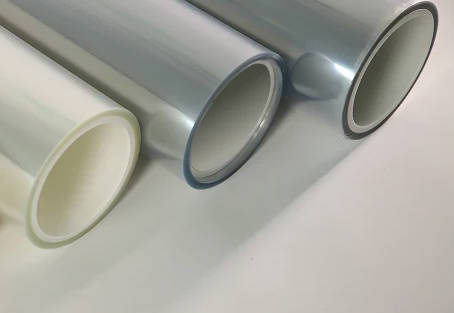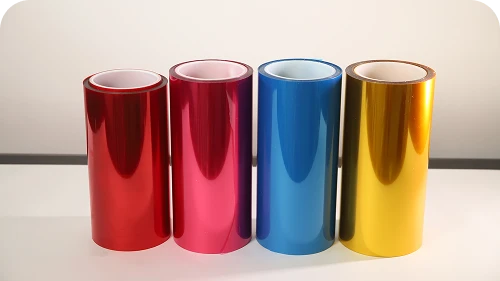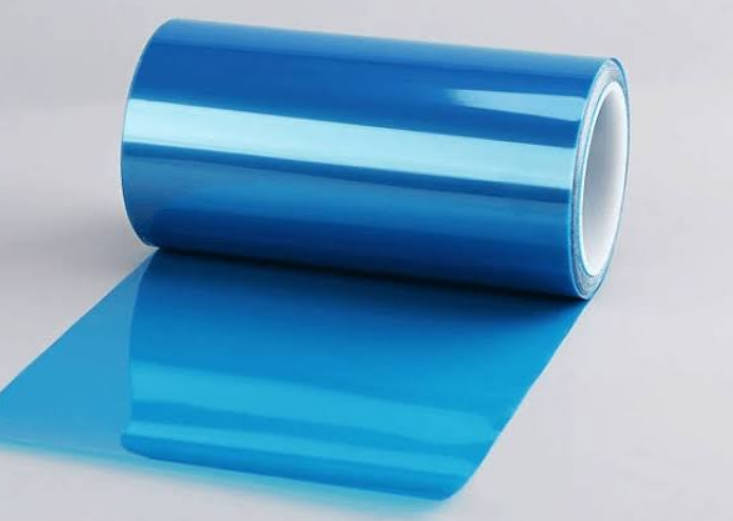
Post-die-cutting liner curl occurs when mechanical stress, environmental shifts, or material imbalances force a converted part to lift, warp, or arch along its edges instead of resting flat. In high-speed rotary and flatbed converting, this issue is solved by isolating two variables: web tension differentials on the press line and the dimensional stability of the release liner substrate.
Addressing post-die-cut curl requires matching the elastic recovery of the adhesive carrier with the carrier liner, setting kiss-cut tooling depths to avoid backing indentation, and specifying carrier films engineered with balanced tensile orientation. This guide details the physical mechanisms driving liner distortion, outlines five verified plant-floor fixes, and provides an engineering framework to stop edge curling before parts reach downstream automated application lines.
Liner curl refers to the unwanted out-of-plane curvature of a release liner following kiss-cutting, slitting, or matrix stripping. While parts may exit the cutting station appearing flat under line tension, relaxation occurs once web tension releases. Within minutes or hours on the inspection table, the composite structure arches into an upward “U-shape” (curling toward the face stock) or a downward “arch” (curling toward the backing).
| Physical Distortion Stage | Machine Feed Interaction | Production Line Consequence |
|---|---|---|
| Edge Curl (Upward Lift)Edges bow upward while the center remains anchored to the web line. | Vacuum Loss on BeltsRaised perimeters prevent the suction cup or vacuum conveyor from forming an airtight seal. | High-Speed Feeder JamsSensor trips, indexer misfeeds, and immediate emergency stops across automated dispensing systems. |
| Arching (Downward Bow)Center raises while cut perimeters press down into the liner bed. | Mechanical Shingling & CrawlLeading edges catch against transfer plates and downstream guide rails. | Double-Part Pickups & ScuffingTooling heads strike raised surfaces, leading to adhesive transfer and scratched facestocks. |
In industrial converting, flat delivery is a strict functional tolerance. When die-cut parts fail to maintain planar stability, downstream assembly suffers immediate failures:
- Automated Dispensing Stalls: High-speed pick-and-place feeders and vacuum belt indexers require consistent edge presentation. Upward edge curl trips optical sensors, causes misfeeds, and produces double-part pickups.
- Matrix Stripping Delays: When a backing liner stretches under rotary shear, the matrix web pulls away at uneven peel angles, tearing delicate perimeter borders and shutting down the press.
- Adhesive Creep and Edge Lifting: Unequal restorative force across layers introduces continuous shear along the adhesive boundary, promoting premature edge oozing, air ingress, and contamination under the die-cut geometry.
Diagnosing the Physics: 3 Root Causes Behind Die-Cutting Liner Curl
Liner curling is fundamentally governed by classical composite beam mechanics. When two or more materials—such as a facestock, a pressure-sensitive adhesive, and a carrier film—are laminated together under tension and severed, any mismatch in stored strain energy resolves as angular displacement.
| Curl Phenomenon | Primary Physical Mechanism | Manifestation on Press Line |
|---|---|---|
| Longitudinal Curl (Machine Direction) | Tension differential between laminates; elastic springback. | Parts curl parallel to the running web immediately after slitting or matrix rewinding. |
| Transverse Curl (Cross Direction) | Internal stress imbalance within biaxially oriented films; thermal variation. | Edges flute or cup perpendicular to the web path during curing or post-cutting rest periods. |
| Localized Perimeter Fluting | Mechanical crushing of liner from excessive kiss-cut blade penetration. | The carrier liner curls specifically beneath cut lines due to localized mechanical displacement. |
1. Differential Web Tension and Viscoelastic Memory
Every substrate possesses a distinct modulus of elasticity (E). If an unsupported facestock is laminated to a carrier liner while either substrate is under disproportionate tension, the extended substrate retains elastic strain. Once severed by the die blade, the layer under greater tension contracts to recover its unstressed dimension, pulling the entire laminate toward that layer.
2. Micro-Denting and Anvil Tooling Penetration
In kiss-cutting operations, the cutting rule or rotary blade must sever through the facestock and adhesive layer, stopping precisely at the silicone-coated surface of the backing. When tooling wear, excessive down-force, or anvil deflection forces the blade tip into the liner matrix:
- Polymer chains undergo localized plastic compression.
- The physical indentation stretches the upper boundary layer of the film.
- The backing arches downward to relieve the micro-shear induced along the cut path.
3. Thermal and Moisture-Induced Shrinkage Mismatch
Substrates respond differently to converting bay temperatures and curing processes. While paper-based release liners absorb or release atmospheric moisture, polymeric liners—especially standard-grade polyester (PET)—react primarily to thermal exposure. When UV curing lamps or heated lamination stations subject films to thermal cycles, substandard films undergo uneven cross-directional shrinkage, inducing permanent warping.
The 5 Practical Fixes That Actually Solve Liner Curl
Eliminating curl requires systematic optimization across machine controls, tooling precision, and raw substrate specifications.
Fix 1: Calibrate Differential Web Tension Across Stations
Eliminating internal shear requires balancing tension so neither substrate elongates disproportionately prior to the nip point:
- Calculate Tension Ratios by Material Modulus: Set unwinds based on caliper and substrate stiffness. A thin PET backing typically requires less tension than a thick vinyl or heavy foam facestock to achieve equal percentage strain.
- Utilize Load-Cell Closed-Loop Feedback: Replace manual friction clutches with closed-loop dancer arms or load-cell-driven servo controls on both the face and liner unwinds.
- Minimize Post-Lamination Draw: Keep web span between the lamination nip and the die station as short as practical to prevent web stretching while the adhesive bond wet-out takes place.
Fix 2: Optimize Kiss-Cutting Depth and Anvil Tooling Pressure
To prevent mechanical deformation of the liner, penetration into the carrier must be held within strict technical boundaries:
- Specify Stepped or Bearer-Relieved Tooling: Use ground magnetic cylinders or rotary dies fitted with precision micrometric bearer adjusters to control die engagement in 1-micron increments.
- Inspect the Liner Impression: Periodically strip adhesive components and inspect the bare liner under backlighting or cross-sectional microscopy. An acceptable kiss cut shows adhesive parting with zero white-line bruising, depression, or thickness reduction in the base film.
- Employ Softer Ejection Foams: Ensure high-density ejection rubber along cut perimeters is not applying localized impact force directly onto the backing matrix prior to blade disengagement.
Fix 3: Standardize Workshop Ambient Equilibrium and Static Discharge
Because polymeric films are sensitive to triboelectric charges and thermal relaxation:
- Eliminate Static Pull: Install active anti-static bars (ionizing bars) directly before the lamination nip, immediately after the die station, and prior to the rewind spindle. High static charges frequently force cut parts to cling unevenly to anvil rolls, inducing mechanical curl upon stripping.
- Isolate Web Heat Sources: Direct cooling air sweeps over UV curing segments or employ chill rolls immediately downstream from thermal curing units to stabilize the web prior to die impact.
Fix 4: Transition to Balanced, High-Modulus PET Substrates
When machine adjustments fail to eliminate curl on sensitive designs, the issue typically traces back to unbalanced internal stress in the base film. Standard commercial packaging films often exhibit erratic mechanical orientation between the machine direction (MD) and transverse direction (TD).
Converting demanding parts requires upgrading to a dimensionally stable PET release film that offers balanced shrinkage performance:
- Equalized MD/TD Tensile Strength: A balanced biaxial orientation prevents cross-directional twisting and fluting under tension.
- Controlled Low Thermal Shrinkage: High-performance die-cutting films are heat-set during production to ensure minimal dimensional change when passing through hot-melt coating or UV stations.
- Gauge Uniformity: Tight cross-web thickness tolerances prevent localized variations in nip pressure and blade penetration.
| Metric / Property | Standard Packaging-Grade PET Film | Precision Die-Cutting PET Film |
|---|---|---|
| MD/TD Modulus Balance | Often unequal; erratic transverse distortion under web tension. | Symmetrical; engineered to resist out-of-plane torque and warp. |
| Heat Shrinkage Resistance | Highly variable across production lots; prone to thermal curl. | Heat-stabilized to maintain absolute flatness through curing. |
| Caliper (Gauge) Variation | Typically ±8% to ±10% variation across the full master roll. | Held to tight tolerances (typically ±3% to ±5%). |
| Processing Reliability | High risk of anvil micro-denting due to uneven film thickness. | Predictable kiss-cut clearance across wide rotary die stations. |
Fix 5: Match the Exact Differential Release Force & Anti-Static Surface Treatment
Liner curl often surfaces during matrix stripping if the peel force required to separate the waste ladder from the carrier exceeds the mechanical stiffness of the liner.
Deploying engineered, custom release film solutions ensures clean release across production runs:
- Stable Separation: A consistent release profile prevents adhesive tugging on narrow web designs, preserving flatness throughout matrix removal.
- Topical Anti-Static Integration: Anti-static surface treatments reduce surface resistance, preventing sheet sticking, edge-cling, and curl after stacking.
- Optimized Curing: Fully cured silicone systems prevent migration into the pressure-sensitive adhesive, avoiding unpredictable peel force increases over time.
Fast Plant-Floor Assessment: Process Error or Substrate Defect?
When curl appears during a production run, use this structured evaluation matrix to isolate the root cause within minutes without lengthy production stoppages:
| Test Protocol | Procedure & Observations | Diagnostic Outcome | Recommended Action |
|---|---|---|---|
| Step 1: Free-Lay Test | Cut a 200 mm sample strip across the web; lay it unconstrained on a flat granite inspection plate for 15 minutes. | Sample remains flat: Curl is absent at rest. | Curl is mechanically induced by rewind friction, over-tight roll tension, or excessive lay-on roll pressure. |
| Step 1: Free-Lay Test | Sample lifts or arches: Internal strain is trapped inside the part. | Proceed immediately to Step 2 (Layer Separation Test). | |
| Step 2: Layer Separation Test | Delaminate the facestock from the release liner using selective solvent or controlled manual peel. | Bare liner curls independently: Tool marks or base film instability. | Inspect under backlighting. If micro-dented, adjust anvil depth. If undamaged, raw substrate has high residual stress. |
| Step 2: Layer Separation Test | Facestock curls, liner stays flat: Top layer over-tensioned. | Facestock was stretched prior to the nip. Reduce unwind brake tension on the face material. | |
| Step 2: Layer Separation Test | Both substrates lay flat separated: Strain mismatch at nip point. | Differential elongation locked in during lamination. Recalibrate nip speed and tension matching. |
Technical Selection Guide: What to Specify When Sourcing Die-Cut Release Film
Purchasing standard liners by thickness alone often leads to intermittent line failures and processing scrap. When ordering release films for precision flatbed, rotary, or multi-layer electronic converting, include explicit mechanical properties in your Technical Data Sheet (TDS) and quality agreements:
- Base Substrate Polymer Quality: Specify virgin, high-clarity biaxially oriented polyester (BOPET) free of unoriented gels, surface inclusions, or excessive recycled content that degrades tensile uniformity.
- Cross-Web Thickness Uniformity: Require confirmed gauge profiles with variations not exceeding ±3% to ±5% across the entire master roll width to ensure uniform kiss-cutting clearances.
- Release Force Consistency: Stipulate release values measured according to international standards (such as FTM 1, 3, or 4), defining target values and acceptable variances across low, medium, or differential release requirements.
- Thermal Shrinkage Tolerances: Define maximum allowable dimensional changes (e.g., test conditions of 150°C for 30 minutes) for both the machine direction (MD) and transverse direction (TD) to prevent thermal distortion during curing.
- Surface Resistance: When selecting anti-static variants, specify target surface resistivity ranges on both coated and uncoated sides to prevent static-induced feed jams.
Specifying the YINGFEI high-precision release film series allows converters to establish verified baselines for tensile strength, low residual shrinkage, and consistent release force profiles, protecting yield rates across demanding production schedules.
Key Takeaways
- The Root Cause: Post-die-cutting liner curl is caused by stored elastic strain mismatches between laminates, mechanical blade indentation from kiss-cutting, or thermal shrinkage variation in the backing film.
- Fast Factory Diagnosis: Use the Free-Lay and Layer Separation tests to distinguish between machine tension errors, tooling over-penetration, and incoming substrate defects within 15 minutes.
- Process Corrections: Balance web unwind tension based on substrate elastic modulus, calibrate kiss-cut tooling to eliminate liner bruising, and manage workshop static and ambient temperatures.
- Material Selection: Prevent structural warping by moving away from standard packaging films to dimensionally stable PET release films manufactured with balanced MD/TD tensile orientation and verified low thermal shrinkage.
- Specification Protocol: Always mandate strict gauge tolerances, precise release force brackets, and thermal stability limits on technical purchase orders.
Frequently Asked Questions (FAQ)
Can moisture absorption cause PET release films to curl?
No. Unlike glassine, kraft, or clay-coated paper liners, polyethylene terephthalate (PET) films have near-zero moisture absorption and remain unaffected by relative humidity shifts. When PET-backed laminates curl under changing humidity, the movement is typically driven by paper or foil facestocks expanding or contracting against the moisture-stable PET base.
Does changing die-cutting speed affect liner curl behavior?
Yes. Die-cutting speed directly influences dynamic web tension, anvil vibration harmonics, and dwell time. Higher press speeds can increase web bounce and blade penetration variations, while rapid matrix stripping at elevated speeds magnifies peel forces. If release liner release is uneven, this increased peel force can pull the backing past its yield point and cause edge warping.
Why does my die-cut part curl upwards instead of downwards?
Curl orientation indicates which layer is contracting. Upward curl (edges lifting toward the facestock) occurs when the top material was laminated under higher tension than the backing, contracting once cut. Downward curl (edges curling toward the liner) indicates the carrier liner was stretched during lamination or compressed and stretched along the cut channel by excessive die blade penetration.
What is the typical thickness tolerance recommended for rotary die-cutting release films?
Precision rotary die-cutting typically requires release film thickness variations held within ±3% to ±5% across the web. Wider gauge variations (such as ±10% found in general packaging grades) make it difficult to set consistent anvil clearances, leading to cutting through the liner on thick spots and incomplete adhesive release on thin spots.
Liner Curl After Die-Cutting: Causes and 5 Proven Fixes
Stop liner curl after die-cutting. Explore root causes, shop-floor diagnostic tests, tension calibration tips, and precision PET release film specifications.
die-cutting-liner-curl-causes-fixes