The Hidden Variable in Precision Die-Cutting: Moisture Content
You run a die-cutting job on Tuesday with perfect matrix stripping and precise depth control. On Thursday, using the exact same machine settings, tooling, and material batch, the web breaks continuously, or the die strikes too deeply into the liner. The variable that changed is paper moisture content.
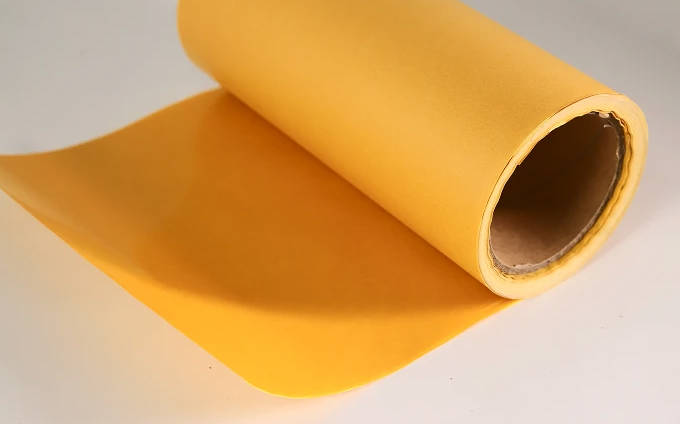
Substrates like glassine or clay-coated kraft (CCK) react aggressively to ambient humidity. A shift in moisture content from 5 percent to 7 percent alters the physical thickness, tensile strength, and brittleness of a paper liner. This article explains how equilibrium moisture content affects tooling feedback, how to troubleshoot humidity-related die-cut failures, and when converting operations should abandon paper entirely in favor of dimensionally stable release film.
Understanding Equilibrium Moisture Content (EMC) in Substrates
Paper is hygroscopic. It continuously absorbs or releases moisture until it reaches equilibrium with the relative humidity (RH) of the converting environment. This state is known as Equilibrium Moisture Content (EMC).
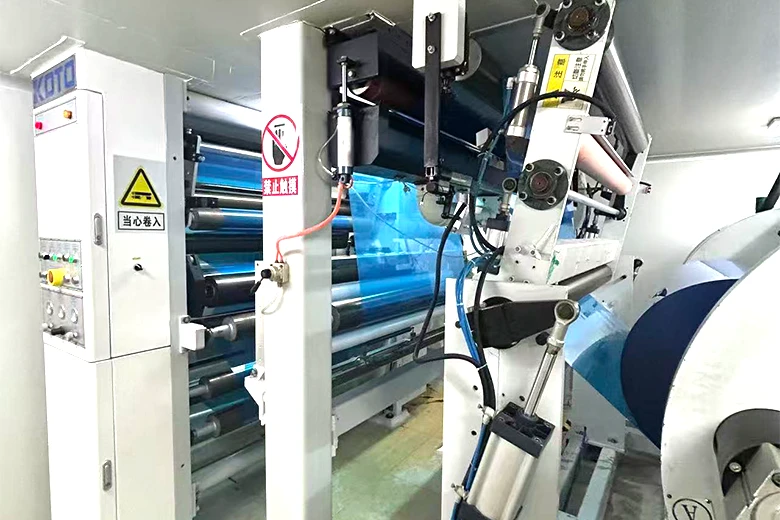
When a roll of paper liner moves from a humid warehouse to a climate-controlled converting floor, its EMC begins to shift. As water molecules enter or leave the cellulose fibers, the dimensional stability of the web changes. Because rotary die-cutting relies on micron-level tolerances between the anvil and the cutting edge, even a microscopic change in the liner’s caliper or density drastically alters how the tooling penetrates the material.
5% vs. 7% Moisture Content: How 2% Changes Everything
A 2 percent swing in moisture content—specifically moving between the standard 5 percent and 7 percent benchmarks—completely changes how a paper liner behaves on the press.
Physical Impact of Moisture Variance
| Physical Property | Behavior at 5% Moisture Content | Behavior at 7% Moisture Content | Impact on Die-Cutting |
|---|---|---|---|
| Caliper (Thickness) | Shrinks to minimum specification. | Fibers swell, increasing overall thickness. | Tooling calibrated for 5% will cut too deep (bruising) at 7%. |
| Brittleness | High. Fibers are dry and stiff. | Low. Fibers become pliable and soft. | 5% provides a crisp cut but risks web breaks; 7% requires higher die pressure. |
| Tensile Strength | Maximum resistance to stretching. | Reduced tensile strength; higher elasticity. | Matrix stripping at 7% may stretch and snap under tension. |
| Die Strike Feedback | Sharp, clean snap when the blade hits. | Spongy absorption of the blade impact. | Softer paper demands tighter clearance or heavier anvil pressure. |
Diagnosing Die-Cutting Failures Linked to Moisture
When converting yields drop unexpectedly, operators can use the physical condition of the waste matrix and the liner to determine if moisture is the root cause.
Troubleshooting Checklist: Moisture-Induced Defects
- Frequent Web Breaks During Matrix Stripping: Indicates the moisture content has dropped too low (often below 4.5%). The paper has become excessively brittle and cannot handle the tension of the rewinder.
- Die Strike Bruising or Slitting: Indicates the paper has absorbed moisture (pushing toward 7% or higher). The swollen fibers increase the caliper, causing the previously set blade to strike deeper than intended.
- Edge Curl (Cross-Directional Bowing): Occurs when the face stock and the liner absorb moisture at different rates. If the paper liner takes on water faster than the facestock, it expands, causing the material to curl toward the face.
- Spongy Matrix Release: If the adhesive seems to drag or the cut feels incomplete without actually dulling the blade, the paper is likely too damp, absorbing the kinetic energy of the die rather than snapping cleanly.
When to Switch: Overcoming Moisture Volatility with Release Film
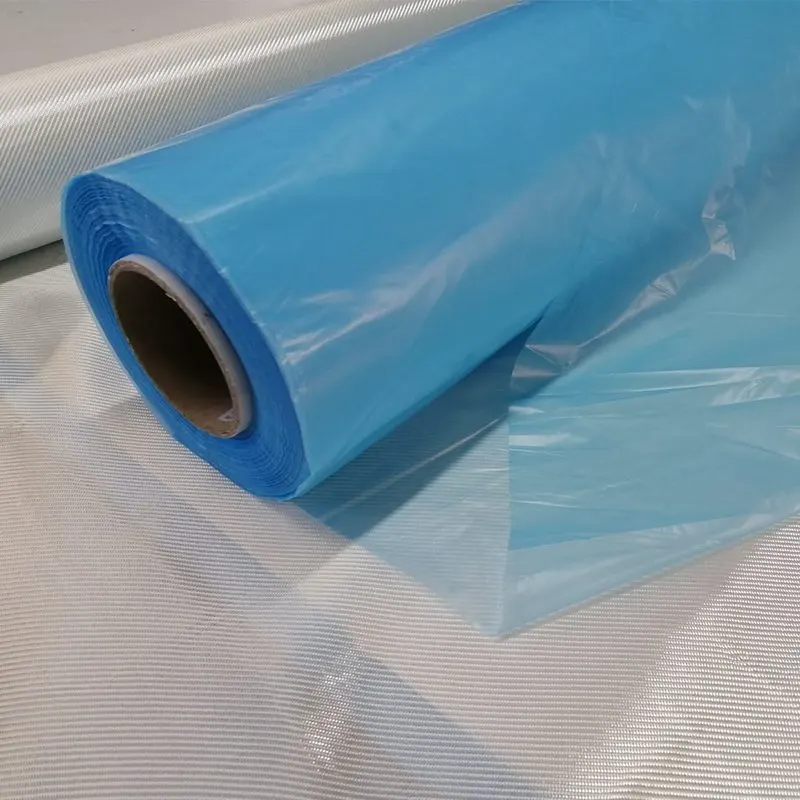
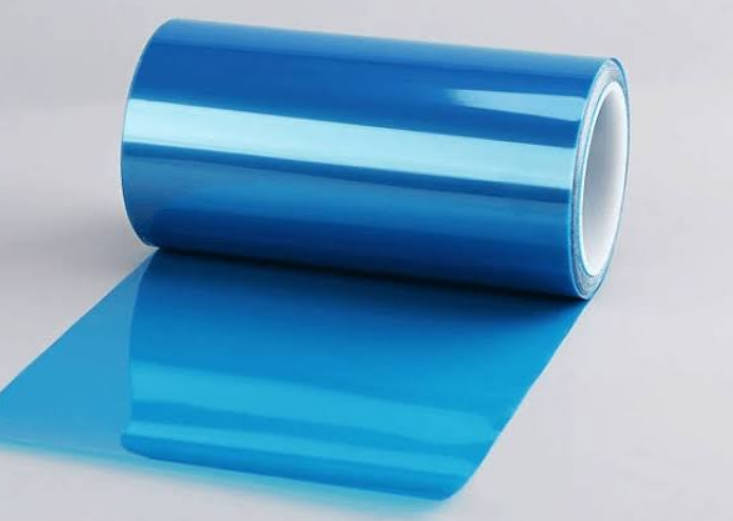
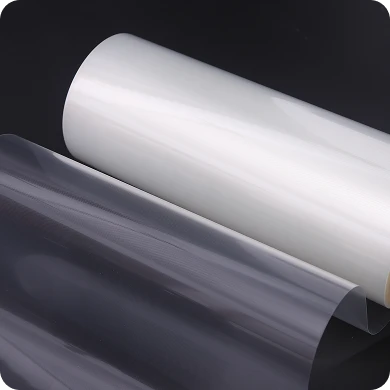
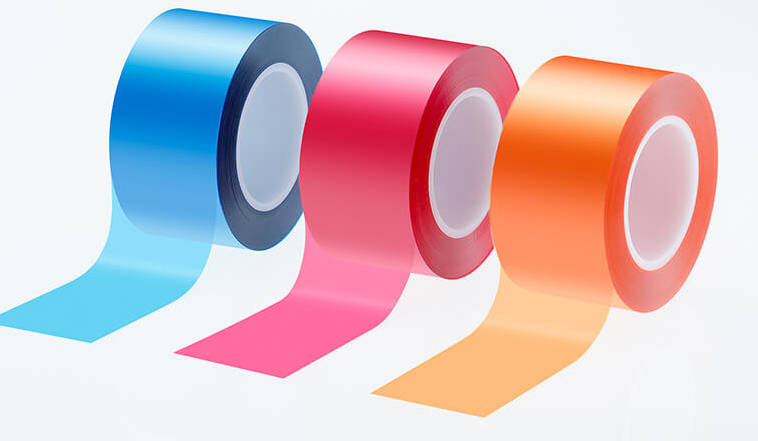
Climate control on a large converting floor is difficult and expensive to maintain perfectly year-round. When dimensional stability is critical, or when operating in regions with severe seasonal humidity swings, the most effective solution is upgrading from paper to PET release film.
Unlike cellulose fibers, polyester (PET) films do not absorb moisture. A PET liner maintains the exact same caliper, tensile strength, and die-strike resistance at 20% RH as it does at 80% RH.
Application Matrix: Paper Liner vs. Release Film
| Converting Requirement | Traditional Paper Liner | PET Release Film |
|---|---|---|
| Moisture Resistance | Poor. Highly reactive to RH changes. | Excellent. Zero moisture absorption. |
| Caliper Consistency | Fluctuates with humidity. | Dead-flat, micron-level consistency. |
| High-Speed Stripping | Moderate risk of web breaks. | High tensile strength; resists snapping. |
| Cleanroom / Electronics | Generates paper dust. | Particulate-free. |
Switching to film eliminates the need to constantly adjust die pressure or anvil settings to chase the changing thickness of a swollen paper liner.
Best Practices for Storing and Handling Converting Materials
If you must use paper-based liners, implementing strict material handling procedures is the only way to minimize EMC fluctuations.
Standard Operating Procedure (SOP) for Roll Storage:
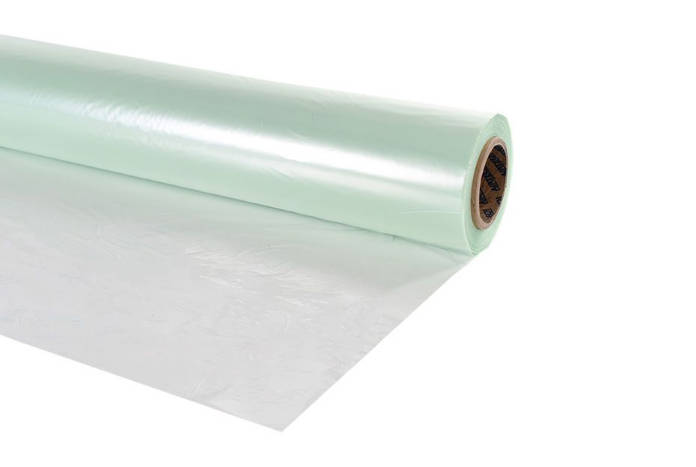
- Maintain the Moisture Barrier: Leave rolls fully wrapped in their original moisture-barrier packaging (usually stretch wrap with a vapor barrier) until immediately before mounting on the press.
- Acclimate the Material: Move the sealed rolls into the converting environment 24 to 48 hours before the run. This allows the core temperature of the roll to match the room temperature, preventing condensation when unwrapped.
- Repackage Partial Rolls: If a job finishes and a partial roll remains, immediately re-wrap it in a moisture-barrier film before returning it to the warehouse. An exposed roll will quickly absorb edge moisture, creating baggy edges and differential tension on the next run.
FAQ: Die-Cutting and Substrate Moisture
How long does it take for a roll to acclimate to shop floor humidity?
If unwrapped, the outer layers of a paper roll will react to ambient humidity within minutes, causing edge wave. The core of a tightly wound roll may take weeks to fully equilibrate. This is why rolls must acclimate while still in their moisture-barrier packaging for at least 24-48 hours.
Can you adjust die pressure to compensate for 7% moisture?
Yes, operators can increase die pressure or swap out anvil rolls to compensate for the swollen caliper of a 7% moisture liner. However, this accelerates tooling wear and requires constant monitoring as the roll’s moisture profile changes.
Why does my material curl as soon as it is unwound?
This indicates a severe moisture imbalance. The paper liner is rapidly absorbing moisture from the air and expanding faster than the top material, causing it to immediately curl upon exposure.
Secure Your Converting Yield with YINGFEI
Relying on paper liners in fluctuating humidity conditions forces operators to spend hours tweaking machine settings and troubleshooting web breaks. Upgrading the substrate eliminates the variable entirely. If your process requires zero-tolerance die-cutting, high-speed matrix stripping, or cleanroom compatibility, switching to a synthetic substrate ensures your tooling performs consistently on every run. Evaluate your current waste metrics against the cost of your liner, and consider testing a moisture-proof alternative on your next precision run.
Key Takeaways
- Paper liners act like sponges; a moisture content shift from 5% to 7% changes the material’s thickness, altering die strike accuracy.
- Low moisture (5% or below) causes brittleness and frequent web breaks during high-speed matrix stripping.
- High moisture (7% or above) causes fiber swelling, leading to deeper die strikes, bruising, and edge curl.
- Polyester (PET) release films do not absorb moisture, providing permanent dimensional stability regardless of shop floor humidity.
- Material rolls must remain in their vapor-barrier packaging for 24-48 hours inside the converting room to acclimate to ambient temperature before use.
FAQ
What is Equilibrium Moisture Content (EMC) in die-cutting?
EMC is the point at which a paper substrate stops absorbing or releasing water because it has balanced with the relative humidity of the converting environment.
How does moisture affect matrix stripping?
Too little moisture makes the paper brittle, causing it to snap under tension. Too much moisture makes the paper elastic and weak, causing it to stretch and tear rather than separating cleanly.
When should a manufacturer switch to PET film?
A switch to film is recommended when environmental humidity cannot be strictly controlled, when cutting to extremely tight micron tolerances, or when paper dust cannot be tolerated in the manufacturing process (such as in electronics or medical manufacturing).