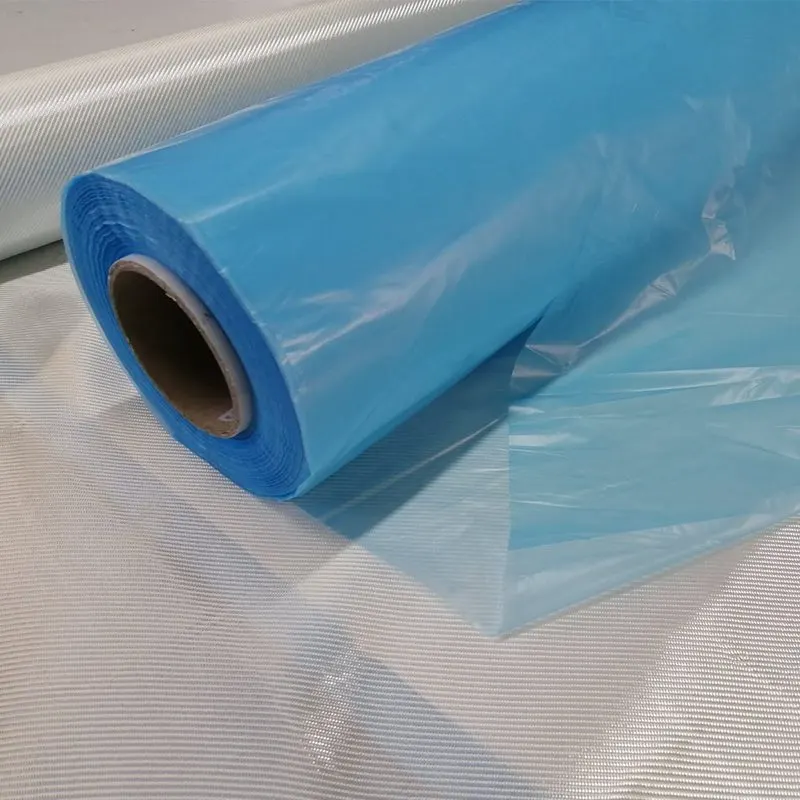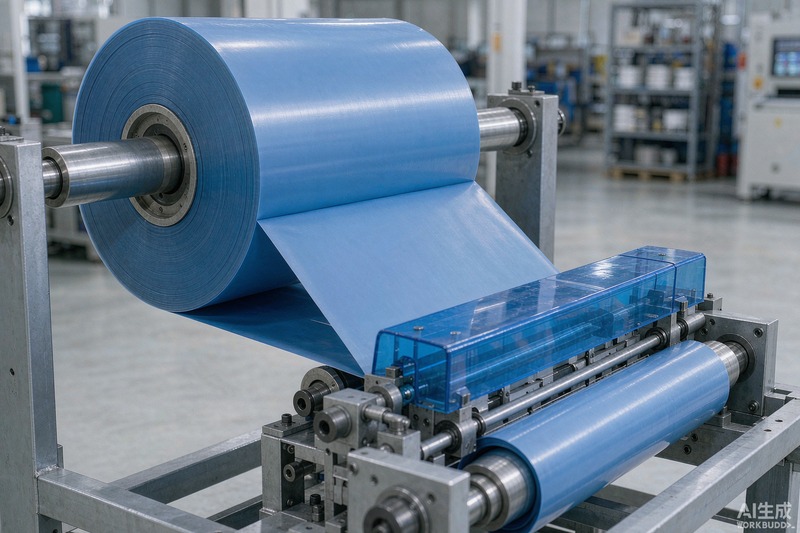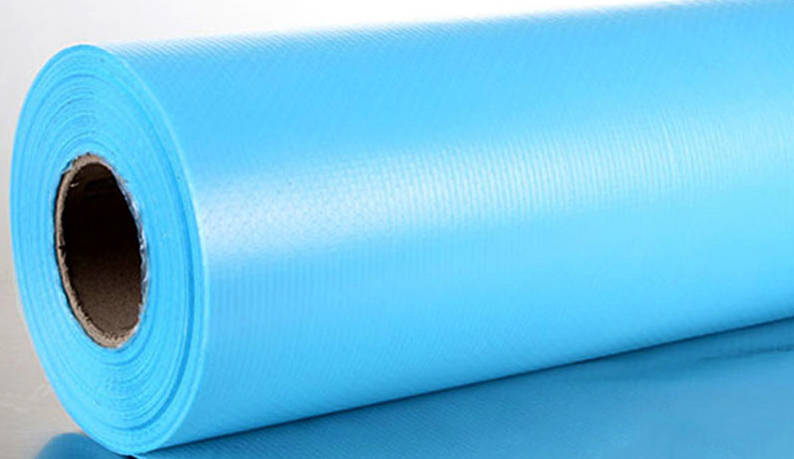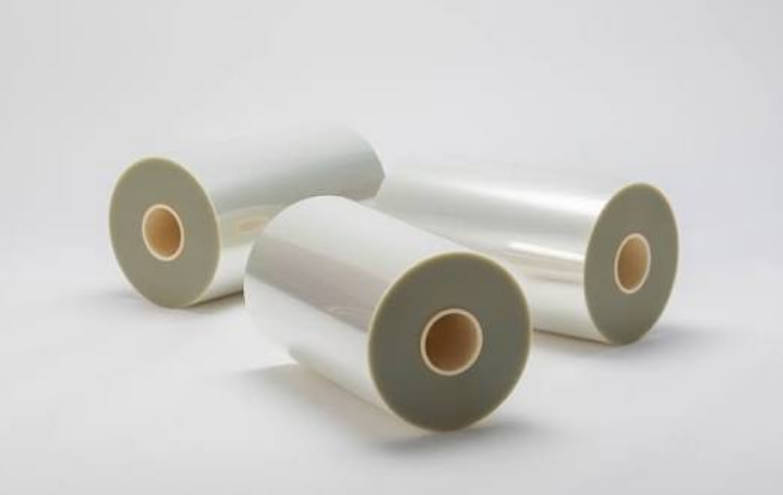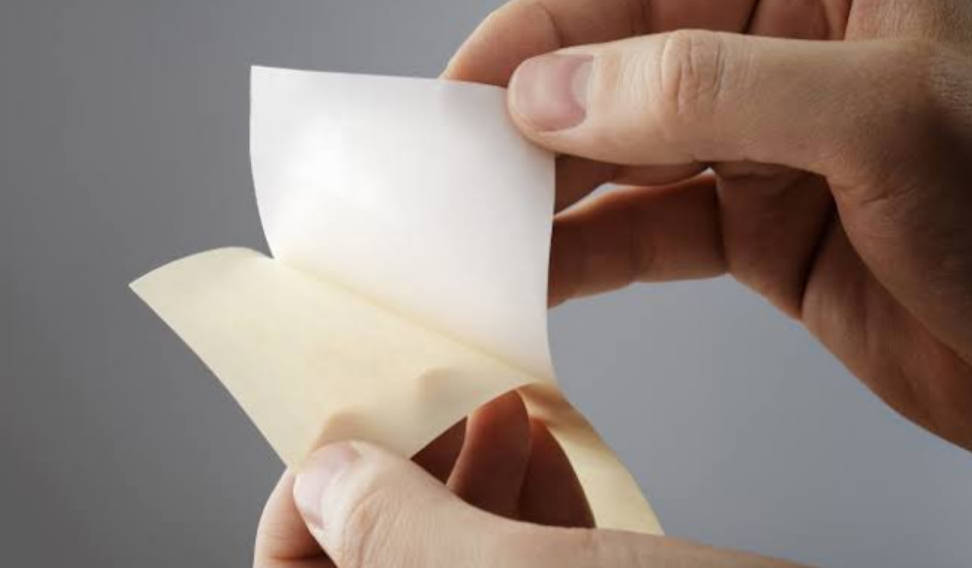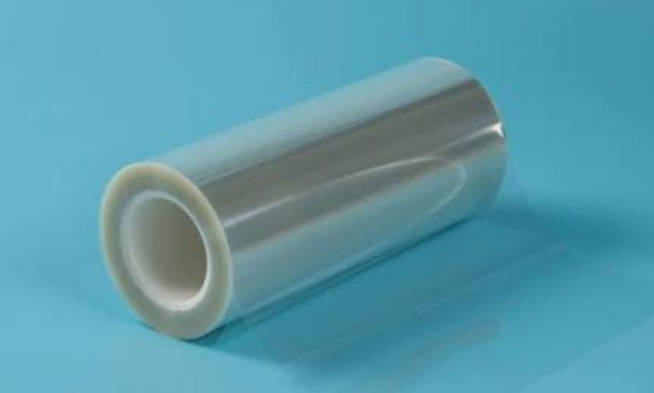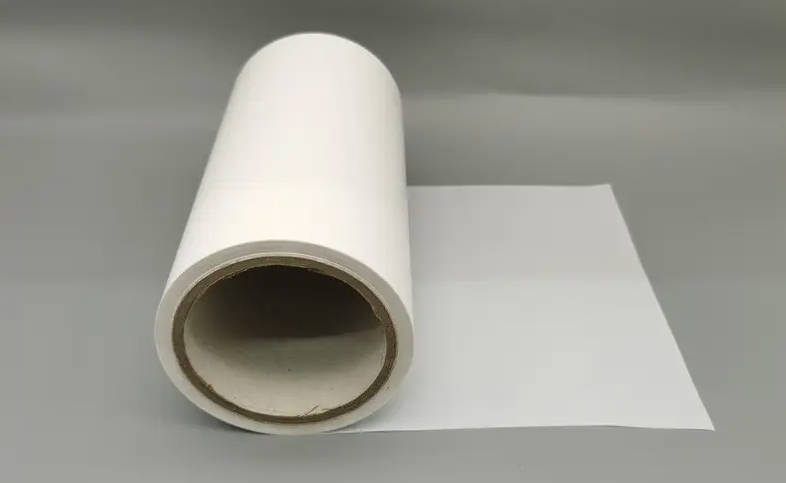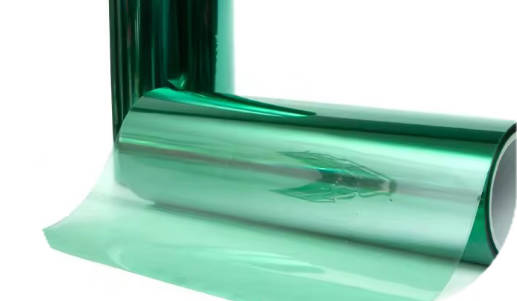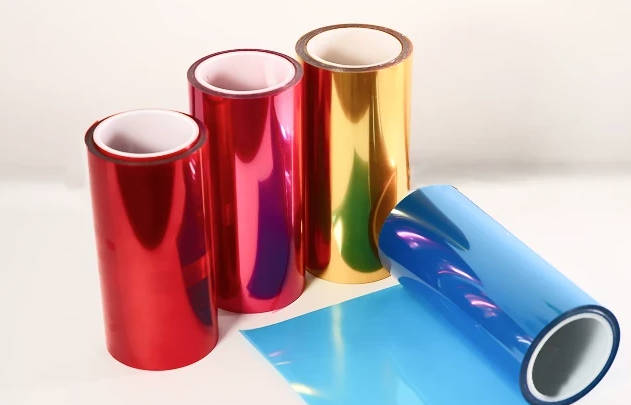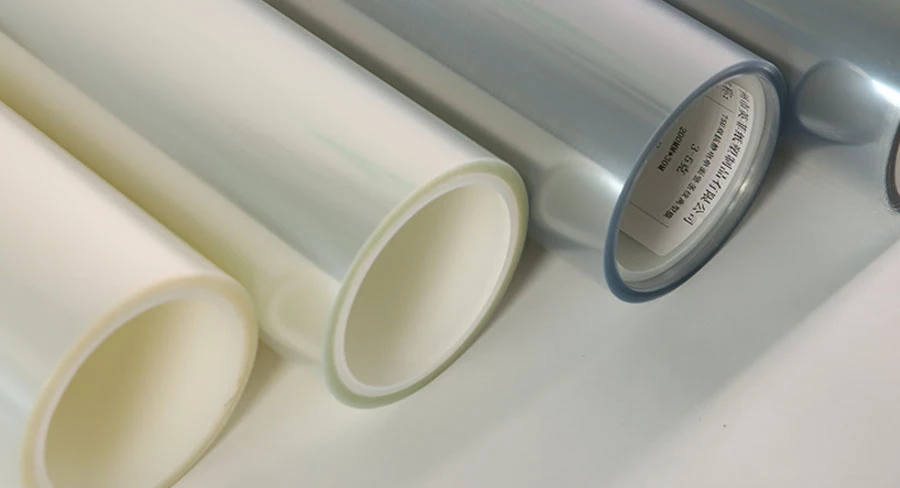
Most release film is transparent, so the adhesive and the substrate behind it can be inspected through the liner. Colored and opaque release films deliberately give that up. A blue PET liner hides what is underneath, and in exchange it makes the liner itself visible — against a white assembly bench, against a clear protective film, against a silver component or a transparent optical part. On a line where an operator has to find a 15 mm liner tab on a clear adhesive in a fraction of a second, that visibility is the product.
Blue is the most widely specified liner colour, but white, black and other shades are used for defined reasons. This article explains how opaque and coloured liners are built, why colour choice follows function rather than appearance, where they are specified in optical and display work, and the converting and inspection points that change when the liner is no longer transparent.
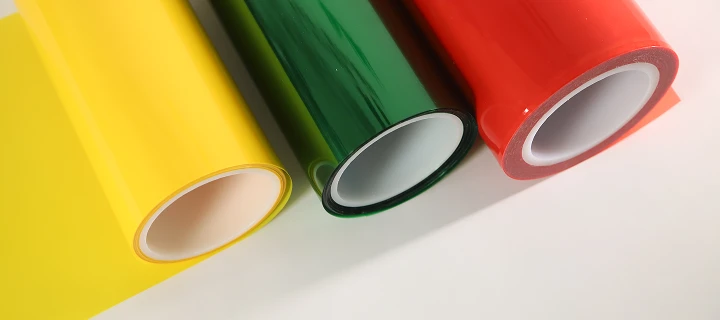
What Colored and Opaque PET Release Films Are
A coloured release film is built the same way as a clear one — a PET substrate with a silicone release coating on one or both faces — with colour introduced either into the film itself during extrusion or as a coating layer in the construction. Pigment added to the polymer gives an even colour through the thickness of the web and cannot be scuffed off. A coated colour layer is cheaper to vary and allows shades that are difficult to achieve in the base film, but it adds an interface that has to be compatible with the silicone system above it.
Opacity is a separate decision from colour. A film can be heavily coloured and still transmit light, or it can be made effectively opaque with a filler or a pigmented layer. Where the requirement is to block light from reaching a light-sensitive adhesive, or to prevent a visual inspection from being confused by what lies behind the liner, opacity — not colour — is the parameter being specified.
Why Blue Became the Common Liner Colour
Blue sits in a practical gap. It is dark enough to read as clearly different from a clear or white film, light enough that a contaminant such as a dark speck or a fibre stands out against it, and distinct from the colours used for the adhesive and the part being carried. In optical and display work that combination does three jobs at once.
- Identification. A blue liner cannot be confused with a clear protective film, a clear carrier or a transparent optical layer when both are on the same bench.
- Defect visibility. Dust, gel particles, coating streaks and die-cut edge damage read more clearly against a coloured background than against a transparent web in which the operator sees the bench underneath.
- Orientation and handling. A coloured face makes it obvious which side of a double-sided construction is being removed, and a liner tab is easy to find on a small part.
Light management matters too. Where a liner is used as a carrier in an optical laminating process, a coloured film reduces the light passing through the web, which limits the effect of stray light on light-sensitive adhesives and makes an optical inspection station easier to set up.
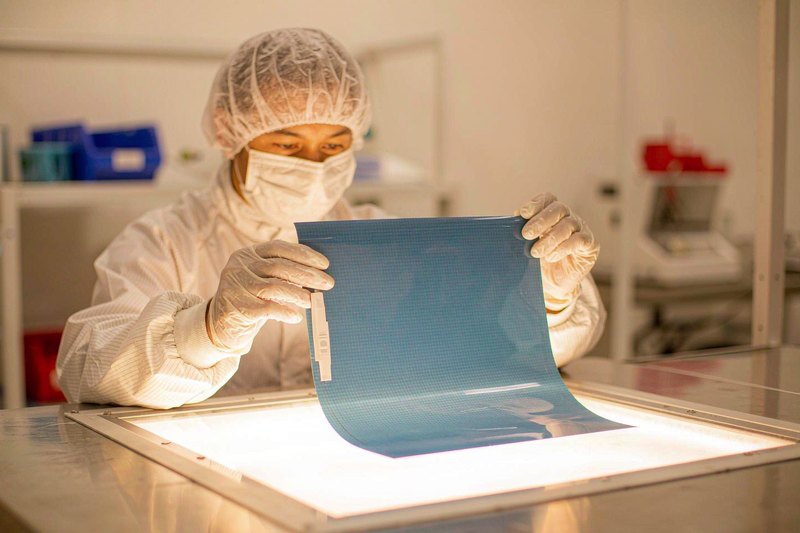
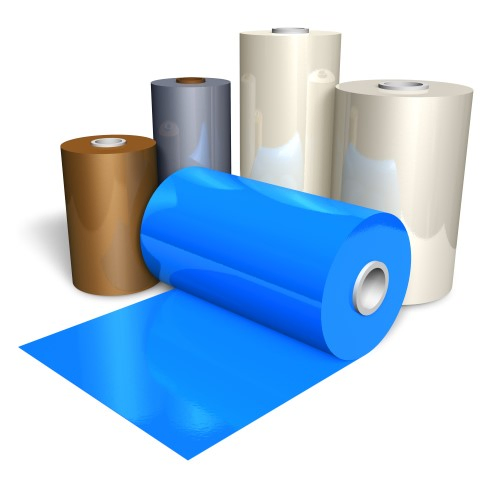
Colour Options and What Each One Signals
| Liner appearance | Typical reason it is chosen |
|---|---|
| Blue, opaque | General identification, defect visibility and tab location on optical and display lines |
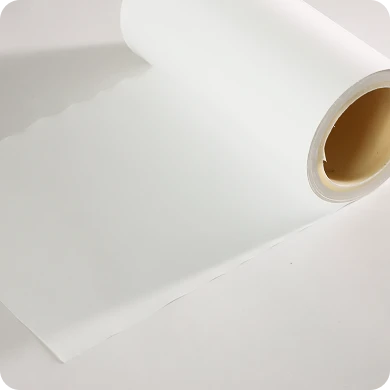
| White, opaque | High contrast for dark adhesives and dark parts; common where inspection is done under reflected light |
| Black or dark, opaque | Light blocking where a light-sensitive adhesive or an optical layer must be protected from ambient light |
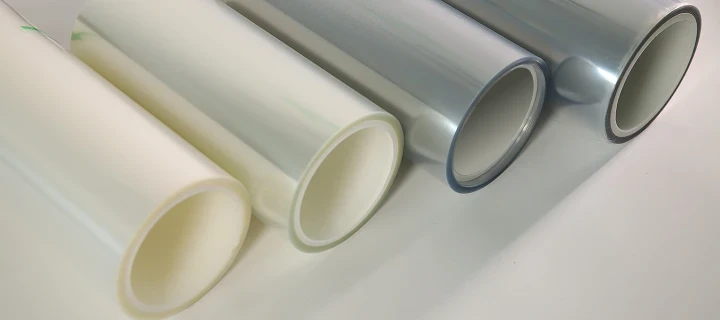
| Clear, transparent | Inspection of the adhesive through the liner; the default where colour serves no purpose |
| Coloured with matt finish | Reduced glare at inspection stations and a different release signature from the coated face |
The colour a customer asks for is not always the colour the process needs. A request for blue is usually a request for identification and defect visibility, and should be tested against the actual inspection setup: a shade that reads clearly under white light in a laboratory can flatten out under the amber lighting of a cleanroom, and a colour that contrasts with one component may not contrast with the next.
Optical, Display and Electronics Applications
Coloured and opaque PET liners are specified most often where a small, high-value part is handled on a liner under clean conditions.
Optical bonding and display assembly is the main case. An optically clear adhesive is supplied on one or two liners; the liner that is removed first on the line is commonly coloured so that the operator and the machine vision system can confirm it has been removed, and so that the remaining adhesive surface is unambiguous. The same logic applies to protective film for displays and lenses, where a coloured release film carrier distinguishes the process side from the product side.
In electronics and component converting, an opaque carrier prevents the operator from visually confusing the liner with the part, and a dark liner is used where light must be blocked. In label and tape work, coloured liners appear on pressure sensitive labels and premium tape products where the liner colour is part of the specification the brand has agreed with its converter, and on adhesive tape products where a coloured tab is needed for hand removal.
Specifying a Colored PET Release Film
Colour is a visible parameter, so it is easy to treat the specification as a colour match and stop there. The performance parameters still have to be fixed in the same document.
| Parameter | Why it matters |
|---|---|
| Colour route: pigmented base film or colour coating | Determines whether the colour can be scuffed or removed, and whether it sits above or below the silicone. |
| Opacity / light transmission requirement | Opacity, not colour, is what blocks light. If the liner protects a light-sensitive adhesive, this needs a number. |
| Colour consistency between batches | A shade that drifts between deliveries breaks a visual inspection routine and any machine vision check keyed to the liner. |
| Which face is coloured and which is coated | Decides whether the silicone is applied over the colour layer, which can shift release force. |
| Release force against the customer’s adhesive | Colour layers and fillers change surface behaviour; release force has to be confirmed on the finished construction. |
| Thickness, width and core | Opaque liners used in optical work are often thin; thin film is more sensitive to tension and edge damage. |
| Cleanliness and inspection criteria | Dark liners show particles more readily, so the acceptance standard for speck and fibre count should be agreed explicitly. |
Converting and Inspection Notes
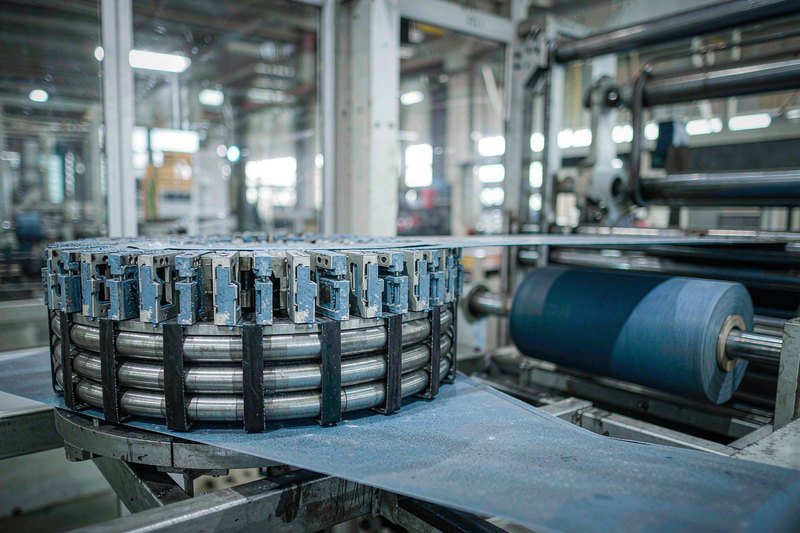
Once the liner is opaque, some familiar routines change. Visual inspection of the adhesive through the liner is no longer possible, so defects that would have been seen from the coated side have to be caught on the film face or by other means before lamination. Inspection criteria written for a transparent web tend to be too loose or too strict when applied to a coloured one.
Slitting and die cutting behave differently as well. A coloured web makes edge damage, nicks and chipped coating easier to see, which is useful, but it also means the customer will notice defects that a clear liner would have hidden. Roll appearance after custom slitting becomes part of the perceived quality of the delivery.
Machine vision is another consideration. Where a camera system confirms liner presence or position, the colour and gloss of the liner affect contrast and illumination settings. It is worth confirming the film against the actual vision setup rather than a reference sample, because a shade that is distinct to the eye may be low-contrast to a monochrome or narrow-band sensor. For constructions where the colour layer, the silicone and the adhesive have to be balanced together, the more reliable route is to treat it as an engineered release liner project with the release performance and the visual requirement defined in the same brief.
Problems and Failure Modes
- Shade drift between batches. Visual inspection that was set up against the first delivery flags later deliveries as wrong, or misses defects because the contrast has changed.
- Release force shifted by the colour layer. Colour under the silicone changes the surface the adhesive sees, so the release value must be confirmed on the finished build rather than on the clear equivalent.
- Scuffing of a coated colour layer. A coated pigment layer can be marked in handling and slitting in a way that a pigmented base film cannot.
- Particles that were previously invisible. A dark or saturated liner shows every speck, so cleanliness specifications have to be agreed before the trial, not after.
- Vision system contrast problems. The camera sees the liner differently from the operator, particularly with coloured or matt surfaces.
- Confusing opacity with colour. Selecting a dark shade for light blocking without specifying a transmission figure leaves the actual requirement undefined.
FAQ
Why is blue the most common color for PET release liners?
Because it does three jobs at once: it distinguishes the liner from clear films and adhesives on the same bench, it gives enough contrast for dust and edge defects to be seen, and it makes a liner tab easy to locate on a small part.
Is an opaque liner the same as a colored liner?
No. Colour and opacity are separate properties. A liner can be strongly coloured and still transmit light; opacity is what blocks light, and it needs its own requirement if the liner is protecting a light-sensitive adhesive.
Does liner colour affect release force?
It can. Where colour is applied as a coating layer beneath the silicone, the surface the adhesive contacts is changed, so release force should be confirmed on the finished construction rather than assumed from the clear equivalent.
Can a colored liner be inspected the same way as a clear one?
Not through the liner — the adhesive is no longer visible from the coated side. Inspection moves to the film face, the edge and the roll appearance, and acceptance criteria written for a transparent web usually need to be rewritten.
What should be confirmed before ordering a colored liner?
The colour route, the opacity or transmission figure, the batch-to-batch colour tolerance, which face is coated, the release force against your adhesive, and the cleanliness criteria — plus a trial against the actual inspection or vision setup.
Conclusion
Colored and opaque PET release films trade transparency for visibility. A blue liner makes itself obvious against clear films, adhesives and metal components, gives dust and edge defects a contrasting background, and lets an operator or a camera find a liner tab on a small part. The colour is introduced either by pigmenting the base film, which is durable, or by adding a colour layer, which is more flexible but sits in the same stack as the silicone.
Colour and opacity are separate requirements: colour provides the contrast, while opacity is what blocks light, and a light-sensitive adhesive needs a transmission figure rather than a shade. Which face carries the colour and which carries the coating decides whether the colour layer sits under the silicone and shifts release force, so the release value has to be confirmed on the finished construction.
Converting behaviour changes once the liner is opaque. The adhesive can no longer be inspected through the liner, acceptance criteria for specks and fibres have to be agreed explicitly because a dark surface shows everything, and machine vision settings depend on the colour and gloss of the web. Batch-to-batch colour consistency becomes a real production requirement rather than a cosmetic one, since both human inspection and camera checks are keyed to it.
If you are specifying a coloured or opaque liner for an optical, display or electronics process, send us the colour and opacity you need, the adhesive and release force, which face must be coated, and the inspection or vision setup the liner will run past. We can confirm the construction and the tolerance that will hold through slitting and delivery.