Sudden release force variations between raw material storage and production lines often stem from thermal gradients rather than defective coating batches. The primary driver behind these peel force swings is the temperature divergence between cold warehouse storage (often under 15°C) and hot converting floors (frequently exceeding 30°C near curing ovens and drive motors).
Temperature directly alters the viscoelastic modulus of pressure-sensitive adhesives (PSAs), the flexural rigidity of the release liner, and interfacial silicone bond dynamics. When a roll moves directly from cold storage to active unwinding without thermal equilibration, converting lines experience false adhesive lockup, web snap, or severe adhesive ghosting.
Understanding how ambient thermal shifts modify interfacial release behavior enables production teams to eliminate unexpected line stoppages, reduce material scrap, and establish reliable converting parameters.
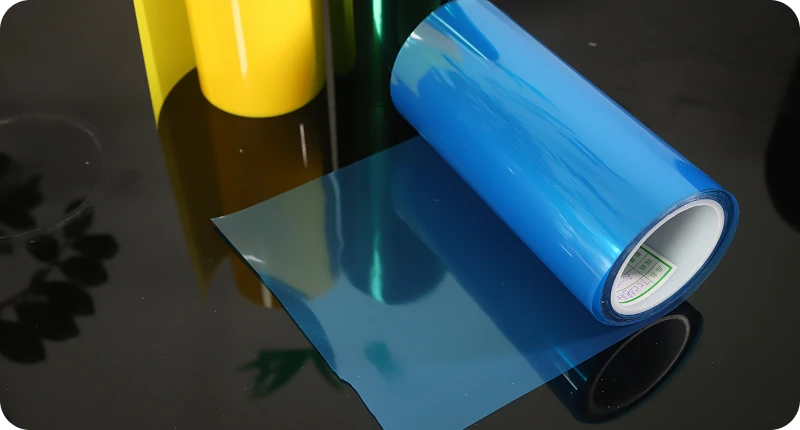
Why Converting Lines Experience Sudden Release Force Fluctuations
A roll of release liner that tests within specification in a climate-controlled quality laboratory can fail immediately when mounted on a high-speed converting press. This discrepancy rarely indicates an unstable release coating formulation; rather, it reflects an unmanaged thermal gradient between storage environments and the production deck.
| Stage / Environment | Operating Conditions | Material & Mechanical Response | Downstream Process Risk |
|---|---|---|---|
| Cold Warehouse | Ambient temperature < 15°C | • Viscoelastic stiffening of PSA • Liner brittleness and edge curl • Artificially high peel resistance | Web snap during stripping, matrix tear-out, register walk |
| Hot Converting Floor | Ambient temperature > 30°C | • Adhesive softening and aggressive wetting • Tension drop and web elongation • Lower interfacial release resistance | Component slippage, pre-dispensing, adhesive ghosting |
| Unmanaged Transition | Inadequate acclimatization window | • Sharp core-to-surface thermal differential • Immediate dew-point moisture condensation | Interfacial shock: cohesive delamination, web breaks, permanent adhesive transfer |
Converting facilities frequently maintain unheated or minimally conditioned warehouses during winter months, allowing raw material rolls to sit at temperatures below 10°C to 15°C. When these dense rolls are brought directly onto a converting floor operating above 30°C—further heated by machinery friction, static bars, and inline drying units—the material experiences thermal shock.
The outer layers of the roll expand and soften rapidly, while the dense core remains cold and contracted. This uneven thermal profile causes web tension spikes, tracking misalignment, and severe variations in peel strength across the length of a single master roll. Implementing stable converting operations requires sourcing premium grade release film engineered for dimensional consistency under thermal stress.
Cold Warehouse Storage: Why Release Force Spikes Below 15°C
Low ambient temperatures dramatically alter the mechanical response of both the release liner substrate and the adhesive laminated against it. When warehouse temperatures dip, converters frequently report that liners become “locked” to the adhesive face.
PSA Glass Transition and Substrate Rigidity
Pressure-sensitive adhesives rely on viscous flow and polymer chain mobility to dissipate energy during peel separation. As ambient temperatures approach or fall below the glass transition temperature (Tg) of the adhesive system:
- The polymer matrix shifts from a flexible, rubbery state toward a glassy, stiff state.
- The adhesive loses its compliance, requiring significantly higher mechanical energy to deform and detach from the silicone release interface.
- High-speed sensors register this mechanical resistance as an artificial spike in peel force, commonly mistaken for silicone failure.
Concurrently, polyester and polyolefin film substrates lose flexibility at low temperatures. A cold, rigid carrier resists peeling along the intended peel angle, forcing the converting system to exert excess tensile force on the web.
The Risk of Liner Tearing and Delamination
When operators encounter elevated peel resistance caused by cold materials, the natural reaction is often to increase web tension on the unwind brake. This introduces secondary failures:
- Tearing at the Die-Cut Matrix: Cold, brittle films fail to stretch evenly, causing tear-outs during complex waste matrix stripping.
- Cohesive Delamination: If peel force spikes beyond the internal shear strength of the adhesive, cohesive failure occurs, leaving adhesive patches bonded permanently to the release liner.
- Core Slippage: Cold cores contract around shafts, leading to chuck slippage, improper brake transfer, and register wandering during multi-tier laminations.
Hot Converting Floor Dynamics: Overcoming Ghosting and Slippage Above 30°C
While cold storage causes excessive peel resistance, an unconditioned, hot converting environment produces the opposite problem: premature release, liner fly-off, and chemical migration.
Adhesive Softening and Reduced Release Resistance
In elevated ambient temperatures, particularly during peak summer shifts or directly adjacent to UV and hot-air curing modules:
- Viscosity Depletion: The adhesive softens, lowering its internal shear resistance.
- Aggressive Wetting: The softened adhesive wets out aggressively across microscopic surface valleys, temporarily increasing contact area while dropping interfacial peel resistance at moderate peel speeds.
- Premature Dispensing: At high converting velocities, the release force can drop below the threshold required to keep die-cut parts anchored to the liner, causing components to lift, skew, or jam downstream vacuum transfer belts.
Elevated Thermal Stress and Potential Silicone Rub-Off
Excessive heat can trigger surface-level chemical interactions between incompletely cured adhesives and the silicone release layer:
- Silicone Migration & Ghosting: Heat accelerates the diffusion of unreacted silicone oligomers or low-molecular-weight adhesive tackifiers across the interface. This leaves a hazy haze—known as ghosting—or an adhesive transfer defect that ruins optical clarity and destroys the bonding potential of the finished component.
- Substrate Deformation: Thin-gauge films subjected to elevated temperatures and web tension undergo non-recoverable plastic stretching, skewing dimensional tolerances on die-cut gaskets and electronic tapes.
| Thermal Environment | Operating Condition | Interfacial Mechanism | Observed Failure Mode on Line | Corrective Action |
|---|---|---|---|---|
| Cold Warehouse | Ambient temperature < 15°C | Adhesive Tg shift toward glassy state; high substrate modulus | Matrix web tear; false adhesive lockup; register wander | Stage in staging vestibule; enforce multi-hour core acclimatization |
| Hot Converting Deck | Ambient temperature > 30°C | Adhesive viscosity drops; excessive wet-out; accelerated oligomer diffusion | Part fly-off; adhesive ghosting; matrix bleeding | Lower unwind tension; isolate rolls from radiant heat; verify silicone cure stability |
| Thermal Gradient (Mixed) | Cold core with warm outer roll wraps | Uneven thermal expansion; mismatched inner/outer tension | Gauge banding; center-to-edge release variance; tracking skew | Complete equilibration prior to unwrapping environmental barrier wrap |
Workshop Acclimatization Protocol: Step-by-Step Thermal Equilibration
Eliminating thermal release failures does not always require capital investments in plant-wide HVAC systems. Establishing a standardized thermal equilibration standard operating procedure (SOP) prevents the vast majority of temperature-induced web defects.
| Protocol Step | Core Action | Operating Parameters | Quality Objective |
|---|---|---|---|
| Step 1: Staging Transfer | Move sealed pallet to transition buffer zone | Staging zone maintained at 20°C to 23°C | Prevent direct thermal shock from warehouse extremes |
| Step 2: Barrier Seal Preservation | Retain factory polyethylene wrap intact | Zero unsealing until thermal equilibrium | Eliminate dew-point surface condensation and edge moisture absorption |
| Step 3: Thermal Equilibration Hold | Allow passive heat conduction to core | • Narrow web (< 300 mm): 12–24 hours • Master rolls (> 1000 mm): 24–48 hours | Standardize internal and external roll temperature |
| Step 4: Temperature Verification | Measure surface and core temperatures | Non-contact infrared pyrometer reading; differential \le 3°C | Confirm thermal readiness before loading onto unwind stands |
Step 1: Direct Transfer to an Intermediate Conditioning Buffer
Never transfer a pallet of raw film rolls straight from an unheated warehouse directly onto an active converting line. Stage incoming material in an intermediate preparation area maintained between 20°C and 23°C.
Step 2: Maintain Environmental Packaging Seals
Keep original stretch wrap, poly bags, and moisture-barrier protective wraps sealed during the warming cycle.
Critical Handling Rule: Cold rolls exposed to warm, humid plant air cause immediate ambient moisture condensation onto the film edges. Moisture trapped within roll wraps causes edge swelling, tight edges, and localized hydraulic blocking of the silicone surface. Do not unseal the protective wrap until the entire roll reaches the ambient temperature of the converting room.
Step 3: Determine Acclimatization Hold Times
Thermal transfer through tightly wound plastic rolls is slow because trapped air layers act as thermal insulation. Allocate equilibration staging time based on roll mass and core diameter:
- Slit Rolls / Narrow Web (< 300 mm width): Minimum 12 to 24 hours of ambient staging.
- Master Rolls / Wide Web (> 1000 mm width): Minimum 24 to 48 hours of staging before loading onto unwind stands.
Step 4: Verify Core-to-Surface Equalization
Before slitting or die-cutting, measure the temperature of the roll face and core chuck area using a non-contact infrared pyrometer. The temperature differential between the outer layer and core edge should not exceed 3°C prior to web threading.
Specifying Release Film for Challenging Thermal Environments
When process conditions involve unavoidable heat exposure—such as inline thermal laminating, hot-melt adhesive coating, or seasonal plant heat spikes—material specification becomes the definitive control factor. Using an engineered PET release film designed for thermal resilience prevents distortion under heavy line loads.
Substrate Thermal Shrinkage and Dimensional Stability
Biaxially oriented polyethylene terephthalate (BOPET) serves as the industry benchmark substrate for precision thermal converting due to its high tensile modulus and low thermal shrinkage. When evaluating base carriers:
- Thermal Shrinkage Rates: Confirm that longitudinal (MD) and transverse (TD) shrinkage remain below controlled limits at elevated operating temperatures. Excessive shrinkage distorts the web under oven tension, wrinkling release coatings and causing catastrophic peel inconsistencies.
- Caliper Consistency: Tight thickness tolerance ensures uniform heat conduction through the roll during processing, preventing localized hot spots across the web profile.
Curing Method: Platinum Thermal vs. UV Silicone Cross-Linking
The chemical durability of the silicone release layer dictates whether release force remains stable under thermal loading:
| Curing Architecture | Chemical & Structural Properties | Thermal Performance Advantages | Converting Limitations & Requirements |
|---|---|---|---|
| Platinum Thermal Addition Cure | • Dense cross-linked Si-C backbone network • Extremely low extractable silicone content | • Superior long-term peel stability • Resistant to heat-induced silicone transfer and ghosting | Requires thermal exposure during initial coating line manufacture |
| UV Photopolymerized Cure (Free-Radical / Cationic) | • Ambient temperature photopolymer matrix • High-speed surface photopolymerization | • Allows processing over heat-sensitive or thin-gauge polyolefin films • Zero thermal distortion during cure | Demands strict nitrogen inerting to avoid under-cured surface oligomers |
- Thermal Platinum-Cure Addition Systems: Platinum-catalyzed addition silicones provide a dense, highly cross-linked siloxane network. When fully cured, they exhibit minimal extractable silicone levels, meaning heat will not mobilize residual polymers into the adhesive matrix. This maintains consistent peel values across fluctuating seasons.
- UV-Cured Silicones: UV systems eliminate thermal exposure during the silicone coating process itself, making them suitable for ultra-thin or heat-sensitive polyolefin bases. However, curing parameters must be rigorously controlled under inert nitrogen atmospheres to avoid surface inhibition, which can otherwise trigger silicone migration under hot converting conditions.
Converting facilities requiring specialized tight-tolerance liners benefit from testing custom release film solutions that calibrate both the carrier resin and the silicone curing chemistry to their specific thermal processing window.
Frequently Asked Questions (FAQ)
Can release force return to standard specification once the liner reaches ambient temperature?
Yes. If release force variations are caused solely by the physical viscoelastic response of the adhesive and carrier stiffness, the separation force will normalize once the laminated construction returns to ambient room temperature. However, if elevated heat has caused chemical migration—such as silicone oil leaching into the adhesive or adhesive tackifier transfer—the change is permanent, resulting in residual adhesion loss or adhesive ghosting.
What is the optimal temperature and humidity range for release film storage?
Standard industrial converting films should be stored between 15°C and 25°C (59°F to 77°F) with relative humidity levels maintained between 45% and 60%. Rolls should remain elevated off concrete warehouse floors on pallets and enclosed within moisture-barrier stretch wraps until ready for immediate staging.
How can converting plants verify release force changes on-site?
Plants should utilize a calibrated 180-degree or 90-degree laboratory peel tester conforming to FINAT (e.g., FTM 1, FTM 3) or ASTM D3330 standards. When diagnosing thermal issues, test strips should be conditioned and evaluated under two states: immediately pulled from the operational roll, and after a 24-hour equilibration in a standard laboratory climate (23°C ± 2°C, 50% ± 5% RH). A notable variance between the two readings confirms an environmental process issue rather than a raw material coating defect.
Summary of Operational Best Practices
Reliable converting yields depend on managing the thermal dynamics of release liners and adhesives throughout their lifecycle:
- Eliminate Thermal Shocks: Cold rolls must not be fed into hot converting zones without a multi-stage conditioning period.
- Preserve Vapor Packaging: Prevent condensation defects by leaving roll barrier packaging sealed until internal core temperatures match room ambient levels.
- Maintain Process Tension Balance: Adjust web tension brakes downward when handling cold materials to prevent web breaks, and verify web tracking to avoid heat-softened edge curling.
- Select Stable Substrates: Specify thermally stabilized, addition-cured silicone release films whenever production runs involve thermal lamination, curing tunnels, or unconditioned seasonal floor conditions.
Final Technical Action
Experiencing unexplained release force spikes, matrix tearing, or adhesive residue on your converting lines? The technical team at YINGFEI can help evaluate your baseline process parameters, review line temperatures, and provide engineered liner evaluations tailored to your die-cutting conditions.
Contact our technical specialists to review your application specifications or request a sample set of thermally stabilized release films for plant evaluation.
Key Takeaways
- Temperature Directly Drives Peel Discrepancy: Low temperatures stiffen pressure-sensitive adhesives, creating high peel resistance and false lockup; elevated temperatures lower viscosity, inducing part fly-off and adhesive ghosting.
- Acclimatization Is Essential: Master rolls require 24 to 48 hours of staged equilibration within sealed moisture-barrier packaging to prevent core-to-surface thermal differentials and condensation.
- Cross-Linking Chemistry Matters: Specifying high-density, platinum-cured addition silicones on dimensionally stable BOPET carriers prevents chemical migration and liner distortion under extreme converting deck temperatures.
FAQ
- Q1: Can release force return to standard specification once the liner reaches ambient temperature?
- A1: Yes, physical viscoelastic effects reverse once room temperature is restored; however, failures involving chemical silicone migration or adhesive transfer cause permanent damage.
- Q2: What is the optimal temperature and humidity range for release film storage?
- A2: Maintain storage between 15°C and 25°C (59°F to 77°F) with relative humidity controlled between 45% and 60%, elevated on pallets in sealed moisture packaging.
- Q3: How can converting plants verify release force changes on-site?
- A3: Compare immediate on-line peel test results against test strips conditioned for 24 hours under standardized laboratory conditions (23°C, 50% RH) using ASTM D3330 or FINAT test protocols.