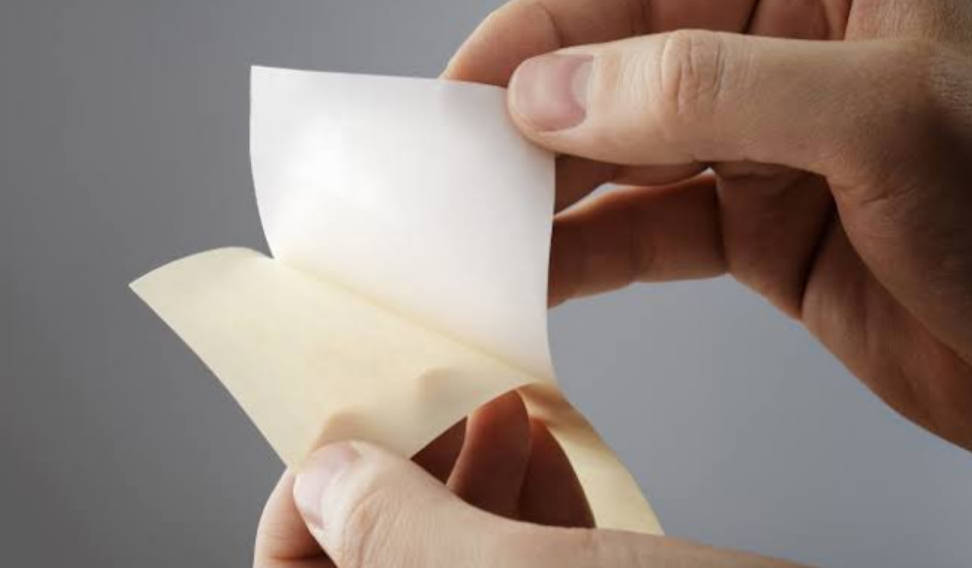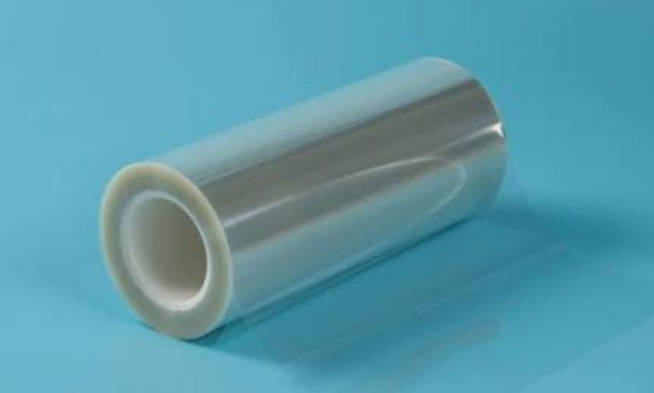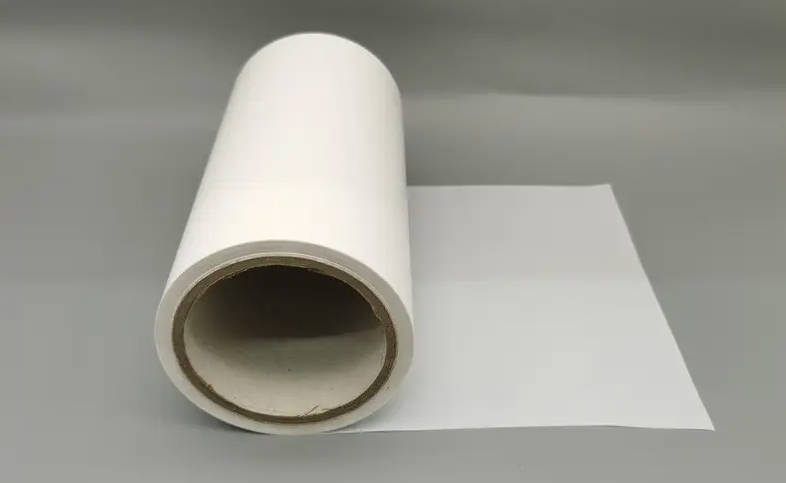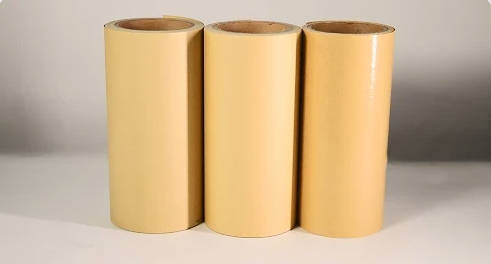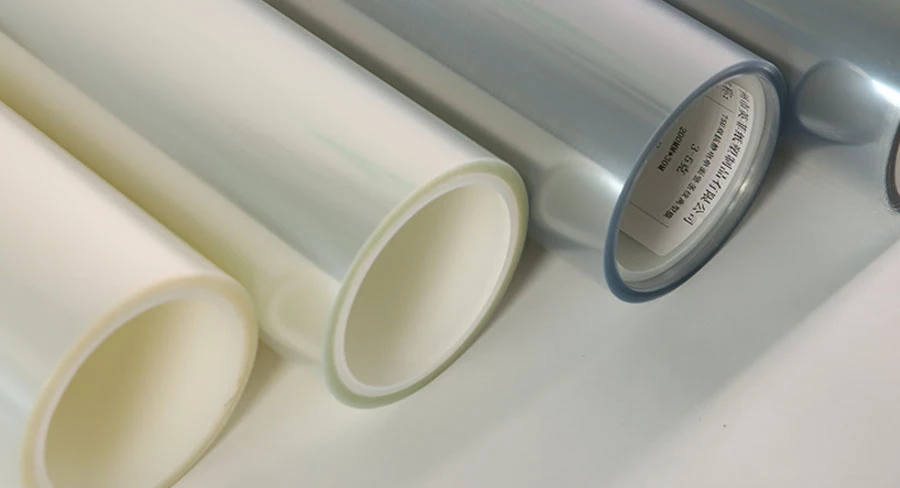
Static charge is a handling problem before it is an electrical one. When a release film web is unwound, slit or stripped at speed in a dry environment, the separation of surfaces generates charge that has nowhere to go on an insulating PET or BOPP substrate. The result is film that clings to rollers and to itself, dust that migrates to the web, and discharge events that are capable of damaging the small components and adhesive parts being carried on the liner.
An antistatic release film addresses this by giving the substrate a controlled path for charge so it does not accumulate. This article covers where the charge comes from, how antistatic and dissipative liners differ, which electronics and cleanroom processes specify them, and the points that belong on a specification sheet before an order is placed.

Where Static Comes From on a Converting Line
Charge generation on a film line is predictable once you look at the process. Every unwind, every roller contact, every strip of a liner away from an adhesive separates two surfaces that were in intimate contact, and the imbalance left behind appears as static. The effect gets worse as line speed rises, as ambient humidity falls through the winter months or in an air-conditioned cleanroom, and as the web gets thinner and lighter.
On an electronics line the consequences follow in a recognisable order. Film clings to itself on the rewind and blocks or telescopes on the roll. Airborne particles are drawn to the charged web and stay there, defeating the point of running the process in a release film cleanroom. Small die-cut parts shift on the liner or jump to the nearest grounded surface. At the far end, a discharge from a charged web into a component or an assembled device can cause latent damage that passes inspection and fails later in the field.
What Makes a Release Film Antistatic
An antistatic release film does two jobs that pull in different directions. The silicone surface still has to release the adhesive cleanly and at a controlled force. At the same time, the film has to dissipate charge rather than hold it, and keep dissipating after slitting, storage and rewinding.
The usual construction routes are these:
- A transparent conductive or dissipative coating applied on one or both faces, under or alongside the silicone.
- Conductive additives loaded into the film substrate itself, which makes the whole web dissipative rather than only its surface.
- A surface treatment or topical antistatic that reduces charge generation at the surface, typically through a thin hygroscopic layer.
Each route behaves differently. Coatings and filled substrates give a more permanent effect but change the surface that the silicone sits on, which is why release force and antistatic performance have to be optimised together rather than sequentially. Topical treatments are cheaper and easier to apply but depend on ambient moisture and can be removed by handling and by the adhesive itself. A liner tested the day it was made and a liner tested after three months of storage are not the same product on this measure, which is why storage conditions belong in the specification.
Antistatic, Conductive and Dissipative: Getting the Terms Right
The three words are not interchangeable, and using them loosely is a common source of mis-specified orders.
| Term | What it describes | Practical meaning on a liner |
|---|---|---|
| Conductive | A surface or material that moves charge away very quickly | Very low surface resistance; usually reserved for special constructions rather than standard liners |
| Dissipative | A surface that moves charge away in a controlled, slower way | The most common target for electronics liners; avoids the fast discharge that damages components |
| Antistatic | Any treatment that reduces charge generation or accumulation | A general umbrella term — it does not by itself define a resistance level |
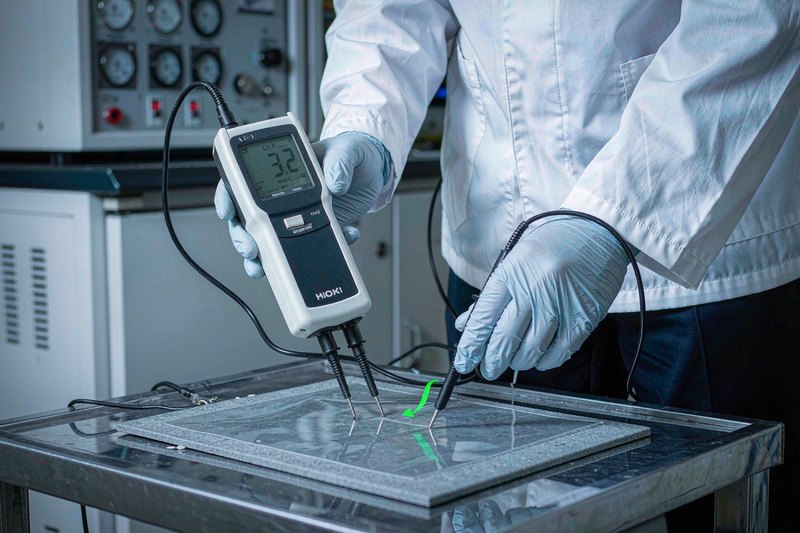
Because “antistatic” is an umbrella term, a specification that stops at that word tells the supplier very little. The measurable parameters are surface resistance and the time taken for a charge to decay, and both need a stated test method, electrode configuration and conditioning period. Resistance values vary widely depending on the coating configuration and the base film, so the target for a given application should be agreed with the supplier against the process it has to survive rather than taken from a catalogue figure.
Where Antistatic Liners Are Specified
Antistatic liners appear wherever a film web carries a small, static-sensitive part through a process in a low-humidity environment.
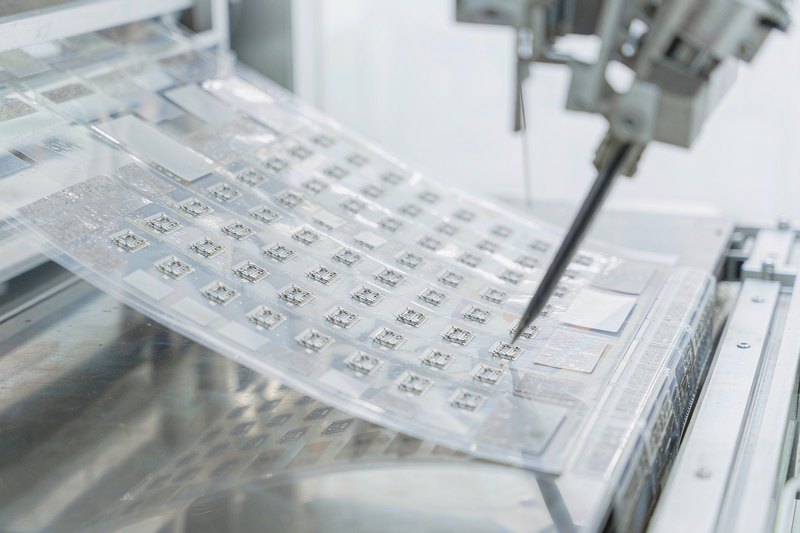
Die-cut adhesive components for electronics are the clearest case: a tiny gasket, spacer or shielding part is cut on the liner and delivered on it, and the part must stay exactly where it was placed until the pick-and-place nozzle takes it. Charge on the liner moves parts, and a part that has shifted is a reject. The same adhesive tape materials in display and optical assembly are handled in cleanrooms where particle attraction is as serious a problem as discharge.
Carrier and shipping applications follow. Fine-pitch components supplied on carrier film need a liner that does not attract dust or discharge into the parts during unwinding at the customer’s line. Where a film is used as a process carrier for pressure sensitive labels and similar parts, the antistatic requirement is often written into the customer’s own process specification rather than chosen by the converter.
Specifying an Antistatic Release Film
The specification has to carry the release requirement and the static requirement together, because choices made for one affect the other.
| Parameter | Why it matters |
|---|---|
| Substrate and thickness | Determines stiffness, dimensional stability and how much charge the web can hold before treatment. |
| Antistatic route (coating, filled substrate or topical) | Decides whether the effect is permanent and whether it survives slitting, rewinding and storage. |
| Surface resistance or charge decay target, with test method | A resistance figure is meaningless without the electrode configuration, applied voltage and conditioning conditions. |
| Which face carries the antistatic function | Silicone face, back face or both — determined by which surface contacts components and which contacts rollers. |
| Release force against the customer’s adhesive | Antistatic coatings sit in the same stack as the silicone and can shift the release value. |
| Cleanroom class for converting and packaging | Cutting and packing outside a controlled environment reintroduces the particles the liner is meant to avoid. |
| Slitting width, core and splice requirements | Narrow slitting increases edge exposure and charge generation; the custom slitting stage has to preserve the antistatic performance. |
Cleanroom Handling, Packaging and Storage
Antistatic performance is easy to lose after the film leaves the coating line. Slitting and rewinding in an uncontrolled area generates charge and can abrade a thin surface treatment. Packaging in a plain polyethylene bag provides no shielding, so a liner that measured well in the laboratory arrives at the customer carrying charge.
Practical controls include converting and packing in a controlled environment, using shielding or dissipative packaging for transport, keeping cores and end faces clean, and specifying storage conditions so that a moisture-dependent topical treatment is not dried out by a hot, low-humidity store. Where the film is used in a cleanroom, the packaging should be opened in the same class of environment in which the film will run, since the outer wrap is a particle source once it is cut.
Because the antistatic effect can be degraded after the coating line, quality control belongs on the finished slit roll and not only on the master roll: surface resistance or charge decay re-checked after slitting, and release force re-confirmed against the customer’s adhesive on the same sample.
Problems and Failure Modes
- Clings and blocks on the roll. Charge left on the web after rewinding holds the layers together; usually a sign that the antistatic route is not dissipating fast enough for the line speed.
- Particle contamination. A charged web attracts airborne dust; the fix is normally a combination of antistatic performance and controlled environment, not a stronger antistatic treatment alone.
- Die-cut parts shifting on the liner. Parts move because the liner is charged, not because the die-cut is wrong.
- Loss of effect after slitting. Mechanical damage or charge generation at the slitting stage degrades a surface treatment; the effect is often uneven across the slit width.
- Release value changed by the antistatic layer. Adding a coating under the silicone shifts the release force, and the differential between faces of a double-sided film shifts with it.
- Effect fades in storage. Topical treatments depend on moisture and can be removed by handling; a liner that passes on day one may not pass after a season in a dry store.
FAQ
Does an antistatic release film stop static damage completely?
No. It controls charge on the liner so that it dissipates instead of accumulating. The rest of the process — grounding, ionisation, cleanroom discipline and the handling of components — still has to do its share.
Should the antistatic function be on one side or both?
It depends on which surfaces matter. If components sit on the silicone face, that face has to dissipate; if the back face runs against rollers and generates charge, it may need treatment as well. Both-face construction costs more and can shift release force, so the requirement should be defined per application.
Can an antistatic coating change the release force?
Yes. The antistatic layer sits in the same stack as the silicone, so it affects how the adhesive interacts with the surface. Release force has to be re-confirmed against the customer’s adhesive whenever the antistatic design changes.
How should antistatic liners be stored?
In clean, dry, moderate conditions with the original packaging intact. Topical treatments depend on ambient moisture, and a low-humidity or hot store can reduce their performance before the film is used.
Is antistatic performance permanent?
It depends on the route chosen. Conductive coatings and filled substrates are more permanent; topical treatments are less so and are affected by handling, moisture and time.
Conclusion
Static on a release film line comes from separation — unwind, roller contact and liner stripping — and gets worse as speed rises and humidity falls. On an electronics or display line the consequences are predictable: blocked rewind rolls, dust drawn to the web, die-cut parts that shift before pick-and-place, and discharge that can damage components without showing up at inspection.
An antistatic liner manages that charge through a conductive or dissipative coating, a filled substrate, or a topical treatment. The routes differ in permanence and in how much they disturb the silicone surface, which is why release force and antistatic performance have to be specified together. The terminology matters as well: “antistatic” is an umbrella word, while the measurable targets are surface resistance and charge decay, each requiring a stated test method and conditioning period.
Specification should therefore fix the substrate and thickness, the antistatic route, the target resistance or decay figure with its test method, which face carries the function, and the release force against the customer’s own adhesive. Just as important are the steps after coating: slitting, converting, packaging and storage all decide whether the film arrives at the line in the condition it was tested in, which makes controlled converting and shielding packaging part of the product rather than an afterthought.
If you are running a static-sensitive film through a cleanroom line, send us the substrate and thickness you need, the resistance or decay target your process requires, which face contacts components, and the adhesive the liner has to release. We can confirm the construction and the converting conditions that will hold the performance through slitting and transport.