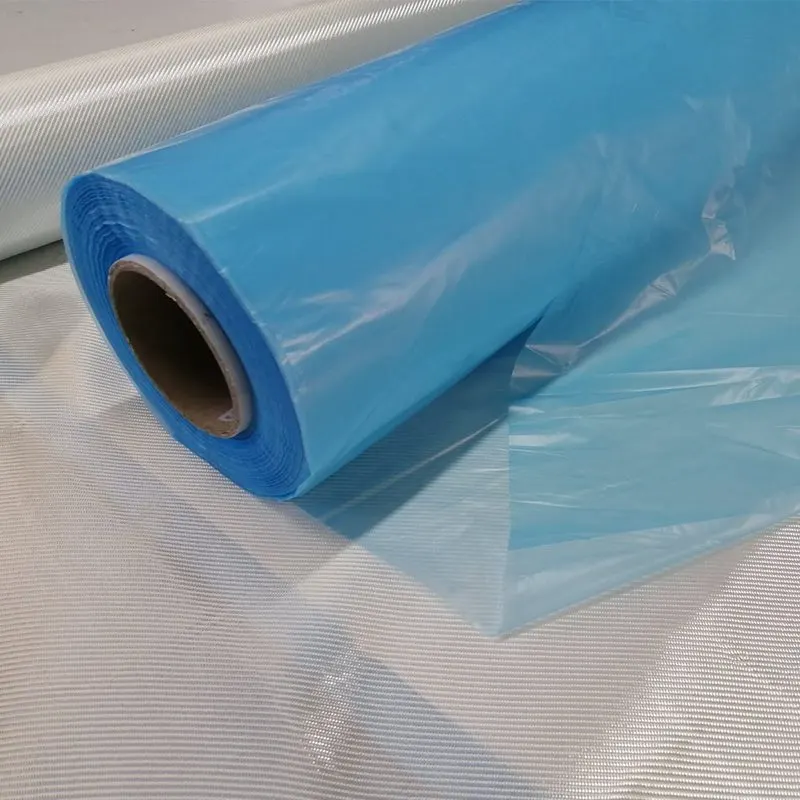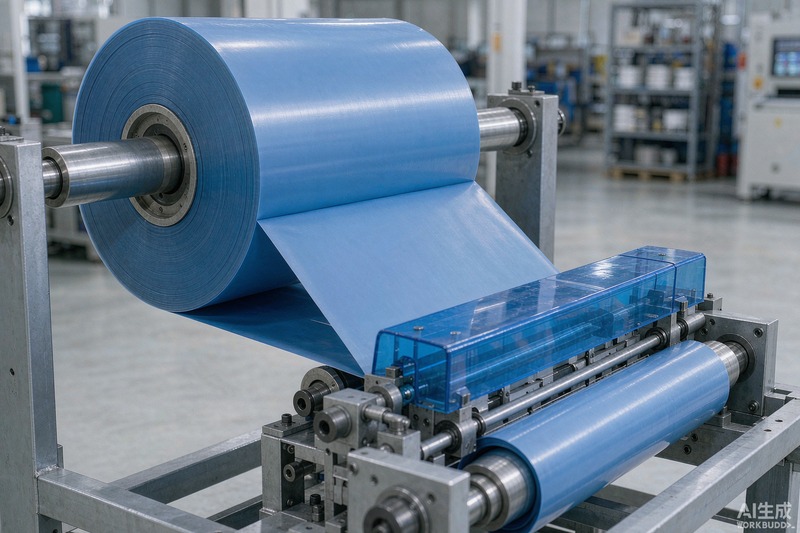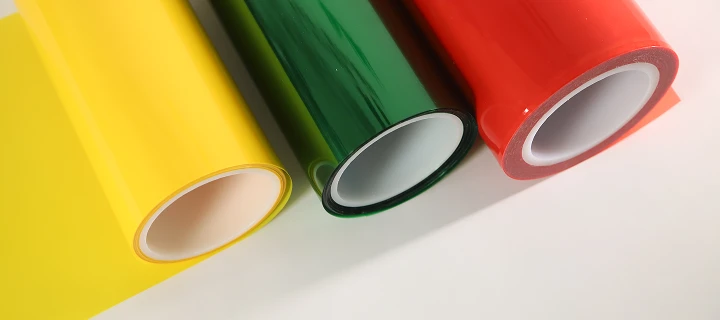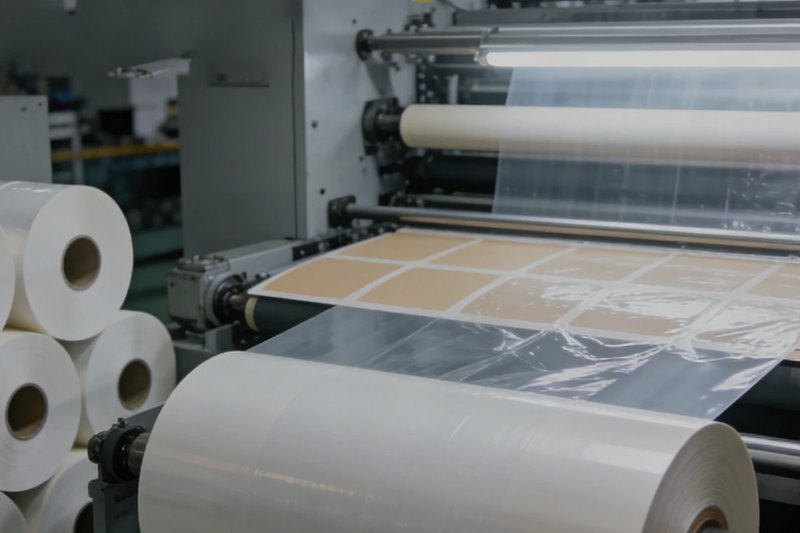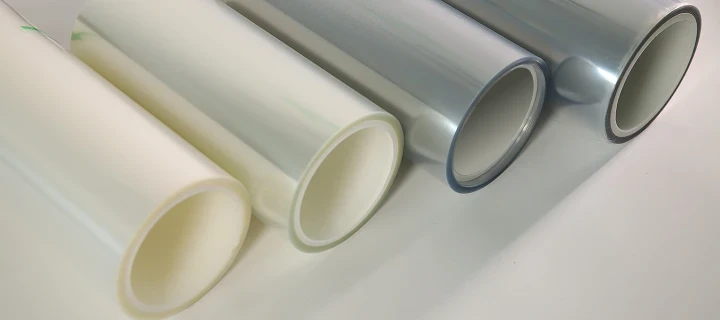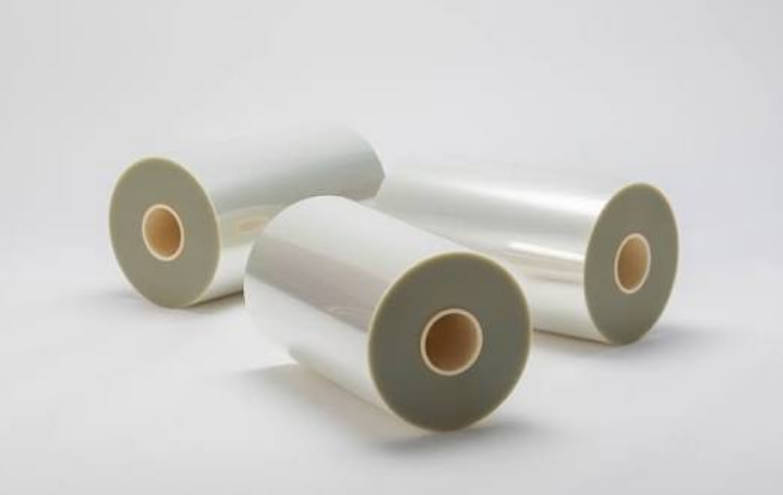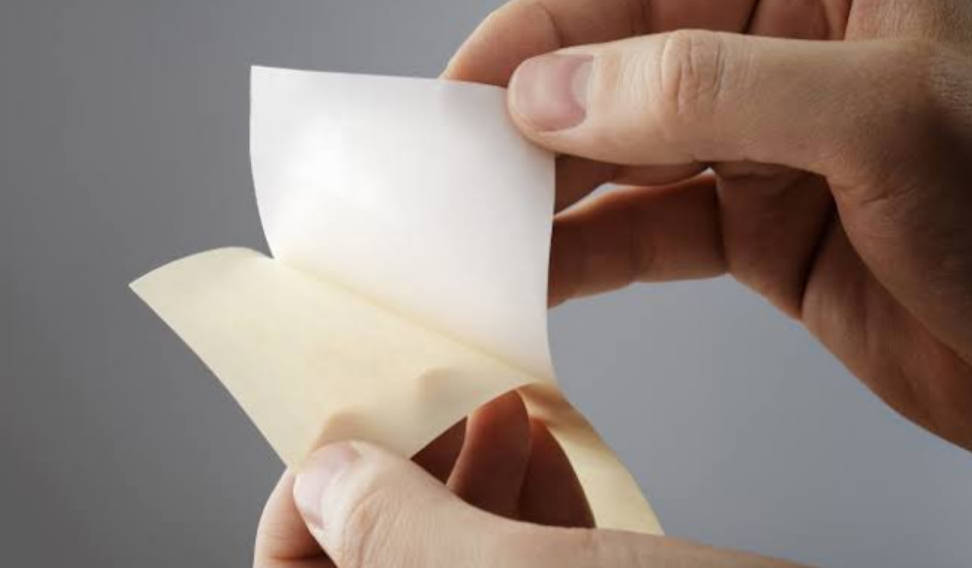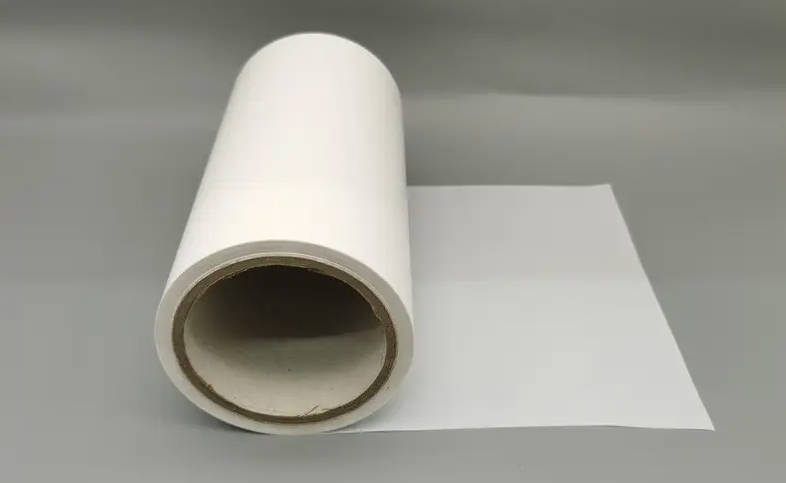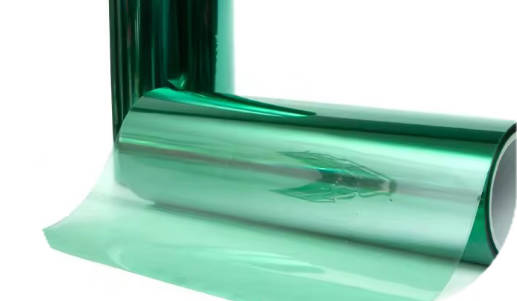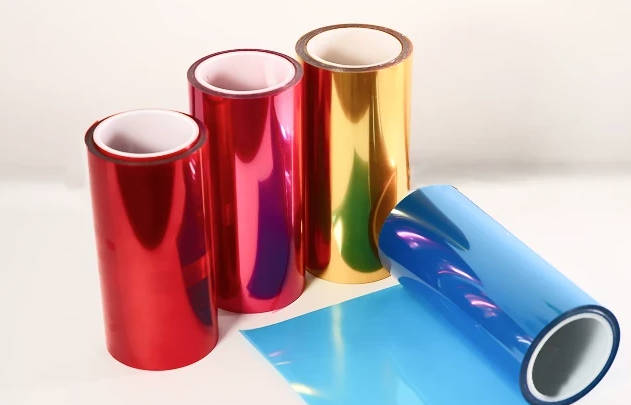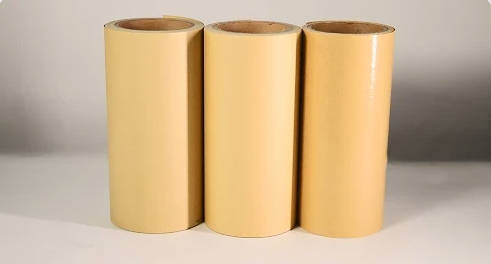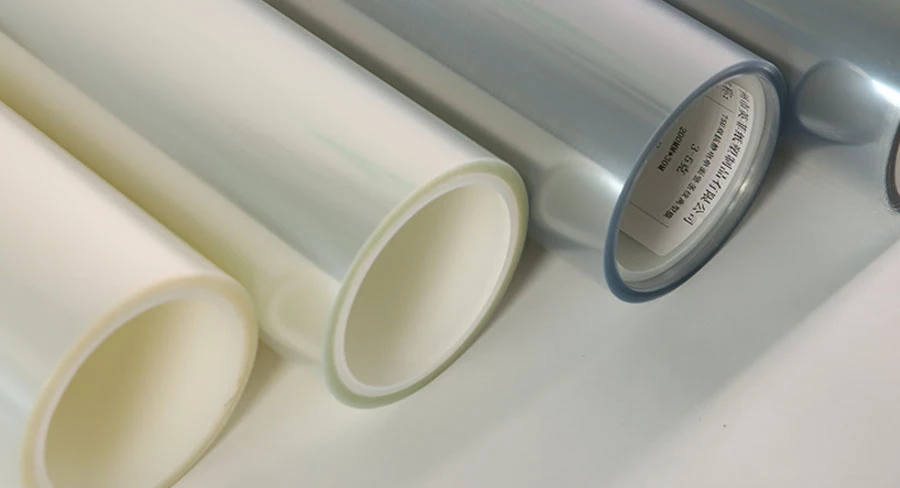
A double-sided release film carries a silicone coating on both faces, and on a differential grade those two faces are engineered to release at different levels. The face that holds the adhesive more firmly is the tight side. The face that lets go first is the easy side. Reverse that relationship and a die-cut part transfers to the wrong carrier, a liner lifts when it should stay flat, or a label ends up stuck to the applicator instead of the product.
This article explains how differential release force is defined and measured, why converting operations need two different release levels on one carrier, how the differential is built during double-sided release film manufacture, and the specification points and in-line checks that keep both sides behaving as intended.
What Differential Release Force Means on a Double-Sided Film
Release force is the peel force required to remove an adhesive from a release surface at a defined angle and speed, usually reported in grams per 25 mm or in newtons per 25 mm depending on the test standard in use. On a single-sided liner the number describes one interface. On a double-sided, differential film there are two interfaces and two numbers that must be quoted separately.
Converters normally express the pair as a ratio or as two absolute values: for example a tight side and an easy side, with the tight-to-easy gap wide enough that the adhesive commits predictably to one face. The gap is the design parameter, not either number on its own. A film with 15 g and 18 g release values is technically differential but practically useless, because the adhesive has no clear preference and can split unpredictably at the lamination nip.
Two further terms belong in the same conversation. Peel adhesion is what the adhesive does on the final substrate; release force is only what happens on the liner. And subsequent adhesion is the adhesion the adhesive achieves after it has been in contact with the liner for a period, which is where silicone transfer or over-cure on the tight side will show up as a drop in performance at the customer’s line.
Why Converters Use Two Different Release Levels
A single release level on both faces means the adhesive has no reason to prefer one side. In a two-liner transfer, where a die-cut part moves from a process liner to a delivery liner, that ambiguity is the failure mode. The tight side holds the adhesive while the carrier web is stripped away; the easy side releases it cleanly onto the new carrier or onto the product.
Typical situations where a differential carrier earns its place:
- Component transfer. A die-cut adhesive tape part is cut on one liner and transferred to another before the part is applied to the final assembly.
- Double-sided tape converting. The adhesive is laminated between two release faces, then one face is removed at the point of use by pulling at a lower force.
- Label and label-adjacent work. The liner must hold the adhesive through printing and pressure sensitive labels converting, then release without distortion at application.
- Medical and hygiene products. A wound dressing or fixation product needs controlled release on the skin-contact side and a firmer hold on the handling side.
- Thin and flexible parts. Foam, mesh and nonwoven carriers will stretch or tear if the release force is too high, so the easy side is deliberately made easier.
In each case the differential is what gives the process a defined direction. Without it, the adhesive decides which liner it prefers, and that decision changes with temperature, dwell time and line speed.
How the Differential Is Built During Coating
A differential is not created by coating both sides with one formulation and hoping the numbers separate. It is engineered through three variables that the coater controls on each pass.
Silicone system selection
Different silicone chemistries, and different ratios of release-controlling additives within a chemistry, produce different release levels against the same adhesive. A platinum-cured addition system and a tin-cured condensation system behave differently against acrylic, rubber and silicone adhesives, and the choice of chemistry for each face is the first lever. The general behaviour of these systems is covered in supplier technical literature; the specific pairing for a given adhesive should be confirmed against the actual adhesive the customer uses, not against a generic table.
Coat weight and coverage on each face
Release force falls as silicone coverage rises, up to the point where coverage is complete and further coating adds little. Running the tight side at a lower coat weight and the easy side at a higher one is one route to a differential. It is also the route that fails first, because a thin coating is less tolerant of substrate roughness and more vulnerable to rub-off during slitting and winding.
Surface treatment and finish
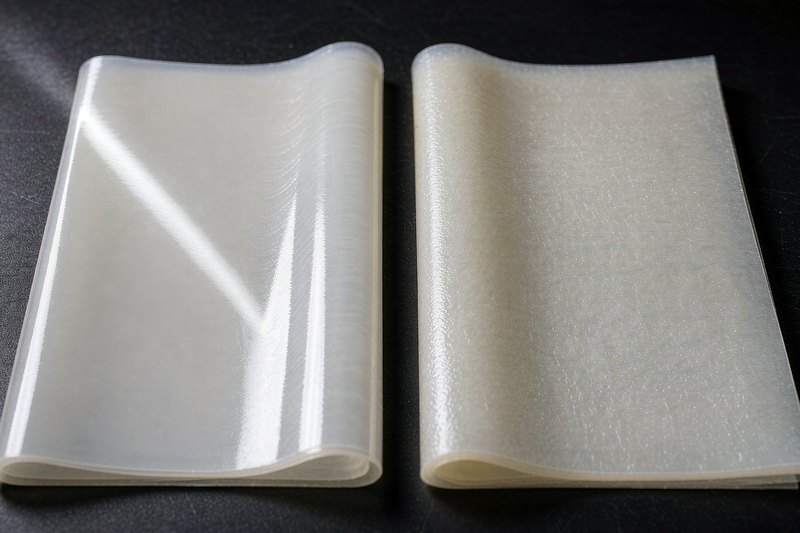
The substrate’s own surface — gloss, matte, corona-treated or untreated, primer-coated or not — changes how the silicone anchors and how the adhesive wets out. A matte face and a gloss face on the same film already release differently against the same adhesive, which is why finish is specified separately from release force and why the two cannot be designed independently. Custom work of this kind is normally handled as a custom coating and slitting project rather than a catalogue item.
Specifying the Differential: What to Confirm Before Ordering
Because so much of the behaviour depends on the adhesive that will sit on the film, the specification should be built around the customer’s adhesive and process, not around a film datasheet alone.
| Item to confirm | Why it decides the outcome |
|---|---|
| Adhesive type and coat weight | Rubber, acrylic and silicone adhesives respond differently to the same release surface; the differential must be set against the adhesive actually used. |
| Tight side and easy side, identified physically | The two faces must be distinguishable on the roll — by marking, by finish, by colour or by winding direction — or operators will load the web the wrong way round. |
| Release force targets with test method | Values are meaningless without the peel angle, peel speed and dwell time used to measure them. State the method with the number. |
| Dwell time at the customer’s line | Release force drifts in the first hours and days after lamination. A value measured at 20 minutes may not describe the same interface after a week. |
| Thickness and web width | Thinner films are more sensitive to tension and more prone to edge damage; the differential has to survive the web handling, not just the peel test. |
| Whether the film is the delivery liner or the process liner | This defines which face is tight and which is easy — the same film can be specified either way round. |
| Whether a full engineered release liner build is needed | Multi-layer and primed constructions are used when a single coated film cannot hold the differential stably. |
Where Differential Double-Sided Liners Are Used
The applications cluster where a small part has to move between carriers, or where one face of a product contacts skin or an optical surface while the other face is handled by machinery.
Foam tape and gasket converting is a common case. The foam is laminated between two liners; the process liner must hold through die cutting and matrix stripping, and the delivery liner must release the finished part onto the assembly without dragging the foam. Electronics and display work follows the same logic at a smaller scale, where a die-cut adhesive component is transferred from a carrier film onto a component or a lens. In medical converting, the differential separates the handling liner from the face that contacts the patient.
In all of these, the differential is doing the same job: it converts an ambiguous interface into a directed one.
Problems That Show Up on the Converting Floor
Most differential failures trace back to one of a small set of causes.
- The wrong side loaded. The web is wound so the tight side faces the wrong direction and the adhesive transfers to the carrier the operator wanted to keep clean. Physical identification of the two faces is the fix, not a tighter tolerance.
- Differential too small. The adhesive splits between faces, leaving residue on both and contaminating downstream rollers.
- Differential too large. The easy side releases so readily that the web shifts during lamination, or the tight side grips hard enough to distort thin foam or stretch a nonwoven.
- Release force drift over time. The tight side becomes tighter as the adhesive interacts with the silicone, and a part that ran cleanly in week one tears in week six.
- Rub-off on the thin side. Mechanical damage to a low-coat-weight face during slitting or rewind creates localised tight spots and unpredictable release.
- Silicone transfer to the adhesive. Over-cured or poorly anchored coating on the tight side migrates into the adhesive and suppresses final adhesion on the customer’s product.
Verifying Both Sides Before Release to Production
A differential film should never be released on the strength of one peel reading. The release force of each face is measured against the customer’s adhesive, at the dwell times that matter, and the ratio between them is checked rather than the absolute values alone. quality control on this type of product normally includes peel testing on both faces, subsequent adhesion testing to detect silicone transfer, visual inspection of both surfaces for coating defects and rub marks, and a web handling trial to confirm that the differential survives real tension and speed.
It also helps to agree the acceptance criteria before the trial run, so that a borderline pair of release values is either accepted with a defined tolerance or rejected on a stated rule, rather than argued about after the roll is on the machine.
FAQ
Which side of a double-sided release film should be tighter?
The side that must keep the adhesive during converting is the tight side, and the side the adhesive has to leave first is the easy side. Which physical face that corresponds to depends on the process — whether the film acts as the process liner or the delivery liner — so it has to be defined per application rather than by convention.
How large should the difference between the two release levels be?
Large enough that the adhesive commits predictably to the tight side, and not so large that the easy side releases before the lamination nip has closed. The correct gap depends on the adhesive type, coat weight, dwell time and line speed, and should be set against the customer’s own adhesive rather than a generic ratio.
Why does release force change after lamination?
Because the adhesive continues to interact with the silicone surface in the hours and days after contact. A release value measured shortly after lamination may not describe the same interface after a week, so dwell time has to be part of the specification.
Can a film be made differential without changing the silicone chemistry?
Yes. Coat weight, surface finish and surface treatment on each face all change release force, and running one face at a higher coverage than the other produces a differential without switching chemistry. The trade-off is that a thin coating is more vulnerable to rub-off in slitting and winding.
How is silicone transfer detected?
By testing subsequent adhesion: the adhesive is applied to the film, aged for a defined period, removed, and then tested on a reference surface. A drop against the control indicates that silicone has migrated from the liner into the adhesive.
Conclusion
A differential double-sided release film is defined by two release values and the gap between them, not by a single number. The tight side holds the adhesive through die cutting, matrix stripping and lamination; the easy side lets the adhesive leave in a controlled direction, whether that is onto a delivery liner, an assembly, or a patient. The differential is engineered through the silicone chemistry, the coat weight on each face, and the surface finish and treatment of the substrate — which is why finish and release force are specified together rather than separately.
Specification succeeds or fails on details that sit outside the film datasheet: which adhesive will be used, at what coat weight, over what dwell time, and with which face identified physically on the roll. Failures on the floor are dominated by the wrong side loaded, a differential that is too small to direct the adhesive or too large to stay put, drift as the adhesive ages against the silicone, and rub-off on a thinly coated face.
Verification therefore has to cover both faces — peel on each side against the customer’s adhesive, subsequent adhesion to catch silicone transfer, and a web trial that proves the differential survives real tension and speed.
If you are converting a part that has to transfer between two liners, send us the adhesive type and coat weight, the thickness and width you need, the dwell time on your line and which face must stay tight. We can confirm whether a differential double-sided film or a multi-layer engineered construction is the right starting point.