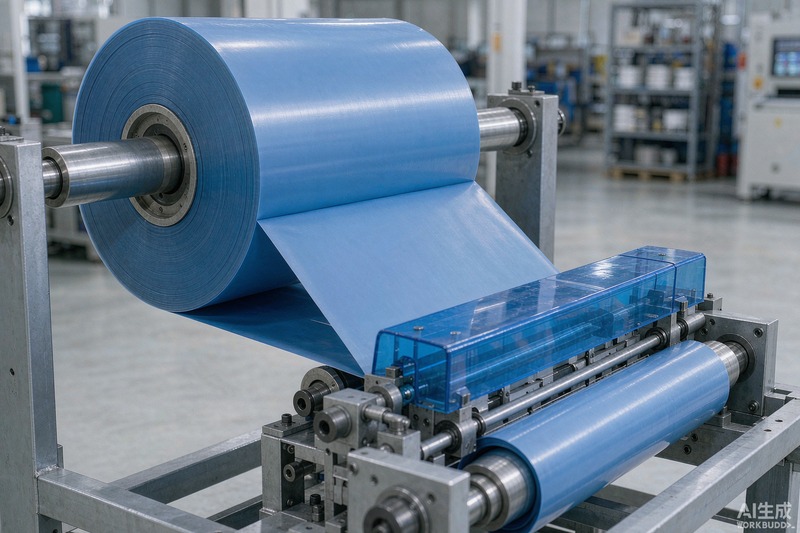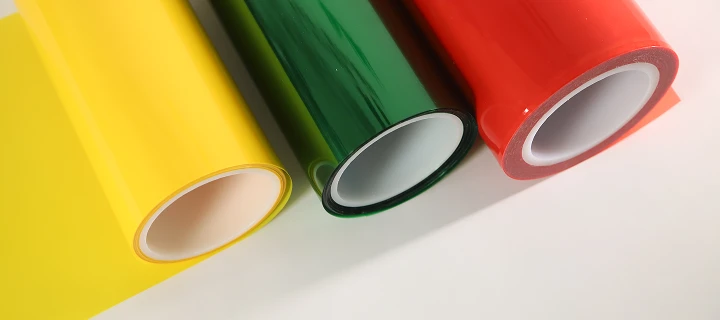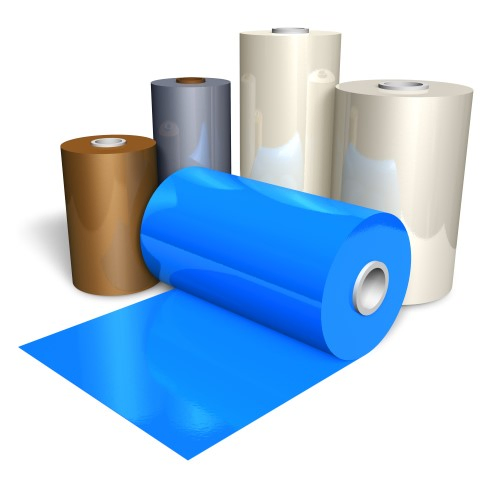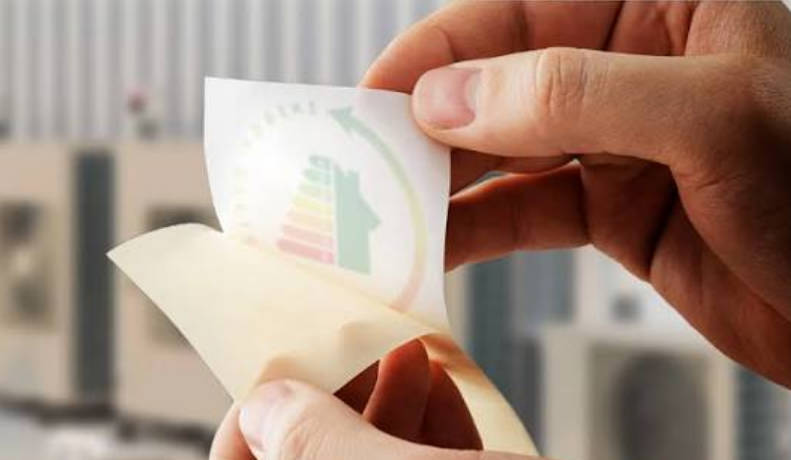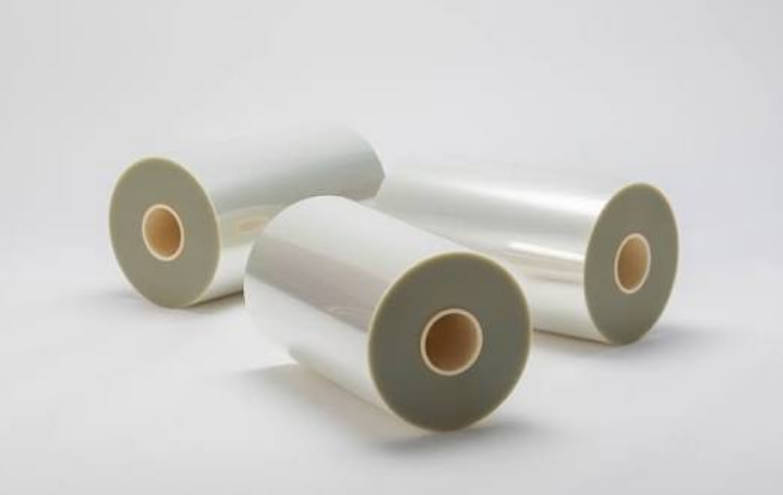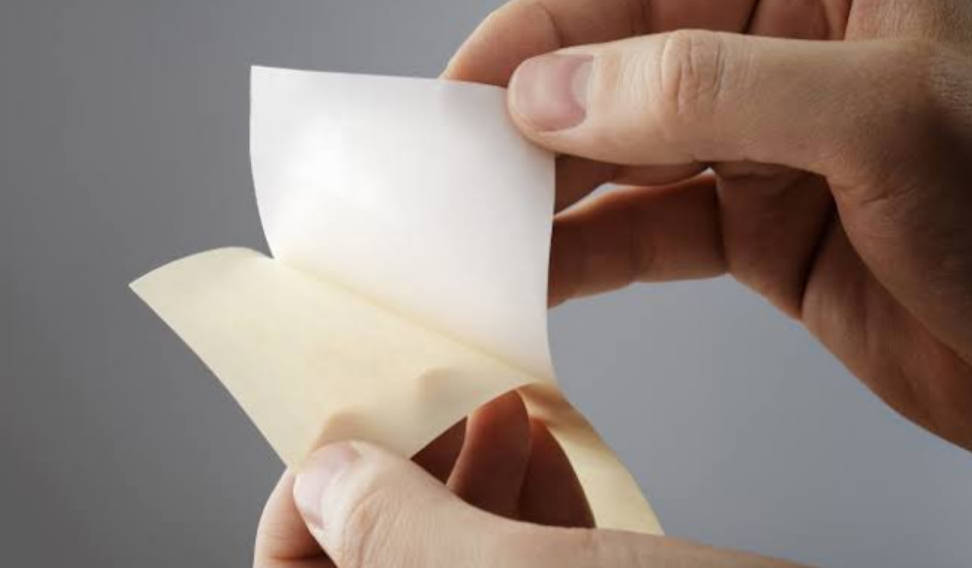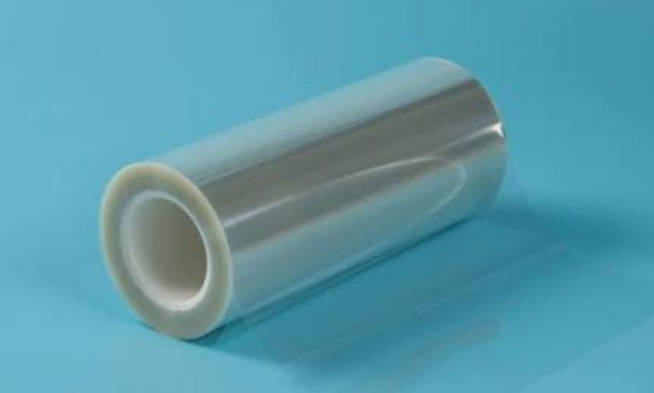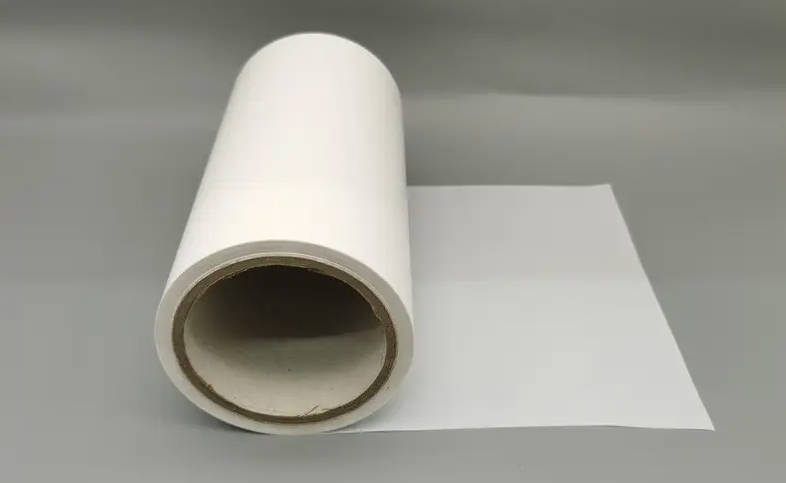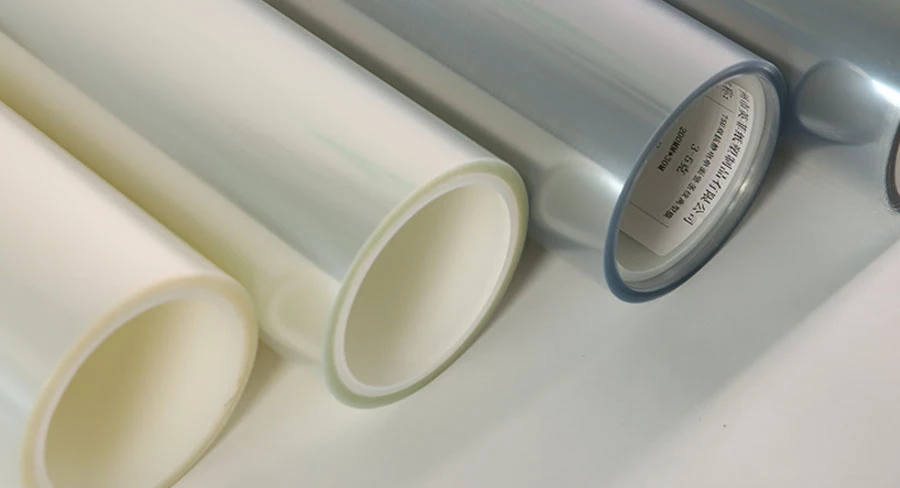
Adhesive residue on a release liner usually happens when the adhesive, release coating, release force, storage condition, or processing method is not properly matched. In adhesive products, the liner should separate cleanly from the adhesive layer. If adhesive remains on the liner after peeling, the product may suffer from poor bonding, surface defects, low yield, unstable converting, or customer complaints.
This problem is common in adhesive tapes, pressure sensitive labels, protective films, medical adhesive products, foam tapes, transfer tapes, and die-cut adhesive components. Buyers may describe the problem in different ways: sticky release liner, adhesive residue on release film, adhesive transfer, dirty liner, glue remaining on liner, or abnormal adhesive surface. Although the wording is different, the core issue is usually the same: the adhesive is not releasing cleanly from the liner.
Preventing adhesive residue requires a complete review of adhesive chemistry, release liner substrate, silicone coating, release force, aging behavior, temperature, pressure, humidity, and production conditions. A release film that works well for one adhesive may fail with another adhesive system.
This guide explains the common causes of adhesive residue on release liners and how to prevent it by choosing the right release film and process conditions.
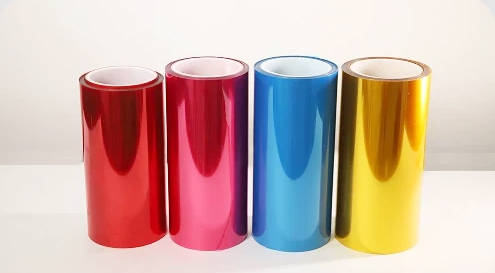
What Is Adhesive Residue on a Release Liner?
Adhesive residue means part of the adhesive layer remains on the release liner after peeling. Instead of transferring fully to the intended product surface, the adhesive splits, smears, deposits, or sticks to the liner.
In a properly designed adhesive product, the liner should protect the adhesive surface and then peel away cleanly. The adhesive should remain on the product backing, label face stock, protective film, foam carrier, or final application surface.
A typical adhesive product structure includes:
| Layer | Function |
|---|---|
| Product backing or face material | Provides the main structure, such as tape backing, label face, foam, film, or fabric |
| Adhesive layer | Provides bonding performance |
| Release coating | Controls peeling between adhesive and liner |
| Release liner substrate | Supports coating, storage, converting, and application |
Adhesive residue appears when the release interface fails or when the adhesive layer loses internal stability during peeling.
This means the problem may come from the liner, adhesive, processing condition, storage condition, or a combination of several factors.
Why Adhesive Residue Matters
Adhesive residue is not only an appearance problem. It can affect production efficiency and final product performance.
| Problem Caused by Residue | Impact |
|---|---|
| Adhesive loss | Lower bonding performance on the final product |
| Dirty liner surface | Contamination during converting or rewinding |
| Uneven adhesive layer | Poor appearance, poor bonding, or surface defects |
| Difficult peeling | Slower production and poor user experience |
| Die-cutting instability | Parts may shift, lift, or deform |
| Roll blocking | Difficult unwinding and higher waste |
| Customer complaints | Final users may reject the material |
| Production downtime | Operators need to stop and clean equipment |
A clean release liner should allow stable peeling without adhesive transfer, liner contamination, or adhesive surface damage.
For high-value products such as electronics tapes, medical adhesives, optical protective films, and precision die-cut parts, even minor residue can cause serious quality issues.
Common Signs of Adhesive Residue Problems
Adhesive residue may appear in different forms depending on product type and process.
Common signs include:
- Glue remains on the release liner after peeling
- Liner feels sticky after removal
- Adhesive layer looks uneven or patchy
- Adhesive surface shows streaks, haze, or spots
- Tape is difficult to unwind
- Labels lift or tear during dispensing
- Die-cut parts shift during matrix stripping
- Adhesive transfers during slitting or rewinding
- Residue appears after aging but not during initial testing
- Bonding strength decreases after liner removal
If residue only appears after storage, the issue may be related to aging, roll pressure, temperature, or adhesive wet-out. If residue appears immediately, the issue may be related to release coating, adhesive compatibility, coating weight, or lamination conditions.
Main Causes of Adhesive Residue on Release Liners
1. Release Force Is Too High
Release force determines how much force is required to peel the adhesive product away from the liner. If release force is too high, the adhesive may be pulled, stretched, or partially transferred to the liner.
Common results include:
| Symptom | Possible Explanation |
|---|---|
| Difficult peeling | Release force is too tight |
| Adhesive remains on liner | Adhesive bond to liner is too strong |
| Adhesive stretches during peeling | Adhesive is soft or high-tack |
| Product backing deforms | Peeling force exceeds product stability |
| Residue increases after storage | Aging increases adhesive-liner contact |
When release force is too high, the adhesive may fail internally before it separates cleanly from the liner.
This is especially common with soft adhesives, aggressive adhesives, hot melt adhesives, rubber-based adhesives, and thick adhesive layers.
2. Release Coating Does Not Match the Adhesive
Different adhesives interact differently with release coatings. Acrylic, rubber, silicone, hot melt, removable, medical, and high-tack adhesives may require different release systems.
| Adhesive Type | Residue Risk |
|---|---|
| Acrylic adhesive | Usually stable, but release force still needs matching |
| Rubber adhesive | Higher tack may increase transfer risk |
| Hot melt adhesive | Heat and pressure may increase wet-out |
| Silicone adhesive | May require fluorosilicone or specialty release coating |
| Medical adhesive | Needs clean and stable release behavior |
| High-tack adhesive | May pull strongly on the release surface |
A standard silicone release film may work well for one adhesive but cause residue with another. Adhesive compatibility testing is essential before bulk production.
3. Silicone Coating Is Incomplete or Uneven
If the silicone release coating is too thin, uneven, poorly cured, or has pinholes, the adhesive may contact the base film or paper surface too strongly. This can cause localized residue, tight release, or adhesive picking.
Possible coating-related causes include:
- Low silicone coating weight
- Poor coating uniformity
- Incomplete curing
- Weak coating anchorage
- Surface contamination before coating
- Coating defects across the web
- Damaged release surface during slitting or rewinding
In these cases, residue may appear in streaks, spots, or certain areas across the roll width.
4. Adhesive Has Low Cohesive Strength
Sometimes the liner is not the main cause. Adhesive residue can happen when the adhesive itself has poor internal strength. During peeling, the adhesive splits: part remains on the product, and part stays on the liner.
This may happen when:
| Adhesive Issue | Possible Result |
|---|---|
| Adhesive is too soft | Smearing or stringing during peeling |
| Adhesive is under-cured | Residue and transfer |
| Adhesive coating is too thick | Higher internal deformation |
| Adhesive formulation is unstable | Poor cohesive strength |
| Solvent or water is not fully removed | Weak adhesive layer |
| Adhesive ages poorly | Residue increases over time |
For this reason, residue troubleshooting should evaluate both the release liner and the adhesive formulation.
5. Excessive Roll Pressure
When adhesive products are stored in rolls, the adhesive and liner remain in close contact under pressure. High winding tension, large roll diameter, or long storage time may increase adhesive wet-out on the liner.
This can make the liner harder to peel and increase residue risk.
Roll pressure is especially important for:
- Foam tapes
- Double-sided tapes
- Thick adhesive tapes
- Protective films
- High-tack labels
- Soft medical adhesives
- Transfer tapes
6. High Temperature During Processing or Storage
Heat can soften adhesive and increase contact between adhesive and liner. If the product is exposed to drying ovens, hot lamination, curing, thermal pressing, or high-temperature storage, adhesive residue may become more likely.
PET release film may be preferred in processes that require better dimensional stability and heat resistance, but the release coating and adhesive compatibility must still be tested.
7. Humidity and Moisture Effects
Humidity may affect paper-based liners, adhesive tack, and storage stability. Some adhesives absorb moisture or change behavior under humid conditions. Paper liners may curl, deform, or change surface behavior if not properly protected.
For humid environments, film-based release liners or coated release structures may be considered.
8. Wrong Liner Substrate
The base liner material also matters. Film liners and paper liners behave differently.
| Liner Type | Possible Residue-Related Consideration |
|---|---|
| PET release film | Good stability and smoothness; suitable for precision applications |
| PE release film | Flexible but may deform under heat or tension |
| PP/BOPP release film | Useful for general film liner applications |
| Glassine release paper | Smooth paper liner for labels and adhesive products |
| PE coated release paper | Better moisture barrier than ordinary paper |
| Kraft release paper | Stronger paper liner for industrial use |
If the liner substrate stretches, wrinkles, absorbs moisture, or fails under process conditions, residue may become worse.
Adhesive Residue: Liner Problem or Adhesive Problem?
A common mistake is blaming the release liner immediately. In reality, residue can come from either side.
| Evidence | More Likely Cause |
|---|---|
| Residue appears only with one adhesive | Adhesive compatibility issue |
| Residue appears across multiple adhesives | Release liner or coating issue |
| Residue appears after aging only | Storage, pressure, or adhesive aging |
| Residue appears in stripes or local zones | Coating uniformity or surface defect |
| Adhesive splits internally | Low cohesive strength |
| Liner becomes sticky after peeling | Adhesive transfer or release failure |
| Product surface loses tack | Adhesive transfer or contamination |
| Problem appears after heat exposure | Thermal stability issue |
The best troubleshooting method is to test the liner and adhesive together under real production and storage conditions.
A simple room-temperature peel test is not enough for many industrial adhesive products.
How to Prevent Adhesive Residue on Release Liners
1. Match Release Force to the Adhesive
The release liner should not be too tight or too easy. For aggressive adhesives, a properly designed release coating is needed to prevent adhesive transfer. For soft adhesives, release force must be balanced to avoid adhesive deformation.
Buyers should test:
- Initial release force
- Aged release force
- Release after heat exposure
- Release after roll pressure
- Release at actual peeling speed
- Release after die-cutting or slitting
2. Choose the Right Release Coating
Silicone release coating is commonly used, but not all silicone systems are the same. Some adhesive systems require specialty coatings, fluorosilicone release coatings, non-silicone release coatings, or custom release levels.
Important coating questions include:
| Question | Why It Matters |
|---|---|
| Is the adhesive acrylic, rubber, hot melt, or silicone? | Determines coating compatibility |
| Is the adhesive high-tack or low-tack? | Affects release level |
| Is the adhesive soft or thick? | Affects deformation risk |
| Will the material be aged in rolls? | Affects long-term release |
| Is the application clean or sensitive? | May require lower transfer or cleaner coating |
3. Select a Suitable Liner Substrate
For precision adhesive products, PET release film is often chosen because it offers good dimensional stability, smoothness, and strength. For standard labels or tapes, release paper may be suitable. For flexible applications, PE or PP liners may be considered.
The substrate should match:
- Coating process
- Machine tension
- Die-cutting method
- Temperature exposure
- Product flexibility
- Surface cleanliness requirement
- Cost target
4. Control Adhesive Coating and Drying
Adhesive residue may result from under-dried, under-cured, or unstable adhesive. The adhesive layer should have enough cohesive strength before lamination with the liner.
Manufacturers should check:
- Adhesive coating weight
- Drying or curing condition
- Residual solvent or moisture
- Adhesive uniformity
- Coating thickness
- Tack development after aging
- Lamination pressure
5. Manage Roll Winding Tension
Excessive winding tension increases pressure between adhesive and liner. This can increase adhesive wet-out and cause residue after storage.
Control points include:
- Winding tension
- Roll diameter
- Core size
- Storage position
- Time under pressure
- Rewinding quality
- Roll packaging
6. Improve Storage Conditions
Storage can change release performance. High temperature, high humidity, direct sunlight, heavy stacking, or long aging may increase residue risk.
Recommended storage practices include:
| Storage Factor | Practical Control |
|---|---|
| Temperature | Avoid excessive heat |
| Humidity | Keep materials in suitable humidity range |
| Pressure | Avoid excessive stacking or roll compression |
| Cleanliness | Protect rolls from dust and contamination |
| Time | Use materials within recommended storage period |
| Packaging | Keep original packaging until use |
7. Test Before Bulk Production
Sample testing should simulate real production. For adhesive products, test both fresh and aged samples.
Useful tests include:
| Test | Purpose |
|---|---|
| Initial release force | Checks basic peeling behavior |
| Aged release force | Checks stability after storage |
| Adhesive transfer test | Detects residue or liner contamination |
| Die-cutting trial | Checks cutting and stripping performance |
| Slitting trial | Checks edge quality and adhesive bleed |
| Heat exposure test | Checks thermal stability |
| Roll storage test | Checks pressure-related residue |
| Final bonding test | Confirms adhesive performance after liner removal |
A liner should be approved only after it performs well with the actual adhesive, actual production process, and realistic storage conditions.
Application-Specific Prevention Tips
Adhesive Tapes
For adhesive tapes, residue prevention depends on release force, roll pressure, adhesive tack, and slitting quality. Double-sided tapes may require differential release liners to control transfer sequence.
Pressure Sensitive Labels
For labels, residue may affect die-cutting, matrix stripping, and dispensing. The liner should provide stable release without adhesive picking or label lifting.
Protective Films
Protective films require clean peeling and stable adhesive protection. Residue may cause surface defects, haze, or poor application to metal, glass, plastic, or coated surfaces.
Medical Adhesive Products
Medical adhesive products require clean and stable release. Residue may affect skin contact, handling, or product consistency. Application-specific testing is important.
Electronics Die-Cut Parts
Electronics adhesive components often require PET release film with stable release, low contamination, and good dimensional control. Residue can affect assembly and bonding reliability.
How to Choose a Supplier to Reduce Residue Risk
A reliable supplier should understand adhesive-liner interaction, not only film or paper specifications.
When evaluating a release liner supplier, ask:
| Supplier Question | Why It Matters |
|---|---|
| Can release force be customized? | Helps match different adhesives |
| Do you offer PET, PE, PP, or paper liner options? | Allows substrate comparison |
| Can you support one-side or double-side release? | Needed for different product structures |
| Can aged release testing be supported? | Helps evaluate storage stability |
| How is coating uniformity controlled? | Reduces local residue problems |
| Can samples be tested before bulk order? | Reduces purchasing risk |
| Can rolls be slit to custom widths? | Supports production efficiency |
| Do you support application-based recommendations? | Helps prevent wrong material selection |
Yingfei provides release film materials for adhesive tapes, labels, protective films, medical adhesives, electronics materials, and industrial converting applications where clean release and stable peeling are important.
You can also visit Yingfei Liner to explore release liner material options for different adhesive product structures.
Practical Buying Checklist
Before ordering release film or release liner, prepare the following information:
| Item | What to Confirm |
|---|---|
| Product type | Tape, label, protective film, medical adhesive, foam, electronics, or die-cut part |
| Adhesive type | Acrylic, rubber, hot melt, silicone, removable, permanent, or high-tack |
| Adhesive coating weight | Helps estimate release force and residue risk |
| Liner substrate | PET film, PE film, PP film, release paper, or coated paper |
| Release force | Easy, medium, tight, differential, or custom |
| Coating side | One-side or double-side release |
| Thickness | Nominal thickness and tolerance |
| Processing temperature | Coating, drying, lamination, or storage temperature |
| Roll pressure | Winding tension and roll diameter |
| Converting process | Slitting, die-cutting, lamination, sheeting, or rewinding |
| Storage condition | Temperature, humidity, time, and packaging |
| Testing requirement | Initial release, aged release, residue check, final bonding test |
FAQ
1. What causes adhesive residue on release liners?
Adhesive residue on release liners can be caused by high release force, adhesive-liner incompatibility, poor silicone coating, weak adhesive cohesive strength, excessive roll pressure, high temperature, humidity, aging, or wrong liner substrate.
2. Why does adhesive stay on the release film after peeling?
Adhesive may stay on release film when the adhesive bonds too strongly to the liner or splits internally during peeling. This can happen when release force is too high, the adhesive is too soft, or the release coating does not match the adhesive.
3. How can I prevent sticky release liner problems?
Prevent sticky release liner problems by matching release force to the adhesive, selecting the correct release coating, using a suitable liner substrate, controlling adhesive drying or curing, reducing excessive roll pressure, and testing aged release performance.
4. Is adhesive residue a liner problem or adhesive problem?
It can be either. If residue appears with many adhesives, the liner may be the issue. If it appears only with one adhesive, the adhesive formulation or compatibility may be the cause. Testing both sides together is necessary.
5. Does storage condition affect adhesive residue?
Yes. Heat, humidity, roll pressure, long storage time, and poor packaging can increase adhesive wet-out and change release force. Residue may appear after aging even if initial peeling looks normal.
6. Which release film helps reduce adhesive residue?
PET release film is often used for applications requiring dimensional stability, smoothness, and cleaner release. However, residue prevention depends mainly on release coating, adhesive compatibility, release force, and process testing.
7. What should I test before buying release film in bulk?
Test initial release force, aged release force, adhesive transfer, residue after peeling, slitting performance, die-cutting performance, heat exposure, roll storage stability, and final bonding performance after liner removal.
Conclusion
Adhesive residue on release liners is usually caused by a mismatch between adhesive, release coating, release force, liner substrate, processing conditions, or storage environment. It may appear as sticky liner, adhesive transfer, glue residue, uneven adhesive surface, difficult peeling, or poor final bonding.
To prevent residue, buyers should not choose release film only by price or material name. The correct approach is to match the liner to the adhesive system and production process. Key factors include release force, coating compatibility, substrate selection, thickness, temperature exposure, roll pressure, storage conditions, and aged performance testing.
If you are experiencing adhesive residue on release film or need a more suitable release film for tapes, labels, protective films, medical adhesives, electronics materials, or die-cut adhesive products, Yingfei can help evaluate liner structures based on your adhesive type and application requirements.