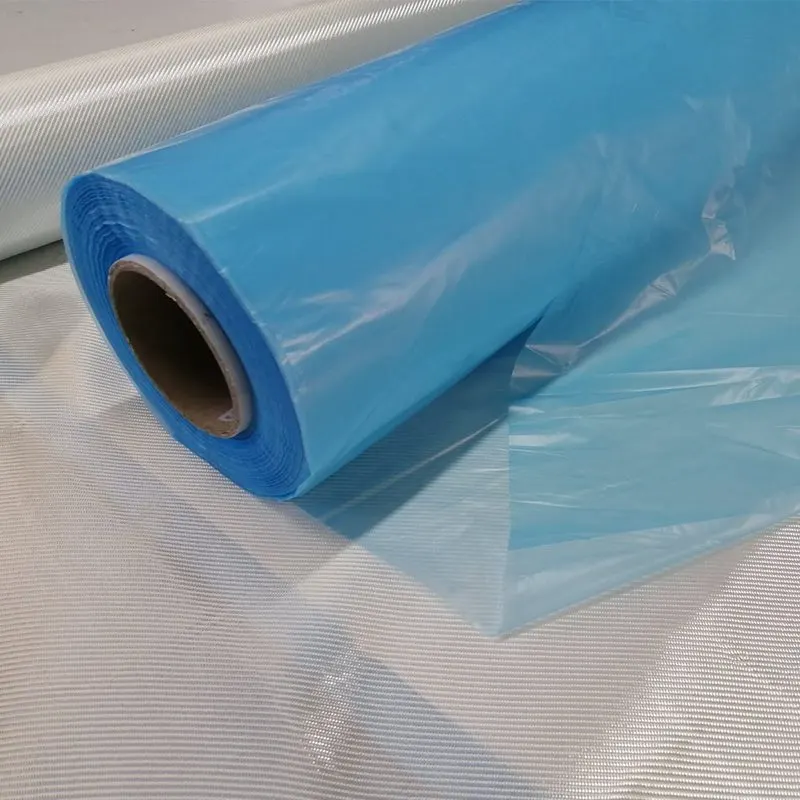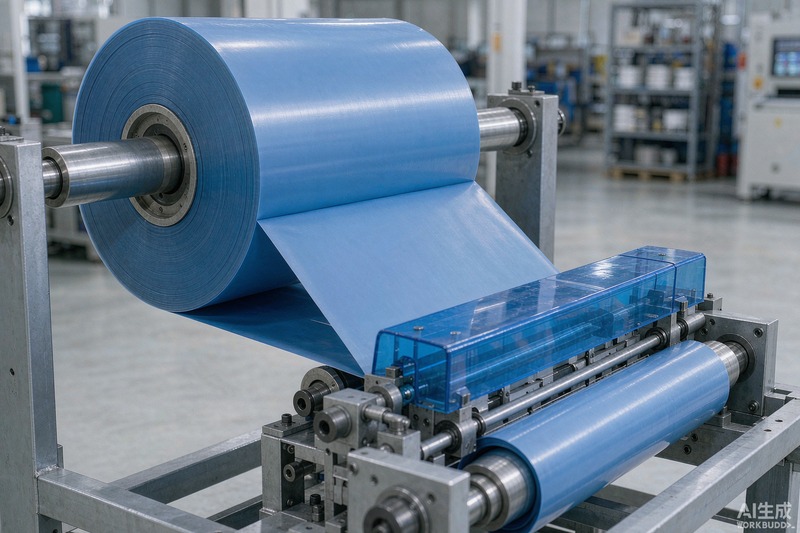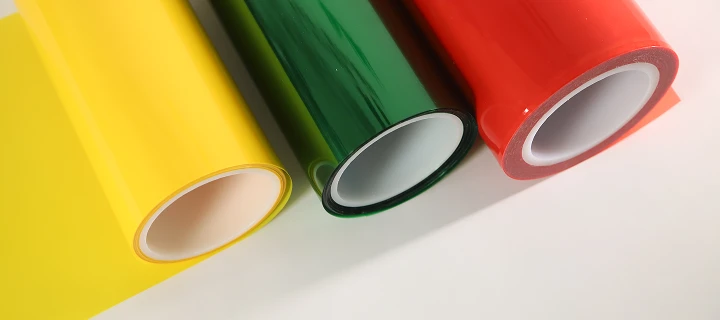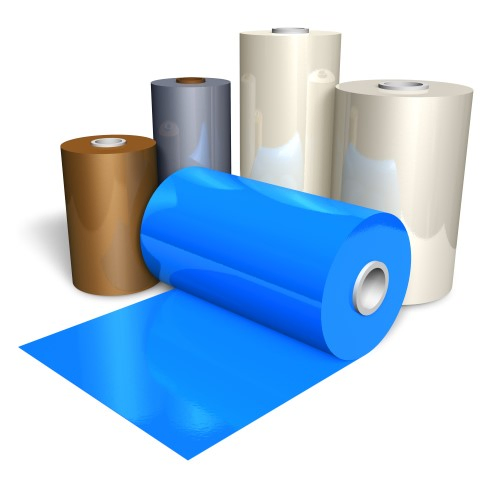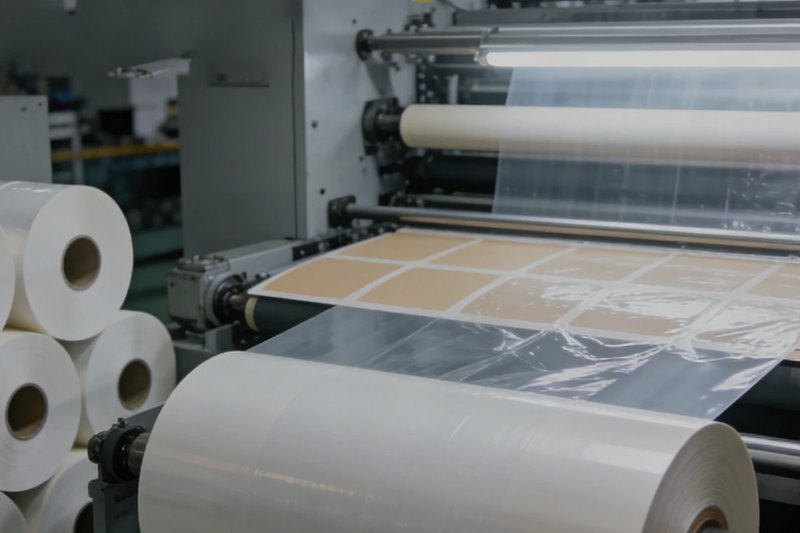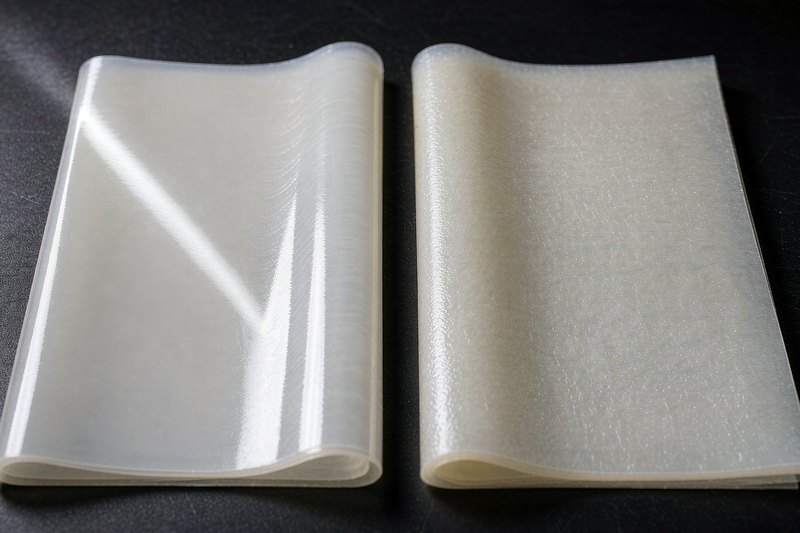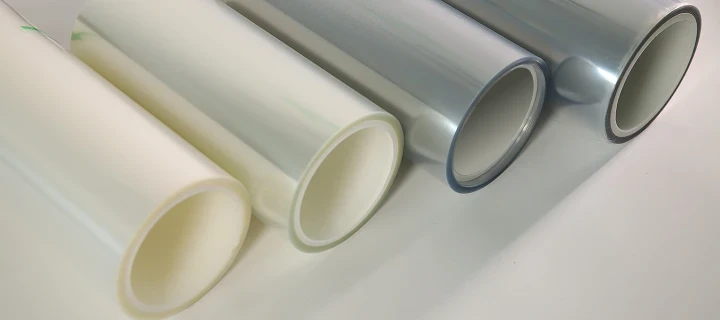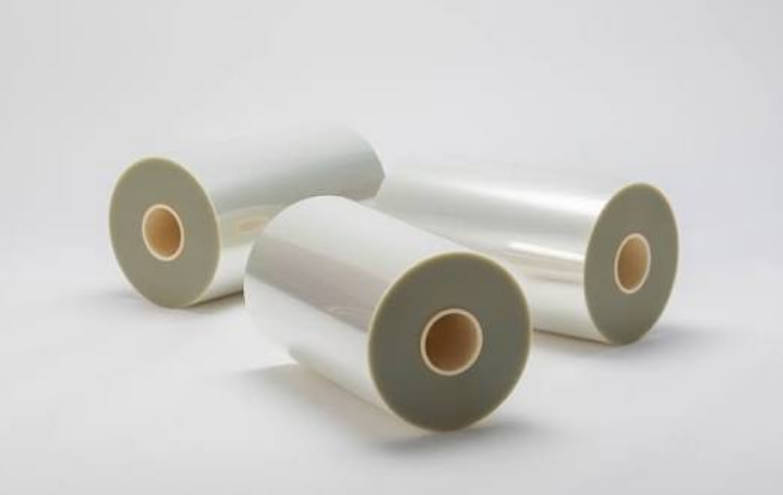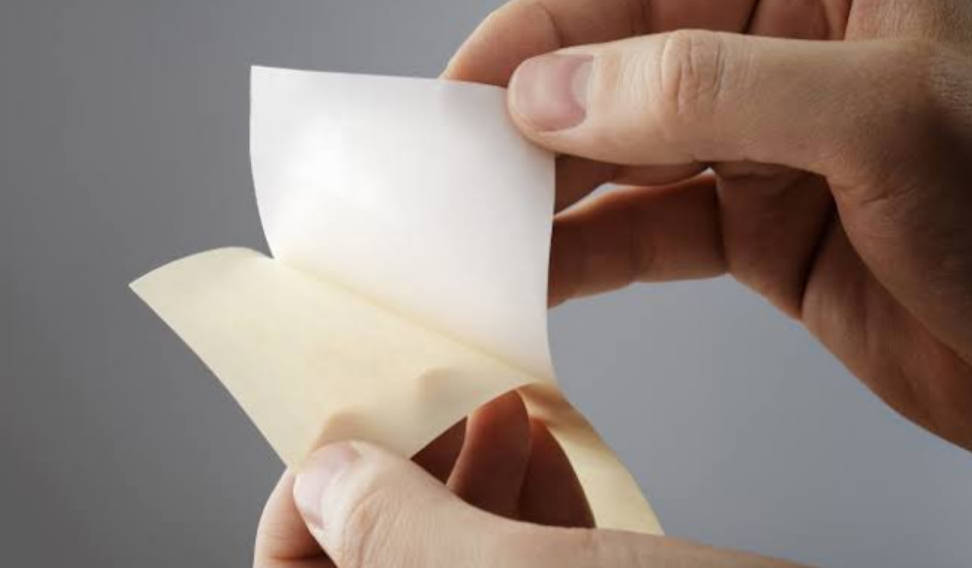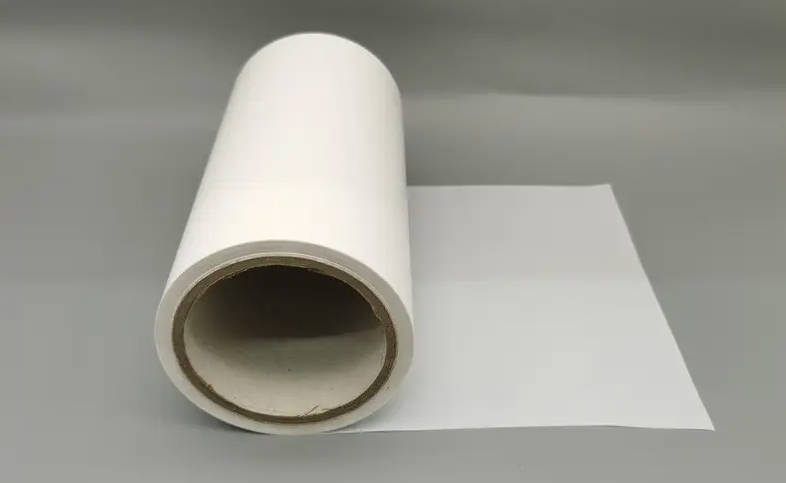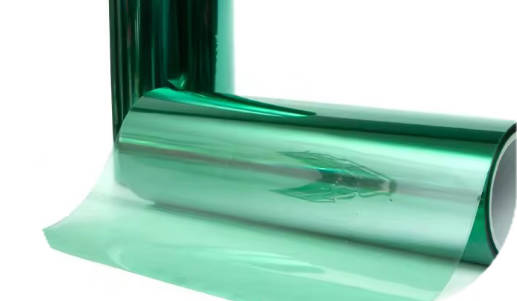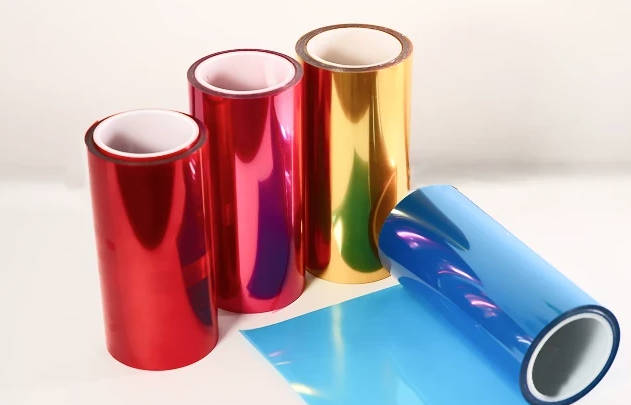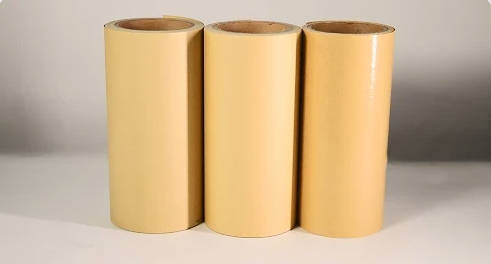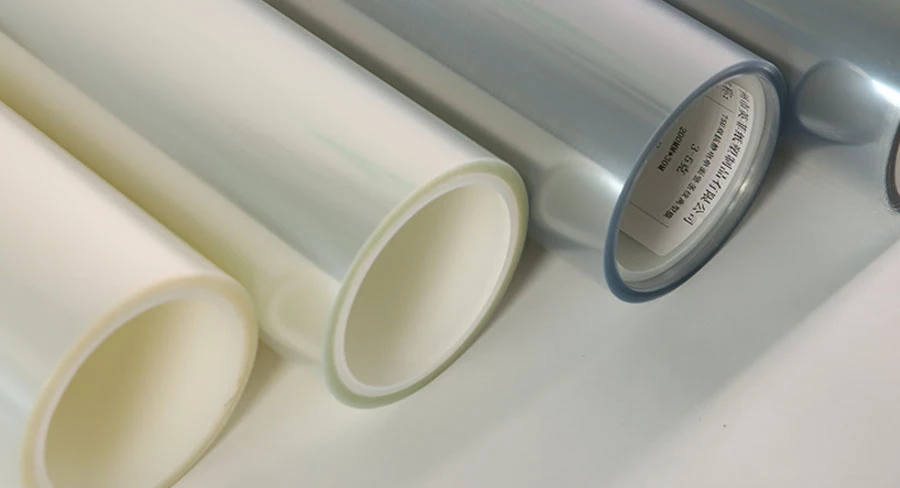
Release film and release paper should be stored in a clean, dry, temperature-stable indoor environment, protected from direct sunlight, excessive heat, moisture, dust, heavy pressure, and physical deformation. Rolls should remain properly packaged and supported until they are ready for production.
That simple rule prevents many release liner problems.
Storage is sometimes treated as a warehouse issue rather than a material-performance issue. In reality, poor storage can affect release liners long before visible damage appears.
A release film roll may still look clean while its release behavior has changed after prolonged heat or pressure. Release paper may absorb moisture and begin to curl. A roll stored incorrectly may develop crushed edges or telescoping. Dust contamination may not become obvious until coating, die-cutting, lamination, or final adhesive bonding.
For manufacturers using release liners in tapes, labels, protective films, electronics components, medical adhesive products, or industrial die-cutting, warehouse control should therefore be part of the material specification.
This guide explains how to store release film and release paper properly from receiving through warehouse storage, production staging, partial-roll handling, and final material inspection.
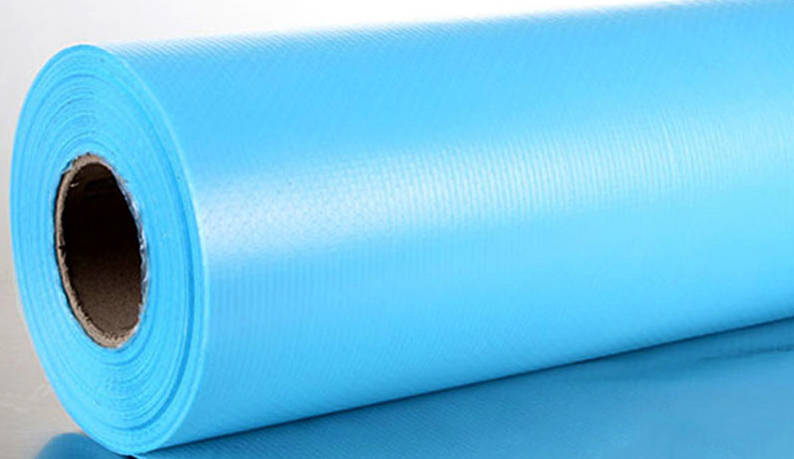
Storage Damage Often Appears Later in Production
The difficult part about release liner storage is that warehouse damage does not always create an immediate visible defect.
A roll may pass a visual inspection but later cause:
- unstable release force;
- wrinkles during lamination;
- curling after sheeting;
- difficult unwinding;
- adhesive residue;
- contamination;
- poor die-cutting;
- web-tracking problems;
- premature liner separation.
This is because release liner performance depends on more than the visible surface.
Storage can influence:
- moisture content;
- roll pressure;
- dimensional stability;
- film flatness;
- paper flatness;
- coating condition;
- surface cleanliness;
- edge quality.
A release liner should be evaluated as a functional converting material, not simply as a roll that can be stored wherever warehouse space is available.
Film and Paper Should Not Be Stored Exactly the Same Way
Release film and release paper can share the same basic warehouse rules, but their main storage risks are different.
| Storage Factor | Release Film | Release Paper |
| Humidity sensitivity | Generally lower | Generally higher |
| Moisture absorption | Low for many plastic films | Can be significant |
| Curl risk | Related to stress, heat, winding, or coating imbalance | Strongly influenced by moisture and humidity |
| Heat sensitivity | Depends on polymer and coating | Depends on paper and coating structure |
| Dust sensitivity | Important for clean adhesive applications | Important, with additional fiber considerations |
| Pressure damage | Can create blocking or deformation | Can crush edges or distort rolls |
| Static attraction | May attract dust | Usually less film-static related |
| Dimensional change | Usually lower for PET | Paper can respond to environmental moisture |
For this reason, a warehouse handling PET release film for precision die-cutting may focus heavily on cleanliness, roll shape, and pressure control, while release paper storage needs additional attention to moisture and humidity changes.
A Practical Release Liner Warehouse SOP
Instead of treating storage as one activity, divide it into six stages:
- Receiving
- Quarantine and inspection
- Warehouse storage
- Production staging
- Machine-side handling
- Repacking unused material
Each stage has different risks.
Stage 1: Inspect Release Liner Rolls When They Arrive
Storage control starts before the material reaches the rack.
Inspect packaging immediately after receiving the shipment.
Check for:
- torn outer wrapping;
- water marks;
- crushed cartons;
- damaged pallets;
- bent or dented roll edges;
- deformed cores;
- telescoping;
- loose winding;
- missing labels;
- contamination;
- scratches on exposed film.
If obvious transport damage exists, isolate the affected roll instead of sending it directly into normal warehouse inventory.
Check the Roll Identification
The label should match the purchasing specification, including information such as:
- material type;
- thickness;
- width;
- roll length where applicable;
- release side;
- batch or roll number;
- product code.
This becomes important later if only certain rolls develop a storage or processing problem.
Stage 2: Keep Material Packaged Until It Is Needed
One of the simplest storage practices is also one of the most effective:
Do not remove protective packaging earlier than necessary.
Packaging helps protect the material from:
- dust;
- moisture;
- fingerprints;
- scratches;
- warehouse debris;
- accidental contact;
- edge damage.
This matters especially for silicone coated PET release film used in:
- electronics die-cutting;
- optical materials;
- protective films;
- high-quality adhesive tapes;
- clean adhesive converting.
Once the original package is opened, the functional release surface becomes more exposed to environmental contamination.
For long-term stock, keeping the roll protected also reduces unnecessary environmental cycling.
Stage 3: Control Temperature Without Treating One Number as Universal
Buyers often ask:
“What exact temperature should release liners be stored at?”
There is no single temperature that should automatically be applied to every PET film, PE film, silicone release liner, release paper, or specialty coating structure.
The safer principle is:
- store indoors;
- avoid excessive heat;
- avoid rapid temperature changes;
- keep material away from heaters and hot machinery;
- avoid direct sunlight;
- follow the supplier’s material-specific storage recommendation.
High temperature can affect the liner indirectly by influencing:
- coating stability;
- adhesive residue on pre-laminated products;
- roll pressure;
- dimensional stability;
- blocking;
- aging behavior.
A warehouse located beside ovens, roofing exposed to strong sunlight, or other heat sources may create a much harsher environment than the room temperature suggests.
Temperature stability is usually more useful than repeatedly moving release liner rolls between hot and cool environments.
Humidity Is Particularly Important for Release Paper
Paper is hygroscopic, meaning its condition can change as it gains or loses moisture from the surrounding environment.
This can lead to:
- curling;
- waviness;
- dimensional change;
- poor sheet flatness;
- unstable feeding;
- die-cutting difficulties;
- inconsistent lamination.
Imagine a release paper roll stored for a long period in a humid warehouse and then moved directly into a dry production room.
The outer layers and inner roll may not respond at the same rate. This can create uneven stress.
Release film—especially PET film—is generally less moisture-sensitive than paper, but humidity control is still valuable because adhesives, packaging, cores, and other components may still be affected.
Film vs Paper Humidity Risk
| Condition | Release Film | Release Paper |
| Short humidity variation | Usually limited dimensional effect | May begin absorbing or losing moisture |
| Long humid storage | Packaging/core may still be affected | Curl and dimensional change risk increases |
| Move from humid to dry room | Usually easier to stabilize | Conditioning may be needed |
| Sheet conversion | Good film flatness can remain stable | Curl may become highly visible |
For businesses buying large volumes from a release film supplier, warehouse conditions should therefore be considered before deciding whether film or paper is the more stable liner for the process.
Keep Release Liners Away From Direct Sunlight
Sunlight creates two problems:
- heat;
- prolonged radiation exposure.
Rolls should not be stored:
- beside windows receiving direct sunlight;
- outdoors;
- under transparent warehouse roofing with strong solar exposure;
- inside hot vehicles for extended periods.
Even if the liner itself does not show immediate visible damage, excessive thermal exposure can affect coating behavior, packaging, cores, and downstream adhesive performance.
Use a shaded indoor storage area with controlled environmental conditions.
Dust Control Matters More Than Many Buyers Expect
The release side contacts the adhesive or product surface directly.
Any contamination on that surface can be transferred into the finished product.
Potential contaminants include:
- dust;
- fibers;
- metal particles;
- oil;
- fingerprints;
- packaging debris;
- warehouse dirt.
This is especially critical for:
- electronics adhesives;
- optical films;
- protective films;
- medical materials;
- precision die-cut parts;
- high-gloss adhesive products.
For these applications, storage should include:
- sealed packaging;
- clean shelving;
- controlled unpacking;
- gloves where appropriate;
- no direct floor contact;
- minimal open-roll exposure.
A high-quality industrial release film cannot compensate for contamination introduced after delivery.
Avoid Heavy Stacking and Excessive Roll Pressure
A release liner roll is not a rigid cylinder.
Improper loading or stacking can deform:
- the core;
- the film layers;
- the roll edge;
- the roll profile.
Possible results include:
- flat spots;
- crushed edges;
- telescoping;
- tight areas in the roll;
- poor unwinding;
- local wrinkles.
If the release film has already been laminated with adhesive, excessive pressure can also increase adhesive-to-liner contact over time.
This may result in higher aged release force or blocking.
Do not use release liner rolls as load-bearing objects for other warehouse materials.
Storage racks, pallets, spacers, and supports should match the roll size and packaging structure.
Horizontal or Vertical Storage?
There is no universal answer for every roll.
The correct orientation depends on:
- roll width;
- roll diameter;
- roll weight;
- core design;
- packaging method;
- supplier recommendation.
Vertical Storage
Possible advantages:
- smaller footprint for some slit rolls;
- easy identification.
Potential risk:
- the bottom roll edge carries the load;
- edge deformation can occur if the roll is heavy or unsupported.
Horizontal Storage
Possible advantages:
- load can be supported through the core or appropriate cradle.
Potential risk:
- rolls can develop flat spots or move if poorly supported.
The correct principle is therefore:
Support the roll according to its packaging and core structure rather than automatically applying one storage orientation to every release liner.
For heavy jumbo rolls, use handling equipment suitable for the roll weight instead of moving the material manually.
Protect Roll Edges During Warehouse Handling
Roll edges are particularly vulnerable.
A small impact can create:
- dents;
- crushed layers;
- edge waves;
- loose particles;
- slitting problems.
Once a roll with damaged edges enters a high-speed line, the defect can become a web-tracking or breakage problem.
Operators should avoid:
- rolling material directly across rough floors;
- placing rolls against sharp warehouse equipment;
- dropping rolls;
- lifting through methods that damage the core;
- pushing the roll from the film edge.
For custom release film rolls, the required width may already be close to the final production width, leaving little material available for trimming damaged edges.
Do Not Ignore the Core
The paper or plastic core is part of the functional roll structure.
Moisture, crushing, impact, or excessive loading can deform the core.
A damaged core may cause:
- eccentric rotation;
- vibration;
- difficulty loading onto an air shaft;
- unstable unwinding;
- roll deformation.
Before moving stored material back into production, inspect the core for:
- oval shape;
- crushed areas;
- moisture damage;
- cracks;
- debris.
This is especially important for long or heavy release film rolls.
Prevent Release Paper Curling Before It Starts
Release paper curling can become expensive because the problem often appears after the material has already been sheeted or die-cut.
To reduce risk:
- maintain stable storage conditions;
- keep packaging closed;
- avoid direct humidity exposure;
- avoid rapid environment changes;
- allow material to condition before precision converting where necessary;
- avoid excessive one-sided heat during processing.
Curl is not always a paper-quality defect.
It can result from interaction between:
- paper structure;
- release coating;
- humidity;
- temperature;
- process tension.
When curl repeatedly affects production, buyers may also evaluate whether a film-based release liner material offers better dimensional stability for that particular application.
What About Partially Used Release Film Rolls?
A partially used roll should not be left exposed beside the production line for days or weeks.
After production:
- Confirm that the roll surface is clean.
- Secure the loose film end without damaging the functional surface.
- Restore protective wrapping.
- Identify the remaining material.
- Return the roll to suitable warehouse storage.
The label should remain readable.
If material from multiple batches is used, maintaining roll identification helps quality teams trace future issues.
For moisture-sensitive paper, repacking after use is particularly important.
Material Should Acclimate Before Precision Converting
A roll moved from a cold, hot, or humid environment into a production room may need time to stabilize.
Immediately opening and running material after a major environmental change can create:
- condensation;
- dimensional differences;
- curl;
- unstable web behavior.
The exact conditioning time depends on:
- material type;
- roll size;
- temperature difference;
- humidity difference;
- packaging.
Rather than inventing one universal number, production teams should establish an internal conditioning procedure based on supplier guidance and actual plant conditions.
A Storage Risk Matrix for B2B Buyers
| Risk | PET Release Film | Release Paper | Prevention Priority |
| Dust contamination | High concern in precision applications | Moderate to high | Keep packaged and clean |
| Moisture | Lower | High | Environmental control |
| Curl | Moderate | Higher | Stable humidity and temperature |
| Crushed edges | High | High | Proper roll handling |
| Core deformation | High | High | Correct storage support |
| Direct sunlight | Avoid | Avoid | Indoor shaded storage |
| Heavy stacking | Avoid | Avoid | Use appropriate racks |
| Excessive heat | Avoid | Avoid | Stable warehouse temperature |
| Static dust attraction | Possible | Lower | Clean handling / anti-static control when required |
When Is PET Release Film More Forgiving Than Release Paper?
For some buyers, storage stability becomes part of the material-selection decision.
PET release film may offer advantages where production requires:
- better dimensional stability;
- lower moisture sensitivity;
- cleaner surfaces;
- precision die-cutting;
- smooth film structure;
- stable web handling.
This makes PET release liners relevant to B2B searches such as:
- PET release film manufacturer
- silicone coated PET release film
- industrial release film supplier
- custom PET release liner
- release film roll supplier
However, film is not automatically the correct choice for every application.
Release paper may remain practical when:
- paper stiffness is useful;
- the process is not highly moisture-sensitive;
- cost is a major consideration;
- standard label or tape converting is involved.
The storage environment should be considered alongside application performance.
Storage Requirements Should Be Discussed Before Purchasing
Storage questions should not begin only after a problem occurs.
When discussing material with a silicone release film manufacturer or PET release liner supplier, buyers can ask:
- What packaging is used for the roll?
- What storage conditions are recommended?
- How long should unopened material remain in storage?
- Does the material require conditioning before use?
- How should partially used rolls be repacked?
- Is the liner sensitive to heat or humidity?
- How should jumbo rolls be supported?
- Which side is the release-coated surface?
- Are special cleanliness requirements available?
For wholesale release film orders, these details become more important because buyers may hold larger inventories for longer periods.
Release Liner Inventory Management: FIFO Matters
FIFO means First In, First Out.
Older approved material should generally be consumed before newer stock unless the material specification or production plan requires otherwise.
FIFO helps reduce:
- unnecessary long-term storage;
- forgotten rolls;
- inconsistent aging;
- mixed batch usage.
Warehouse records should ideally track:
- receipt date;
- batch;
- roll number;
- material specification;
- storage location;
- quantity remaining.
If a release problem appears later, this information can help determine whether it is linked to material batch, storage time, or processing conditions.
Pre-Production Checklist for Stored Release Film
Before taking stored material back to the line, check:
| Check | What to Look For |
| Packaging | Water, tears, contamination |
| Roll edges | Dents, crushing, particles |
| Roll shape | Telescoping or flat spots |
| Core | Deformation or moisture damage |
| Film surface | Dust, scratches, marks |
| Release side | Correct orientation |
| Identification | Correct product and batch |
| Environment | Material has stabilized before use |
| Release behavior | Re-test if material has been stored unusually long or under abnormal conditions |
Material that has experienced abnormal storage conditions should be evaluated before it is released into full production.
A short machine trial may be much less expensive than discovering defects after coating, lamination, or die-cutting an entire batch.
Common Storage Mistakes to Avoid
Opening Every Roll During Receiving Inspection
Inspect packaging and required samples without unnecessarily exposing every roll.
Storing Rolls Directly on the Floor
Floor storage increases exposure to moisture, dirt, impact, and handling damage.
Placing Heavy Materials on Top of Release Liner Rolls
This can deform the roll, core, or edges.
Leaving Partially Used Rolls Unwrapped
Exposed rolls collect dust and environmental contamination.
Using the Same Storage Procedure for Film and Paper
Paper generally requires closer attention to humidity and curl.
Moving Material From Extreme Conditions Directly to the Machine
Environmental stabilization may be needed.
Keeping Untraceable Partial Rolls
A roll without a batch or specification label can create quality-control problems later.
Warehouse Checklist for Release Liner Storage
A simple warehouse SOP can include:
- Store indoors.
- Keep material dry.
- Avoid direct sunlight.
- Avoid strong heat sources.
- Keep rolls in protective packaging.
- Keep materials away from dust and chemicals.
- Do not place rolls directly on dirty or wet floors.
- Prevent heavy stacking.
- Protect roll edges.
- Maintain roll and batch identification.
- Repack partial rolls promptly.
- Use FIFO inventory management.
- Allow environmental conditioning when needed.
- Inspect stored rolls before high-precision converting.
This checklist is simple, but consistency matters more than complexity.
FAQ
1. How should release film be stored?
Release film should be stored indoors in a clean, dry, temperature-stable area away from direct sunlight, excessive heat, dust, moisture, and heavy pressure. Keep rolls protected in their original packaging until needed.
2. What is the proper way to store PET release film rolls?
PET release film rolls should be kept clean, properly supported, protected from edge damage and excessive stacking, and stored away from heat and direct sunlight. Follow the supplier’s recommended conditions for the specific coating structure.
3. How should release paper be stored to prevent curling?
Keep release paper protected from large humidity and temperature changes. Maintain packaging until use and allow the material to stabilize before precision converting when it has moved between different environments.
4. Can humidity damage release film?
Plastic release films such as PET are generally less sensitive to moisture than paper liners, but humidity can still affect packaging, cores, adhesive systems, and production conditions. Clean, stable indoor storage remains important.
5. Can high temperature affect silicone release film?
Excessive heat can influence film dimensions, coating behavior, roll pressure, and adhesive-liner interaction. Silicone release film should therefore be stored away from heat sources and under the material-specific conditions recommended by the supplier.
6. Should release liner rolls be stored vertically or horizontally?
Storage orientation depends on roll size, weight, core design, packaging, and supplier instructions. The main requirement is to support the roll without crushing its edges, deforming the core, or creating flat spots.
7. How should partially used release film rolls be stored?
Keep the remaining roll clean, secure the loose end, restore protective packaging, maintain its identification label, and return it to the appropriate warehouse environment.
8. Why does release paper curl after storage?
Release paper can curl because of moisture gain or loss, temperature changes, coating stress, or uneven environmental exposure. Stable storage and proper material conditioning can reduce this risk.
9. Should release film be tested again after long storage?
If the material has been stored for an unusually long time or exposed to abnormal temperature, humidity, pressure, or packaging damage, a release or production trial should be considered before full-scale use.
Conclusion
Proper release liner storage protects more than the roll itself. It helps preserve release performance, dimensional stability, surface cleanliness, roll shape, and converting reliability.
Release film should be protected from heat, sunlight, dust, heavy pressure, and physical damage. Release paper requires additional attention to environmental moisture because humidity changes can contribute to curling and dimensional instability.
For industrial buyers, storage performance should therefore be considered during material selection—not only after delivery.
When sourcing PET release film and silicone release liner for adhesive tapes, protective films, labels, electronics die-cutting, medical adhesive products, or other industrial applications, discuss packaging, storage, roll format, release force, thickness, width, and downstream processing requirements together.
YingFei provides release liner solutions for B2B converting applications. Buyers looking for a PET release film manufacturer, silicone release film supplier, custom release film, or wholesale release film roll can learn more about available material options through YingFei.