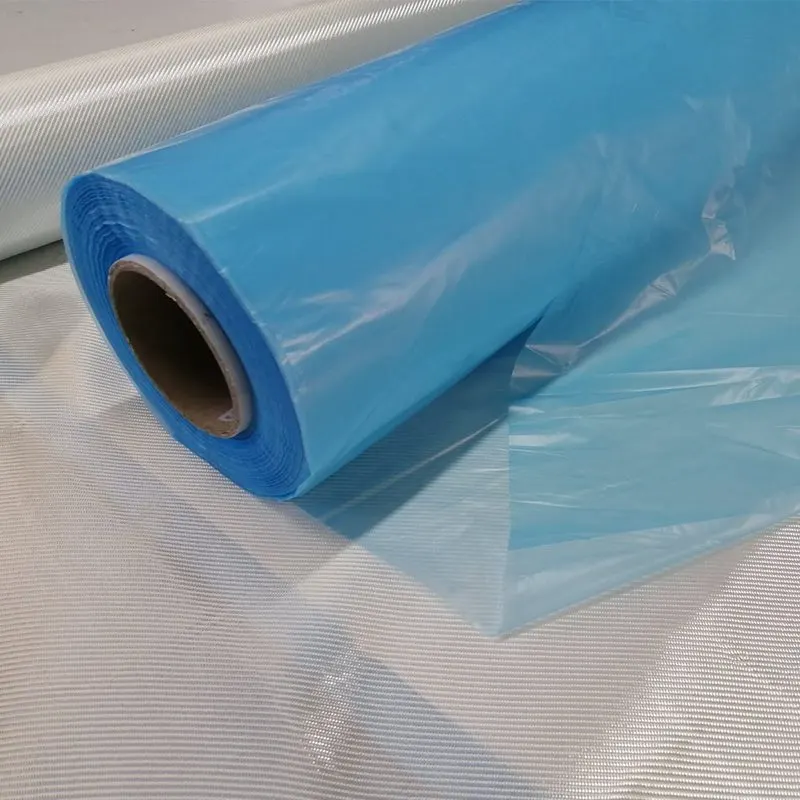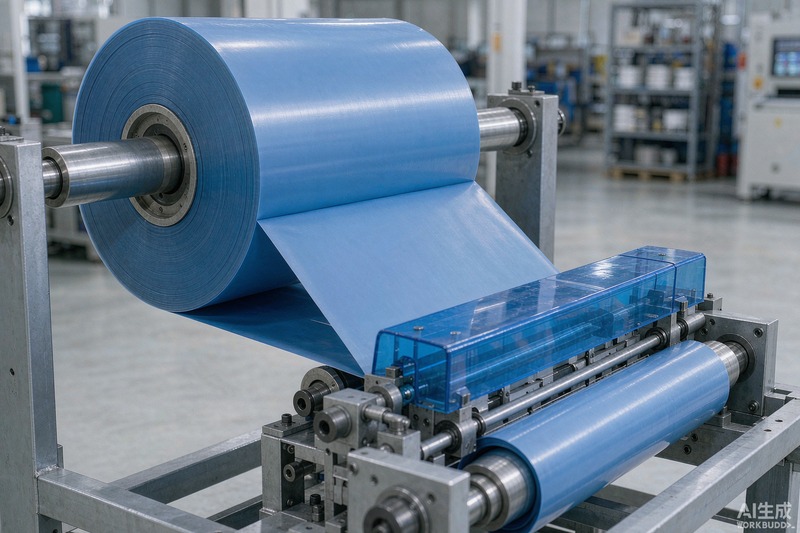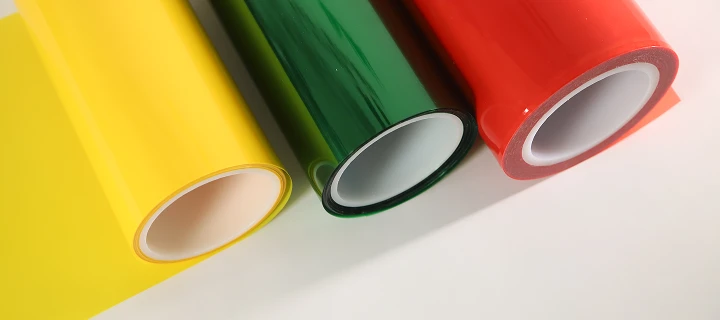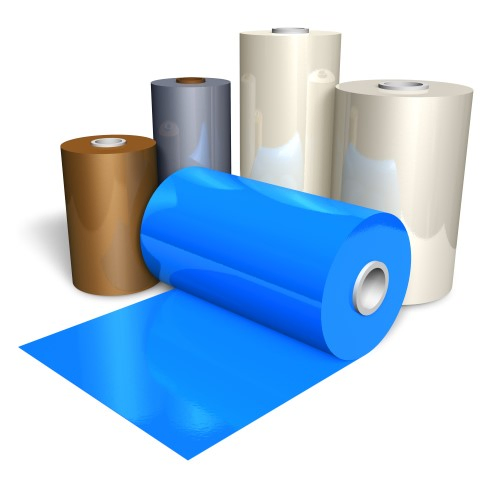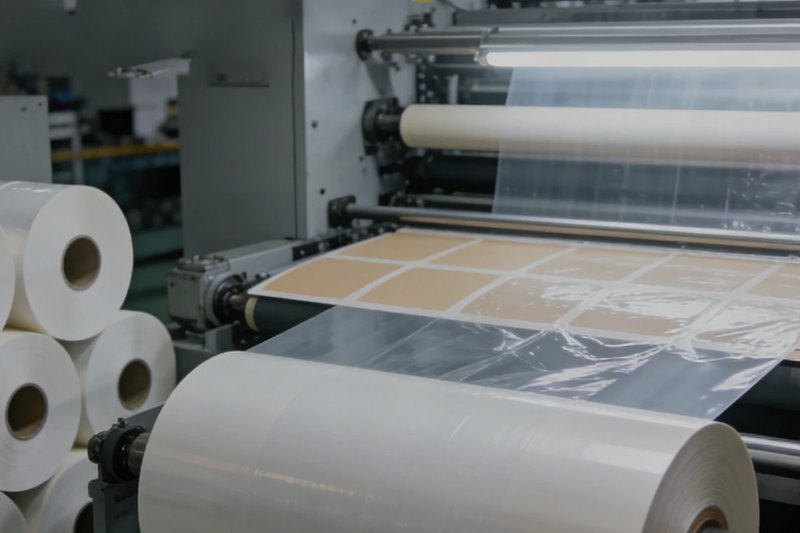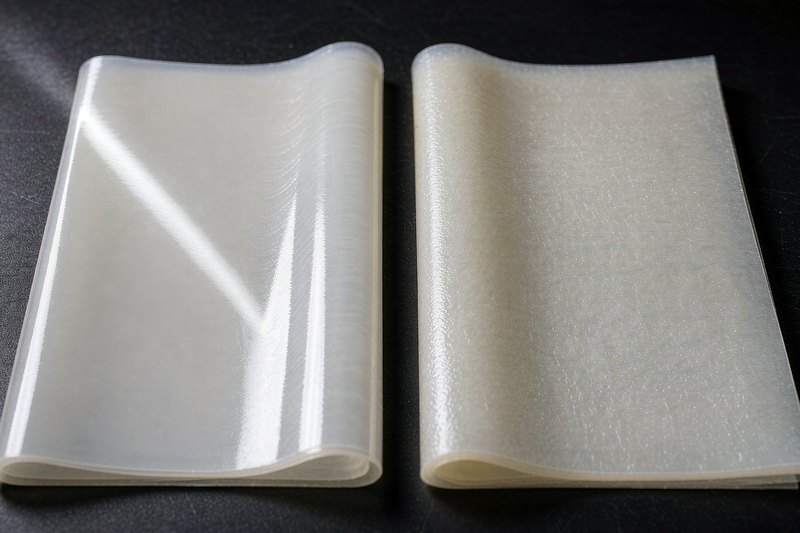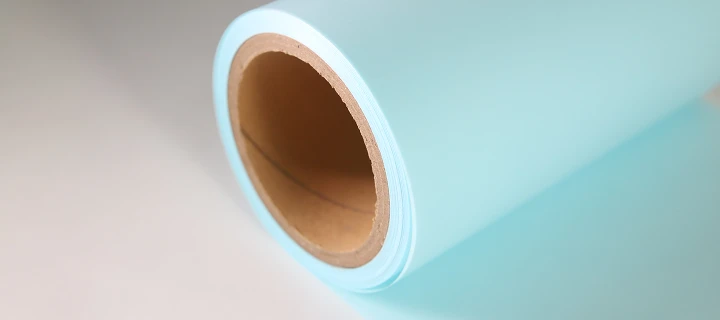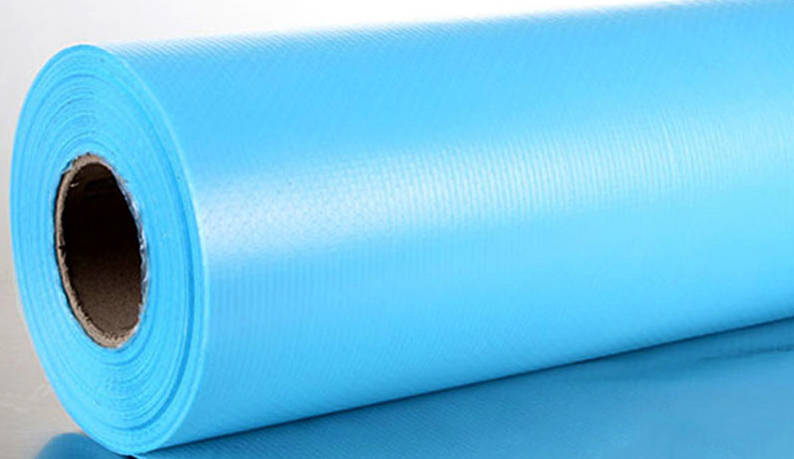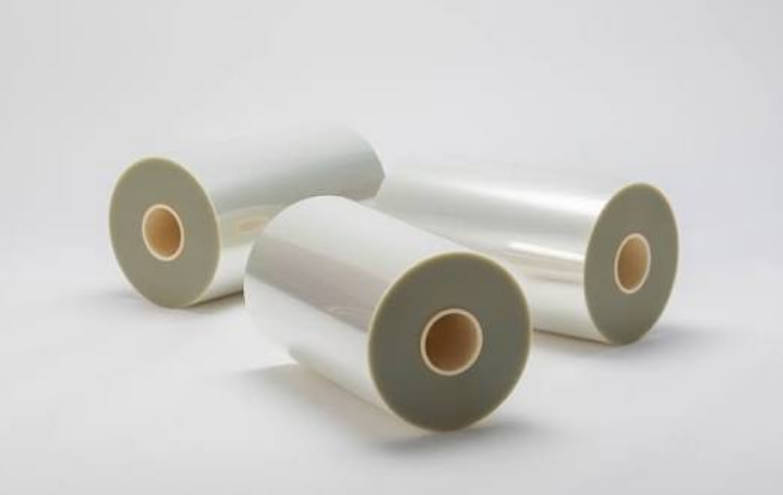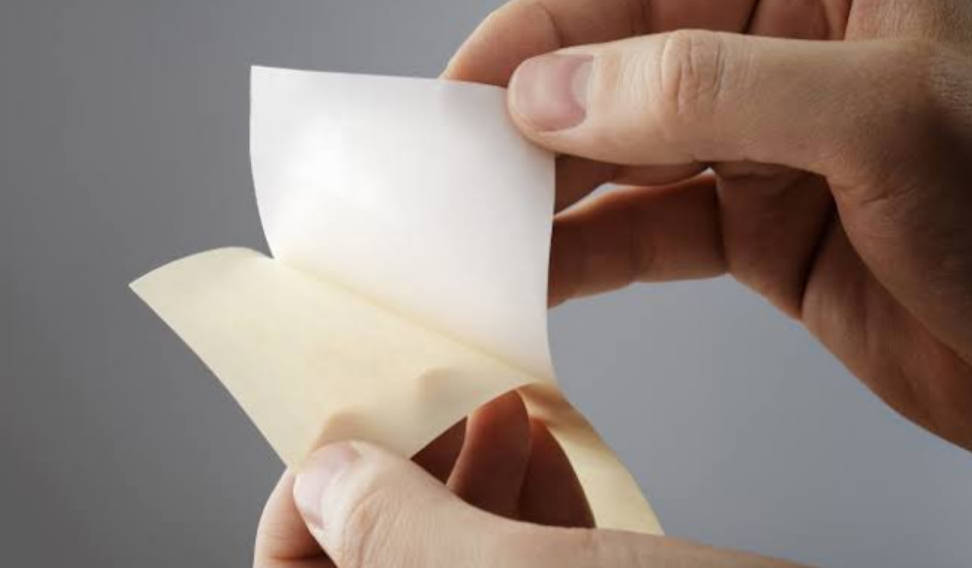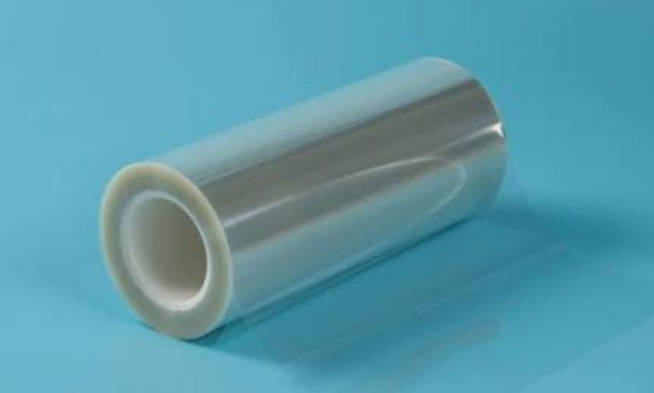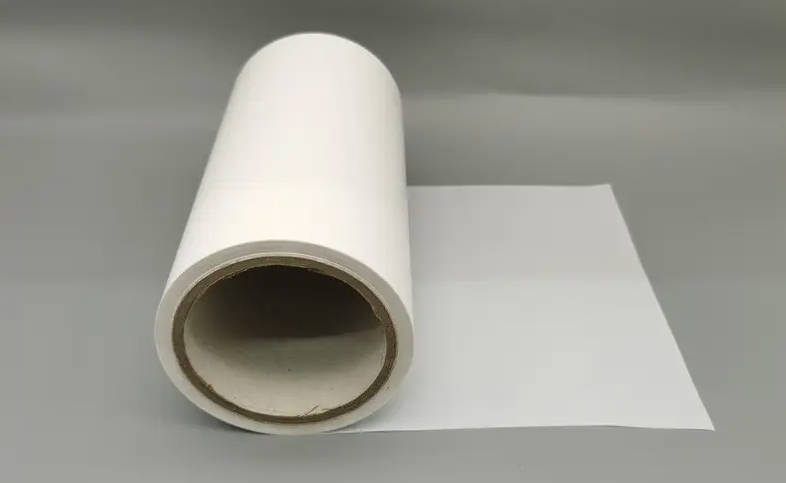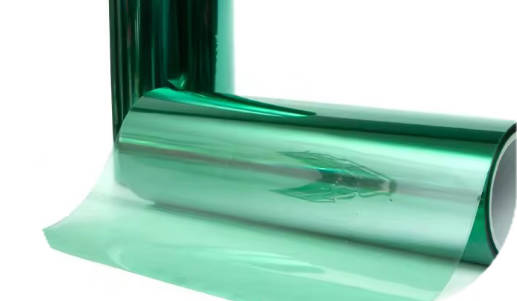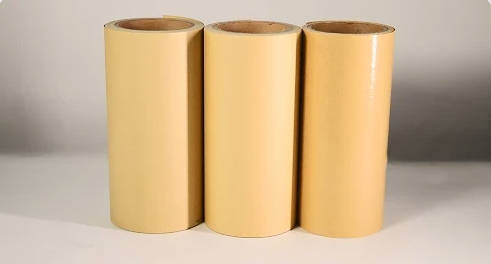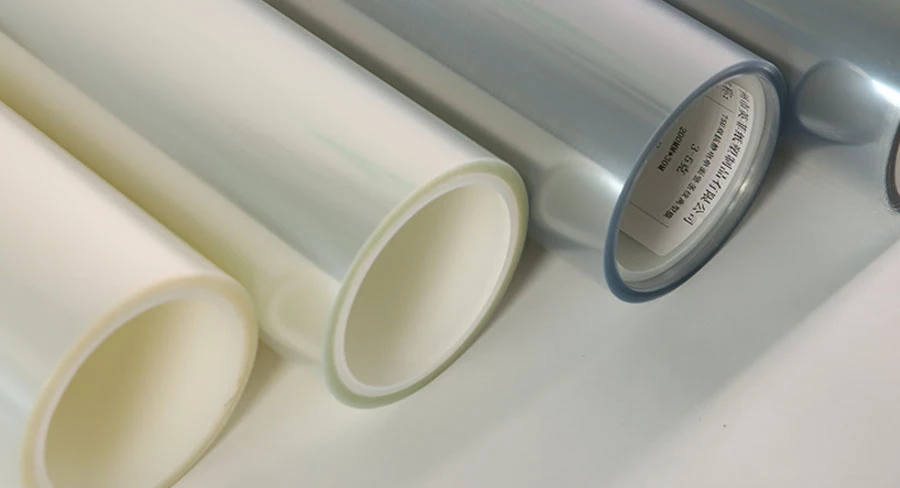
Choosing between polyester (PET) release film and release paper determines whether a converting line runs smoothly or suffers from web breaks, dimensional skew, and particulate contamination. In the evaluation of PET release film vs release paper, the fundamental difference lies in substrate morphology and mechanical behavior: PET is a synthetic, non-porous thermoplastic polymer offering optical transparency and high tensile stability, while release paper (typically glassine, CCK, or poly-coated kraft) is a fibrous, porous material derived from wood pulp that provides natural tearability and lower raw-material unit costs.
Converting engineers and procurement specialists must balance cleanroom compatibility, tension tolerance, die-cutting precision, and moisture stability against procurement budgets. For high-precision electronics, optical displays, and medical applications where slitting dust or dimensional shifting is unacceptable, PET film serves as the standard carrier. Conversely, for standard industrial packaging, logistics labels, and manual tape application, release paper remains the more economical, operationally forgiving substrate.
This guide provides a technical comparison of physical parameters, analyzes how each substrate behaves during converting and rotary die-cutting, maps out industry application suitability, and introduces a practical framework for selecting the appropriate release liner substrate.
1. Quick Verdict: What Is the Real Difference Between Film and Paper Substrates?
The operational boundary separating film and paper liners centers on particulate generation, tensile elasticity under tension, and moisture susceptibility.
- Select PET Release Film when: The manufacturing environment requires cleanroom operation (ISO Class 7 or higher), the adhesive layer demands an ultra-smooth coating without surface pinholes, or high-speed rotary die-cutting requires optical vision inspection through the carrier. Converting processes requiring precise engineered release film solutions benefit from PET’s high tensile modulus and resistance to humid ambient storage.
- Select Release Paper when: The primary focus is raw-material cost reduction for non-critical surfaces, the processing machinery benefits from manual tearability (such as masking and logistics tapes), or the adhesive requires high air permeability during lamination.
                                SUBSTRATE SELECTION MATRIX

   Application Priority                               Recommended Substrate
   ─────────────────────────────────────────────────────────────────────────
   Particulate-Free / Cleanroom Converting   ───────► PET Release Film
   Optical Inspection / CCD Alignment        ───────► PET Release Film
   Micro-Tolerance Rotary Die-Cutting        ───────► PET Release Film
   High-Volume Logistics / Shipping Labels   ───────► Glassine / Kraft Paper
   Cost-Driven Industrial Tapes              ───────► Poly-Coated Kraft (PCK)
   Manual Tear / Field Application           ───────► Supercalendered Kraft (SCK)
2. Head-to-Head Comparison: Physical and Mechanical Properties
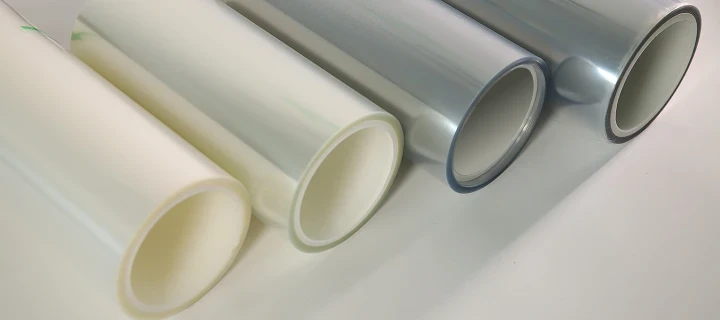
A thorough material evaluation requires examining how polyester film and paper behave under mechanical, environmental, and thermal stress. The structural consistency of biaxially oriented polyethylene terephthalate (BOPET) ensures uniform thickness across both web directions, whereas paper exhibits anisotropic properties depending on fiber alignment (machine direction vs. cross direction).
Physical & Mechanical Comparison
| Property Parameter | PET Release Film | Release Paper (Glassine / Kraft) | Operational Impact on Converting |
| Base Material | Biaxially Oriented Polyester (BOPET) | Calendered Wood Pulp Fibers (Glassine, SCK, CCK) | Dictates environmental resistance and recyclability streams. |
| Caliper Uniformity | Extremely high (tight gauge control) | Moderate (natural fiber caliper variation) | Film provides tighter adhesive coating thickness control. |
| Tensile Strength | High across both MD and CD | Moderate in MD; significantly weaker in CD | Film resists web breaks during high-speed tension surges. |
| Elongation at Break | Controlled elongation before failure | Low yield elongation; prone to sudden web snap | Paper provides a stiffer web until exceeding tear thresholds. |
| Surface Smoothness | Optically smooth, non-porous | Micro-textured, porous (unless poly-coated) | Paper roughness can telegraph texture into wet adhesive coatings. |
| Particulate / Dust Risk | Zero internal fiber generation | Fibers and dust shear off during mechanical slitting | Paper can contaminate cleanrooms and optical components. |
| Moisture Absorption | Impermeable; hydro-stable | Hydrophilic; subject to curl and dimension change | Paper expands and curls with seasonal humidity swings. |
| Transparency | Clear, translucent, or pigmented | Semi-translucent (Glassine) to opaque (Kraft) | Clear film enables automated optical transmission inspection. |
| Thermal Resistance | Continuous exposure dependent on grade | High short-term heat resistance without melting | Paper does not soften, but can dry out and embrittle. |
Note: Specific technical parameters, such as exact break elongation, dielectric strength, and thermal shrinkage rates, vary by resin supplier and substrate thickness. These values should be verified with material data sheets (MDS) prior to high-volume manufacturing runs.
Dimensional and Environmental Stability
The internal matrix of paper readily absorbs ambient water vapor. When relative humidity fluctuates on a factory floor, paper liners expand across the cross-direction (CD) faster than down the machine direction (MD). This uneven expansion causes edge curl, web wander, and surface wrinkling during coating or laminating passes.
PET film features virtually zero moisture absorption under typical warehouse conditions. Its dimensional stability prevents adhesive-coated rolls from warping, telescoping, or suffering from planar distortion during transoceanic shipping through humid transport corridors.
3. Processing Performance: How Substrate Choice Impacts Die-Cutting and Converting
The performance differences between release substrates become most apparent during high-speed slitting, coating, and automated die-cutting.
       DIE-CUTTING IMPACT: CUT DEPTH ACCURACY & TOOLING WEAR

       [ PET Film: Narrow Anvil Window ]
          ▼ Blade Edge
       ═══════════════════ Upper Adhesive Layer
       ─────────────────── Release Interface
       ███████████████████ PET Substrate (High Shore Hardness: requires
                           precise anvil control to avoid anvil denting)

       [ Paper Liner: Forgiving Impression, Dust Generation ]
          ▼ Blade Edge
       ═══════════════════ Upper Adhesive Layer
       ─────────────────── Release Interface
       ░░░░░░░░░░░░░░░░░░░ Paper Substrate (Fibrous Core: absorbs strike depth,
                           but yields edge fuzz and airborne slitting lint)
Precision Rotary Die-Cutting
Rotary die-cutting relies on micrometer-level clearance between the cutting blade edge and the anvil roll.
- Die-Striking Depth Control: PET possesses high surface hardness. The cutting blade must kiss-cut cleanly through the face stock and adhesive layer, stopping precisely at the silicone-PET boundary. Because PET film exhibits minimal caliper variation, anvil depths can be calibrated to tight margins without cutting through the liner. In contrast, natural density variations in paper can lead to partial liner penetrations or adhesive hang-ups.
- Dust and Fiber Generation: When razor or shear blades slit paper, cellulosic fibers fracture and create airborne dust. In microelectronics manufacturing, this debris causes display voids, short circuits, and poor adhesion. High-speed lines processing precision PET release film produce clean cut edges without particulate shedding, eliminating offline vacuum-cleaning requirements.
Tension Dynamics and Web Speeds
During high-tension coating, siliconizing, or delamination, paper liners exhibit a defined yield limit: once the tensile threshold in the machine direction is breached, the web snaps abruptly, forcing line downtime.
PET film withstands significantly higher operational tension without snapping. However, machine operators must carefully monitor unwind tension. Because PET exhibits higher mechanical memory, excessive line pull can introduce elastic stretch. If laminated while stretched, the liner will slowly recover its original dimension after slitting, resulting in laminated part curl or delamination.
Optical Transmission and Sensor Verification
Modern automated converting machinery relies heavily on optical through-beam sensors, contrast scanners, and automated optical inspection (AOI) cameras to detect registration marks, missing labels, or splice joints.
Transparent PET liners allow light to pass through the entire composite stack, making high-speed vision inspection possible. Opaque or semi-translucent glassine paper diffuses optical signals, which complicates automated inspection when processing clear-on-clear labels or transparent electronic adhesives.
4. Application Matrix: Which Substrate Fits Your Industry?
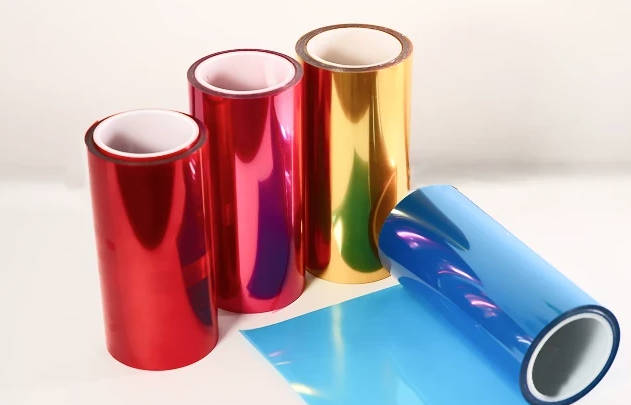
Because converting requirements vary widely across industries, release liner selection must align directly with end-use performance criteria.
+------------------------------------+-----------------------------+-------------------------------------------------+
| Industry Application               | Preferred Carrier Substrate | Primary Engineering Rationale                   |
+------------------------------------+-----------------------------+-------------------------------------------------+
| Optoelectronics (OLED, Touch Panels)| PET Release Film            | Optically clear, zero dust, pinhole-free coat   |
| Multi-Layer Ceramic Capacitors     | PET Release Film            | Extreme thickness uniformity and chemical inert |
| Medical Hydrogel & Wound Dressings | PET Release Film            | Biocompatibility, cleanroom slitting, non-lint  |
| Automotive Die-Cut Foam Gaskets    | PET Release Film            | High tension pull through stiff elastomeric foam|
| Roll-Fed Logistics & Shipping Labels| Glassine Paper (Supercal.)  | Economical, standard auto-dispenser tearability |
| Double-Sided Construction Tapes    | Poly-Coated Kraft (PCK)     | Mechanical strength, manual field handling, cost|
| Graphic Arts & Sign Vinyl          | Clay-Coated Kraft (CCK)     | Lay-flat stability under heavy solvent exposure |
+------------------------------------+-----------------------------+-------------------------------------------------+
Industrial Scenarios Favoring PET
In the production of thermal interface materials (TIM) and flexible printed circuit (FPC) components, manufacturers frequently partner with a custom release film manufacturer to specify tight release force tolerances (such as 3–5 grams per inch) alongside fluorosilicone or non-silicone coatings. The structural integrity of PET prevents silicone migration from penetrating through to the backside of the liner, preserving electrical contact performance.
Industrial Scenarios Favoring Release Paper
For building envelope tapes, double-faced structural acrylics, and commodity labels, release paper remains the dominant industrial standard. The porous structure of paper accepts protective polyethylene barriers (PE extrusion coating) on both sides, creating Poly-Coated Kraft (PCK). This configuration offers excellent dimensional resistance to outdoor humidity during construction use, while allowing operators to tear the liner by hand without requiring scissors or edge-slitting tools.
5. Cost vs. Value: Total Cost of Ownership (TCO) Analysis
When evaluating release liner investments, calculating raw substrate pricing per square meter alone often obscures the broader cost structure. Processing inefficiencies, defect scrap rates, and tool maintenance contribute significantly to the Total Cost of Ownership (TCO).
TOTAL COST OF OWNERSHIP (TCO) BREAKDOWN
┌─────────────────────────────────────────────────────────────┐
│ 1. Raw Substrate Unit Price (Paper advantage: 15% - 40% lower)│
├─────────────────────────────────────────────────────────────┤
│ 2. Line Scrap & Slitting Rejection Rate (Film advantage)     │
├─────────────────────────────────────────────────────────────┤
│ 3. Tool Wear, Cleaning Downtime, Blade Regrinding           │
├─────────────────────────────────────────────────────────────┤
│ 4. Cleanroom Compliance & Particulate Filtration Costs      │
└─────────────────────────────────────────────────────────────┘
  Equals: True Realized Cost per Converted Component
Procurement Checklist for TCO Evaluation
- [ ] Base Material Area Cost: Does paper’s lower material price compensate for its higher defect rate during rotary die-cutting?
- [ ] Scrap and Trim Ratios: Does paper web snapping or moisture-induced edge curl cause roll waste during machine startup?
- [ ] Tooling Maintenance: Are fibrous residues from slitting paper increasing web-cleaner maintenance and shortening die life?
- [ ] Cleanroom Air Filtration: Does processing paper liners exceed airborne particle counts, triggering extra HEPA air scrubbing?
- [ ] Customer Quality Metrics: What is the financial liability if a fibrous particle contaminates an optical adhesive or medical component?
In micro-clear applications, switching from release paper to PET film frequently cuts scrap rates by 5% to 12%, fully offsetting the higher initial material cost of the synthetic substrate.
6. Step-by-Step Decision Framework: How to Choose in 4 Steps
To determine the correct liner substrate for your converting operation, follow this structured four-step decision framework:
                         SUBSTRATE DECISION FLOWCHART

                      [ Step 1: Cleanliness Audit ]
                       Requires cleanroom or optical?
                                /         \
                             YES           NO
                             /               \
              (Select PET Film)         [ Step 2: Mechanical Demands ]
                                         Rotary die-cut under 0.05mm?
                                                /        \
                                             YES          NO
                                             /              \
                              (Select PET Film)        [ Step 3: Climate Check ]
                                                        Uncontrolled humidity?
                                                               /        \
                                                            YES          NO
                                                            /              \
                                             (Select PET / PCK)      (Select Glassine/SCK)
Step 1: Evaluate Operating Environment and Cleanliness Standards
Determine whether the converted part will be deployed in a cleanroom or optical stack. If the specification limits particulate counts or prohibits airborne fiber dust, eliminate standard paper liners immediately. PET film is mandatory.
Step 2: Define Converting Stress and Die-Cutting Tolerance
Assess the complexity of the cutting profile. If the process involves rotary kiss-cutting on an adhesive layer thinner than 25 microns (0.001 inches), the thickness consistency of PET film prevents strike-through. For wider mechanical tolerances or guillotine knife cutoffs, paper liners are operationally suitable.
Step 3: Account for Storage and Ambient Humidity Variations
Review environmental controls throughout the supply chain. If rolls are stored in unconditioned facilities or shipped by ocean freight without climate-controlled containers, paper liners can curl or distort. If choosing paper for these environments, specify a two-sided poly-coated kraft (2S PCK) to limit moisture uptake. Otherwise, select PET film to maintain dimensional stability.
Step 4: Validate Release Force Matching and Coating Chemistry
Identify the chemistry of the adhesive: acrylic, rubber, polyurethane, or silicone. Consult engineering documentation to explore specialized release film specifications that match the required release force. Silicone coatings adhere to PET and paper differently; paper requires barrier sizing coats to keep silicone from soaking into raw fibers, whereas PET requires crosslink anchoring primers to prevent silicone rub-off during aging.
Key Takeaways
- Substrate Morphology: PET release film is a clean, continuous thermoplastic layer with high dimensional and thermal stability; release paper is a fibrous, natural substrate with lower raw-material costs but vulnerability to moisture and slitting dust.
- Converting Precision: PET film provides tighter thickness tolerances, supporting high-speed rotary die-cutting and clean kiss-cutting for thin, sensitive adhesive layers.
- Environmental Sensitivity: Release paper absorbs ambient moisture, which can cause edge-curling and tension shifts during seasonal humidity changes. PET film remains dimensionally stable regardless of humidity.
- Total Cost Perspective: While paper carries a lower upfront price per square meter, processing micro-clear adhesives or high-precision components on paper can drive up scrap rates, tooling wear, and particulate cleaning costs.
- Primary Application Rule: Use PET release film for optical displays, electronics, cleanroom medical products, and precision die-cuts. Reserve release paper for general industrial tapes, building composites, and commodity labeling.
Frequently Asked Questions (FAQ)
Can PET release film completely replace glassine release paper in all applications?
No. While PET release film outperforms glassine paper in cleanliness, mechanical strength, and moisture resistance, glassine paper remains preferred for high-volume automated label dispensing. Glassine provides a cost-effective, easily recyclable cellulose path for commodity packaging, and its natural tearability suits manual application setups where synthetic film is difficult to separate by hand.
What causes release paper to curl or jam during high-speed feeding?
Release paper curls primarily due to uneven moisture absorption. Paper fibers expand across their diameter when exposed to rising relative humidity, creating mechanical tension differences across the sheet. Applying an anti-curl polyethylene barrier coating (PCK) or converting to an impermeable polyester film liner solves this issue on high-speed lines.
Is PET release film recyclable compared to silicone-coated paper?
Both materials face processing challenges due to the cured silicone release layer, but their recycling streams differ. PET film can be mechanically granulated, chemically washed to strip silicone coatings, and pelletized back into industrial polyester resin where local industrial plastics infrastructure exists. Silicone-treated paper requires specialized repulping facilities capable of separating silicone and poly coatings from virgin wood fibers.
What thickness range is standard for PET release film versus kraft release paper?
Standard industrial PET release film typically ranges from 12 microns (0.5 mil) up to 125 microns (5 mil), with 23, 36, 50, and 75 microns serving as standard industry benchmarks for converting. Release papers (Glassine, SCK, CCK) are measured by basis weight rather than thickness alone, commonly ranging from 40 g/m² to 140 g/m² (approximately 45 to 160 microns in caliper), depending on whether extrusion barrier layers are applied.