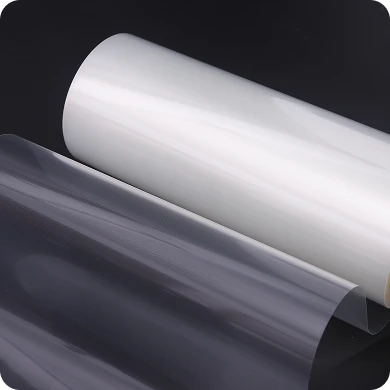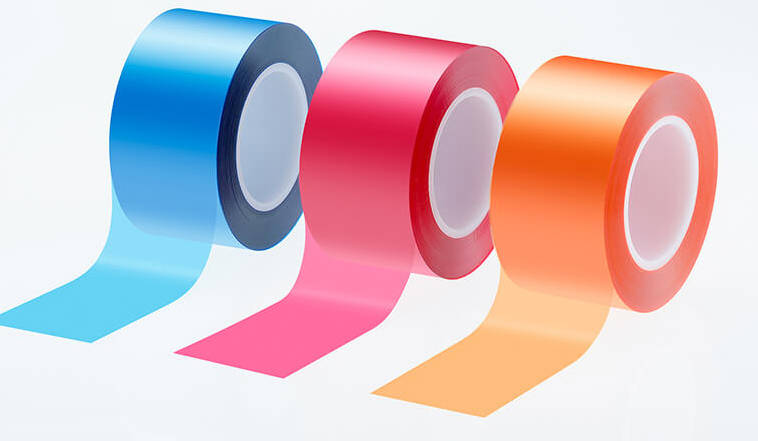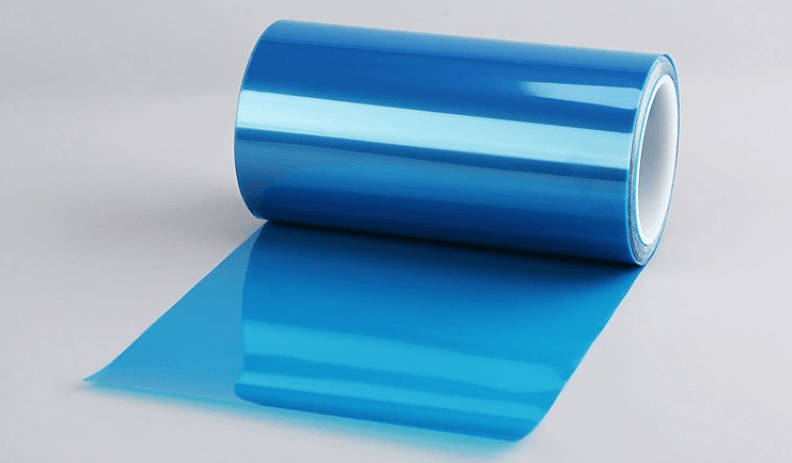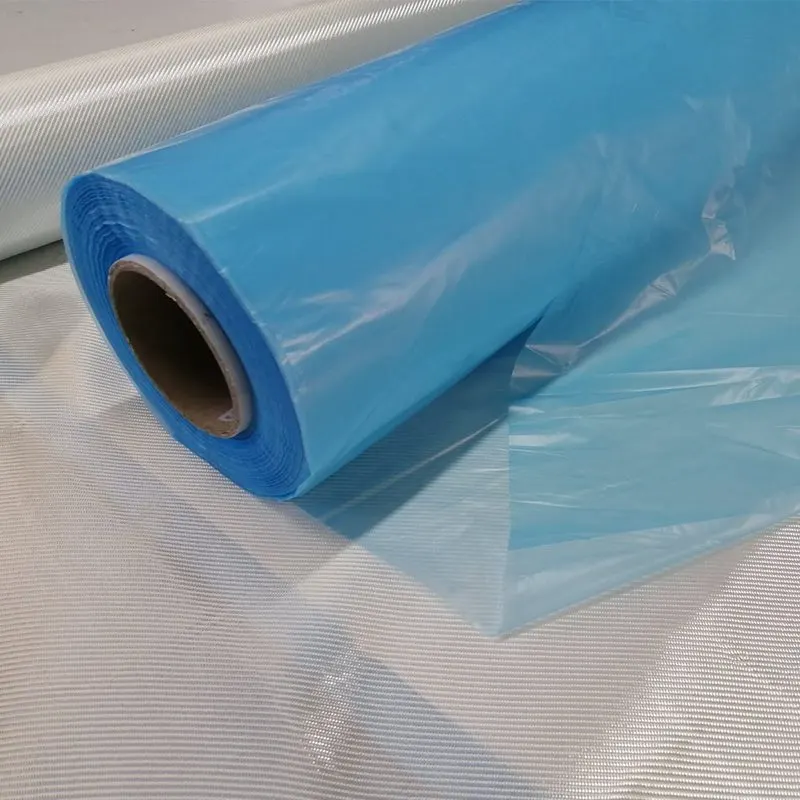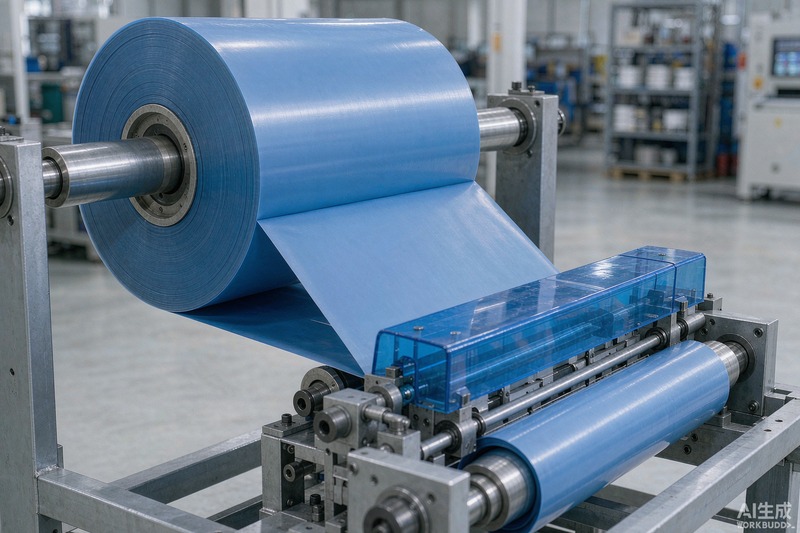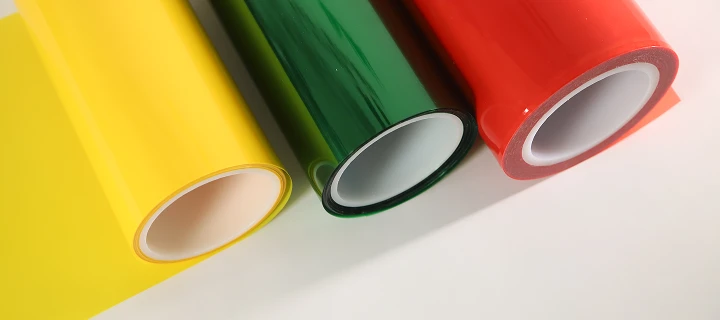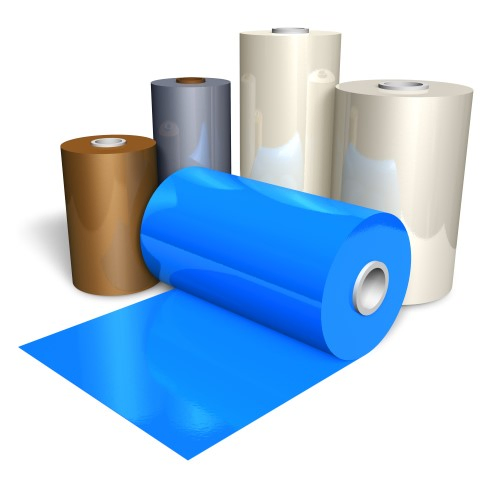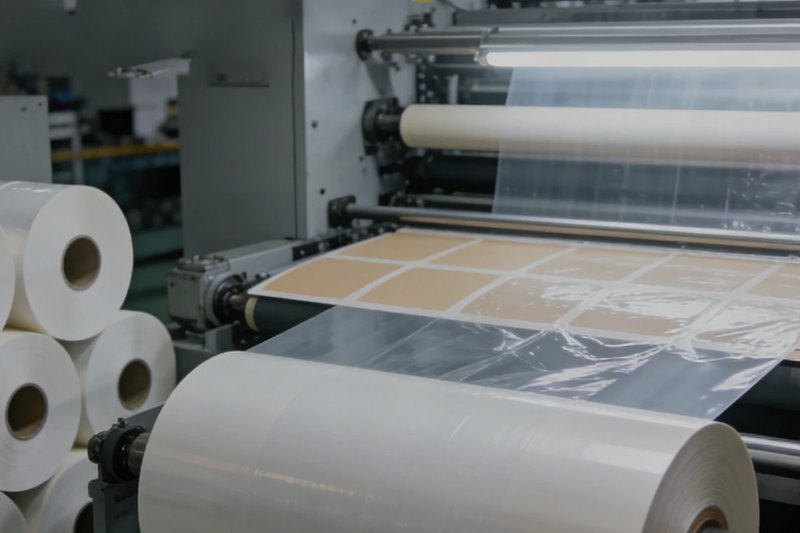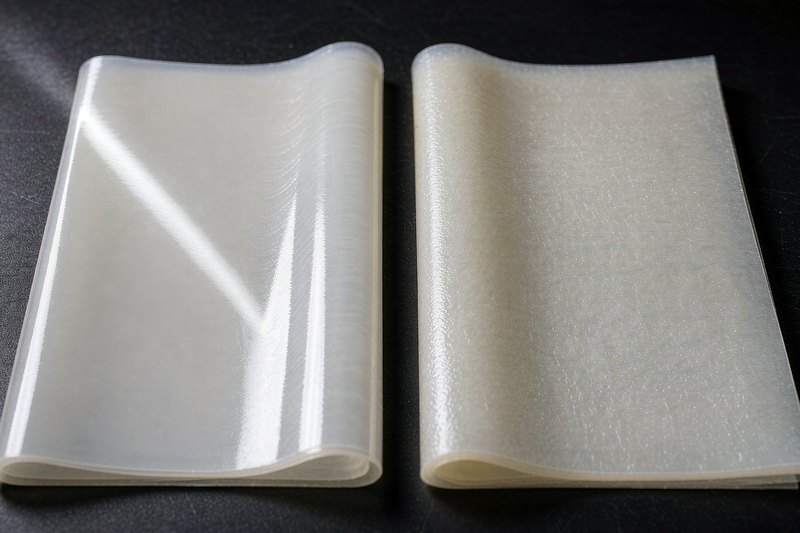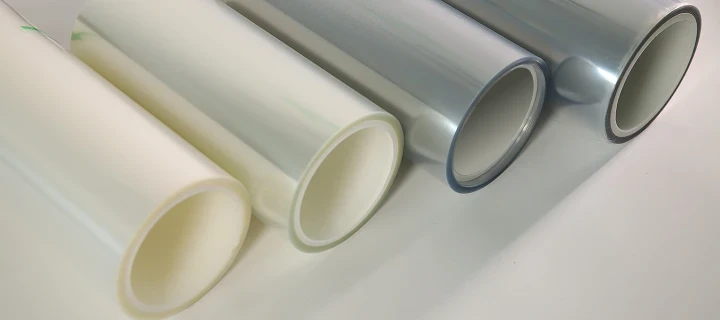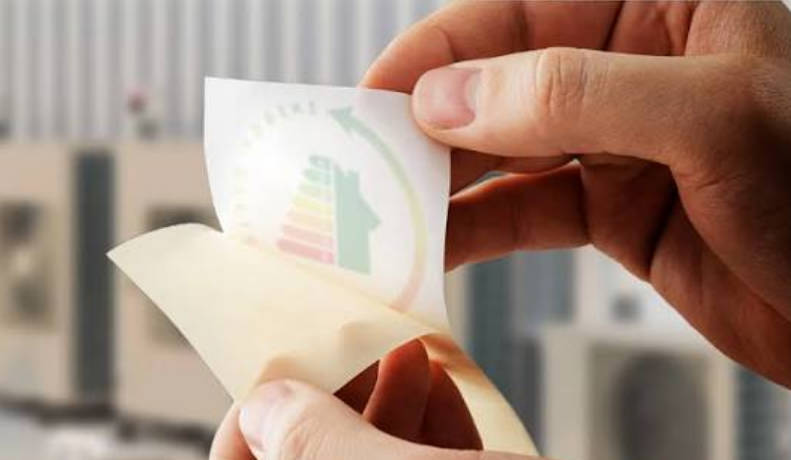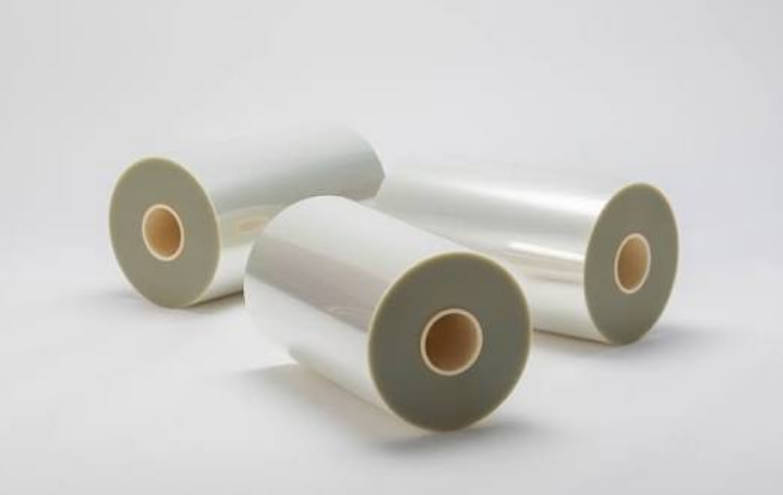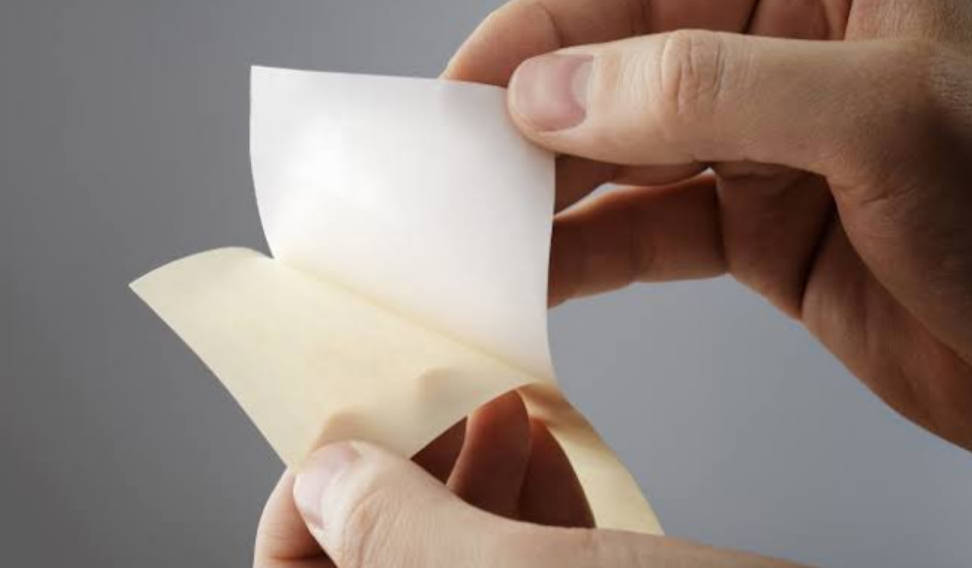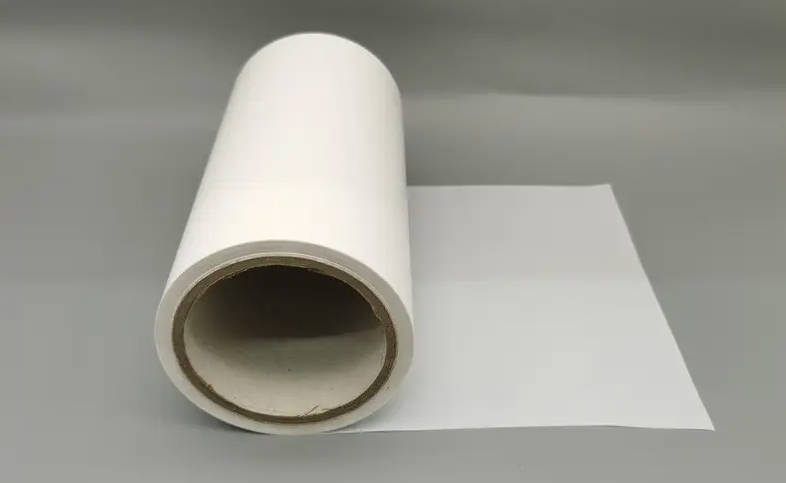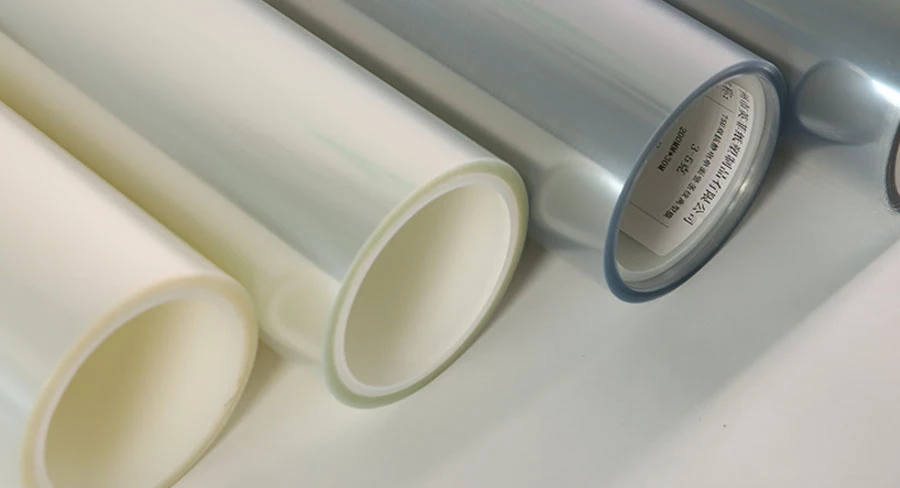
Release liner thickness affects handling stiffness, die-cutting stability, roll diameter, web tension, peeling control, and total material cost. In many PET release film applications, 25μm is used for thin and lightweight processes, 50μm is a common balanced thickness, 75μm provides stronger handling and die-cutting support, and 100μm is often selected for heavy-duty, high-stability, or industrial applications.
For adhesive tapes, labels, protective films, medical adhesive products, electronics materials, and die-cut components, thickness is not just a number on a specification sheet. It can influence how the liner behaves during coating, laminating, slitting, rewinding, die-cutting, storage, and final peeling. A liner that is too thin may wrinkle, stretch, or become difficult to handle. A liner that is too thick may increase cost, roll volume, and waste if the application does not require that level of support.
Many buyers ask for “PET release film” or “silicone release film” without clearly defining thickness. However, release film thickness should be selected according to the adhesive type, product structure, machine tension, die-cutting method, release force, roll size, and end-use requirements.
This guide explains how 25μm, 50μm, 75μm, and 100μm release liners are commonly used and how to choose the right release film thickness for your application.
What Does Release Liner Thickness Mean?
Release liner thickness refers to the total thickness of the liner substrate, and in some specifications, it may include the base film plus coating layer. For PET release film, thickness usually refers mainly to the PET film substrate thickness, while the release coating is much thinner.
A typical PET release liner structure includes:
| Layer | Function |
| PET base film | Provides thickness, tensile strength, stiffness, dimensional stability, and surface flatness |
| Surface treatment or primer | Helps improve coating anchorage |
| Silicone release coating | Provides controlled peeling from adhesive or sticky materials |
| Optional functional treatment | May provide anti-static, matte, high-gloss, or specialty performance |
The release coating controls peeling behavior, while the film thickness controls mechanical support, handling, roll stability, and converting performance.
This means two release liners with the same thickness may perform differently if they have different release coatings. Similarly, two liners with the same release force may behave differently if one is 25μm and the other is 100μm.
Why Thickness Matters in Release Film Selection
Thickness affects several practical performance areas.
| Performance Factor | How Thickness Affects It |
| Handling stiffness | Thicker liners are usually easier to handle and peel manually |
| Flexibility | Thinner liners bend more easily and reduce roll bulk |
| Die-cutting support | Thicker liners can provide better cutting stability |
| Web tension resistance | Thicker PET film may resist stretching and wrinkling better |
| Roll diameter | Thicker liners create larger rolls at the same length |
| Material cost | Thicker liners usually use more material |
| Final product feel | Thin liners may suit lightweight products; thick liners may feel more robust |
| Machine compatibility | Thickness must match coating, slitting, laminating, and dispensing equipment |
The right release liner thickness should provide enough support for production without adding unnecessary cost or roll volume.
This is especially important for large-volume adhesive products, where a small thickness difference can affect both performance and material consumption.
Quick Comparison: 25μm, 50μm, 75μm and 100μm Release Liners
| Thickness | General Character | Common Application Direction | Main Advantage | Main Limitation |
| 25μm | Thin, lightweight, flexible | Thin labels, lightweight films, temporary process liners | Lower bulk and flexible handling | Less stiffness and lower handling support |
| 50μm | Balanced and widely used | Labels, tapes, protective films, general converting | Good balance of cost, strength, and processability | May not be enough for heavy-duty support |
| 75μm | Stronger, more stable | Die-cut parts, electronics tapes, foam tapes, precision adhesive products | Better stiffness and die-cutting support | Higher material cost and roll volume |
| 100μm | Thick, robust, high-support | Industrial tapes, heavy adhesive products, high-stability process liners | Strong handling and dimensional support | Higher cost and larger roll diameter |
As a practical rule, use thinner liners when flexibility and cost matter more, and use thicker liners when handling, dimensional stability, and die-cutting support matter more.
However, this rule is only a starting point. The final choice should be verified through production testing.
25μm Release Liner: Thin and Lightweight
A 25μm release liner is a thin film liner often selected when low material bulk, flexibility, and lightweight construction are important. It may be used as a process liner or temporary liner in applications where heavy support is not required.
Common Uses of 25μm Release Film
| Application | Why 25μm May Be Used |
| Thin adhesive films | Reduces total product thickness |
| Lightweight labels | Supports thin structures where stiffness is not critical |
| Temporary process liners | Provides release surface without adding bulk |
| Flexible protective materials | Allows easier bending and winding |
| Cost-sensitive film applications | Lower material usage if performance is sufficient |
Advantages of 25μm Release Liner
- Lower material bulk
- Smaller roll diameter at the same length
- Better flexibility
- Useful for thin adhesive structures
- May reduce material consumption in suitable applications
Limitations of 25μm Release Liner
A 25μm liner may be more sensitive to wrinkling, stretching, folding, edge damage, and handling difficulty. It may not be suitable for heavy adhesive layers, aggressive die-cutting, high web tension, or applications requiring strong liner stiffness.
25μm release film is usually suitable when the liner mainly needs to provide a release surface, not strong mechanical support.
For demanding applications, testing is important before choosing 25μm as a production material.
50μm Release Liner: Balanced and Versatile
A 50μm PET release film is one of the commonly selected thicknesses for general adhesive product applications. It provides a balance between flexibility, stiffness, strength, roll size, and cost.
Common Uses of 50μm Release Film
| Application | Why 50μm May Be Suitable |
| Pressure sensitive labels | Supports converting and dispensing in many cases |
| Adhesive tapes | Offers balanced handling and roll performance |
| Protective films | Provides stable adhesive protection |
| General die-cutting | Works for many medium-demand products |
| Industrial liners | Suitable for broad converting applications |
Advantages of 50μm Release Liner
- Balanced stiffness and flexibility
- Suitable for many standard adhesive products
- Easier to handle than very thin film
- Lower bulk than thicker liners
- Often practical for tapes, labels, and protective films
Limitations of 50μm Release Liner
For very precise die-cutting, thick adhesive products, large-format components, or high-stability process requirements, 50μm may not provide enough support. In those cases, 75μm or 100μm may be more suitable.
50μm PET release film is often a good starting point when buyers need a general-purpose release liner for adhesive products.
75μm Release Liner: Stronger Support for Converting
A 75μm release liner provides more stiffness and handling support than 25μm or 50μm films. It is often used when die-cutting stability, dimensional control, and manual handling are important.
Common Uses of 75μm Release Film
| Application | Why 75μm May Be Used |
| Precision die-cut parts | Better dimensional support during cutting |
| Electronics adhesive components | Improved flatness and handling |
| Foam tapes | Supports thicker adhesive or foam structures |
| Double-sided tapes | Helps stabilize roll and transfer process |
| Protective film components | Better liner stiffness for application |
| Medical adhesive products | May improve handling for certain product formats |
Advantages of 75μm Release Liner
- Better stiffness than 50μm
- Improved die-cutting support
- More stable handling during peeling
- Useful for precision adhesive components
- Helps reduce deformation in some converting processes
Limitations of 75μm Release Liner
A 75μm liner increases material usage and roll diameter compared with thinner films. It may be unnecessary for simple labels, lightweight films, or low-cost standard applications.
75μm release film is often selected when the liner must support accurate converting and stable handling.
100μm Release Liner: Heavy-Duty and High-Stability
A 100μm release liner is a thick and robust option. It is typically used when the product requires strong handling support, high stiffness, stable die-cutting, or heavy-duty process performance.
Common Uses of 100μm Release Film
| Application | Why 100μm May Be Used |
| Industrial adhesive tapes | Strong liner support for heavy adhesive products |
| Thick foam tapes | Better support for thick structures |
| Large die-cut components | Improved handling and dimensional control |
| Heavy protective films | Stronger liner during application and transport |
| Composite or process liners | Better mechanical support |
| Specialty adhesive products | Useful when stability is more important than roll volume |
Advantages of 100μm Release Liner
- Strong handling stiffness
- Better support for heavy adhesive products
- More stable during die-cutting and peeling
- Useful for large-format or industrial applications
- Reduces risk of folding and handling damage
Limitations of 100μm Release Liner
A 100μm liner increases cost, roll diameter, storage space, and waste volume. It may be over-specified for standard labels, thin tapes, or lightweight protective films.
100μm release film should be chosen when the application truly needs high stiffness, strong support, or heavy-duty process stability.
Thickness Selection by Application
| Application | Common Thickness Direction | Selection Logic |
| Thin labels | 25μm or 50μm | Balance flexibility and dispensing needs |
| General labels | 50μm | Practical balance of cost and support |
| Clear labels | 50μm or 75μm | Depends on clarity, handling, and die-cutting |
| General adhesive tapes | 50μm | Balanced roll handling and cost |
| Double-sided tapes | 50μm or 75μm | Depends on differential release and adhesive strength |
| Foam tapes | 75μm or 100μm | Thicker product needs stronger support |
| Protective films | 50μm or 75μm | Depends on surface quality and application method |
| Electronics die-cut parts | 75μm or 100μm | Precision and stability matter |
| Medical adhesive products | 50μm or 75μm | Depends on handling and cleanliness |
| Industrial adhesive components | 75μm or 100μm | Heavy-duty stability is often important |
These are application directions, not fixed rules. The final specification should be tested with the actual adhesive, converting equipment, and end-use process.
How Thickness Affects Die-Cutting
Die-cutting is one of the most important reasons buyers compare release liner thickness. The liner must support the adhesive product during cutting without being cut through, stretched, or damaged.
| Thickness Factor | Die-Cutting Impact |
| Too thin | May wrinkle, stretch, or be damaged easily |
| Too thick | May require adjusted cutting pressure and increase cost |
| Stable thickness | Helps maintain consistent cutting depth |
| Higher stiffness | Supports small parts and precision shapes |
| Poor thickness tolerance | May cause inconsistent cutting quality |
For kiss-cutting, the blade cuts through the adhesive product but should not cut through the release liner. If the liner thickness or tolerance is inconsistent, the cutting depth may become unstable.
For precision parts, 75μm or 100μm PET release film may be preferred because it provides better backing support.
How Thickness Affects Release Force
Release force is controlled mainly by the release coating, not by thickness alone. However, thickness can influence how peeling feels and how the liner behaves during removal.
| Thickness | Peeling Behavior |
| Thinner liner | More flexible, may bend easily during peeling |
| Medium liner | Balanced peeling and handling |
| Thicker liner | More rigid, easier to grip and control in some applications |
A thicker liner does not automatically mean tighter release. A thinner liner does not automatically mean easier release. Buyers should specify both thickness and release force separately.
Release liner thickness and release force are different specifications. Both must be confirmed during purchasing.
How Thickness Affects Roll Size and Cost
Thicker liners increase roll diameter and material consumption. This can affect logistics, storage, machine loading, and total cost.
| Factor | Thin Liner | Thick Liner |
| Roll diameter | Smaller at the same length | Larger at the same length |
| Material usage | Lower | Higher |
| Handling support | Lower | Higher |
| Shipping/storage | More compact | More space required |
| Cost | Usually lower | Usually higher |
| Process stability | Application-dependent | Better for demanding support |
For large-volume applications, buyers should avoid over-specifying thickness. If 50μm performs well, using 75μm or 100μm may add unnecessary cost. If 50μm causes deformation or poor handling, a thicker liner may reduce waste and improve production yield.
Thickness Is Not the Only Specification
Release liner thickness is important, but it should not be selected alone. Buyers should also confirm:
| Specification | Why It Matters |
| Film substrate | PET, PE, PP, BOPP, or specialty film |
| Release coating | Silicone, non-silicone, fluorosilicone, or custom release |
| Release force | Easy, medium, tight, differential, or custom |
| Coating side | One-side or double-side release |
| Surface smoothness | Affects adhesive contact and appearance |
| Heat resistance | Important for drying, lamination, or high-temperature storage |
| Tensile strength | Affects web handling and slitting |
| Width tolerance | Important for automatic equipment |
| Roll quality | Affects coating, slitting, and rewinding |
| Cleanliness | Critical for electronics, optical, and medical applications |
A 75μm liner with poor coating uniformity may perform worse than a 50μm liner with stable release force and better roll quality.
Common Mistakes When Choosing Release Liner Thickness
Mistake 1: Assuming Thicker Is Always Better
Thicker liners provide more support, but they also increase cost and roll volume. For standard applications, excessive thickness may not improve performance.
Mistake 2: Choosing the Thinnest Film Only to Save Cost
A very thin liner may wrinkle, stretch, or create handling problems. If waste increases, the actual cost may be higher than using a thicker liner.
Mistake 3: Ignoring Die-Cutting Depth
Thickness affects die-cutting setup. If the liner thickness changes, cutting pressure and blade control may need adjustment.
Mistake 4: Confusing Thickness With Release Force
Thickness controls mechanical behavior. Release force controls peeling. Both need separate specifications.
Mistake 5: Not Testing on Real Equipment
A liner may look suitable in theory but fail under actual web tension, machine speed, die-cutting pressure, or storage conditions.
How to Choose a Release Film Supplier
A suitable supplier should help match thickness with application, not simply quote standard rolls.
When evaluating a supplier, ask:
| Supplier Question | Why It Matters |
| What PET release film thicknesses are available? | Helps compare 25μm, 50μm, 75μm, and 100μm options |
| Can release force be customized? | Thickness alone does not define peeling performance |
| Can you provide one-side or double-side release? | Required for different product structures |
| Can rolls be slit to custom widths? | Supports production line requirements |
| How is thickness tolerance controlled? | Important for die-cutting and coating |
| How is coating uniformity tested? | Affects release stability |
| Can samples be tested before bulk order? | Reduces selection risk |
| Can you support application-based recommendations? | Helps avoid over-specification or under-specification |
Yingfei provides release film materials for adhesive tapes, labels, protective films, medical adhesive products, electronics materials, die-cut parts, and industrial applications.
You can also visit Yingfei Liner to learn more about release liner material options and application-based selection.
Practical Thickness Selection Checklist
Before confirming a release liner thickness, prepare the following information:
| Item | What to Confirm |
| Product type | Label, tape, protective film, medical adhesive, electronics part, or industrial liner |
| Adhesive type | Acrylic, rubber, hot melt, silicone, removable, or permanent |
| Release force | Easy, medium, tight, differential, or custom |
| Film substrate | PET, PE, PP, BOPP, or specialty film |
| Target thickness | 25μm, 50μm, 75μm, 100μm, or custom |
| Thickness tolerance | Important for coating and die-cutting |
| Coating side | One-side or double-side release |
| Die-cutting method | Kiss-cutting, full-cutting, rotary die-cutting, or flatbed die-cutting |
| Machine tension | Determines risk of stretching or wrinkling |
| Roll specification | Width, length, core, diameter, winding direction |
| Temperature exposure | Coating, drying, lamination, or storage temperature |
| Surface requirement | Standard, clean, anti-static, optical, or high-smoothness |
| Sample testing | Initial release, aged release, die-cutting, slitting, final peeling |
FAQ
1. What is the common thickness of PET release film?
Common PET release film thicknesses include 25μm, 50μm, 75μm, and 100μm, though other custom thicknesses may also be available. The right thickness depends on application, handling, die-cutting, roll size, and cost requirements.
2. Is 50μm release film suitable for adhesive tapes?
50μm release film is commonly used for many adhesive tape applications because it offers a balanced combination of stiffness, flexibility, roll handling, and cost. However, high-tack, foam, or precision tapes may need 75μm or 100μm liners.
3. When should I choose 75μm PET release liner?
Choose 75μm PET release liner when your application needs better die-cutting support, stronger handling, improved dimensional stability, or more stable peeling than thinner liners can provide.
4. Is thicker release liner always better?
No. Thicker release liners provide more support but also increase cost, roll diameter, storage space, and waste volume. The best thickness is the one that meets process requirements without unnecessary material use.
5. Does release liner thickness affect release force?
Release liner thickness affects handling and peeling feel, but release force is mainly controlled by the release coating. Buyers should specify both thickness and release force when ordering.
6. What thickness is best for precision die-cutting?
Precision die-cutting often uses 75μm or 100μm PET release film when strong backing support and dimensional stability are required. However, the final choice depends on part size, adhesive thickness, cutting method, and machine setup.
7. How do I choose release film thickness for protective films?
For protective films, 50μm or 75μm release film is commonly evaluated. Thinner liners may suit lightweight products, while thicker liners may be better for high-value, precision, or large-format protective film applications.
Conclusion
Release liner thickness plays an important role in adhesive product manufacturing. A 25μm release liner is thin and flexible, suitable for lightweight or low-bulk applications. A 50μm release liner offers balanced performance for many tapes, labels, and protective films. A 75μm release liner provides stronger support for die-cutting and precision converting. A 100μm release liner is suitable for heavy-duty, large-format, or high-stability industrial applications.
The right choice depends on more than thickness alone. Buyers should also consider release force, film substrate, coating side, adhesive compatibility, die-cutting method, temperature exposure, roll size, surface cleanliness, and total cost.
If you are comparing release liner thickness options for tapes, labels, protective films, medical adhesives, electronics materials, or die-cut components, Yingfei can help evaluate suitable release film structures based on your production process and application requirements.