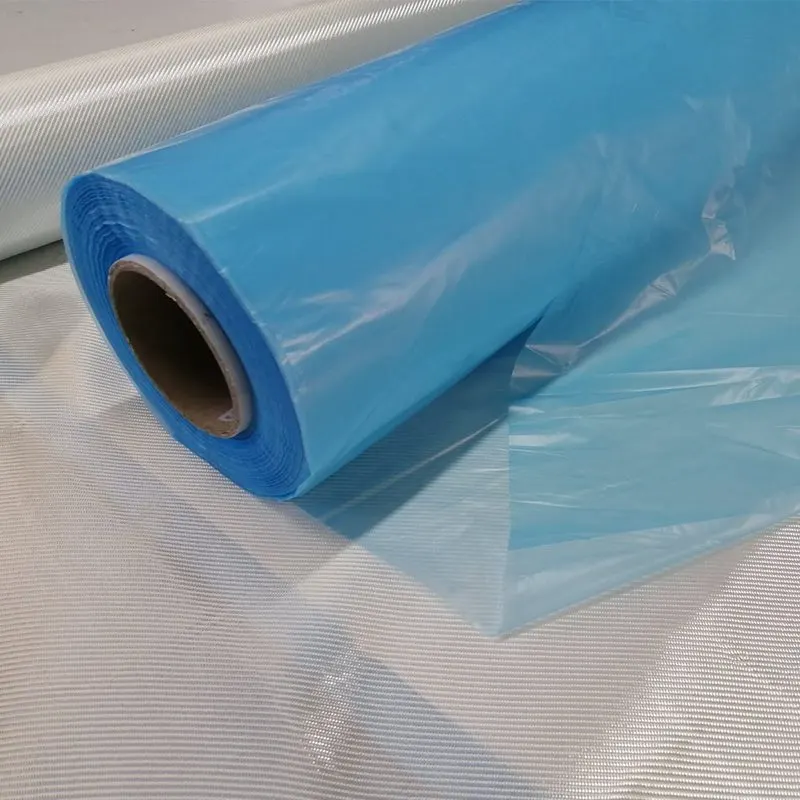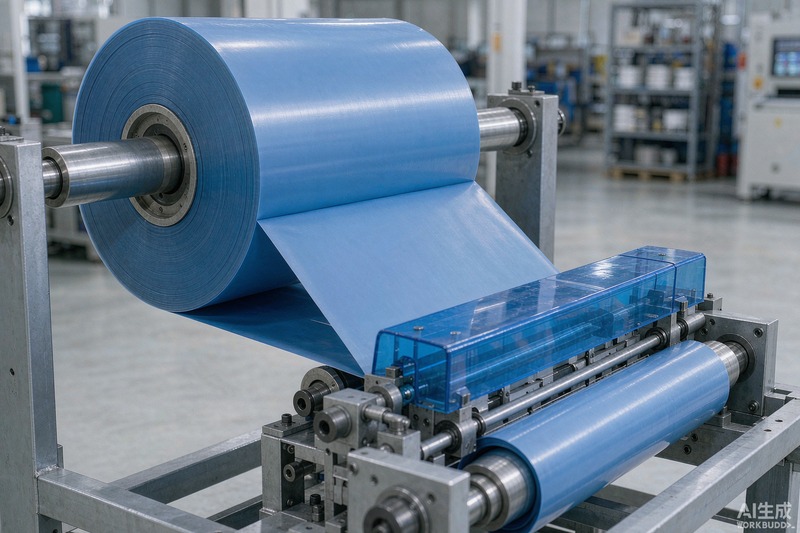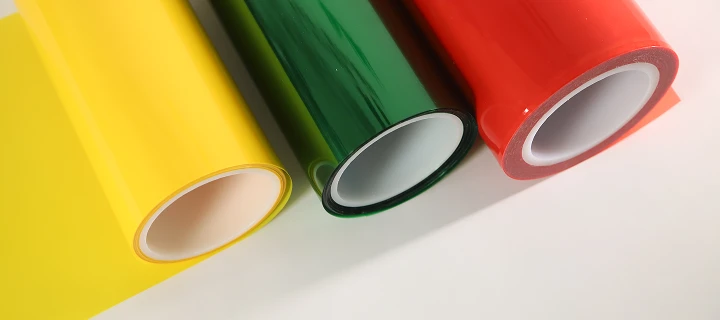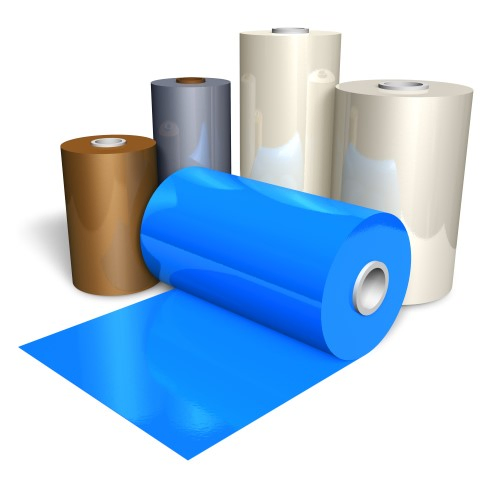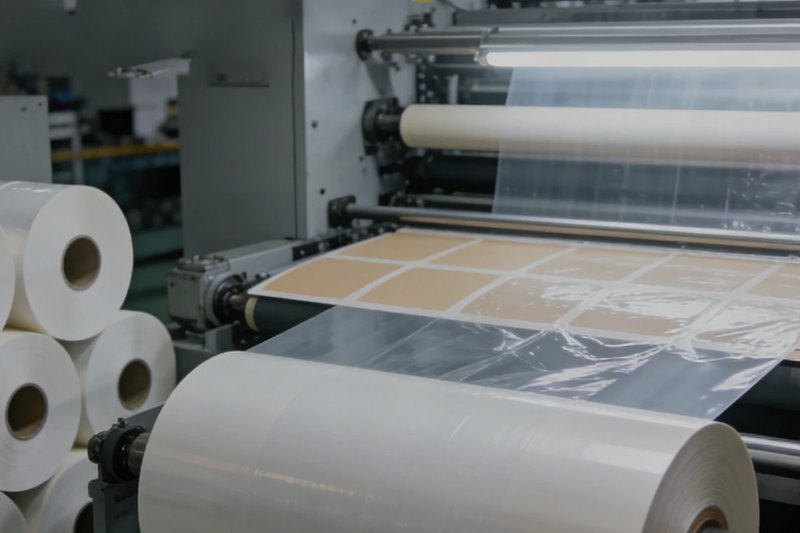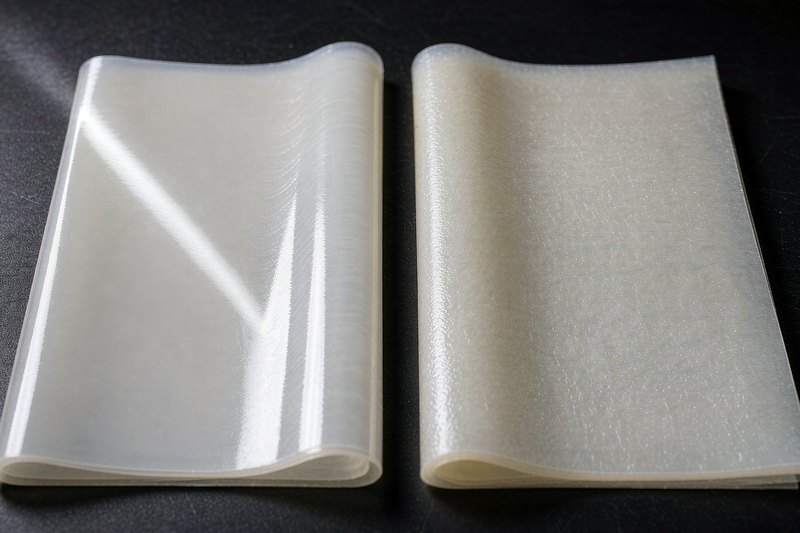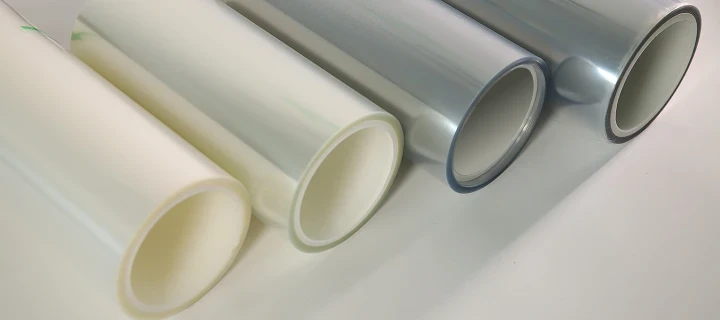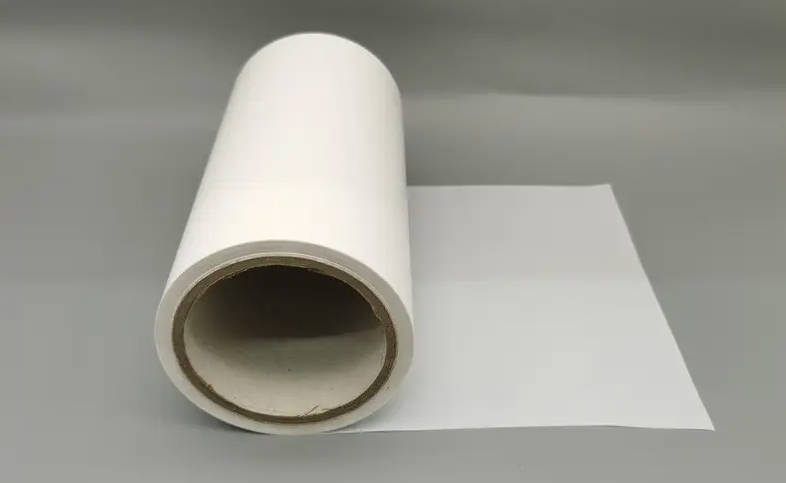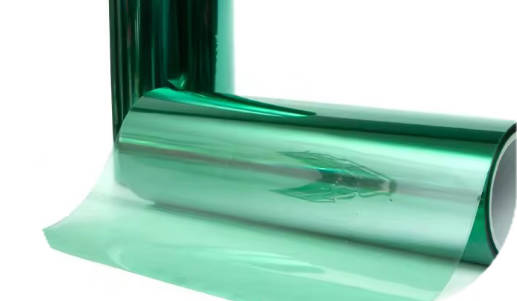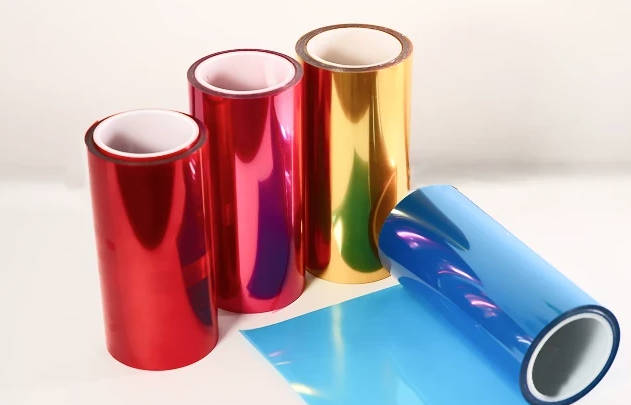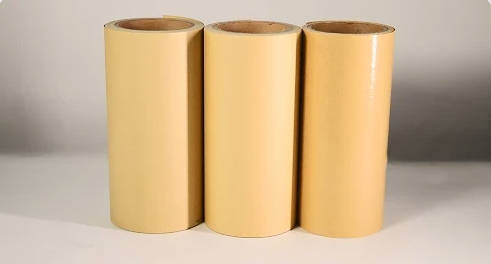
A release liner may account for only one layer of an adhesive construction, but its release behavior can influence almost every converting step that follows.
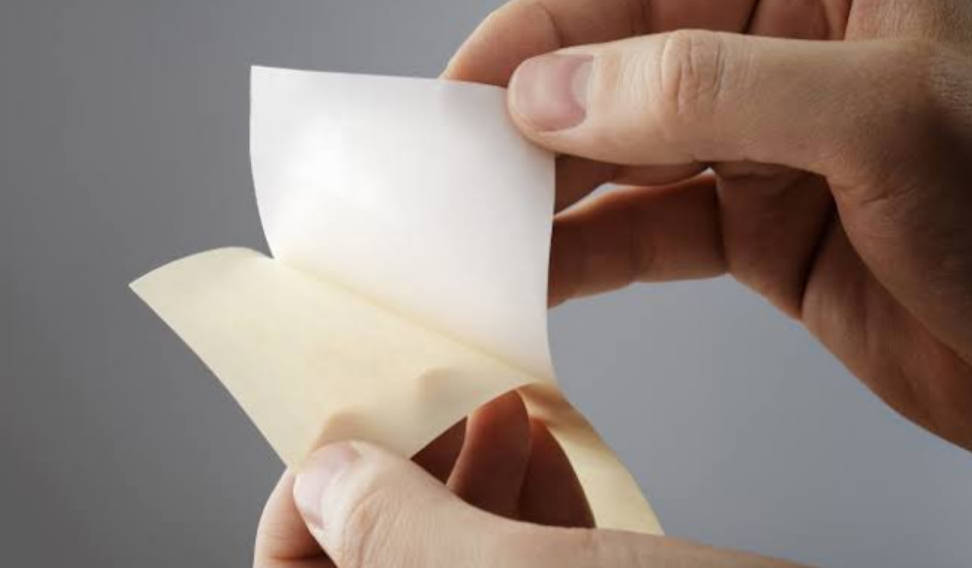
Consistent release force allows the adhesive construction to stay firmly supported when it should remain on the liner and separate predictably when peeling, matrix stripping, transferring, or dispensing is required.
When release force varies, production may become unstable even though the face material, adhesive, die, and machine settings have not changed.
Typical symptoms include:
- waste matrix breaking during stripping;
- labels lifting with the matrix;
- die-cut parts shifting on the liner;
- difficult liner removal;
- inconsistent adhesive transfer;
- tape or film stretching during peeling;
- frequent machine adjustments;
- lower converting speeds;
- increased scrap.
For manufacturers involved in pressure-sensitive labels, adhesive tapes, protective films, electronics die cutting, foam products, and other adhesive converting processes, release force should therefore be viewed as a process-control parameter rather than simply a liner specification.
This article explains how release force stability affects converting yield, die cutting, matrix stripping, lamination, and final application—and what B2B buyers should look for when sourcing release film or release paper.

Think of Release Force as a Production Window
Release force is often discussed as if there were only two conditions:
- easy release;
- tight release.
Actual converting is more complicated.
A production line usually needs a working window.
The liner must hold the adhesive construction strongly enough during:
- coating;
- laminating;
- rewinding;
- die cutting;
- matrix stripping;
- transportation.
But it must also release cleanly during:
- transfer;
- dispensing;
- assembly;
- final application.
If release force moves outside that window, production becomes unstable.
| Release Condition | What Happens in Production |
| Too low | Premature lifting, part movement, unstable matrix stripping |
| Correct and stable | Predictable converting and controlled peeling |
| Too high | Difficult stripping, adhesive deformation, slower processing |
| Highly variable | Machine settings work for some sections but fail in others |
The production problem is often not that the release force is simply high or low—it is that it does not remain sufficiently consistent through the roll, batch, or aging period.
Where Release Force Stability Enters the Converting Process
Instead of looking at the liner as a finished material, follow it through the production line.
There are five critical stages where release behavior matters.
Stage 1: Lamination
During lamination, the adhesive structure and release liner are brought into controlled contact.
At this stage, the liner must:
- remain flat;
- support the adhesive;
- avoid premature separation;
- tolerate web tension;
- maintain a uniform interface.
If release behavior is already too light, the construction may shift during rewinding or further converting.
If release is excessively tight, the problem may not appear yet. It often appears later during stripping or final peeling.
This is why initial lamination appearance alone cannot confirm that the liner specification is correct.
Stage 2: Die Cutting
Die cutting creates individual labels, tape parts, gaskets, protective components, or other shapes while the release liner remains underneath.
For kiss-cut structures, the die cuts through the face material and adhesive but should leave the liner intact.
The liner is therefore serving two functions simultaneously:
- supporting the construction mechanically;
- controlling the adhesive interface.
A suitable die cutting release liner needs:
- stable thickness;
- dimensional stability;
- sufficient strength;
- predictable release.
If release force is inconsistent, different sections of the same roll may respond differently when the die-cut parts are separated from surrounding waste.
What Happens When Release Is Too Easy?
Small components may:
- lift;
- move;
- rotate;
- leave the liner with the waste matrix.
This becomes particularly problematic with:
- small labels;
- narrow adhesive strips;
- complex die-cut shapes;
- thin face materials;
- high-speed rotary die cutting.
What Happens When Release Is Too Tight?
Higher force is needed to remove the waste or final part.
Possible consequences include:
- matrix breakage;
- adhesive stretching;
- part deformation;
- reduced line speed;
- difficult automatic dispensing.
Stable release force helps keep die-cut components on the liner during waste removal while still allowing controlled removal later in the process.
Stage 3: Matrix Stripping
Matrix stripping is often where release-force problems become visible.
After die cutting, the unwanted surrounding material is removed while the finished labels or adhesive parts remain on the liner.
This creates a demanding balance.
The matrix must separate.
The finished component must stay.
The release liner must therefore create predictable resistance.
If Release Force Is Too Low
The finished component may follow the waste matrix.
Operators may see:
- labels lifting;
- corners rising;
- small parts disappearing into waste;
- unstable matrix removal.
If Release Force Is Too High
The matrix itself can become difficult to remove.
Possible results include:
- matrix tearing;
- frequent stops;
- lower converting speed;
- higher web tension;
- product deformation.
The problem becomes more sensitive as:
- line speed increases;
- shapes become smaller;
- spacing between parts decreases;
- face materials become thinner;
- adhesive becomes more aggressive.
This is why stable release force becomes particularly valuable in precision die-cutting applications.
Stage 4: Rewinding and Storage
A release liner that performs correctly immediately after lamination may behave differently after being stored in roll form.
Why?
Because the adhesive remains in contact with the release surface under pressure.
Over time, variables such as:
- adhesive chemistry;
- roll pressure;
- winding tension;
- temperature;
- storage period;
may change the adhesive-liner interaction.
The result is often called aged release behavior.
A liner may show acceptable initial release but become significantly tighter later.
This creates a common factory scenario:
The trial roll ran well, but production material became harder to strip after several days.
The correct evaluation should therefore consider both:
- initial release;
- aged release.
Release force stability over time can be more important than a single peel result measured immediately after lamination.
Stage 5: Final Dispensing or Application
After converting, the liner still has one final job.
It must release the finished component predictably.
For labels, this may happen during automatic dispensing.
For die-cut electronics components, it may occur during assembly.
For adhesive tapes, it may happen when the customer removes the liner.
Unstable release can cause:
- liner tearing;
- incomplete peeling;
- part deformation;
- adhesive transfer;
- inconsistent automatic dispensing.
The same material therefore needs to perform from lamination all the way to final use.
The Production Chain: One Release Variable, Multiple Yield Effects
A useful way to understand release force is to connect it directly to production yield.
| Release Variation | Converting Effect | Possible Yield Impact |
| Too easy | Parts lift during matrix stripping | Missing or displaced parts |
| Too tight | Waste becomes difficult to remove | Matrix breaks and downtime |
| Uneven across web | Different lanes behave differently | Localized defects |
| Changes through roll | Machine requires repeated adjustment | Lower production stability |
| Changes after aging | Approved material later fails | Scrap after storage |
| Inconsistent between batches | Different machine settings required | Poor repeatability |
This is why release force consistency has commercial value.
It can affect:
- machine uptime;
- operator intervention;
- scrap rate;
- converting speed;
- batch consistency;
- customer complaints.
Release Force Consistency Across the Web
Consider a wide release liner roll.
If release coating is not uniform across the width, the left side may release differently from the center or right side.
A converter may then see:
- stable matrix stripping on one lane;
- label lifting on another;
- different peeling behavior across the finished roll.
This may initially look like a die or machine problem.
A practical troubleshooting approach is to take samples from:
- left;
- center;
- right.
Then compare release behavior under the same test conditions.
For applications where width is later slit into multiple narrow reels, cross-web uniformity becomes especially important because individual slit rolls may otherwise behave differently.
Release Force Consistency Through the Roll
Variation can also occur from the outside toward the core.
Potential influences include:
- roll pressure;
- winding conditions;
- storage;
- adhesive wet-out.
If the outer layers perform normally but material near the core becomes tighter, production teams should not immediately assume the coating itself is the only cause.
Compare:
- outer roll;
- middle roll;
- inner roll.
This helps identify whether roll pressure or aging contributes to the variation.
PET Release Film vs Release Paper for Die Cutting
Both film and paper can serve as release liners, but they bring different converting characteristics.
PET Release Film
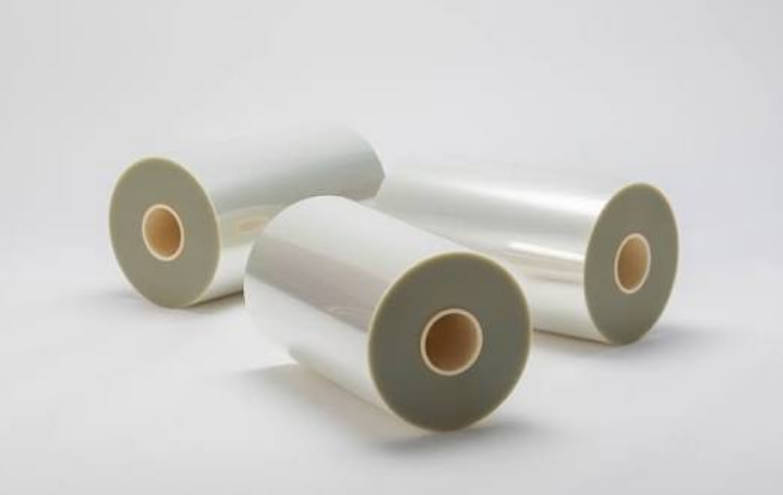
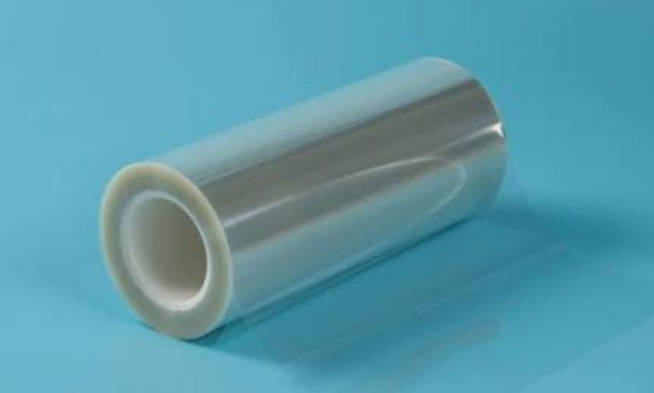
PET film is commonly considered when applications require:
- good dimensional stability;
- smooth surfaces;
- consistent thickness;
- moisture resistance;
- clean converting;
- precision die cutting.
Applications may include:
- electronics components;
- thin adhesive tapes;
- protective films;
- precision die-cut parts.
Buyers looking for a PET release film should evaluate not only nominal release force but also consistency across width, roll, and production batch.
Release Paper
Paper liners remain widely used for:
- pressure-sensitive labels;
- adhesive tapes;
- stickers;
- general die-cut adhesive products.
Paper may provide:
- useful stiffness;
- cost efficiency;
- familiar converting behavior.
However, humidity and moisture can influence paper dimensions and flatness.
For label and general adhesive converting, release paper may remain a practical solution when the substrate and release coating are matched to the process.
Film or Paper? Choose Based on the Converting Failure You Cannot Accept
Instead of asking only “Which liner is cheaper?”, ask which production risk matters most.
| Production Requirement | Selection Direction |
| Precision dimensional stability | PET release film |
| High cleanliness | PET release film |
| Standard pressure-sensitive labels | Release paper often suitable |
| Cost-sensitive converting | Release paper may be suitable |
| Humidity-sensitive environment | Film may offer advantages |
| High-speed precision die cutting | Evaluate PET film |
| General matrix stripping | Either, depending on construction |
| Automatic dispensing | Focus on liner stiffness and release consistency |
There is no universal material choice.
The liner must work with the complete adhesive construction.
Release Force and Adhesive Chemistry Must Be Evaluated Together
The same release liner can behave differently with different adhesives.
Common adhesive systems include:
- acrylic;
- rubber-based;
- hot melt;
- silicone adhesive;
- removable adhesive;
- high-tack adhesive.
An aggressive adhesive may require a different release coating from a low-tack adhesive.
Likewise, silicone adhesives may require a specialized release system rather than a conventional silicone release surface.
When discussing material with a silicone release liner manufacturer or release film supplier, provide the adhesive chemistry whenever possible.
Do not simply request:
“Medium release PET film.”
A more useful inquiry explains:
- adhesive type;
- application;
- converting process;
- desired peeling sequence;
- storage conditions.
Release Force Stability Is Not the Same as “Low Release Force”
One misconception deserves special attention.
Some buyers assume that easier release automatically improves converting.
It does not.
Very low release force can make:
- labels lift;
- small parts shift;
- adhesive transfer unstable;
- waste stripping unpredictable.
Likewise, high release force is not automatically more secure.
Too much resistance may cause:
- difficult waste removal;
- adhesive deformation;
- slower dispensing.
The target should therefore be a stable release window, not simply the lightest possible release.
Five Signs Your Release Force May Be Inconsistent
1. Operators Keep Changing Machine Settings
If the same construction requires repeated tension or stripping adjustments, investigate the liner and adhesive interface.
2. Only Certain Lanes Fail
Cross-web release variation may be involved.
3. Problems Increase Toward the Roll Core
Roll pressure or aged release behavior may be contributing.
4. Fresh Samples Pass but Stored Rolls Fail
Initial release alone is not representing real production.
5. Small Parts Fail Before Large Parts
Small and complex die-cut parts are often more sensitive to release-force variation.
A Practical Troubleshooting Matrix
| Symptom | Release Force Possibility | Other Factors to Check |
| Label lifts with waste matrix | Too low | Die depth, adhesive tack |
| Matrix repeatedly breaks | Too high | Waste geometry, line tension |
| Parts move after cutting | Too low or inconsistent | Film stiffness, die accuracy |
| Peeling damages adhesive | Too high | Adhesive cohesive strength |
| One side of web fails | Cross-web variation | Die pressure, alignment |
| Inner roll performs differently | Aged release / roll pressure | Winding tension |
| Different batches require new setup | Batch variation | Adhesive and machine settings |
This approach helps avoid replacing material before identifying the real cause.
What Should B2B Buyers Ask a Release Liner Supplier?
A B2B inquiry should go beyond thickness and width.
When evaluating a PET release film manufacturer, release paper supplier, or custom release liner supplier, ask about:
- release-force options;
- release-force consistency;
- one-side or two-side coating;
- differential release;
- thickness;
- width;
- slitting;
- winding direction;
- adhesive compatibility;
- sample testing;
- aged release evaluation.
For die-cutting projects, also provide:
- part dimensions;
- whether the process uses kiss cutting;
- matrix stripping requirements;
- machine speed;
- liner thickness requirement;
- end application.
This helps the supplier understand the converting process rather than treating the inquiry as a generic roll order.
B2B RFQ Checklist for Die-Cutting Release Liner
| RFQ Item | Information to Provide |
| Application | Label, tape, electronics, foam, protective film |
| Liner type | PET film or release paper |
| Adhesive | Acrylic, rubber, hot melt, silicone, etc. |
| Thickness / GSM | Required specification |
| Release level | Easy, medium, tight, differential |
| Coating side | One side or two sides |
| Finished width | Roll width and tolerance |
| Roll length | Required length |
| Core size | Machine-compatible dimension |
| Die-cutting method | Rotary, flatbed, kiss cut |
| Matrix stripping | Required / not required |
| Line speed | Actual converting condition |
| Storage | Expected aging conditions |
| Quantity | Trial and production volume |
The more closely a release-liner sample represents the real converting process, the more useful the approval test becomes.
What Should Be Tested Before Bulk Approval?
For converting and die-cutting applications, consider evaluating:
Initial Release
Does the material peel correctly immediately after lamination?
Aged Release
Does the release behavior remain stable after realistic storage?
Cross-Web Consistency
Do left, center, and right samples behave similarly?
Roll Consistency
Does performance remain stable from outer layers toward the core?
Matrix Stripping
Do finished parts remain on the liner?
Die-Cutting Stability
Does the liner maintain flatness and support?
Adhesive Residue
Does adhesive remain where it should after peeling?
Final Dispensing
Can the finished component be removed predictably?
Testing the complete production sequence is more useful than approving the liner from a single hand-peel test.
Why This Matters When Comparing Release Liner Prices
Release liners are often purchased by:
- square meter;
- roll;
- kilogram;
- finished width.
That makes material price easy to compare.
Converting loss is harder to see.
If a lower-priced liner causes:
- more line stops;
- slower stripping;
- increased scrap;
- missing labels;
- customer complaints;
then the lower purchase price may not create lower overall production cost.
For high-volume converters, consistency is therefore a purchasing factor.
A technically appropriate custom release liner should be assessed according to process stability as well as unit price.
Where YingFei Release Materials Fit
For B2B buyers sourcing adhesive-converting materials, YingFei provides both film- and paper-based release liner options.
Buyers evaluating precision die cutting, tapes, protective materials, or other film-based applications can explore release film solutions.
For pressure-sensitive labels and paper-based adhesive constructions, silicone release paper provides another liner direction to evaluate.
The correct choice should be determined by:
- adhesive system;
- release requirement;
- converting method;
- liner thickness;
- dimensional stability;
- storage conditions;
- final application.
More information about YingFei’s B2B release material solutions is available through YingFei.
FAQ
1. Why is consistent release force important in die cutting?
Consistent release force helps die-cut parts remain on the liner during matrix stripping while allowing predictable removal later. Unstable release can cause lifting, matrix breaks, shifting, and production stops.
2. What causes release force to become unstable?
Release-force variation may be related to coating uniformity, adhesive chemistry, aging, temperature, roll pressure, winding conditions, storage, or differences across the web.
3. Can low release force cause matrix stripping problems?
Yes. If release force is too low, labels or die-cut components may lift from the liner and leave with the waste matrix.
4. Can high release force reduce die-cutting efficiency?
Yes. Excessively tight release can make waste removal or final peeling more difficult and may contribute to matrix breaks, adhesive deformation, or reduced converting speed.
5. Why does release force change after storage?
Adhesive can continue interacting with the release surface under pressure during storage. Adhesive chemistry, temperature, winding pressure, and storage time can therefore change aged release behavior.
6. Is PET release film suitable for precision die cutting?
PET release film is commonly considered for precision die-cutting applications because of its dimensional stability, surface smoothness, thickness consistency, and mechanical strength.
7. Is release paper suitable for label die cutting?
Yes. Release paper is widely used for pressure-sensitive labels and general adhesive converting where its stiffness, cost, and converting characteristics meet the application requirements.
8. How should I test release force consistency?
Evaluate more than one sample. Compare different positions across the web, different roll depths, multiple rolls or batches, and both fresh and aged material under consistent test conditions.
9. What information should I send to a die cutting release liner supplier?
Provide adhesive type, liner substrate, thickness, release requirement, coating side, roll width, converting method, matrix stripping requirements, machine conditions, storage conditions, and final application.
Conclusion
Release force is not merely a technical value listed on a release liner specification sheet. It influences the entire converting chain.
During die cutting, it helps the adhesive construction remain stable.
During matrix stripping, it determines whether the waste separates without taking finished parts with it.
During storage, release behavior must remain sufficiently stable despite pressure and aging.
During final dispensing, the liner must separate predictably again.
For converters, the key objective is therefore not simply easy release or tight release—it is consistent release behavior throughout the complete production and application process.
When evaluating a PET release film manufacturer, release paper supplier, silicone release liner manufacturer, or die cutting release liner supplier, buyers should compare consistency, adhesive compatibility, converting performance, and aged release behavior alongside price.
For film-based precision converting, explore YingFei PET release film and custom release liner solutions. For paper-based adhesive and label applications, review YingFei release paper options.