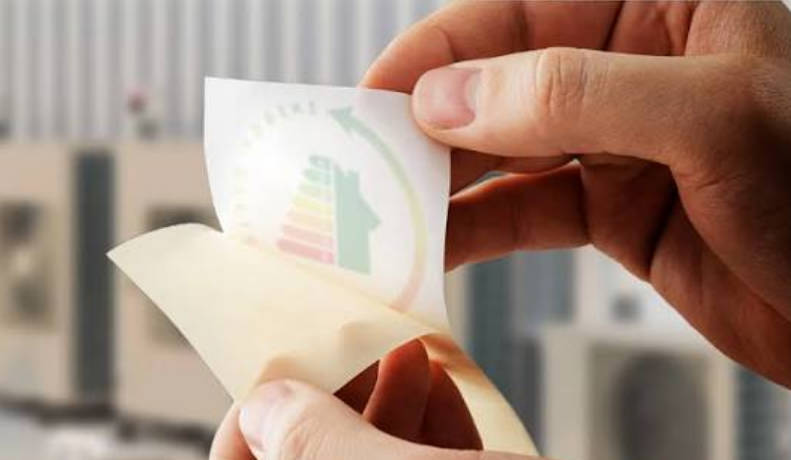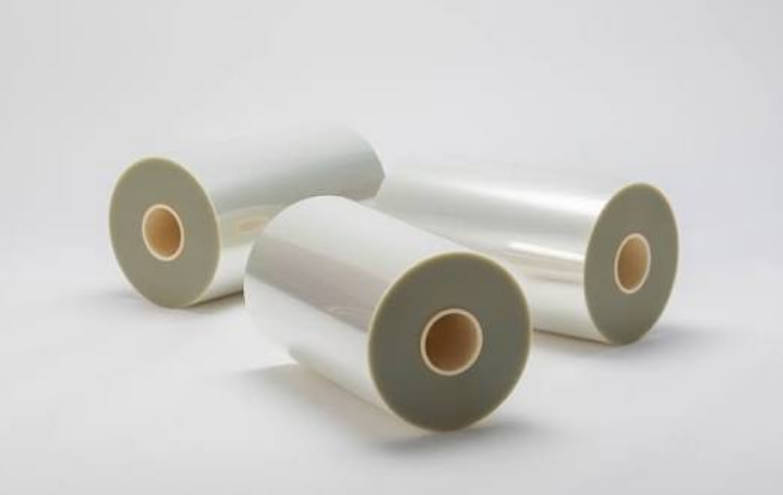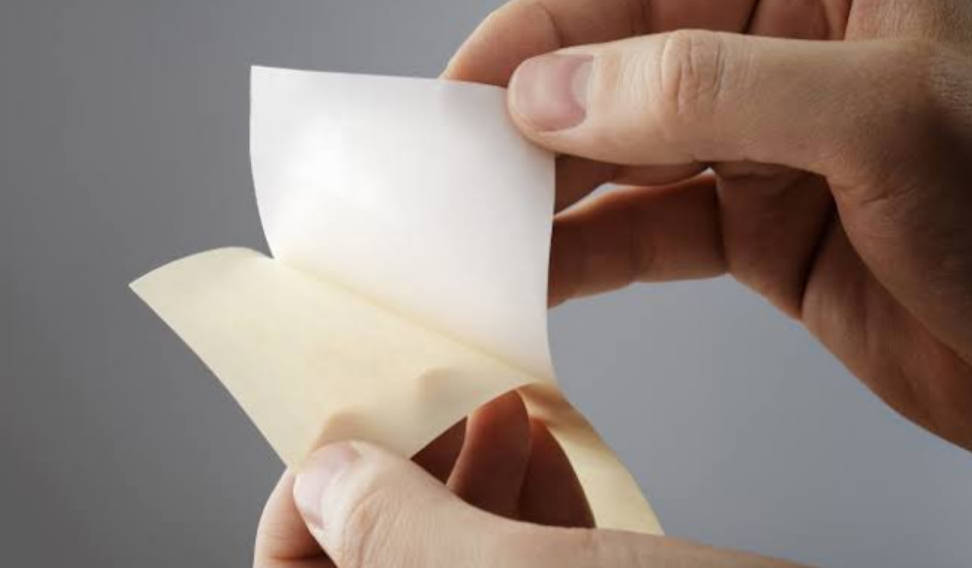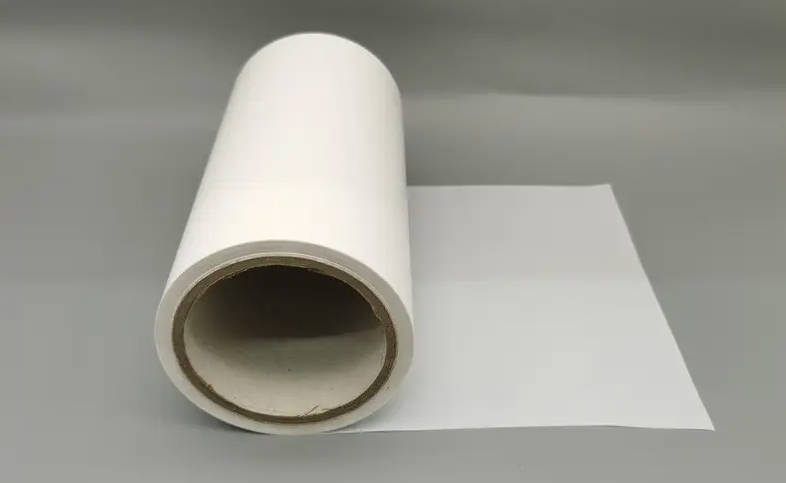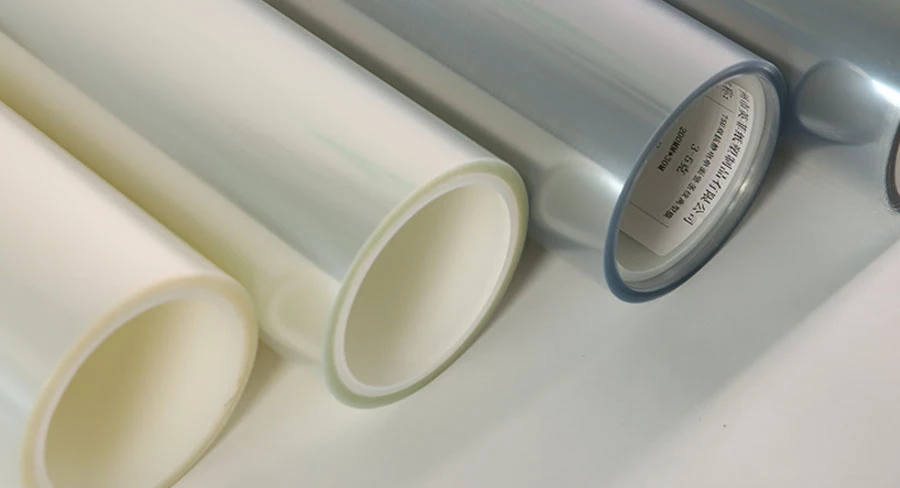
Silicone transfer on release film happens when silicone or low-molecular-weight components from the release coating migrate or transfer onto the adhesive surface, backing film, or contact material. This can cause poor bonding, printing problems, coating defects, adhesive surface abnormalities, reduced surface energy, inconsistent release force, or contamination in downstream processes.
For many adhesive product manufacturers, silicone release film is essential because it allows tapes, labels, protective films, medical adhesives, foam tapes, and die-cut parts to peel cleanly from the liner. However, if the silicone coating is not properly cured, poorly anchored, incompatible with the adhesive, or exposed to unsuitable storage and processing conditions, silicone transfer may occur.
Silicone transfer is not always visible. A release film may look normal, and the adhesive product may peel normally, but the adhesive surface may later show poor bonding, coating failure, printing defects, or unstable performance. This makes silicone transfer a difficult quality issue for tape manufacturers, label converters, protective film producers, and electronics material suppliers.
This article explains what silicone transfer is, why it happens, how it affects adhesive products, and how buyers can reduce release liner contamination by choosing suitable release film materials and proper process controls.
What Is Silicone Transfer on Release Film?
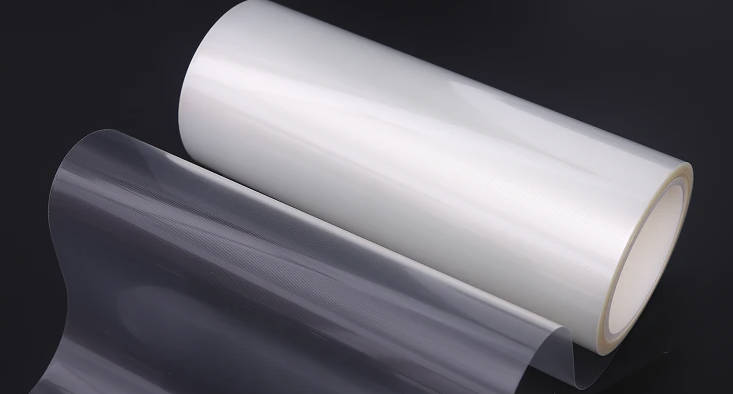
Silicone transfer refers to the unwanted movement of silicone substances from the release coating to another surface. This surface may be an adhesive layer, film backing, paper backing, rubber material, resin, coating layer, or product surface.
In a standard silicone release film, the silicone coating is designed to stay anchored on the film substrate while providing a low-surface-energy release surface. When the adhesive is peeled away, the adhesive should separate cleanly from the liner without carrying silicone contamination.
A typical release film structure includes:
| Layer | Function |
| Base film substrate | Provides strength, thickness, flatness, and dimensional stability |
| Surface treatment | Helps coating anchorage and coating uniformity |
| Silicone release coating | Provides controlled peeling from adhesive or sticky materials |
| Adhesive contact surface | The adhesive layer that touches the release coating during storage or processing |
Silicone transfer becomes a problem when part of the release coating or mobile silicone component moves from the liner to the adhesive or contact surface.
This transfer may occur during coating, lamination, roll storage, heating, pressure exposure, die-cutting, or final peeling.
Silicone Transfer vs Silicone Migration: Are They the Same?
The terms are related but not always identical.
| Term | Meaning | Typical Concern |
| Silicone transfer | Silicone moves from the release coating to the contact surface during direct contact or peeling | Adhesive contamination, bonding failure, printing defects |
| Silicone migration | Mobile silicone components move within or across materials over time | Long-term contamination, surface energy change, aging effect |
| Release liner contamination | Broader term covering silicone, dust, particles, oils, coating residues, or other contaminants | Product defects and downstream process failure |
In practical manufacturing discussions, buyers may use “silicone transfer,” “silicone migration,” and “release liner contamination” to describe similar issues: the adhesive or product surface has been affected by unwanted substances from the release liner.
Why Silicone Transfer Matters for Adhesive Products
Silicone contamination can change the surface properties of adhesives, films, papers, coatings, and treated substrates. Because silicone has low surface energy, even a small amount of transfer may interfere with downstream bonding, printing, painting, coating, or lamination.
Possible effects include:
| Product Problem | How Silicone Transfer May Contribute |
| Poor adhesive bonding | Contaminated adhesive surface may bond less effectively |
| Printing defects | Ink may not wet or anchor properly on contaminated areas |
| Coating failure | Coatings may crawl, fisheye, or show uneven wetting |
| Adhesive transfer issue | Release interface may become unstable |
| Reduced tack | Adhesive surface may lose contact strength |
| Die-cutting defects | Parts may lift or shift due to surface contamination |
| Poor lamination | Laminate layers may not bond consistently |
| Cosmetic defects | Spots, streaks, haze, or surface marks may appear |
| Electronics contamination | Surface cleanliness problems may affect assembly or performance |
Silicone transfer is especially critical in applications where the adhesive surface must later bond, print, coat, laminate, or contact sensitive components.
Examples include electronics tapes, optical protective films, medical adhesive products, automotive bonding tapes, label materials, and die-cut adhesive components.
Common Signs of Silicone Transfer or Release Liner Contamination
Silicone transfer may show up as a production defect, customer complaint, or downstream performance failure.
Common signs include:
- Adhesive does not bond well after liner removal
- Ink or coating does not wet the surface evenly
- Fisheyes or craters appear during coating
- Adhesive surface looks hazy or uneven
- Tack feels lower than expected
- Release force changes after storage
- Adhesive transfers to the liner
- Die-cut parts shift or lift unexpectedly
- Lamination defects appear only after liner contact
- Surface energy test results are abnormal
- Product passes initial release test but fails later bonding test
Because these symptoms can also be caused by adhesive formulation, substrate treatment, dust, oil, humidity, or process conditions, silicone transfer should be diagnosed systematically rather than assumed immediately.
Main Causes of Silicone Transfer on Release Film
1. Insufficient Silicone Curing
One of the most common causes is incomplete curing of the silicone release coating. Silicone release coatings need sufficient curing to form a stable network and anchor properly to the film surface.
If curing is insufficient, mobile or extractable silicone components may remain in the coating. These components can transfer to the adhesive or contact surface during storage or peeling.
Possible causes include:
| Cause | Result |
| Low curing temperature | Silicone coating does not fully crosslink |
| Insufficient curing time | Coating remains partially mobile |
| Incorrect catalyst or formulation | Poor coating network formation |
| Excessive coating speed | Not enough curing residence time |
| Poor oven control | Uneven curing across the web |
| Substrate incompatibility | Silicone does not anchor well |
A well-cured silicone coating reduces the risk of migration, poor anchorage, and contamination during adhesive contact.
2. Poor Silicone Anchorage to the Film Substrate
Anchorage means how well the silicone coating attaches to the base film. If the silicone coating does not bond well to the film surface, it may rub off, transfer, or partially detach during contact with adhesive.
Poor anchorage can be caused by:
- Insufficient surface treatment
- Low surface energy of the base film
- Contamination before coating
- Incompatible primer or coating chemistry
- Poor coating process control
- Film surface aging before silicone coating
PET release film often requires suitable surface treatment or primer design to ensure the silicone layer anchors properly. Without good anchorage, even a correct release force may not prevent silicone transfer.
3. Too Much Mobile Silicone or Low-Molecular Components
Some silicone release systems may contain mobile components that are more likely to migrate. If the formulation contains too many extractable or low-molecular-weight silicone fractions, contamination risk may increase.
For clean adhesive, electronics, optical, or medical-related applications, buyers may need lower-transfer or lower-migration release film options.
4. Adhesive and Release Coating Incompatibility
Different adhesives interact differently with silicone coatings. Acrylic, rubber, hot melt, silicone, and medical adhesives may all create different release and transfer behaviors.
For example:
| Adhesive Type | Possible Risk |
| Acrylic adhesive | Generally compatible with many silicone release films, but still requires release force testing |
| Rubber adhesive | High tack may pull more strongly on the release coating |
| Hot melt adhesive | Heat and pressure may increase wet-out and transfer risk |
| Silicone adhesive | May require fluorosilicone or specialty release coating |
| Medical adhesive | Requires stable release and cleanliness |
| High-tack adhesive | May increase coating stress during peeling |
A release film that works well with one adhesive may show transfer problems with another.
5. Excessive Heat During Processing
Heat can soften adhesive, accelerate molecular movement, and change the interaction between adhesive and release coating. If the release film passes through drying ovens, lamination machines, curing systems, or hot pressing processes, silicone transfer risk may increase if the material is not designed for that condition.
Heat-related transfer risk is especially relevant for:
- Hot melt adhesive tapes
- High-temperature coating lines
- Thermal lamination
- Protective film manufacturing
- Foam tape production
- Electronics die-cut materials
- Long-term high-temperature storage
6. High Roll Pressure or Long Storage Time
When adhesive products are stored in rolls, the adhesive and liner remain in close contact under pressure. Over time, this pressure can increase adhesive wet-out and contact area. If the silicone coating has weak anchorage or mobile components, transfer risk may increase.
Storage-related factors include:
| Factor | Why It Matters |
| Roll winding tension | Higher pressure increases adhesive-liner contact |
| Roll diameter | Large rolls may create higher internal pressure |
| Storage time | Longer contact time increases aging effects |
| Temperature | Heat can accelerate migration |
| Humidity | May affect paper-based structures or adhesive behavior |
| Packaging | Dust or contamination can complicate diagnosis |
7. Mechanical Rubbing or Abrasion
During slitting, rewinding, die-cutting, or transport, mechanical rubbing can damage the release surface. If the silicone coating is poorly anchored, abrasion may cause transfer or contamination.
This issue may appear as local defects rather than uniform transfer across the whole roll.
8. Backside Contamination in Roll Form
In roll materials, the silicone-coated surface may contact the backside of another layer during winding. If backside transfer occurs, silicone may later appear on surfaces where it is not expected.
This is important for films, tapes, and labels that require printing, corona treatment, lamination, or secondary coating on the opposite side.
How Silicone Transfer Affects Different Applications
Adhesive Tapes
In tape production, silicone transfer can reduce adhesive bonding, cause adhesive transfer, or affect unwinding. Double-sided tapes and transfer tapes are especially sensitive because the liner controls adhesive transfer sequence.
Labels and Stickers
For pressure sensitive labels, silicone contamination may affect printing, matrix stripping, dispensing, or bonding to the final substrate. It may also cause inconsistent release during high-speed converting.
Protective Films
Protective film manufacturers may see haze, reduced tack, poor bonding to surfaces, or liner peeling abnormalities. Optical and electronics protective films are more sensitive because surface cleanliness is critical.
Medical Adhesive Products
Medical adhesives require clean and stable peeling. Silicone transfer may affect adhesion, skin-contact performance, or product consistency. Buyers should use application-specific testing and compliance review.
Electronics and Die-Cut Components
Electronics applications often require low contamination and stable bonding. Silicone transfer may interfere with assembly, lamination, or component adhesion. PET release film with controlled surface cleanliness is often evaluated in these applications.
Troubleshooting Silicone Transfer Problems
When silicone transfer is suspected, the issue should be investigated step by step.
| Symptom | Possible Cause | What to Check |
| Adhesive loses tack after liner contact | Silicone transfer or adhesive aging | Compare adhesive before and after liner contact |
| Ink or coating fisheyes | Silicone contamination | Surface energy or wetting test |
| Release force changes after storage | Aging or migration | Initial and aged release force testing |
| Adhesive transfers to liner | Coating mismatch or high pressure | Adhesive compatibility and roll tension |
| Defects appear only in certain roll areas | Local coating defect or abrasion | Cross-web and roll-depth sampling |
| Poor bonding after peeling | Contamination on adhesive surface | Surface analysis or controlled bonding test |
| Backside printing fails | Backside silicone contamination | Check roll contact and winding structure |
The most useful troubleshooting approach is to compare fresh material, aged material, and material after real production contact.
A single peel test may not reveal silicone transfer. Buyers should also evaluate adhesion after liner removal, surface wetting, printing, lamination, and storage aging.
How to Prevent Silicone Transfer on Release Film
1. Choose a Low-Transfer Release Film
For sensitive applications, buyers should ask for release films designed to minimize silicone transfer or migration. These may use improved silicone formulations, better curing systems, stronger anchorage, or specialty release coatings.
Applications that may need low-transfer release film include:
- Electronics tapes
- Optical protective films
- Medical adhesive products
- Automotive bonding tapes
- High-performance labels
- Die-cut adhesive components
- Products requiring secondary coating or printing
2. Match the Release Coating to the Adhesive
Release coating should be selected according to adhesive chemistry. Aggressive adhesives, silicone adhesives, hot melt adhesives, and medical adhesives may require different release systems.
Buyers should provide adhesive type, adhesive coating weight, tack level, processing temperature, and storage condition to the supplier.
3. Control Release Force Properly
Release force that is too high can increase stress on the release coating during peeling and may increase the risk of adhesive or silicone-related defects. Release force that is too low may cause premature separation.
A balanced release force improves both production stability and final peeling performance.
4. Verify Curing and Anchorage Quality
Suppliers should control silicone curing and anchorage to the substrate. Buyers can request quality checks or sample tests when the application is sensitive.
Possible evaluation methods include:
| Check Item | Purpose |
| Release force test | Confirms peeling behavior |
| Aged release test | Checks stability after storage |
| Rub-off or anchorage check | Evaluates silicone coating adhesion |
| Surface energy test | Detects possible contamination |
| Adhesion-after-contact test | Checks whether adhesive performance changes |
| Visual inspection | Identifies coating defects or haze |
| Roll sampling | Checks consistency across roll width and length |
5. Avoid Excessive Heat and Pressure
If heat and roll pressure are unavoidable, the release film should be selected for that condition. Storage temperature, winding tension, roll diameter, and shipping environment should be controlled as much as possible.
6. Use Proper Roll Packaging and Handling
Dust, oil, fingerprints, static, and packaging contamination can create similar symptoms to silicone transfer. Clean handling and protective packaging help reduce false contamination issues.
For sensitive products, buyers may need cleaner roll packaging, anti-static control, or controlled storage conditions.
7. Test Under Real Production Conditions
The final test should simulate actual manufacturing. This may include coating, lamination, drying, slitting, rewinding, die-cutting, storage, and final application.
A release film should be tested not only for initial peeling, but also for aged release, adhesive transfer, surface contamination, and downstream bonding or printing performance.
Buyer Checklist for Low-Transfer Release Film
Before ordering release film for sensitive adhesive applications, confirm the following:
| Selection Item | What to Confirm |
| Application | Tape, label, protective film, medical adhesive, electronics, optical, or industrial use |
| Adhesive type | Acrylic, rubber, hot melt, silicone, medical, removable, or high-tack adhesive |
| Film substrate | PET, PE, PP, BOPP, or specialty film |
| Release coating | Silicone, fluorosilicone, non-silicone, or custom release |
| Transfer requirement | Standard, low-transfer, low-migration, or clean application |
| Release force | Easy, medium, tight, differential, or custom |
| Temperature exposure | Coating, drying, lamination, curing, or storage temperature |
| Roll pressure | Winding tension and roll diameter |
| Storage time | Short-term or long-term contact with adhesive |
| Downstream process | Printing, bonding, coating, lamination, die-cutting, or assembly |
| Testing method | Initial release, aged release, transfer check, adhesion-after-contact |
| Cleanliness requirement | Standard, clean, anti-static, optical, or electronics grade |
How to Choose a Release Film Supplier
A qualified release film supplier should understand that silicone transfer is not only a material issue, but also a coating, curing, adhesive compatibility, storage, and converting issue.
When evaluating suppliers, ask:
| Supplier Question | Why It Matters |
| Do you offer low-transfer or low-migration release film options? | Important for sensitive adhesive applications |
| Can release force be customized? | Helps match adhesive and process needs |
| What film substrates are available? | PET, PE, PP, BOPP, and specialty films behave differently |
| Can you support one-side or double-side release coating? | Needed for different product structures |
| How is silicone anchorage controlled? | Reduces transfer and rub-off risk |
| Can samples be tested before bulk order? | Reduces purchasing risk |
| Can aged release testing be supported? | Helps evaluate storage stability |
| Can rolls be slit to custom widths? | Supports production efficiency |
| How is roll cleanliness protected? | Important for electronics, optical, and medical uses |
Yingfei provides release film materials for labels, tapes, protective films, medical adhesive products, electronics materials, and other industrial applications where release stability and surface cleanliness matter.
You can also visit Yingfei Liner to learn more about release liner material options for different adhesive and converting processes.
Common Mistakes to Avoid
Mistake 1: Treating Silicone Transfer as Only a Supplier Defect
Silicone transfer may be related to coating quality, but it can also be influenced by adhesive chemistry, heat, pressure, storage time, and converting conditions. A full process review is necessary.
Mistake 2: Only Testing Initial Release Force
A liner may pass initial release testing but fail after aging. Adhesive-liner interaction should be tested after realistic storage and pressure exposure.
Mistake 3: Ignoring Downstream Bonding or Printing
If the adhesive product will later be printed, coated, laminated, or bonded, contamination testing should include those downstream steps.
Mistake 4: Using Standard Silicone Release Film for Sensitive Products
Electronics, optical, medical, and high-performance bonding applications may require lower-transfer or specialty release films.
Mistake 5: Not Providing Enough Application Information
If the supplier only knows “PET release film,” they cannot accurately recommend a suitable release coating. Adhesive type, temperature, storage, and process details are essential.
FAQ
1. What is silicone transfer on release film?
Silicone transfer on release film means silicone or mobile silicone components move from the release coating onto the adhesive, backing film, or contact surface. This can cause contamination, poor bonding, printing defects, or coating problems.
2. What causes silicone migration in release liners?
Silicone migration can be caused by insufficient curing, poor silicone anchorage, mobile silicone components, adhesive incompatibility, high temperature, high roll pressure, long storage time, or mechanical rubbing during converting.
3. How does silicone contamination affect adhesive products?
Silicone contamination may reduce adhesive bonding, change surface energy, cause ink or coating defects, create adhesive transfer issues, or lead to unstable release performance. The impact depends on the adhesive system and downstream process.
4. How can silicone transfer on release film be prevented?
Silicone transfer can be reduced by using well-cured, well-anchored, low-transfer release film; matching the release coating to the adhesive; controlling heat and pressure; improving roll storage; and testing aged release and downstream adhesion.
5. Is silicone release film suitable for medical or electronics applications?
Silicone release film can be used in medical or electronics applications, but the material should be selected carefully. Low-transfer, clean, stable release films may be required, and testing should match the real production and end-use conditions.
6. How do I test for release liner contamination?
Common checks include release force testing, aged release testing, rub-off or anchorage checks, surface energy testing, adhesion-after-contact testing, visual inspection, and downstream bonding or printing evaluation.
7. Can PET release film reduce silicone transfer problems?
PET release film can provide good dimensional stability and surface smoothness, but silicone transfer depends mainly on release coating formulation, curing, anchorage, adhesive compatibility, and process conditions. PET substrate alone does not eliminate the risk.
Conclusion
Silicone transfer on release film is a technical issue that can affect adhesive bonding, printing, coating, lamination, die-cutting, and final product performance. It may be caused by insufficient silicone curing, poor coating anchorage, mobile silicone components, adhesive incompatibility, excessive heat, high roll pressure, long storage time, or mechanical abrasion.
For adhesive tape, label, protective film, medical, electronics, and optical applications, silicone transfer should be controlled through proper material selection and process testing. Buyers should evaluate not only release force, but also aged release stability, adhesive transfer, surface cleanliness, downstream bonding, and real production performance.
If your adhesive product is sensitive to silicone contamination or release liner migration, choosing a suitable release film with stable coating quality and application-matched release performance can help reduce risk. Yingfei can support release film selection based on your adhesive system, processing conditions, cleanliness requirements, and end-use application.