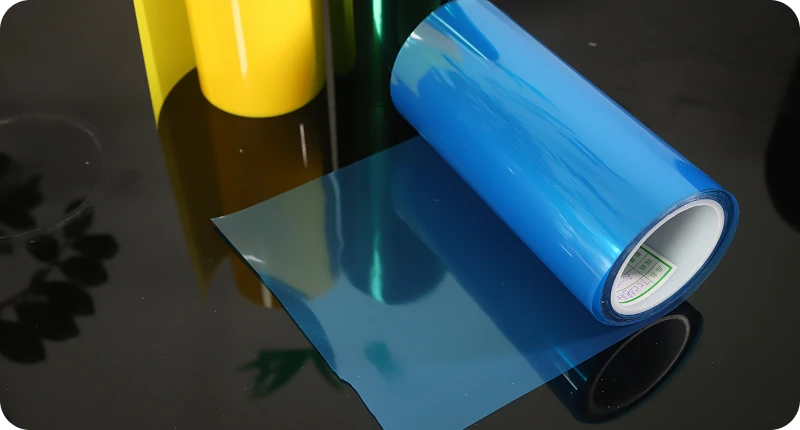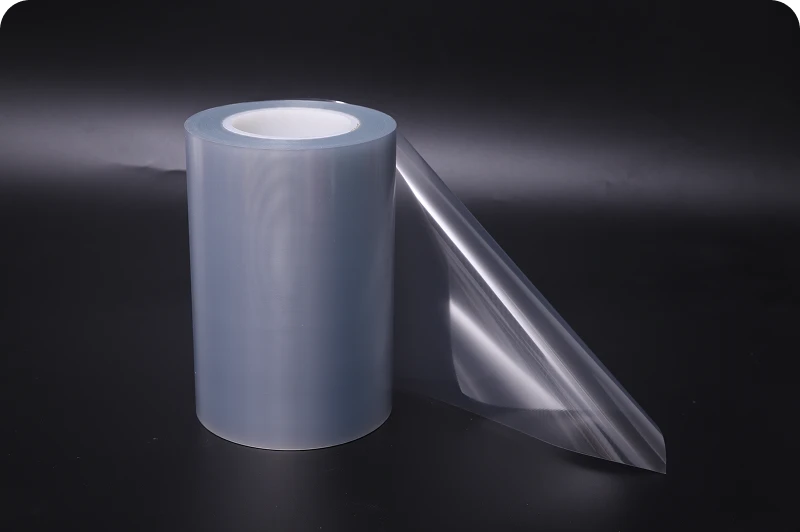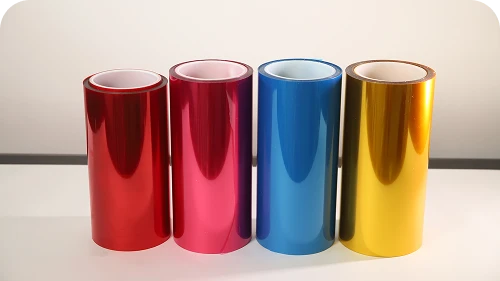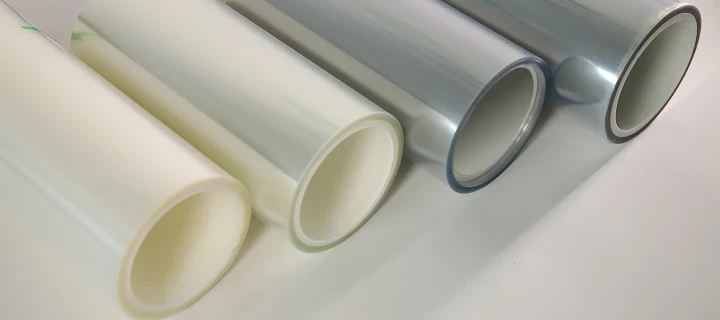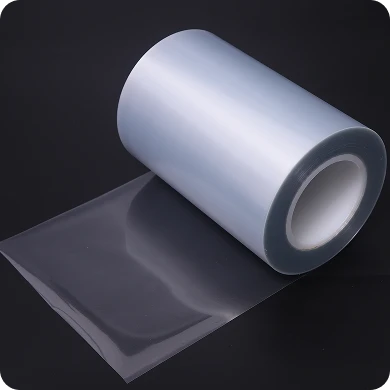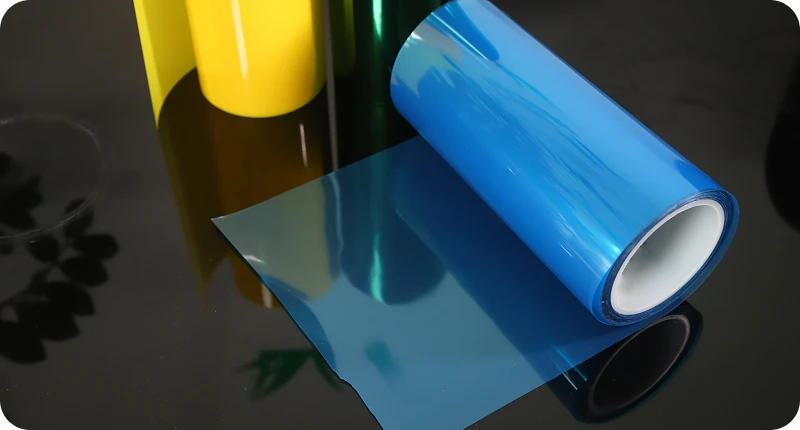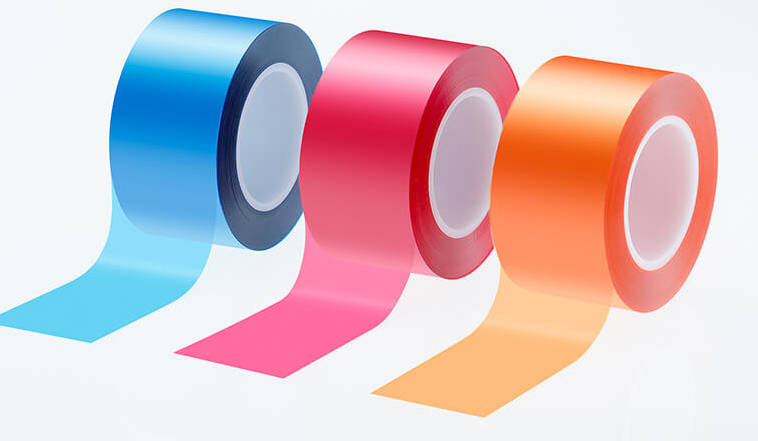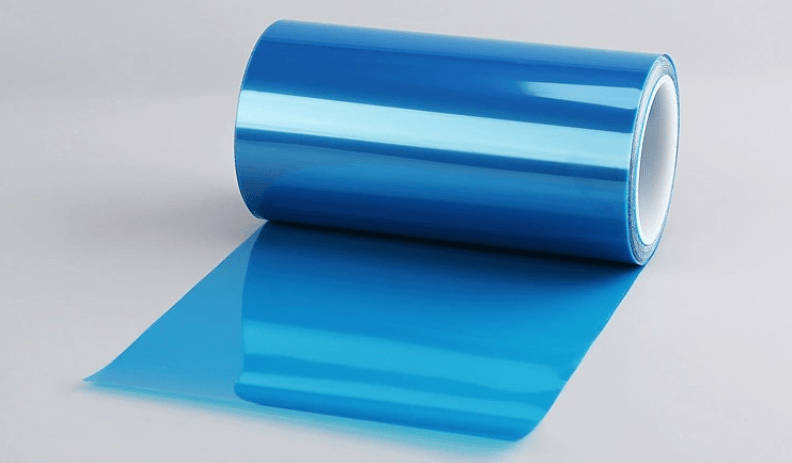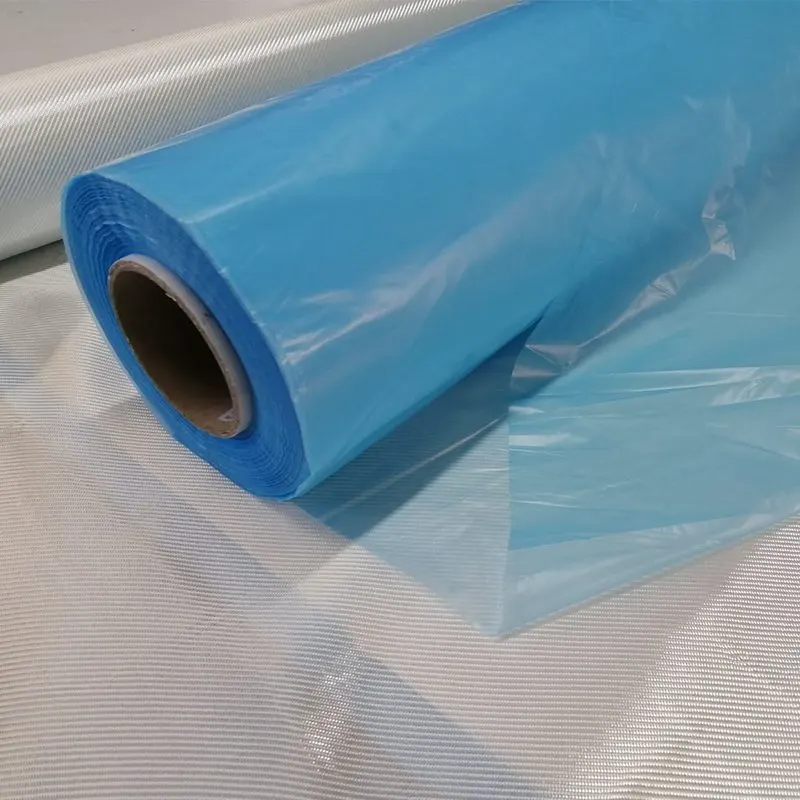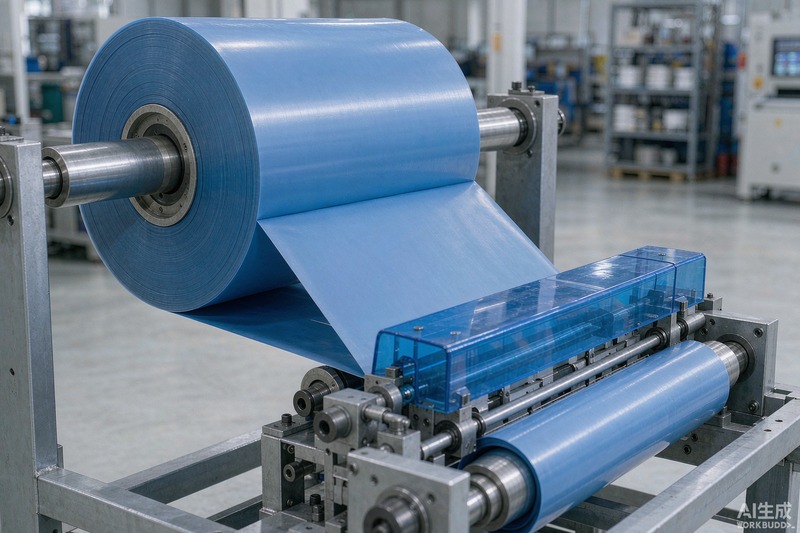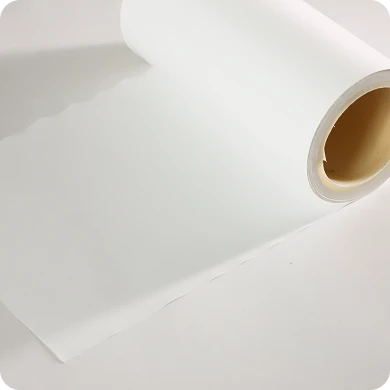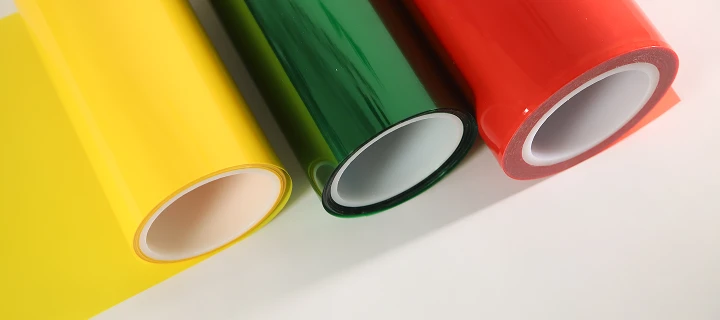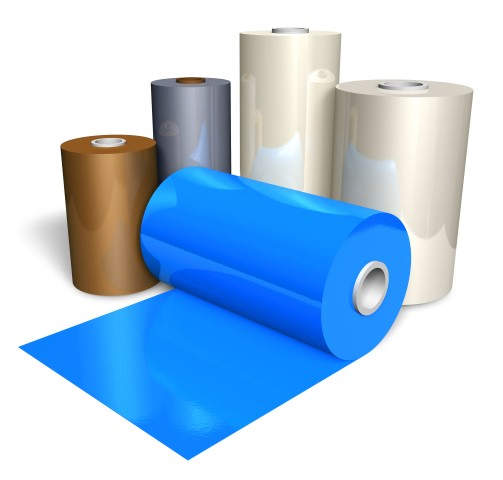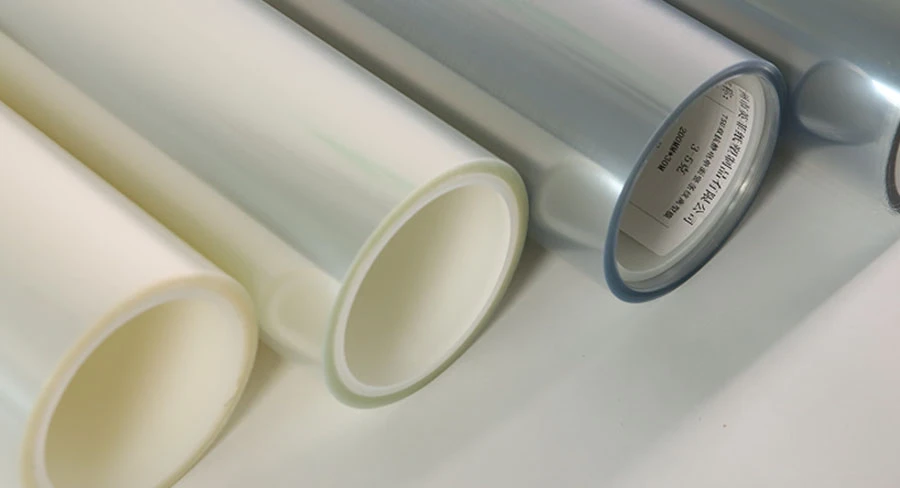
PET release film serves as an essential carrier and protective substrate designed to isolate adhesive layers, maintain cleanroom purity, and peel cleanly during high-speed converting processes. Selecting the appropriate film requires balancing three primary technical variables: base film tensile and thermal stability, chemical coating compatibility (silicone, fluorosilicone, or non-silicone), and calibrated release force profiles matching the adhesive chemistry. Choosing an incompatible carrier or surface energy profile leads directly to converting tear-outs, web flutter, or severe adhesive contamination.
This engineering guide examines the mechanics of biaxially-oriented polyester carriers, details chemical coating compatibility with acrylic and silicone adhesives, establishes standard release force parameters, and outlines practical frameworks to prevent processing failures in electronics, die-cutting, and functional composites manufacturing.
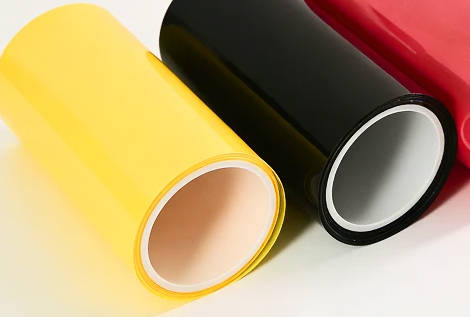
Understanding PET Release Film: Substrate Architecture and Working Principles
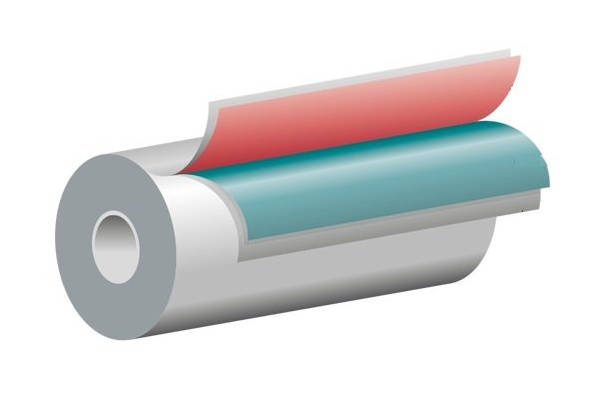
A PET release film is an engineered multilayer functional structure comprising a polyester (polyethylene terephthalate) carrier web coated on one or both surfaces with a crosslinked low-surface-energy release agent. Its functional purpose is to protect pressure-sensitive adhesives (PSAs), prepregs, and green ceramic tapes during processing and storage, allowing separation without residual chemical transfer or mechanical distortion of the adhesive matrix.
| Layer Position | Structural Component | Primary Function & Specifications |
| Top Surface | Functional Release Coating | Cured polydimethylsiloxane, fluorosilicone, or non-silicone formulation defining interfacial peel energy |
| Sub-Coating | Primer / Surface Treatment Layer | Corona treatment or chemical anchor coat enhancing coating anchorage and preventing delamination |
| Core Layer | Biaxially Oriented PET (BOPET) Carrier | Structural core (12 µm to 125 µm) providing tensile modulus, gauge uniformity, and thermal resistance |
| Back Surface | Functional Backing / Secondary Coating | Bare PET, single/double-sided antistatic (ESD) coating, or secondary differential release layer |
Key Mechanical & Thermal Properties of Biaxially-Oriented PET Carriers
Biaxially-Oriented Polyethylene Terephthalate (BOPET) is preferred over alternative carriers—such as paper liners or polyolefin films—due to its isotropic molecular alignment achieved through sequential mechanical stretching in both machine (MD) and transverse (TD) directions.
When evaluating substrate performance, production engineers prioritize mechanical stiffness, low elongation under web tension, and cleanroom compatibility:
| Carrier Substrate | Dimensional Stability Under Tension | Heat Resistance Window | Cleanroom Particulate Risk | Caliper Uniformity | Primary Application Focus |
| BOPET Film | High (minimal elongation under die tension) | Up to 150°C–180°C (short-term curing) | Extremely Low (lint-free, zero fiber shedding) | High (tight gauge tolerance across web) | Precision rotary die-cutting, optical displays, MLCC, electronics |
| Glassine Paper | Medium (hygroscopic, vulnerable to moisture curl) | Up to 120°C–140°C | Moderate (fibrous edge debris during slitting) | Moderate | General industrial labeling, double-sided tape rewinding |
| Polyethylene (PE) | Low (stretches easily under web pull) | Low (softens above 70°C–80°C) | Low | Moderate | Low-temperature rubber tape liners, surface protection masking |
Because die-cutting anvils require micro-inch depth tolerances, PET’s consistent caliper thickness prevents the cutting blade from penetrating the backing liner—a common failure mode observed when converting softer, fibrous paper backings. Industrial converters can explore tailored carrier thicknesses across Yingfei’s selection of engineered release film substrates to match specific press tonnage and knife clearances.
Release Coating Chemistry: Solvent, Solvent-Free, and Specialized Formulations
Release performance depends on the chemical formulation applied to the PET carrier. The surface tension of the cured release layer must be significantly lower than that of the contacting adhesive to allow clean mechanical peel.
| Target Adhesive Chemistry | Recommended Release Coating Chemistry | Chemical Mechanism & Bonding Behavior |
| Standard Acrylic, Rubber, & PU PSAs | Thermal or UV Polydimethylsiloxane (PDMS) | Low surface tension hydrocarbon/siloxane network prevents wetting and mechanical keying |
| Aggressive Silicone PSAs | Cured Fluorosilicone Formulations | Perfluoroalkyl functional side chains reduce surface energy below silicone adhesive thresholds |
| Optoelectronics & Semiconductor Tapes | Non-Silicone Polymer Formulations (Alkyls/Acrylates) | Eliminates siloxane monomers, providing zero-migration assurance for cleanroom bonding |
Silicone-Coated PET Films (Thermal vs. UV Curing)
Polydimethylsiloxane (PDMS) systems represent the industry baseline for acrylic, rubber, and polyurethane adhesive systems. These coatings are crosslinked onto the PET substrate using two distinct industrial methods:
- Thermal-Cure Silicone Systems: Utilize platinum-catalyzed hydrosilylation chemistry exposed to oven heat. Thermal curing produces densely crosslinked silicone networks with high anchorage to the PET surface, ensuring long-term shelf stability and consistent separation force.
- UV-Cure Silicone Systems: Utilize photoinitiators activated by ultraviolet radiation. UV curing operates without applying high thermal loads to the PET web, making it suitable for ultra-thin PET gauges vulnerable to thermal contraction. However, UV curing formulations require precise radiation dosimetry to prevent unreacted photoinitiators from migrating into delicate adhesive layers.
Fluorosilicone Coatings for Difficult-to-Release Silicone Adhesives
Silicone pressure-sensitive adhesives adhere tenaciously to conventional PDMS coatings because chemically identical polymers interdiffuse and crosslink across the interface, causing release lock-up.
To overcome this, manufacturers specify fluorosilicone and specialized release coatings. Fluorinated siloxane polymers introduce perfluoroalkyl side chains that drastically lower interfacial energy below that of standard silicone PSAs. This chemical contrast enables consistent release of aggressive silicone-coated polyimide tapes, thermal pads, and skin-contact medical adhesives.
Non-Silicone Release Coatings for Zero-Migration Applications
In semiconductor processing, optical display manufacturing, and secondary bonding processes (such as automotive paint masking), trace levels of transferred silicone oil can compromise electrical contacts, produce optical hazing, or cause catastrophic coating dewetting (fish-eyes).
Non-silicone release liners utilize alternative chemistries—including alkyd resins, long-chain alkyl carbamates, polyolefins, or fluorinated acrylates. These coatings guarantee zero silicone transfer, protecting downstream processes that require pristine surface wettability.
Key Technical Parameters and Release Force Classification
Engineering teams must define quantitative release characteristics rather than relying on qualitative descriptions like “easy peel” or “tight release.”
Release Force Range: From Ultra-Light to Heavy Release
Release force measures the peel resistance per unit width when an adhesive tape is peeled from the liner under standardized angles (typically 180° or 90°) and speeds (such as 300 mm/min or high-speed 10 m/min). Testing typically references FINAT FTM 1 / FTM 3 or ASTM D3330 standards using a designated test tape (e.g., TESA 7475 for acrylics).
| Release Force Classification | Quantitative Force Range (g/25mm) | Converting Mechanics & Process Behavior | Typical Application Profile |
| Ultra-Light Release | 1–5 g/25mm | Minimal peel resistance; peels without web back-tension | High-speed automated labelers, large-format optical protective films |
| Light Release | 5–15 g/25mm | Low peel force; prevents part displacement while allowing waste stripping | High-speed rotary die-cutting of acrylic foam tapes, FPC coverlays |
| Medium Release | 15–30 g/25mm | Balanced separation; resists incidental peeling during winding | Standard double-sided transfer tapes, graphic overlay films |
| Heavy Release | 30–60 g/25mm | Stable adhesion grip; functions as tight side in differential systems | Tight liner on differential double-coated tapes, deep-draw stamping |
| Ultra-Heavy Release | 60–100+ g/25mm | High structural holding force; resists delamination under shear | Composite prepreg casting, asphaltic membranes, heavy industrial sheets |
Critical Inspection Parameters
When auditing a Technical Data Sheet (TDS) or inspecting production lots, quality teams evaluate several non-negotiable metrics:
- Subsequent Adhesion Rate (SAR): Measures the percentage of original adhesion strength retained after the adhesive has been laminated to the release film and peeled off. An SAR greater than 85%–90% indicates minimal transfer of unreacted silicone oligomers.
- Caliper and Gauge Control: Typically specified from 12 µm to 125 µm. High-speed precision die-cutting lines require cross-web thickness uniformity within tight boundaries (typically ±5% or better depending on customer specifications) to prevent inconsistent anvil kiss-cutting.
- Surface Resistivity (ESD Control): Untreated PET collects static electricity during unwinding, attracting airborne debris. Anti-static treatments adjust surface resistivity to $10^8$ to $10^{11} \ \Omega/\text{sq}$, dissipating static charges during high-speed converting.
To configure specific peel weights, review verified customized release film specifications directly with an applications engineer.
Industry Applications: Die-Cutting, Electronics, and Functional Composites
Matching the film’s mechanical properties to manufacturing converting speeds and environmental conditions ensures steady process throughput across demanding industries.
| Industrial Sector | Mechanical & Coating Requirements | Functional Carrier Role |
| Precision Die-Cutting & Stamping | High tensile modulus, cross-web gauge uniformity, tight release tolerance | Acts as kiss-cutting anvil stop; prevents matrix snapping during high-speed skeleton pull |
| MLCC & Ceramic Tape Casting | Ultra-smooth coating topography, defect-free surface, pinhole resistance | Serves as casting bed for ceramic slurries; prevents pinhole dielectric breakdown |
| Flexible Printed Circuits (FPC) | High thermal dimensional stability, low thermal shrinkage under lamination | Backs acrylic/epoxy bonding sheets through heated vacuum lamination cycles |
| Optical Display Manufacturing | Zero silicone transfer, Class 1,000 / 100 cleanroom coating, optical clarity | Protects polarizing films and OCA without leaving ghosting patterns or micro-voids |
| Thermal Interface Materials (TIM) | Mechanical tear resistance, release stability against mineral fillers | Carriers for casting and vulcanizing highly filled silicone and ceramic thermal pads |
Precision Rotary and Flatbed Die-Cutting
Die-cutting operations convert multilayer adhesive stacks into micro-gaskets and electronic components. During high-speed rotary kiss-cutting, the tool blade cuts through the functional adhesive and face material, stopping precisely at the PET release surface. The tensile modulus of PET prevents web elongation under line tension, eliminating pitch variance in automated robotic pick-and-place lines. For high-volume stamping, converters configure PET release film for precision converting to maximize machine uptime.
Optical Displays, MLCC, and Flexible Printed Circuits (FPC)
- Multi-Layer Ceramic Capacitors (MLCC): PET release film serves as the casting carrier for ceramic slurries. The film must feature defect-free surface smoothness; minute coating pinholes or orange-peel textures transfer directly to the green sheet, causing dielectric layer breakdowns.
- FPC & Coverlay Stamping: Requires high dimensional stability under moderate laminating temperatures, preventing circuit trace misalignment.
- Optical Displays: Demands cleanroom coating processing (typically Class 1,000 or Class 100 environments) to eliminate airborne particulates that generate optical micro-voids.
Thermal Interface Materials (TIM) and Industrial Tapes
Thermal interface pads—frequently filled with abrasive boron nitride or alumina particles—are cast and cured directly on release liners. The PET carrier must withstand continuous oven temperatures while resisting mechanical tearing from abrasive filler loads.
In double-sided adhesive converting, differential release liners are deployed: one surface provides light peel force (e.g., 5 g/25mm) while the reverse side maintains medium-heavy peel force (e.g., 30 g/25mm). This ratio ensures that the operator removes the primary liner smoothly without lifting the tape from its secondary carrier.
Troubleshooting Common PET Release Film Failures in Production
Processing problems often stem from chemical mismatches, environmental fluctuations, or improper converting line tension rather than underlying film defects.
| Defect Observation | Technical Root Cause | Corrective Engineering Action |
| Adhesive Lock-Up (Release Rise over Time) | Unreacted chemical groups in the adhesive cross-link with the release silicone during ambient storage, causing peel force to climb steeply. | Switch to an ultra-tightly crosslinked thermal silicone system or change to a fluorosilicone release system if silicone adhesives are present. |
| Silicone Ghosting & Poor Secondary Adhesion | Insufficiently cured silicone transfers oily monomers to the adhesive surface, reducing subsequent tack and bonding strength. | Audit the liner’s Subsequent Adhesion Rate (SAR). Ensure the supplier provides verified cure parameters and verify extraction values in the lab. |
| Converting Web Curl / Telescoping | Excessive unwind/rewind tension applied to a thin PET liner, or thermal imbalance across differential coating stations. | Re-calibrate web brake tensions. When converting asymmetric differential liners, verify web pathway geometry to balance stress across both sides. |
| Die-Cutting Waste Matrix Tear-Out | The release force on the light-side liner is too heavy, causing the delicate surrounding waste skeleton to snap under high-speed stripping tension. | Shift to a lighter release force class (e.g., reduce from 15 g/25mm to 6–8 g/25mm) or reinforce the waste web profile. |
Deploying verified, defect-free PET release liners allows manufacturers to eliminate variable release swings across shifting seasonal temperatures.
How to Source and Specify PET Release Film: A B2B Procurement Framework
Miscommunications between converters and substrate coaters often stem from incomplete requests for quotation (RFQs). Standardizing technical handoffs accelerates sample iteration and pilot verification.
Essential Parameters to Include in Your Custom RFQ
To receive an accurate technical match, procurement teams should assemble a formal specification profile containing these operating factors:
- [ ] Base PET Gauge: Desired thickness (e.g., 23 µm, 36 µm, 50 µm, 75 µm, 100 µm) and slitting width tolerances.
- [ ] Coating Structure: Single-sided, double-sided identical, or double-sided differential release.
- [ ] Release Chemistry: Standard thermal silicone, UV silicone, fluorosilicone, or non-silicone.
- [ ] Target Adhesive Chemistry: Specify exact PSA type (e.g., modified acrylic, natural rubber, pure silicone, polyurethane).
- [ ] Target Peel Force Range: Explicit release force in g/25mm measured under defined standard test conditions (e.g., FTM 1 with TESA 7475 at 300 mm/min).
- [ ] Subsequent Adhesion Requirement: Minimum acceptable SAR percentage (e.g., >85% or >90%).
- [ ] Surface Treatments: Requirement for corona treatment, primers, or single/double-sided antistatic (ESD) coatings.
- [ ] Winding Specifications: Core diameter (3-inch vs. 6-inch), release-side facing inward or outward, and maximum roll diameter.
Laboratory Testing vs. On-Line Pilot Trials
Before authorizing full container orders, procurement managers should validate performance through a sequential two-phase trial:
- Benchtop Compatibility Testing: Laminate the target adhesive to incoming release film samples under standardized roller pressure. Store samples under accelerated aging conditions (typically 60°C to 70°C at 70%–80% RH for 72 to 168 hours) to verify that peel force does not lock up over time and that SAR values meet quality standards.
- Dynamic Pilot Machine Run: Mount pilot sample rolls onto production slitting or die-cutting machinery to confirm web tracking, kiss-cut depth consistency, and matrix stripping performance under actual operating speeds.
Review the Yingfei industrial release film catalog to align engineering parameters with current factory manufacturing options.
Frequently Asked Questions About Industrial PET Release Films
What is the typical shelf life of silicone-coated PET release film?
Under climate-controlled warehousing conditions (typically 20°C–25°C and 45%–60% relative humidity, away from direct sunlight), high-quality silicone-coated PET release films generally provide a shelf life of 12 to 24 months. Over extended storage or exposure to elevated temperatures, unreacted silicone components can migrate or peel forces can drift. Actual performance should be verified based on manufacturer specifications and the sensitivity of the target adhesive.
What is the difference between single-sided and differential double-sided release film?
A single-sided PET release film has a release coating applied to one surface of the carrier, while the reverse side remains bare PET or is treated with an antistatic agent. A differential double-sided release film features release chemistry on both faces, engineered with differing peel force ratings (for example, 5 g/25mm on the easy-peel side and 30 g/25mm on the tight-peel side). This differential ratio allows clean, sequential unwinding and exposure of double-sided adhesive tapes without delamination errors.
Can PET release film be recycled after industrial die-cutting?
Yes, PET release film is chemically recyclable; however, the crosslinked silicone or fluorosilicone release layer presents separation challenges for standard municipal post-consumer recycling streams. Industrial recyclers use specialized chemical wash de-siliconization processes or thermal depolymerization to reclaim clean PET flakes for reuse in industrial strapping or secondary engineering resins.
How does temperature variation during ocean freight affect release liner stability?
Uncontrolled shipping container temperatures (which can exceed 55°C–60°C in tropical transit) can accelerate release force drift if free silicone oligomers remain present in the coating layer. Specifying fully crosslinked thermal hydrosilylation silicone systems and using moisture-barrier foil wrap packaging mitigates the risk of liner degradation during international shipping.
Final Recommendation and Technical Inquiries
Balancing PET film thickness, coating chemistry, and release force avoids costly trial-and-error in die-cutting and adhesive tape converting lines. To ensure stable production, match the liner surface energy to your specific adhesive chemistry and verify peel stability using accelerated heat and humidity aging tests before ramping up volume.
If you are developing a new adhesive product or addressing release instability on your manufacturing line, submit your adhesive type, target release force range, and slitting dimensions to Yingfei’s technical engineering team to request sample rolls and complete laboratory test reports.
Key Takeaways
- Substrate Stability: Biaxially-oriented PET offers superior caliper uniformity, dimensional stability, and cleanroom compatibility compared to paper or polyolefin alternatives, preventing anvil strike-through during rotary die-cutting.
- Chemical Compatibility: Standard acrylic adhesives pair with thermal PDMS silicone coatings; silicone-based adhesives require fluorosilicone coatings; and semiconductor/optical surfaces necessitate non-silicone chemistries to avoid contamination.
- Release Calibration: Release force must be specified in quantitative units (g/25mm or N/25mm under standard FTM/ASTM test conditions). A minimum Subsequent Adhesion Rate (SAR) of 85%–90% is critical to prevent silicone transfer.
- Defect Avoidance: Common production failures—such as adhesive lock-up, silicone ghosting, and web curl—are avoided by validating accelerated aging performance, inspecting cure crosslinking, and balancing machine web tensions.
FAQ
- Q: What is the typical shelf life of silicone-coated PET release film?A: Most industrial silicone-coated PET release films maintain stable performance for 12 to 24 months when stored at 20°C–25°C and moderate humidity away from direct sunlight.
- Q: Why can’t standard silicone release film be used with silicone adhesives?A: Standard silicone release coatings and silicone adhesives share identical polydimethylsiloxane backbones, causing molecular interdiffusion that bonds them together permanently (lock-up). Fluorosilicone coatings are required to create the necessary surface energy contrast.
- Q: How does Subsequent Adhesion Rate (SAR) indicate coating quality?A: SAR measures the retention of adhesive tack after contact with the release film. High SAR (>85%–90%) confirms complete chemical crosslinking with negligible transfer of free silicone oils to the adhesive surface.