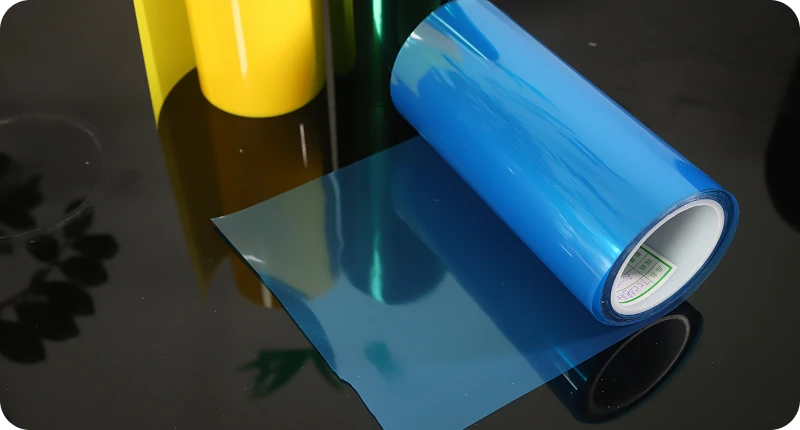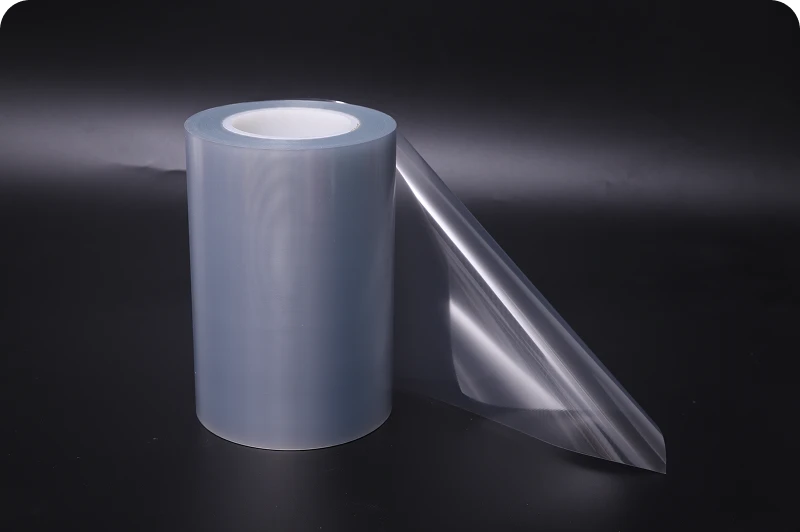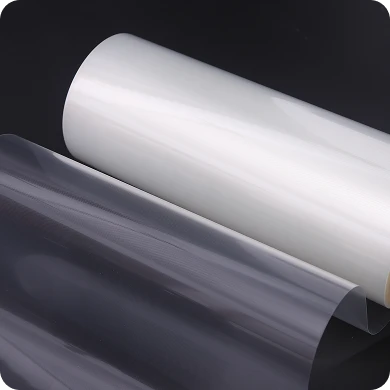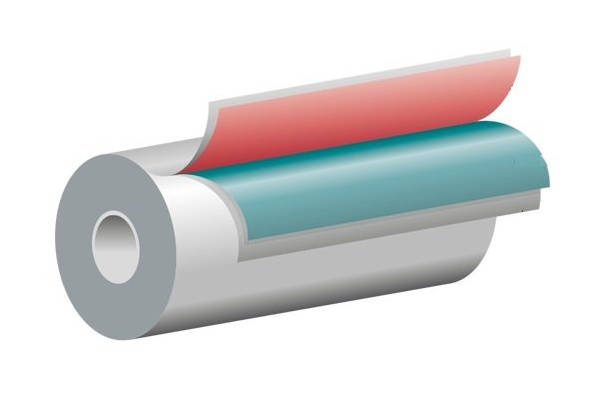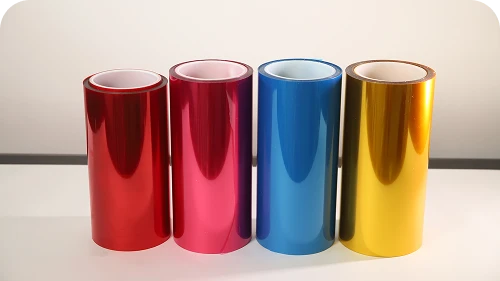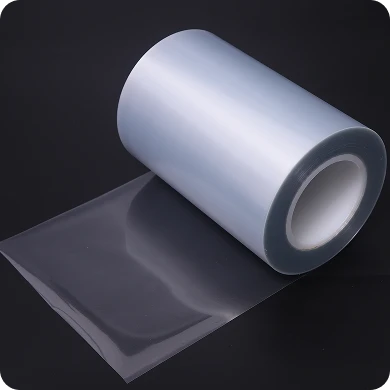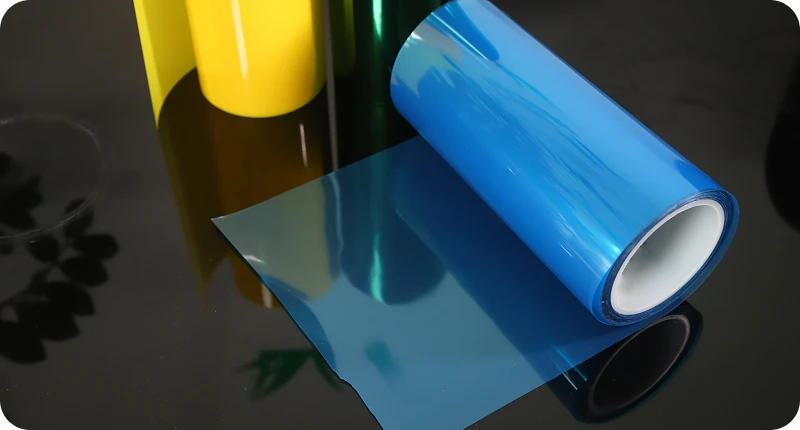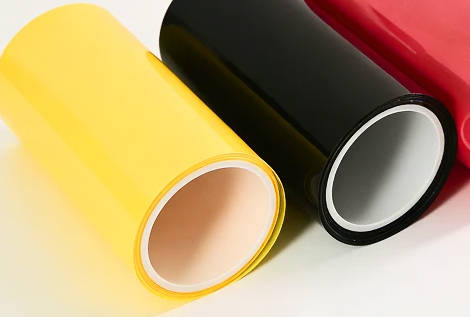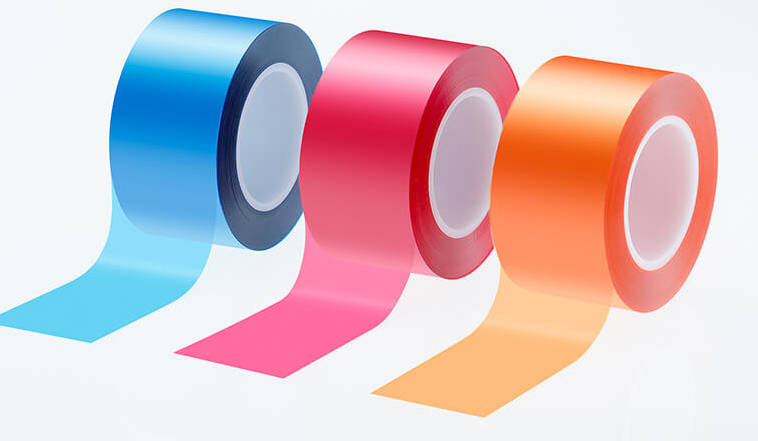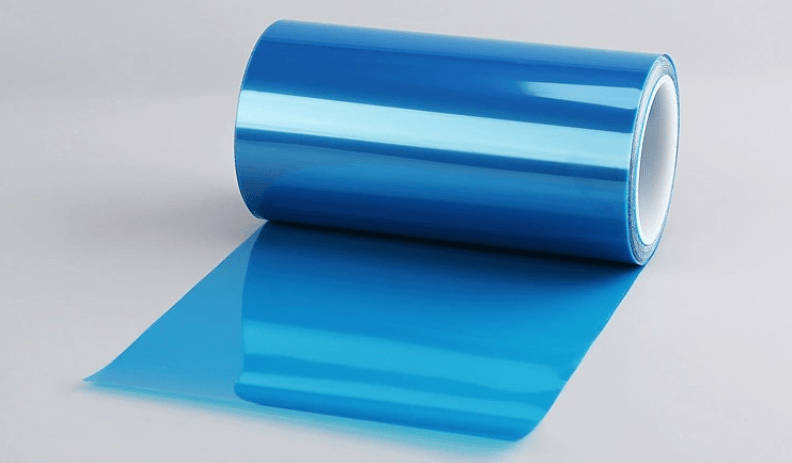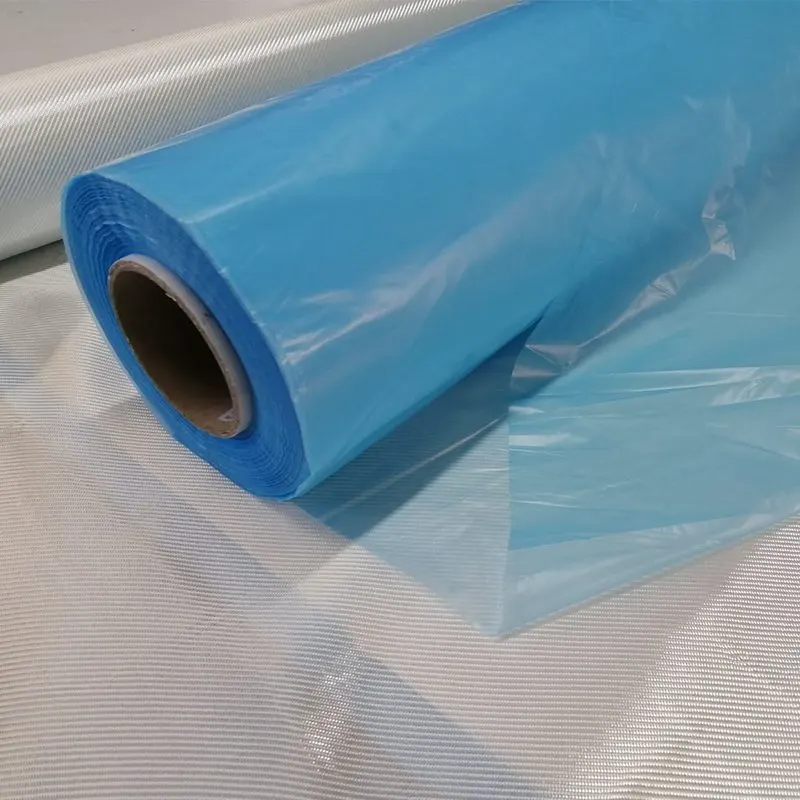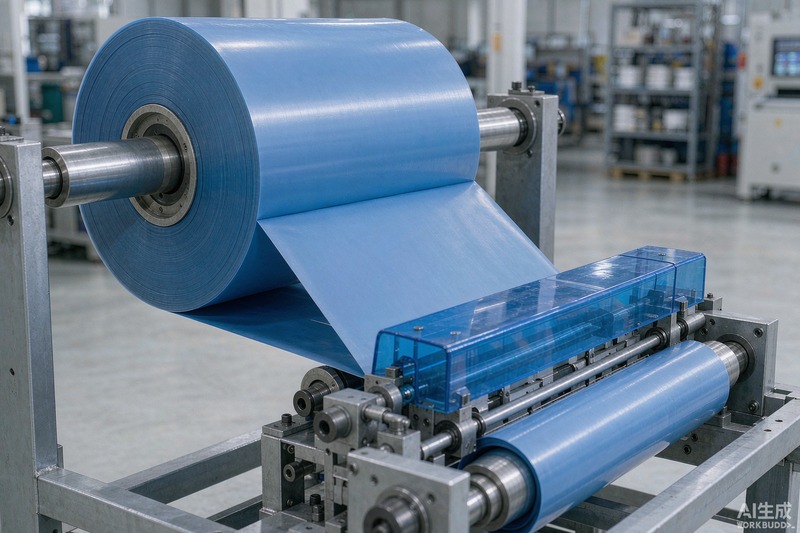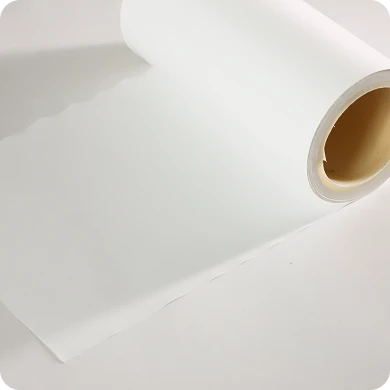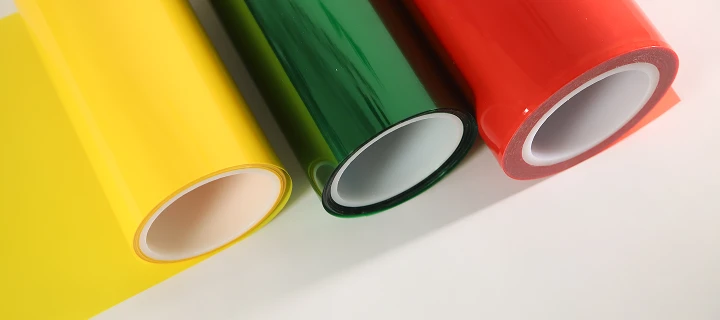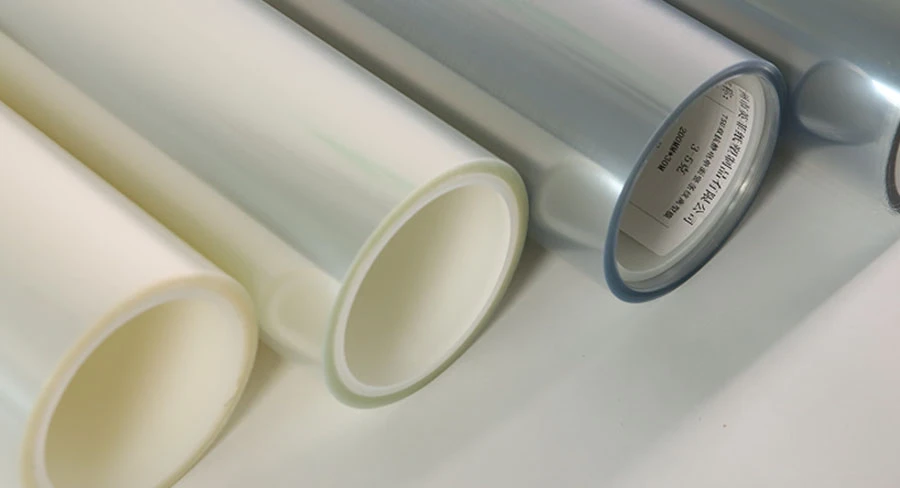
Choosing between PET release film and glassine release paper is one of the most critical substrate decisions in die-cutting and web converting. While material purchase price often favors paper, overall conversion yield, press speed, and product performance depend entirely on the mechanical match between the liner and the adhesive converting process.
PET release film provides superior thickness uniformity, high tensile strength, and zero fiber contamination, making it essential for optical clear adhesives (OCA), tight-tolerance rotary die-cutting, and cleanroom electronics. Conversely, glassine release paper offers excellent semi-bleached density, high temperature resistance during curing, and cost-efficient processing for high-volume logistics labels and general industrial tapes.
This guide evaluates the mechanical differences, machine converting dynamics, application suitability, and total cost of ownership to help converting engineers and procurement managers select the proper release carrier.
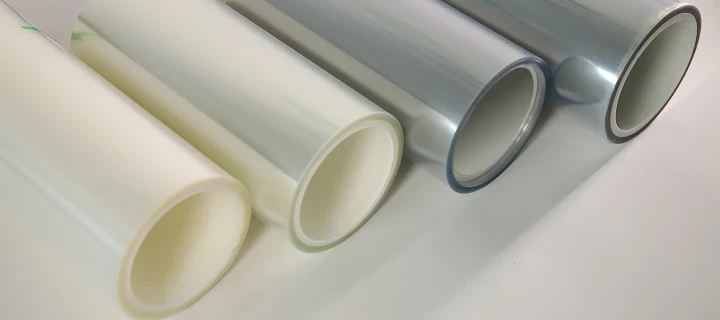
Technical Comparison: Dimensional Stability, Tensile Strength, and Thickness Uniformity
The functional divergence between PET film and glassine paper originates in their foundational structures: a synthetic biaxially-oriented polyester network versus a supercalendered wood-pulp fiber matrix.
Thickness Tolerance and Caliper Consistency across the Web
Precise depth control during kiss-cutting requires absolute caliper consistency across the full web width. Biaxially-oriented PET films are manufactured via precision melt-extrusion, yielding extremely tight cross-web caliper tolerances with minimal micro-meter variance.
Glassine paper achieves density through high-pressure, high-temperature supercalendering of bleached chemical pulp. While this collapses paper pores to create a smooth, oil-resistant face, natural fiber variance across the roll can introduce micro-level thickness fluctuations. In critical kiss-cutting operations with minimal anvil clearance, these subtle variances increase the risk of either penetrating the liner or leaving the adhesive incompletely severed.
Tensile Strength and Web Breakage Risks during High-Speed Converting
Mechanical integrity under tension determines maximum line speed. PET films deliver high tensile modulus in both machine direction (MD) and transverse direction (TD). This tensile strength resists stretching or necking under high web tensions, virtually eliminating web breaks during fast accelerations or aggressive matrix stripping.
Glassine paper exhibits high stiffness and good tensile performance under stable, unidirectional load. However, paper fibers remain susceptible to edge nicks. If a rotary die blade develops a micro-burr or an edge slit contains a minor tear, stress concentration can cause glassine to tear abruptly across the web, forcing press shutdowns.
Surface Smoothness and Cleanliness (Fiber-Free vs. Cleanroom Grade)
Surface roughness directly governs how smooth the silicone coating and the laminated adhesive will be:
- PET Film: Features an ultra-smooth, non-porous face. When laminated to clear adhesives, it prevents orange peel texture and optical haze. Being completely synthetic, PET produces zero airborne dust or particulate shedding.
- Glassine Paper: Although supercalendered to a glossy finish, its cellulose matrix can still shed microscopic fiber particles when cut. In standard packaging, this is negligible; in semiconductor, optical, or medical converting, fiber shedding can compromise particulate-sensitive cleanroom standards.
| Evaluation Parameter | PET Release Film | Glassine Release Paper | Engineering Significance |
| Base Material Structure | Biaxially-oriented polyester (BOPET) | Supercalendered chemical wood pulp | Dictates fiber presence, porosity, and clarity |
| Caliper Uniformity | Tight, precise thickness control | Moderate; subject to natural fiber distribution | Governs kiss-cut depth margin without liner strike |
| Tensile Strength (MD/TD) | High in both directions; high modulus | Good MD stiffness; susceptible to edge tears | Determines resistance to web breaks at high speeds |
| Dimensional Stability | Unaffected by humidity; stable | Expands/contracts with relative humidity shifts | Controls web flatness and sheet curl during storage |
| Surface Smoothness | Optical grade; mirror finish | Smooth, calendered; subtle micro-texture | Influences adhesive wet-out and optical clarity |
| Particulate / Fiber Shedding | Zero particulate release | Potential for microscopic fiber shedding | Critical criterion for ISO-rated cleanroom converting |
Die-Cutting Performance: Rotary, Flatbed, and Waste Stripping Behavior
The mechanical response of the carrier liner dictates tooling configuration, machine settings, and processing output on the shop floor.
High-Speed Rotary Die-Cutting and Narrow Matrix Stripping
In narrow-web rotary converting, continuous waste matrix stripping exerts concentrated peel tension at sharp take-off angles. Because PET film exhibits high tear resistance and balanced elongation properties, converters can run complex, serpentine die patterns with minimal border margins without tearing the backing.
Glassine paper requires wider matrix borders and carefully calculated take-off angles. If the adhesive peel force spikes unexpectedly or the matrix border narrows below critical thresholds, the paper matrix can delaminate or split, resulting in expensive press line stoppages.
Optical Inspection and Automatic Label Dispensing Accuracy
Modern automated lines rely on high-speed sensors to detect label gaps and register placement:
- Optical Transparency: Transparent PET liners allow direct light-transmission sensors to detect clear-on-clear label gaps, print marks, and internal die cuts with high accuracy.
- Opaque/Semi-Bleached Sensors: Standard glassine is translucent to opaque (commonly white, blue, or yellow). While compatible with standard capacitive and optical contrast sensors, it cannot match PET’s optical clarity for high-precision vision verification systems.
Thermal and Environmental Stability in Production Environments
Ambient humidity variations introduce processing challenges for paper substrates. Cellulose fibers absorb and release moisture based on factory relative humidity. Variations between storage and converting rooms can lead to edge curl, waviness, and dimensional growth.
PET release film remains inert to moisture fluctuations, ensuring that die-cut parts remain flat and dimensionally stable through multi-tier lamination, transit, and automated pick-and-place assembly.
Application Suitability: When to Choose PET Film vs. Glassine Paper
Choosing between these two liners requires aligning technical cleanliness, optical demands, and mechanical stress tolerances with component requirements.
| Decision Criterion | Primary Condition | Recommended Liner | Technical Justification |
| Cleanroom & Optical Requirement | High optical clarity needed or ISO cleanroom processing (semiconductors, displays) | PET Release Film | Zero fiber shedding; mirror-flat surface prevents adhesive haze and orange-peel texture. |
| Die-Cutting Tolerance Margin | Ultra-tight kiss-cut window (less than 10–15 µm penetration margin) | PET Release Film | Superior cross-web caliper uniformity prevents liner strikes and blade puncture. |
| Matrix Stripping Geometry | High-speed rotary converting with narrow waste borders or complex matrix shapes | PET Release Film | High tensile modulus and tear resistance eliminate web breakage during aggressive stripping. |
| Environmental Stability | Multi-tier converting or storage in fluctuating humidity environments | PET Release Film | Polymer base prevents edge curling, wrinkling, and dimensional movement caused by moisture. |
| Standard Industrial Processing | Standard die-cut tolerances, non-optical double-sided tapes, and high-volume labels | Glassine Release Paper | Economical unit cost, good unidirectional tensile stiffness, and excellent thermal curing resistance. |
Precision Electronics, Optical Tapes, and Medical Converting
High-end converting applications typically specify PET release film due to its cleanroom compatibility and smooth surface profile:
- Optically Clear Adhesives (OCA): Any surface irregularity on the liner transfers directly into the adhesive layer. PET ensures distortion-free optical clarity.
- Ultra-Thin Foam and Graphic Overlays: Enables precise kiss-cutting without blade penetration into the backing.
- Medical Diagnostic Strips & Wearables: Requires cleanroom processing where cellulose contamination must be prevented.
Industrial Tapes, Logistics Labels, and General Packaging
Glassine paper remains the premier industrial choice where baseline mechanical margins are sufficient:
- High-Volume Logistics and Retail Labels: Delivers cost-effective conversion on standard rotary and flatbed label presses.
- Standard Double-Sided Tapes: Offers sufficient heat stability during silicone curing and adhesive coating processes.
- Eco-Conscious Packaging Applications: Provides a fiber-based substrate that aligns with paper-stream recycling systems where compatible.
Selection Decision Framework: 5-Step Evaluation for Converters
To determine the most cost-effective liner without sacrificing operational reliability, evaluate these five steps:
- Map Kiss-Cutting Tolerance: Measure your required blade penetration depth. If your adhesive layer is thin and the die-cut margin permits less than 10–15 micrometers of penetration tolerance, specify PET to prevent anvil cut-through.
- Review Environmental Sensitivity: Check if parts will undergo high-humidity transport or multi-stage assembly where liner curling causes machine feed errors. If flatness is paramount, favor PET.
- Inspect Cleanliness Class: For ISO Class 7 or higher cleanroom environments, eliminate cellulose paper liners to avoid airborne particulate generation.
- Evaluate Matrix Take-Off Angles: For high-speed rotary presses pulling intricate or narrow-border scrap matrices, verify whether paper tear strength is sufficient or if PET tensile modulus is needed to prevent breaks.
- Calculate Total Cost of Ownership (TCO): Compare the raw square-meter price against operational yield:$$\text{TCO} = \text{Substrate Purchase Cost} + \text{Downtime/Breakage Loss} + \text{Scrap Defect Cost}$$If glassine’s lower material price is eclipsed by downtime from web breaks or tooling wear, switching to a synthetic PET carrier lowers overall finished-part production costs.
Key Takeaways
- Dimensional Precision: PET release film delivers superior thickness uniformity and dimensional stability across changing humidity conditions compared to glassine paper.
- Cleanroom Compliance: PET films eliminate fiber shedding, making them essential for electronics, medical components, and optical laminations.
- Converting Speed: PET’s high tensile modulus prevents web tears during high-speed rotary die-cutting and intricate matrix stripping.
- Cost Balance: Glassine release paper provides an economical, heat-resistant solution for standard industrial tapes, logistics labeling, and non-critical kiss-cutting operations.
- Total Cost Perspective: Choosing the right liner requires balancing the base square-meter price against scrap rates, tooling wear, and press downtime.
FAQ
Can glassine release paper be completely replaced by PET release film?
While PET release film can physically replace glassine across virtually all die-cutting processes, doing so is not always economically necessary. For commodity logistics labels and standard packaging tapes, glassine remains the cost-effective industry standard. PET is preferred when tolerances, cleanliness, or matrix strength demand synthetic performance.
Why does PET release film cause static issues during high-speed die-cutting, and how is it mitigated?
As an electrical insulator, PET accumulates static electricity during high-speed unwind and matrix stripping. Converters mitigate this by installing active ionizing blowers, static neutralization bars, or specifying PET release films with topical antistatic coatings.
What is the primary difference in thickness tolerance between PET and glassine liners?
PET films are extruded synthetically, holding tight micro-level cross-web tolerances with minimal thickness fluctuation. Glassine paper, formed from compressed natural fibers, exhibits slightly wider localized thickness variations across the web width.
How does silicone transfer affect adhesive performance on PET vs. glassine liners?
Silicone transfer occurs when unreacted siloxane migrates into the adhesive, reducing subsequent bonding strength. Both PET and glassine can achieve high subsequent adhesion strength (typically greater than 90% to 95%) when cured properly. However, PET’s smooth, non-porous face generally allows for a thinner, more uniform silicone coating layer.