Release force, or peel adhesion, defines the exact mechanical resistance encountered when separating a pressure-sensitive adhesive (PSA) from a carrier liner. In high-speed die-cutting, rotary converting, and multilayer lamination, achieving the proper release force release film balance determines whether processing runs smoothly or suffers from pre-dispensing, tunneling, and substrate tearing. Selecting the right release level requires balancing three factors: adhesive chemistry (acrylic, silicone, or rubber), converting speed, and environmental aging conditions.
This guide outlines industry classifications from ultra-light to tight release forces, standardized testing protocols, failure mechanics behind release force buildup, and an engineering framework for specifying liners accurately.
What Is Release Force in Release Film Converting?
Release force is the quantitative measurement of the peel strength required to remove a release liner from an adhesive substrate under standardized speed, angle, and temperature conditions. It is expressed in units such as grams per inch (g/in), grams per 25 millimeters (g/25mm), or Newtons per meter (N/m).
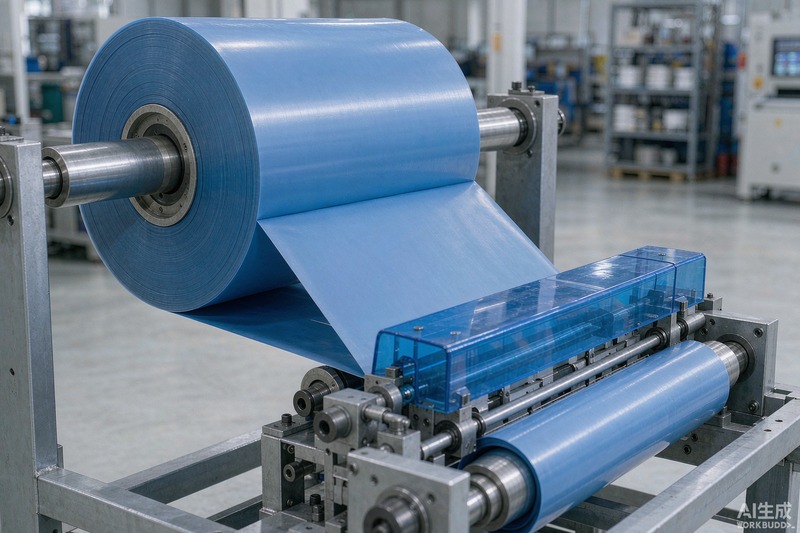
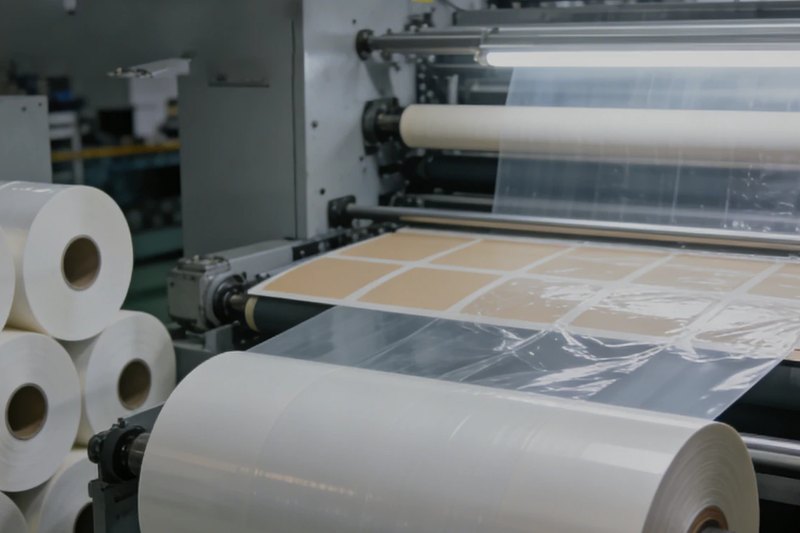
In modern converting operations, release liners serve as dynamic processing carriers rather than inert backing layers. If the release force deviates from the target window:
- Excessively low release force leads to “fly-off” during high-speed rotary die-cutting, label displacement, and blistering or tunneling during roll rewinding.
- Excessively high release force causes face stock delamination, label tearing, matrix breakage during matrix stripping, and adhesive transfer or ghosting.
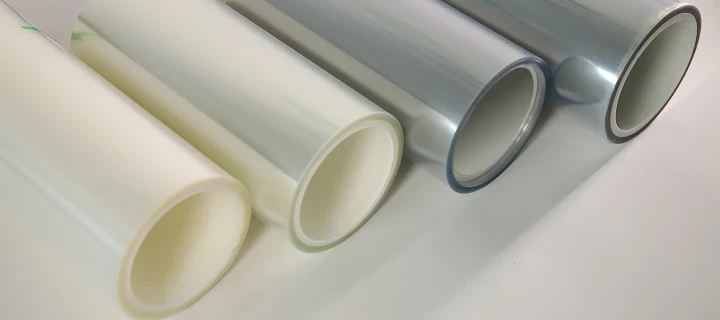
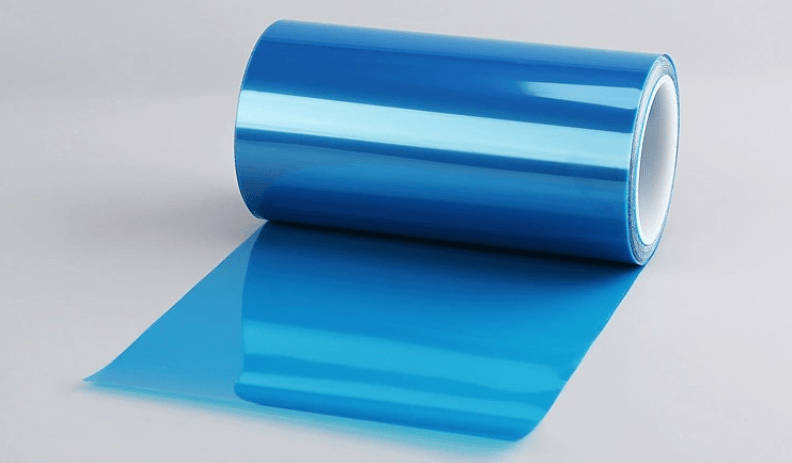
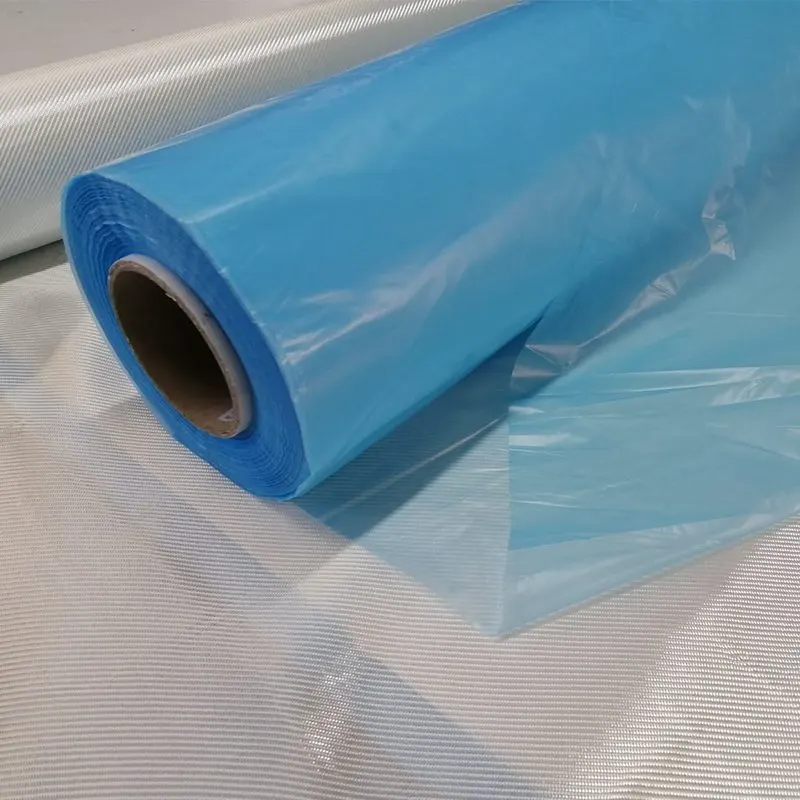
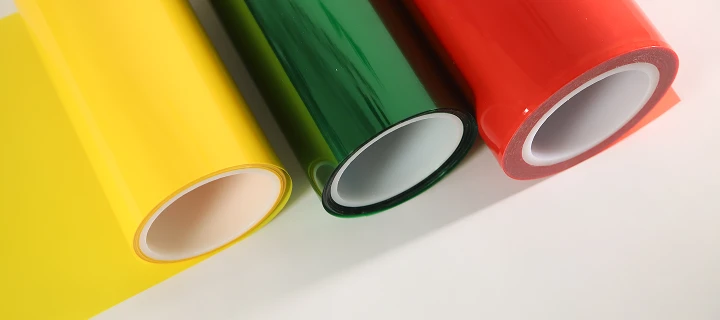
Matching the liner coating system to production demands requires selecting engineered carriers, such as specialized silicone release films, that deliver stable peel adhesion under variable line tensions.
Release Force Classification: From Ultra-Light to Tight Explained
Release levels are categorized into distinct operational ranges to accommodate specific converting setups and adhesive properties. While numerical cutoffs vary slightly across regional standards, the industrial coating sector follows a clear progression.
| Release Level Classification | Typical Release Force Range* | Common Coating Chemistry | Typical Adhesive & Converting Match |
| Ultra-Light Release | ~1 to 5 g/25mm | High-slip, specialized solvent/solventless silicone | High-tack adhesives, wide-web protective films, thick foam bonding |
| Light Release | ~5 to 15 g/25mm | Standard thermal-cure solventless silicone | High-speed automatic labeling, light die-cutting, double-sided tapes (easy-peel side) |
| Medium Release | ~15 to 40 g/25mm | Controlled modified silicone systems | General-purpose PSA tapes, flatbed die-cutting, industrial decals |
| Heavy Release | ~40 to 80 g/25mm | Tight-release silicone formulations with CRA additives | Transfer tapes, thick acrylic foams, precision laser cutting |
| Tight / Very Heavy Release | 80+ g/25mm | High-level Control Release Additive (CRA) systems, non-silicone | Differential release systems (second side), cast polymer backing carriers |
*Note: Numerical ranges depend on standardized testing conditions (such as FINAT FTM 1/FTM 3, 180° peel angle, and 300 mm/min peel speed) and specific adhesive types. Exact operational limits must be validated with the supplier’s technical data sheets.
Ultra-Light and Light Release Force (Low Peel Adhesion)
Ultra-light and light release configurations facilitate immediate separation with minimal tensile resistance. These liners are commonly paired with aggressive adhesives where stronger peel adhesion would cause substrate stretching or matrix tearing. In rotary die-cutting, light liners require precise web tension regulation to prevent parts from lifting prematurely off the carrier before dispensing.
Medium Release Force (General Purpose)
Medium release liners serve as the standard choice for balanced converting. They deliver adequate grip to keep the die-cut matrix firmly anchored to the carrier during high-speed web movement, yet peel away smoothly during manual or automated final application without tearing face stocks.
Heavy and Tight Release Force (High Peel Adhesion)
Heavy and tight release liners are formulated using Controlled Release Additives (CRAs) to increase release resistance. In differential-release double-sided tapes, a heavy liner is paired with an ultra-light liner on opposite sides. This intentional delta ensures that the light liner peels away easily during initial mounting while the heavy liner stays firmly adhered until final placement.
How Release Force Is Measured: Standards, Angles, and Speed
Peel adhesion values are only meaningful when evaluated against defined testing protocols. Testing the identical film under mismatched parameters produces vastly conflicting force readings.
Industry Testing Standards (FINAT, ASTM, PSTC)
Industrial converters rely on globally harmonized test methods:
- FINAT FTM 1 & FTM 3: The primary European converting standard measuring peel adhesion at 180° at low and high speeds.
- FINAT FTM 10: Measures subsequent adhesion to verify that silicone transfer has not compromised adhesive bond strength.
- ASTM D3330 / PSTC-101: North American benchmark methods for standardizing 180° and 90° peel adhesion from specified panels or standard test tapes.
| Test Setup Component | Function & Mechanical Configuration | Key Operational Parameters |
| Tensile Grip / Load Cell | Pulls the standard test tape back over itself at an exact 180° parallel vector | Constant peel rate (commonly 300 mm/min or high-speed FTM 3 settings) |
| Standard Test Tape | Certified pressure-sensitive adhesive strip laminated to the release layer | Tesa 7475 (acrylic-based) or Nitto 31B (rubber-based) |
| Release Film Sample | The coated liner under evaluation | Fixed flat to prevent tensile stretching during peel travel |
| Rigid Test Bed / Steel Plate | Rigid stainless steel or float glass substrate backing the assembly | Uniform clamping to eliminate deflection and vibration |
Key Test Variables That Alter Peel Force Readings
- Peel Angle (180° vs. 90°): A 180° peel configuration concentrates mechanical stress directly along the peeling interface, while a 90° test spreads shear forces across a wider area, yielding lower measured values.
- Peel Speed: Silicone release layers display rate-dependent viscoelasticity. Increasing peel speed from 300 mm/min to 10 m/min elevates observed release force.
- Standard Test Tape: Standardized tapes, such as Tesa 7475 (acrylic test tape) or Nitto 31B (rubber-based), deliver repeatable baseline readings. A liner calibrated against a rubber test tape will behave differently when laminated against a solvent acrylic adhesive in production.
- Dwell Time, Temperature, and Pressure: Freshly laminated adhesive layers exhibit lower peel force than assemblies aged under heat (e.g., 70°C for 24 hours under 20–50 g/cm² pressure), which accelerates interfacial wet-out.
Why Does Release Force Change? Overcoming Release Force Buildup
A frequent challenge in precision converting is “release force buildup”—a condition where peel adhesion climbs during storage or lamination, transforming an easy-peel liner into a locked assembly.
| Stage of Aging Process | Chemical / Physical Mechanism | Production Impact on Converting |
| Initial Lamination | Baseline interfacial contact established between adhesive and silicone surface | Normal release force within nominal target specification |
| Interfacial Wet-Out | Viscoelastic adhesive cold-flows into microscopic voids over extended dwell time | Moderate increase in mechanical peel resistance |
| Chemical Interaction | Unreacted silane groups, low-MW silicone oils, or adhesive tackifiers migrate | Severe release force buildup; risk of silicone transfer |
| Late-Stage Lock-Up | Chemical bonding or deep mechanical interlock across the boundary layer | Converting lock-up, matrix snapping, or face delamination |
Several factors drive peel force drift:
- Incomplete Silicone Cross-Linking: Under-cured silicone networks leave free reactive silane groups or silicone fluid. Uncured silicone migrates into the adhesive matrix, lowering subsequent adhesive strength while causing inconsistent release performance.
- Adhesive Interpenetration and Wet-Out: Soft adhesives flow into microscopic substrate pores over time, expanding the true contact surface and elevating physical peel resistance.
- Chemical Additive Migration: Low-molecular-weight plasticizers, tackifiers, or residual solvents in the adhesive can attack the silicone boundary layer. In extreme cases, chemical affinity bridges the interface, causing release failure.
- Environmental Heat and Humidity: Elevated storage temperatures accelerate molecular mobility, compounding force buildup. Liners must be qualified under realistic accelerated aging protocols.
To prevent processing bottlenecks caused by force buildup, manufacturers specify custom-coated release films engineered with stable silicone cross-linking density and balanced curing chemistry.
Application Matrix: Selecting the Right Release Force for Your Converting Line
Selecting release liners requires mapping process dynamics, adhesive types, and converting speeds against target release levels.
| Converting Application | Adhesive System Used | Recommended Release Level | Primary Process Risk |
| High-Speed Rotary Die-Cutting | Emulsion Acrylic / Hot-Melt | Light (5–12 g/25mm) | Part fly-off at high velocity; matrix snapping if release is too heavy |
| Electronic Functional Tapes & OCA | Pure Solvent Acrylic | Ultra-Light to Light (3–10 g/25mm) | Optical distortion; surface haze; adhesive transfer to release layer |
| Differential Double-Sided Tapes | Acrylic / Rubber Hybrids | Light (Side A) / Heavy (Side B) | Accidental early peeling of the wrong liner during installation |
| Thick Foam and Gasket Bonding | Aggressive Tackified Acrylic | Ultra-Light (1–5 g/25mm) | Foam stretching or tearing due to excessive peel force |
| Medical Dressings & Hydrogels | Polyurethane / Silicone Gel | Medium to Heavy (20–50 g/25mm) | Premature liner detachment; edge lifting during patient packaging |
For advanced electronics and medical converting, converters utilize specialized PET release liner specifications that combine flat surface topography with tight release force tolerances.
Technical Checklist for Specifying Release Force with Your Supplier
To ensure consistent converting performance across production lots, engineering and sourcing teams should confirm the following parameters prior to ordering:
- [ ] Base Film Substrate & Gauge: Specify exact polymer backing (e.g., PET, PP, PE) and thickness gauge (e.g., 23μm, 36μm, 50μm, 75μm).
- [ ] Target Release Force & Acceptable Tolerance: Define nominal peel force and acceptable variance (e.g., $15 \pm 3\text{ g/25mm}$), avoiding ambiguous labels like “medium release.”
- [ ] Qualification Test Standard: Document the precise testing method (FINAT FTM 1, FTM 3, or ASTM D3330), peel angle (180° or 90°), and pull speed.
- [ ] Baseline Qualification Tape: Specify the control tape used for batch acceptance (e.g., Tesa 7475, Tesa 7476, or Nitto 31B).
- [ ] Aging & Dwell Specifications: Confirm whether release tolerances apply immediately after coating or after accelerated heat and pressure aging (e.g., 70°C for 20 hours).
- [ ] Coating Architecture: Define single-side coating, double-side identical coating, or differential release profiles (e.g., 1:3 or 1:5 ratio).
- [ ] Subsequent Adhesion Value (SAS): Request minimum subsequent adhesion retention (typically $\ge 90\%$) to verify complete silicone cure without adhesive contamination.
Key Takeaways
- Release force is dynamic: Peel force varies with peel velocity, peel angle, temperature, and specific adhesive chemistries.
- Standardize qualification: Never assess release force in isolation. Establish a clear testing protocol (e.g., FINAT FTM 1 at 180° with standard test tape) to reconcile supplier data with line performance.
- Plan for release force buildup: Adhesives interpenetrate and react with silicone layers over time. Always evaluate release stability via accelerated heat and pressure dwell testing.
- Control differential ratios: Double-sided tape constructions require an engineered delta (typically 1:3 to 1:5) between sides to prevent converting jams.
- Specify quantitative parameters: Replace vague descriptive terms with concrete numeric values, tolerances, and carrier substrate gauges on all purchase specifications.
Frequently Asked Questions
What is the difference between peel adhesion and release force?
Peel adhesion generally refers to the force required to separate an adhesive from an active application surface (such as steel, glass, or plastic). Release force refers specifically to the peel strength needed to detach a low-surface-energy protective liner from the adhesive layer before application.
Why does release force increase during storage?
Peel force increases because adhesive polymer chains slowly wet out microscopic liner pores over time. In addition, chemical interactions—such as the migration of tackifiers or plasticizers, incomplete silicone curing, and elevated warehouse temperatures—can accelerate release force buildup.
What is a differential release liner, and when is it required?
A differential release liner features different release forces on each side of the film (for example, ultra-light release on the inner wrap and heavy release on the outer face). This construction is required for coreless double-sided transfer tapes to ensure the tape unwinds smoothly without picking up or delaminating the wrong adhesive face.
How does converting speed affect release force?
Silicone release layers exhibit viscoelastic properties. Under low peel speeds (such as manual peeling), release force remains relatively low. At high rotary die-cutting or automated labeling speeds, measured release force increases. Formulations must be chosen to accommodate high-speed strip dynamics.