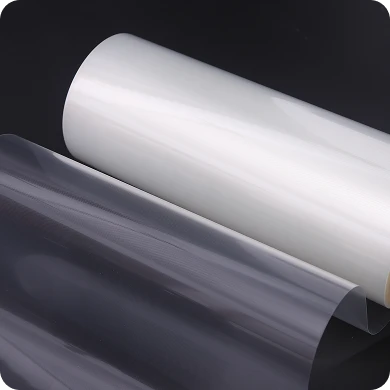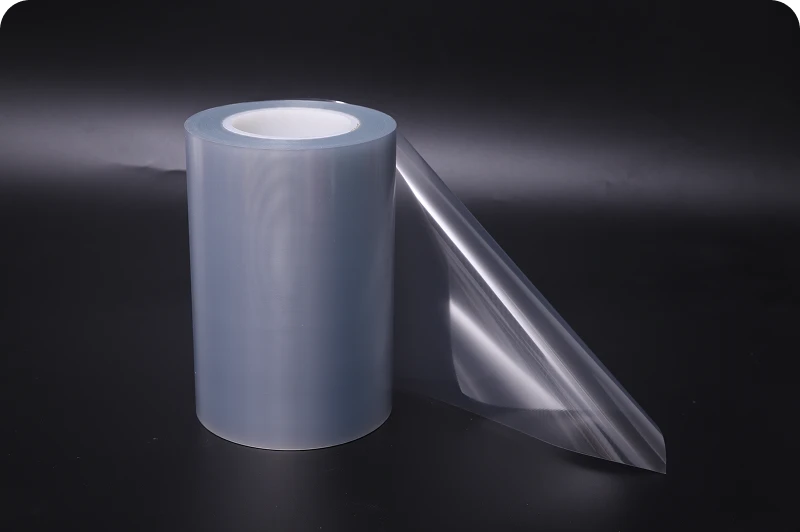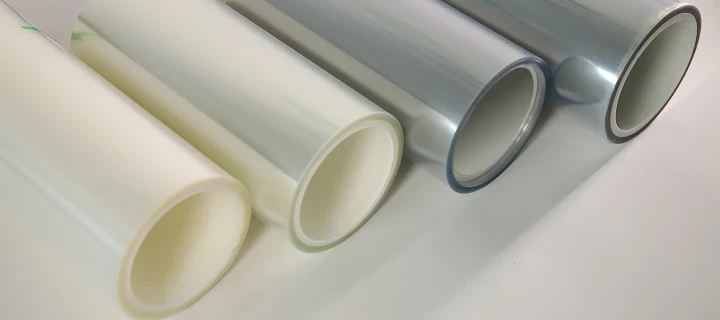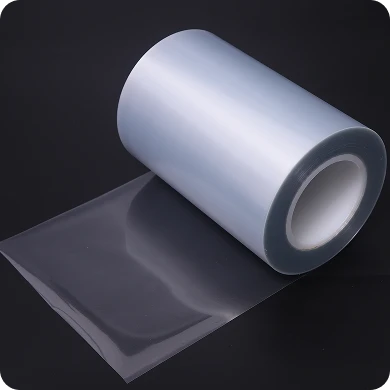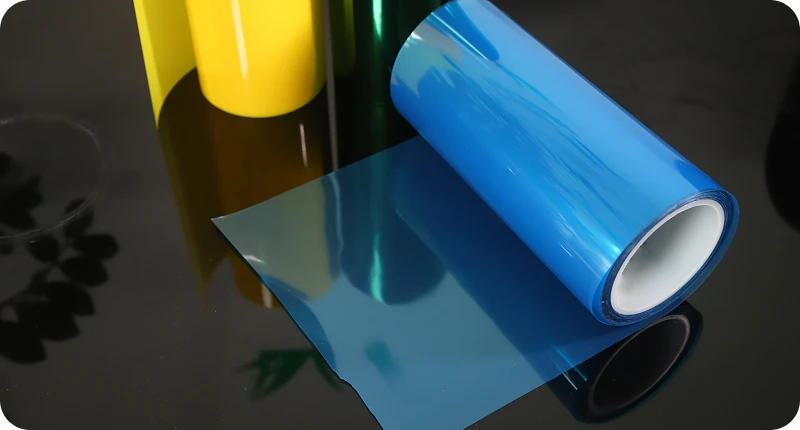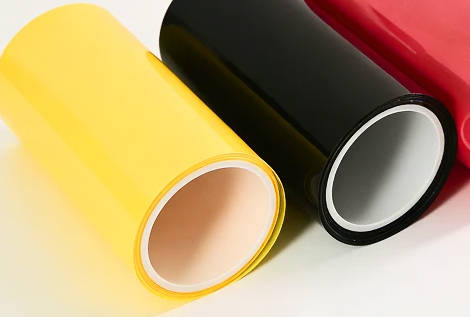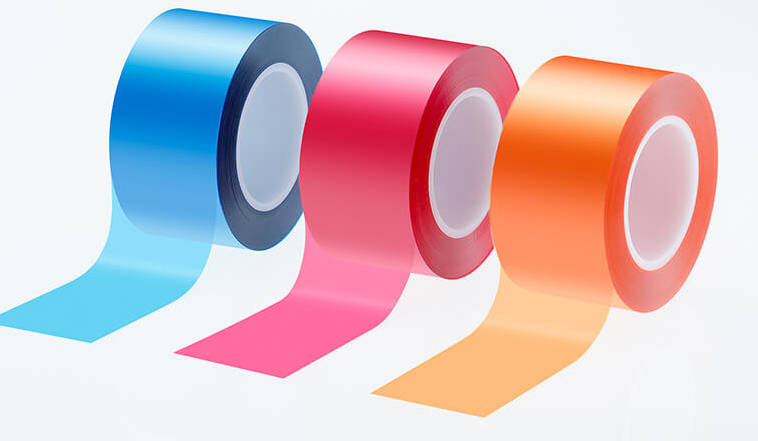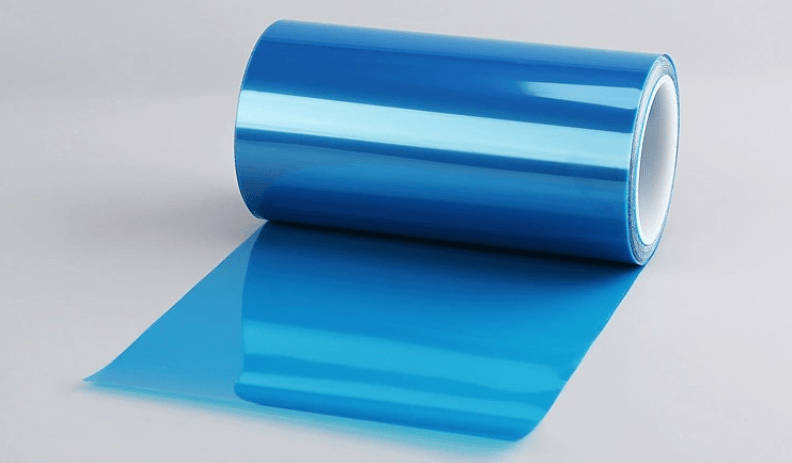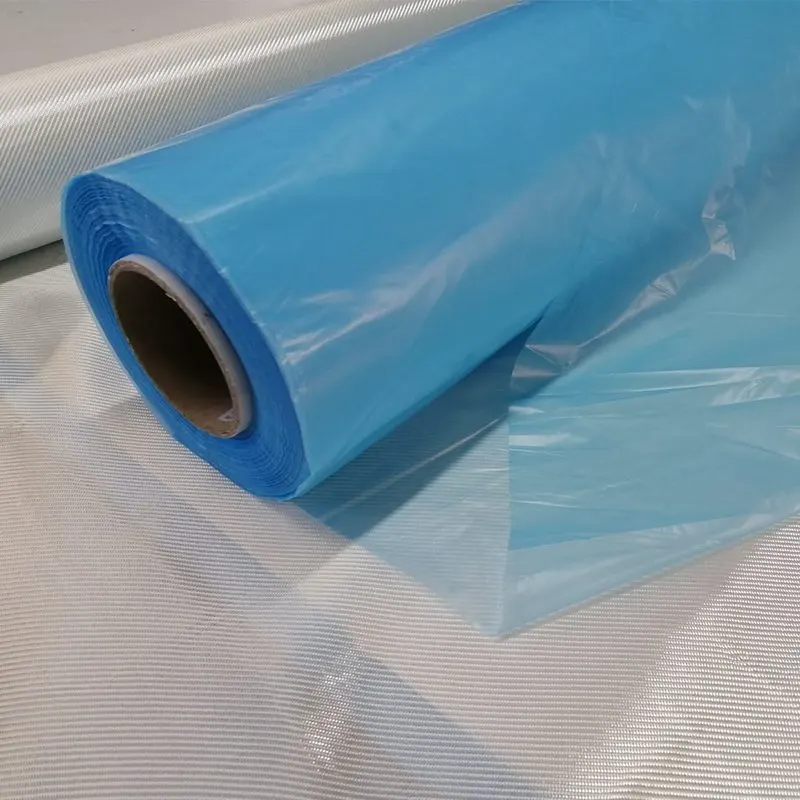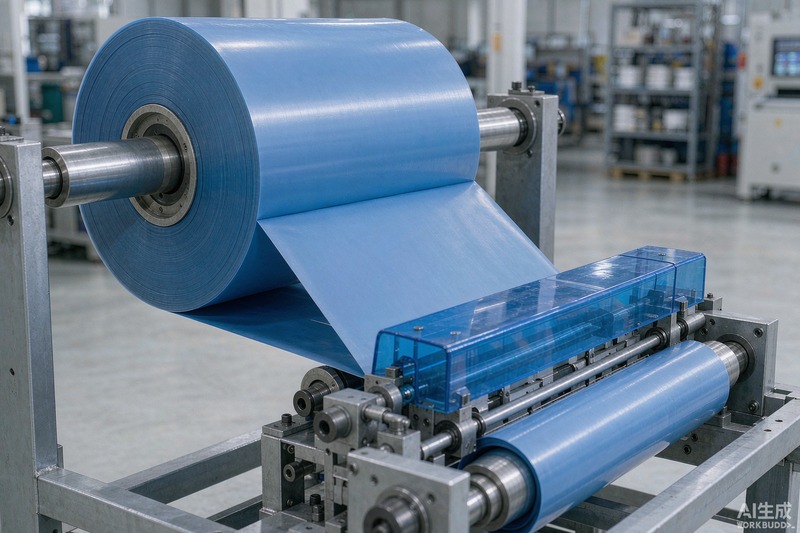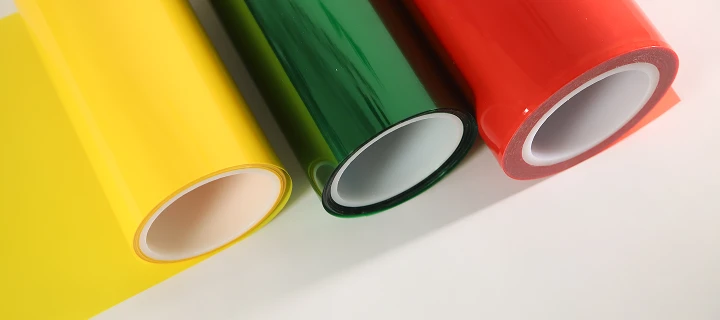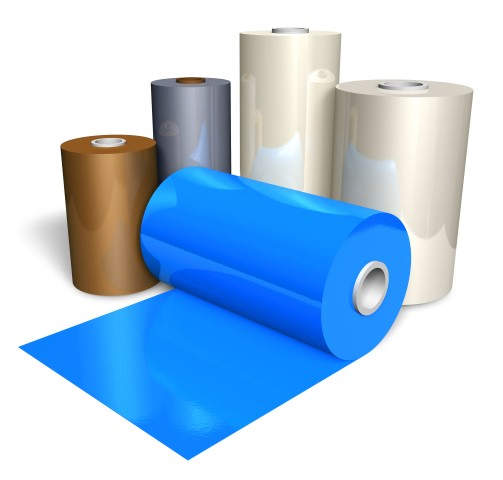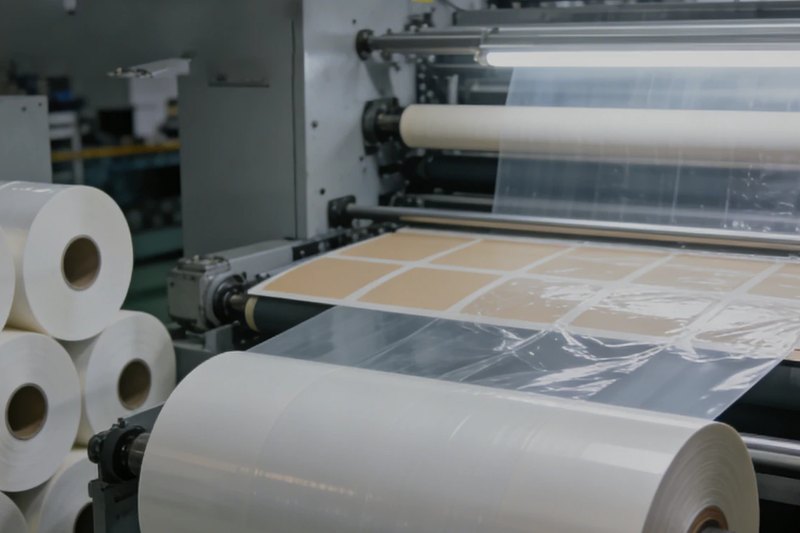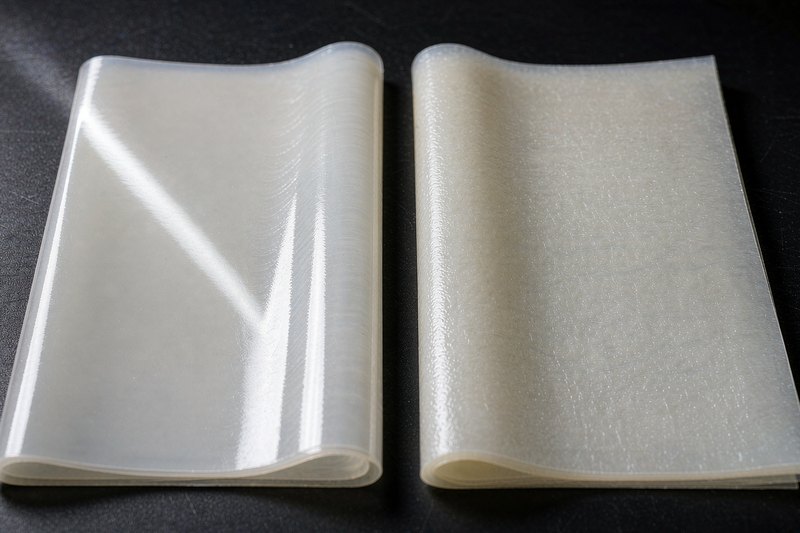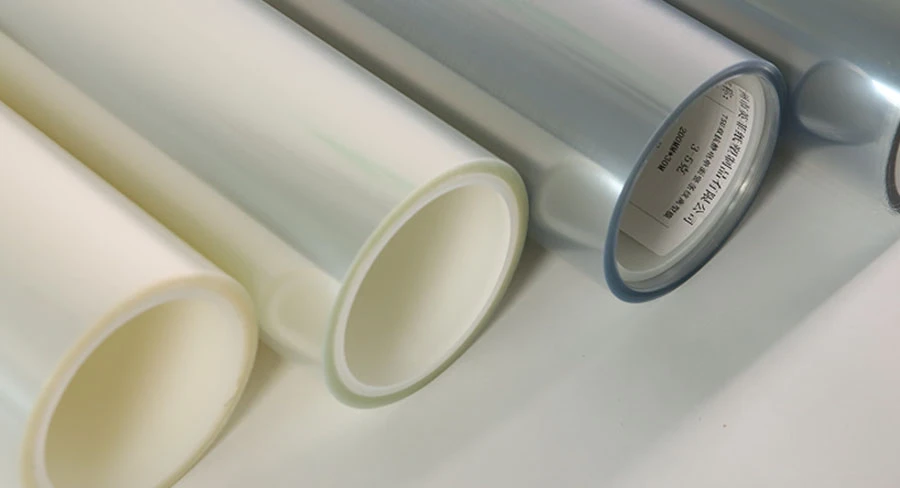
Choosing between PET release film and glassine release paper determines converting line yields, dimensional accuracy, and tooling wear. For high-speed rotary die-cutting, optical assembly, and cleanroom applications, polyethylene terephthalate (PET) film serves as the preferred carrier substrate due to its tensile strength, consistent caliper, and zero-particulate profile. Conversely, glassine paper remains a standard, cost-effective base for high-volume automated roll label dispensing and general-purpose industrial tapes.
Evaluating the difference between PET release film and glassine paper requires balancing mechanical demands—such as kiss-cutting tolerance and web break resistance—against baseline material cost and application cleanliness requirements.
PET Release Film vs. Glassine Paper: Solving the Die-Cutting Substrate Challenge
Converting flexible materials demands extreme consistency from the carrier liner. During precision die-cutting, the release carrier supports the adhesive and face material through mechanical punching, slitting, and continuous matrix stripping. A substrate that stretches unevenly or yields under anvil pressure causes inconsistent cut depths, adhesive bleed, or costly web breaks.
Converters encounter distinct operational challenges with each material:
- Glassine Paper Challenges: Paper fibers can tear under high dynamic line tension, generate cellulose dust during blade contact, and absorb ambient humidity, causing edge curling.
- PET Film Challenges: Polyester carriers require precise tension control to prevent slippage and accumulate electrostatic charges during continuous unwinding if untreated.
Selecting suitable engineered release film solutions allows converters to increase line speeds without risking structural carrier failure during kiss-cutting.
Key Material Properties: PET Film vs. Glassine Paper
The mechanical behavior of each carrier originates in its core structure: PET is a synthetic, bi-axially oriented polymer, whereas glassine is a supercalendered, highly dense wood-pulp paper.
| Property Dimension | PET Release Film | Glassine Release Paper | Converting Implication |
| Base Material Structure | Biaxially oriented polyester (synthetic) | Supercalendered chemical wood pulp (fibrous) | PET provides complete isotropic smoothness; glassine retains microscopic fiber variance. |
| Caliper Uniformity | Tight, uniform thickness profile across web | Slight gauge variations typical of paper fiber sheets | PET allows tighter kiss-cutting tolerances without penetrating the liner backing. |
| Tensile Strength | High tensile yield point; minimal elongation | Moderate tensile strength; prone to edge-tear propagation | PET resists snapping during high-speed matrix stripping and rapid web starts. |
| Surface Smoothness | Optically smooth; mirror-like release face | Calendered smooth, but retains subtle paper topography | Smooth PET ensures uniform adhesive coat-weight and surface wet-out without orange peel. |
| Moisture Resistance | Completely hydrophobic | Hygroscopic; expands/contracts with relative humidity | PET maintains lay-flat stability across seasonal ambient humidity changes. |
| Cleanroom Suitability | Non-shedding; zero particulate generation | May shed cellulose fibers along slit edges | PET meets strict cleanroom requirements for medical and electronic assemblies. |
Because durable PET release film resists mechanical elongation under tension, process engineers can maintain exact registration tolerances on multi-station rotary presses.
Die-Cutting Performance: Rotary, Flatbed, and High-Speed Converting
The dynamic interaction between cutting dies, anvil cylinders, and release liners differs fundamentally between synthetic films and fibrous papers.
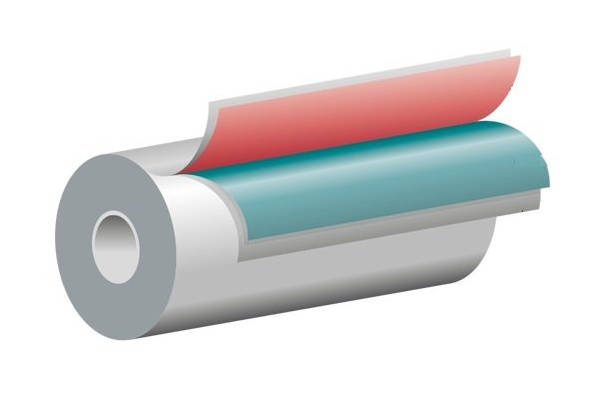
| Layer & Component | Functional Role in Kiss-Cutting | Substrate Performance Under Tooling Load |
| Tooling: Rotary Die Cylinder | Hardened cutting blade applying precision downward pressure | Drives through upper layers; stops micro-inches above the base carrier. |
| Layer 1: Face Material | Intended functional product (film, foil, foam, or paper) | Fully severed by tooling blade. |
| Layer 2: Adhesive Layer | Pressure-sensitive bonding agent (acrylic, rubber, silicone) | Fully severed; requires clean shear without adhesive bleeding. |
| Interface: Silicone Release Coat | Cured silicone coating governing release force | Provides critical release barrier; must remain intact across the web. |
| Layer 3: Carrier Substrate | Structural backing supporting kiss-cut parts | PET: Resists anvil indentation, eliminates web tear, non-compressible. Glassine: Prone to localized fiber crush, gauge fluctuation, and edge nicks. |
| Tooling: Anvil Support Cylinder | Hardened base cylinder supporting line pressure | Requires uniform counter-resistance from carrier to prevent premature blade dulling. |
Kiss-Cutting Precision
Kiss-cutting requires cutting completely through the face stock and adhesive layer while stopping precisely at the silicone interface without piercing the underlying carrier.
- PET Substrates: Bi-oriented polyester exhibits high compressive resistance against hardened steel tooling. It acts as a firm, non-compressible anvil stop, reducing the risk of cutting through the liner.
- Glassine Substrates: Under repeated impact or continuous rotary pressure, paper fibers can compress locally. Tooling wear or minute pressure spikes can lead to liner penetration, causing the liner to tear during end-use peeling.
High-Speed Web Break Resistance
In high-speed rotary die-cutting and matrix stripping, web tension spikes when peeling complex, aggressive adhesive geometries. If a slitting knife leaves a microscopic nick on the edge of glassine paper, the tear quickly propagates across the web, causing an immediate press stop. PET film possesses high tear-propagation resistance, enabling converters to maximize press throughput.
Particulate Contamination
Blade slitting on glassine release paper fractures cellulose fibers, releasing dust into the converting environment. In contrast, using precision release film for converting eliminates particulate shedding, safeguarding print plates, adhesive coatings, and rotary tooling from debris buildup.
Optical Inspection and Cleanroom Requirements: When Clarity Dictates Choice
High-end converting for optoelectronics, automotive displays, and medical devices requires clear visual inspection. In automated lines, sensors must detect voids, pinholes, contamination, or bubbles in adhesive layers via Automated Optical Inspection (AOI).
- Inspection Through the Carrier: Standard glassine paper ranges from semi-bleached amber to opaque white or blue. While translucent under backlighting, it scatters light, preventing optical cameras from verifying adhesive clarity through the liner. Clear PET release liners provide high light transmittance, allowing in-line vision systems to scan the adhesive matrix without stripping the liner.
- Cleanroom Compliance: In ISO Class 5 to Class 7 cleanrooms, paper-based products are restricted because exposed fibrous edges release airborne particulates. PET film provides a clean, non-linting backing compatible with medical diagnostic strips, biosensors, and optical clear adhesive (OCA) assembly.
Total Cost Analysis: Material Price vs. Overall Processing Yield
Evaluating release liners solely on price per square meter obscures total operational costs. A comprehensive procurement review must weigh upfront raw material pricing against process yields, press run speeds, and material scrap rates.
| Operational Cost Component | Glassine Release Paper Profile | PET Release Film Profile | Economic Impact on Converting Yield |
| Initial Raw Material Unit Cost | Lower initial baseline price per square meter | Moderate-to-higher initial baseline price | Glassine offers direct upfront material savings on simple runs. |
| Converting Line Speed Capability | Moderate; restricted by web tensile limits | High; supports maximum rotary acceleration | PET amortizes machine hourly rate across higher linear output. |
| Downtime from Web Breaks | Higher risk from edge slitting nicks and matrix pull | Minimal; tear-propagation resistance prevents breaks | PET reduces un-webbing downtime and associated labor costs. |
| Environmental Storage Stability | Susceptible to ambient humidity; curl risk | Hydrophobic; stable across seasonal shifts | PET prevents scrap from edge curling and adhesive tunneling in storage. |
| Tooling & Mechanical Wear | Fiber debris accumulation requires cleaning stops | Zero dust generation; clean blade interface | PET reduces blade maintenance stops and prevents debris buildup. |
Raw Material Expenditure
Glassine paper provides an economical upfront material cost for primary labeling, packaging tapes, and non-critical industrial gaskets. For applications without optical or extreme tension demands, glassine minimizes bill-of-materials costs.
Yield Gains and Scrap Reduction
PET release film commands a higher initial price point, but it offsets this premium in demanding manufacturing scenarios:
- Reduced Downtime: Eliminating web breaks on continuous rotary presses saves hours of re-webbing downtime and scrap material per shift.
- Thinner Caliper Capability: Converters can utilize thinner PET films (e.g., 23 μm to 36 μm) that match or exceed the tensile integrity of 60 g/m² glassine paper. Thinner liners yield more linear meters per master roll, reducing roll-change frequencies.
- Climate-Resistant Storage: Glassine rolls can warp, absorb moisture, and exhibit uneven release values when stored across changing seasons. Chemically inert, cost-efficient industrial release film maintains uniform release stability and flatness during long-term warehouse storage.
Selection Guide: Matching Substrates to Converting Applications
Selecting the correct release backing depends on the end-use product, adhesive chemistry, converting tooling, and environmental specifications.
| Application Field | Recommended Substrate | Decisive Engineering Factor |
| Optically Clear Adhesives (OCA) & Displays | PET Release Film | Optical transparency required for automated visual inspection; smooth adhesive wet-out without surface texture transfer. |
| Electronic Components & FPC Die-Cutting | PET Release Film | Precise kiss-cutting tolerances; zero fiber contamination; high thermal dimensional stability during processing. |
| Medical Patches & Skin Adhesives | PET Release Film | Certified cleanroom cleanliness; completely non-shedding edge profile during mechanical slitting. |
| High-Volume Logistics & Retail Labels | Glassine Paper | Low unit cost per square meter; standard mechanical demands during regular rotary dispensing. |
| Automotive Gaskets & Thick Foam Tapes | PET Release Film | Supports heavy tensile pull required to peel dense acrylic foam cores without tearing the liner backing. |
| General Industrial Masking & Double-Sided Tapes | Glassine Paper | Economical baseline processing where moderate converting speeds and standard caliper tolerances apply. |
When manufacturing custom parts with unique surface energies or high-tack acrylics, matching the carrier to customized release film options prevents adhesive delamination and tearing during converting.
Essential Engineering Parameters for Sourcing Release Liners
Before placing an order or requesting trial samples, process and procurement teams should confirm these technical specifications with their material converter or coating partner:
- Liner Thickness and Basis Weight: Identify nominal film thickness (typically 23, 36, 50, 75, or 100 μm for PET) or paper weight (typically 60 to 90 g/m² for glassine).
- Release Force Values: Define targeted release levels in g/inch or N/25mm (e.g., ultra-light 3–7g for high-speed dispensing; medium 15–30g for manual assembly; tight 40–80g for heavy adhesives).
- Silicone Coating System: Specify solvent-based silicone for ultra-stable release profiles, solvent-free silicone for economical runs, or fluorosilicone coatings for silicone pressure-sensitive adhesives.
- Surface Treatments: Determine whether secondary processing requires single-sided or double-sided differentiated release, corona treatment, or anti-static (ESD) coatings to mitigate static build-up.
- Slitting Tolerances: Confirm target master or slit roll widths, core diameters (3-inch vs. 6-inch cores), winding tension, and acceptable edge weave tolerances.
Specifying these performance parameters early with a specialized custom silicone release film manufacturer ensures seamless pilot runs without trial-and-error machine stops.
Key Takeaways
- Substrate Strength: PET film provides superior tensile strength and dimensional stability, practically eliminating the web breaks common to paper liners during high-speed matrix stripping.
- Cutting Precision: The non-compressible, uniform caliper of PET provides a reliable anvil stop for tight-tolerance kiss-cutting, whereas glassine is subject to localized fiber compression.
- Cleanroom & Vision Readiness: PET is non-shedding and optically transparent, making it suitable for cleanroom medical parts, microelectronics, and AOI-inspected adhesive coatings.
- Cost Balance: Glassine presents a lower initial unit purchase cost for standard industrial tapes, but PET offsets its upfront price through higher machine speeds, fewer web breaks, and lower scrap rates in complex converting.
Frequently Asked Questions (FAQ)
Can I replace glassine paper directly with PET release film on an existing rotary line?
Yes, but line tension and cutting pressure must be recalibrated. Because PET is less compressible than paper, die strike depth must be set precisely to avoid scoring the anvil cylinder. Furthermore, unwind and rewind tensions should be adjusted to account for the smoother surface of the film.
Does static electricity affect PET release film during high-speed die-cutting?
Polymer films naturally build static charge during continuous unwinding and high-speed peeling. For operations prone to static issues or electronic component manufacturing, converters should integrate ionizing air blowers on machine lines or source PET liners treated with top-coated anti-static (ESD) layers.
How do moisture variations affect glassine paper flatness compared to PET?
Glassine paper is hygroscopic and naturally absorbs or desorbs ambient moisture, which can cause edge wave, curl, and adhesive tunneling during seasonal changes. PET release film is synthetic and hydrophobic, maintaining flat lay and dimensional stability regardless of facility humidity fluctuations.
What is the typical shelf life difference between PET and glassine release liners?
When stored in standard warehouse conditions (around 20–25°C and 50% relative humidity), both types typically offer a 12-month shelf life. However, PET maintains consistent release forces longer in fluctuating climates because its base substrate is chemically inert and unaffected by moisture-induced aging.