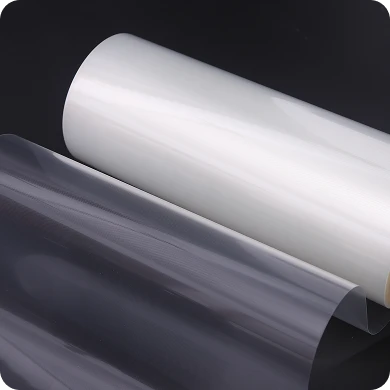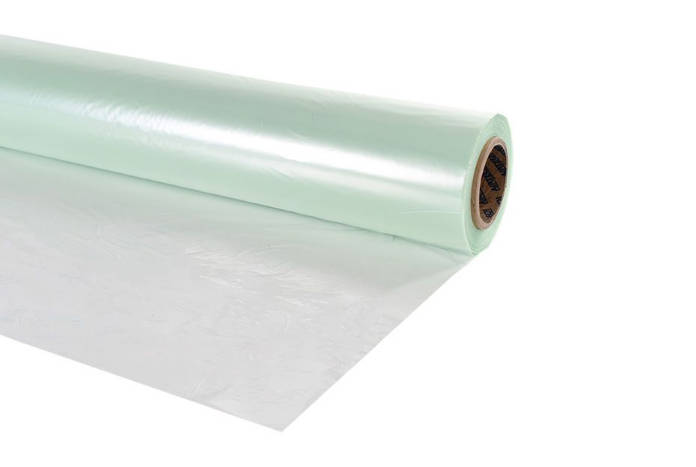
Converting thin-gauge release film presents a strict margin for error. While downgauging reduces roll weight and material costs, it amplifies web handling challenges. Minor tension fluctuations or base material inconsistencies that go unnoticed on standard liners will quickly manifest as wrinkles, baggy lanes, or tracking instability on thin films.
Resolving these defects requires isolating the root cause: determining whether the web instability stems from equipment tension control, roller alignment, or the thickness tolerance of the base material itself. This guide breaks down how to diagnose directional wrinkles, measure baggy lanes on the factory floor, and establish the material specifications necessary for stable web handling.
Machine Direction vs. Transverse Direction: Diagnosing Wrinkles
When release film wrinkling occurs on the coating or die-cutting line, the direction of the crease provides the most accurate diagnostic clue. Because thin-gauge liners lack the structural stiffness of heavier materials, they are highly responsive to both over-tensioning and under-tensioning.
By categorizing wrinkles into Machine Direction (MD) and Transverse Direction (TD), operators can quickly adjust the correct web handling variables.
Wrinkle Diagnosis and Troubleshooting Table
| Wrinkle Direction | Visual Symptom | Primary Causes | Corrective Action |
|---|---|---|---|
| Machine Direction (MD) | Longitudinal creases running parallel to the web path. | Web tension is too high, causing lateral contraction (necking). Misaligned rollers or concave roller wear. | Decrease web tension. Check roller parallelism using laser alignment. Verify roller profiles are flat or properly crowned. |
| Transverse Direction (TD) | Horizontal creases running across the width of the web. | Web tension is too low. Roller deflection (bending under load). Speed mismatch between driven nip rollers. | Increase web tension carefully. Check for worn bearings or flexing shafts on wide webs. Synchronize nip speeds. |
| Diagonal Wrinkles | Angled creases starting from one edge of the web. | Severe roller misalignment. Uneven nip pressure. Tapered base material (one edge thicker than the other). | Realign the specific roller where the wrinkle originates. Adjust nip pressure to be even across the web width. |
If tension adjustments do not resolve MD or TD creases, the issue often lies in the tensile characteristics of the substrate. Sourcing premium release film with optimal tensile strength helps maintain dimensional stability even under challenging converting conditions.
What Causes Baggy Lanes (and How to Measure Them)?
Baggy lanes appear as localized slackness or “drooping” in specific sections across the width of the web. Unlike transient wrinkles caused by roller alignment, baggy lanes are almost always a material defect rather than a machine fault.
This slackness is caused by gauge variation—inconsistencies in the web thickness profile. When a master roll is wound, areas with slightly higher thickness stack on top of each other. Over thousands of layers, this minor caliper variation creates high-pressure bands. The localized pressure stretches the thin-gauge film in that specific lane. When the roll is unwound on your line, the stretched lane sags because it is now physically longer than the rest of the web.
How to Conduct a Web Droop Test To confirm if baggy lanes are causing your web instability in converting, perform a simple droop test before adjusting machine parameters:
- Pull a 2- to 3-meter section of the thin-gauge release liner from the unwind stand.
- Hold both ends firmly across the full width, applying even manual tension.
- Observe the center and edges. If specific lanes sag downward while the rest of the web remains taut, the material has baggy lanes.
- Measure the severity by laying the sample flat on a cutting table; the stretched lane will ripple or refuse to lay perfectly flat.
Web Instability: Overcoming Tracking Issues in Converting
Beyond wrinkles, thin-gauge liners frequently suffer from web tracking issues, wandering laterally off the intended path. This web instability is primarily driven by air entrapment and insufficient traction.
As line speeds increase, a boundary layer of air travels with the film. When the thin web passes over an idler roller, this trapped air acts as a lubricant, causing the film to float and lose traction. Without sufficient friction, the web cannot track straight.
To solve air entrapment and tracking instability:
- Use Grooved Idler Rollers: Replacing smooth idler rollers with spirally grooved or matte-finished rollers allows trapped air to escape, restoring traction.
- Optimize Wrap Angles: Increasing the wrap angle around the roller increases the normal force, pushing out entrained air and gripping the thin film more securely.
- Manage Static: Thin gauge films generate high static charges, which can cause the web to cling erratically to rollers. Implementing active static eliminators at key web handling points stabilizes the path.
Why Base Material Quality is Your First Line of Defense
No amount of tension control or roller alignment can fix a base material that suffers from severe gauge variation or poor winding tension. When processing thin-gauge materials, the physical tolerances of the base film dictate the theoretical limits of your production speed and yield.
Upgrading to a high-quality base material is often more cost-effective than continuous machine downtime and high scrap rates. When evaluating a new supplier to prevent baggy lanes and wrinkles, verify the following material specifications:
Thin-Gauge Material Specification Checklist
- Gauge Tolerance: Ensure the thickness variation across the full web width is strictly controlled.
- Thermal Shrinkage: Confirm the thermal stability matches your coating or drying oven temperatures to prevent heat-induced TD wrinkles.
- Roll Profile (Hardness): The roll should exhibit uniform hardness from edge to edge without high-pressure bands.
- Tensile Strength and Elongation: The film must possess sufficient mechanical strength to resist necking under your standard operating tension.
Operator’s Checklist for Thin-Gauge Web Handling
When web instability occurs on the line, operators should follow this standard sequence to isolate and resolve the defect systematically:
- Verify the Material: Perform the droop test on a fresh pull from the unwind stand. If baggy lanes are present, quarantine the roll.
- Check Tension Settings: Reduce tension for MD wrinkles; increase tension for TD wrinkles. Keep adjustments small (e.g., 5-10% increments).
- Inspect Rollers for Debris: A small piece of dried adhesive or silicone on an idler roller will cause a localized blister or diagonal wrinkle in thin films.
- Confirm Alignment: If wrinkles consistently appear at the same zone, use a tramming tool or laser to check the parallel alignment of the rollers in that specific machine section.
- Monitor Nip Pressure: Ensure nip rollers are applying uniform pressure across the entire web width.
Stop Fighting Your Web: Upgrade Your Release Liner
Diagnosing web instability in thin-gauge converting requires a systematic approach to tension control, air management, and alignment. However, equipment troubleshooting can only go so far when the substrate itself lacks dimensional consistency. Eliminating baggy lanes and unpredictable wrinkling starts with sourcing a base film engineered for strict gauge tolerance and uniform winding.
Key Takeaways
- Direction Matters: Machine Direction (MD) wrinkles usually indicate excessive tension, while Transverse Direction (TD) wrinkles suggest insufficient tension.
- Baggy Lanes are Material Defects: Localized slackness is caused by gauge variations stretching the film during the winding process, not by converting equipment misalignment.
- Air Entrapment Causes Tracking Issues: Thin films float on boundary air layers at high speeds; grooved rollers and optimized wrap angles are required to maintain traction.
- Material Trumps Adjustments: Strict thickness tolerances and uniform roll hardness in the base material are mandatory prerequisites for stable thin-gauge converting.
FAQ
Why is thin-gauge release film harder to convert than standard liners?
Thin-gauge films have lower tensile strength and stiffness, making them highly sensitive to minor tension variations, roller misalignment, and static electricity, which easily lead to wrinkles and tracking loss.
How do I fix baggy lanes on my coating line?
Severe baggy lanes cannot be completely fixed through machine adjustments, as the material is permanently stretched. You can mitigate minor slackness using bowed rollers (spreader rollers) or by isolating tension zones, but the root solution is sourcing base film with tighter gauge tolerances.
What is the best way to prevent air entrapment on thin films?
Use grooved, matte, or micro-roughened idler rollers to provide an escape path for the air. Additionally, increasing the web’s wrap angle around the roller increases the pressure, forcing the boundary layer of air out.
Can static electricity cause web wrinkling?
Yes. High static charges can cause thin-gauge films to cling unevenly to rollers or machine frames, creating sudden tension spikes and lateral shifts that result in diagonal wrinkles.