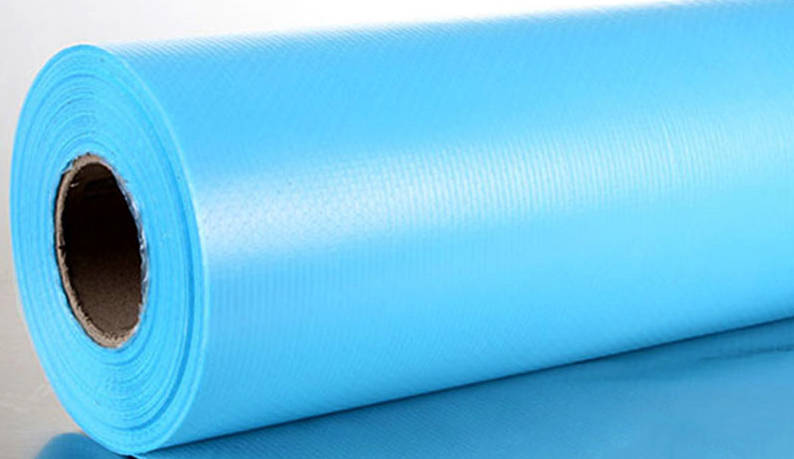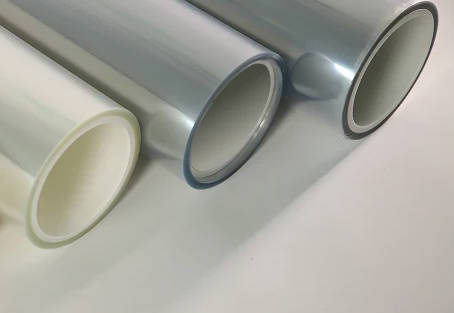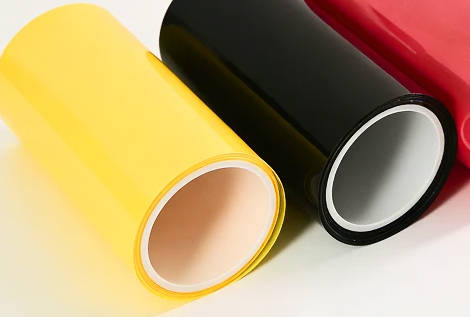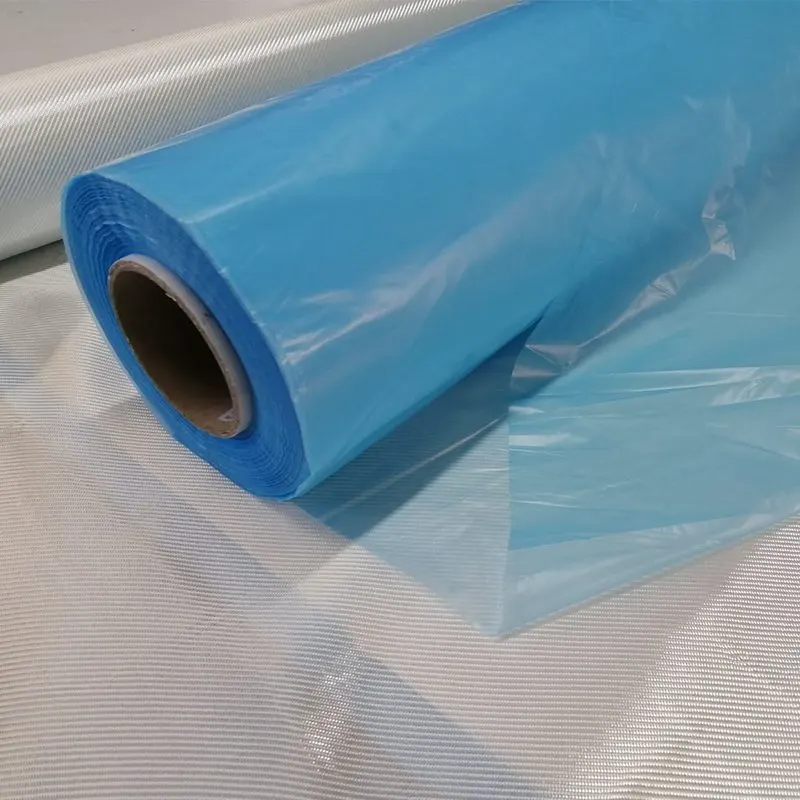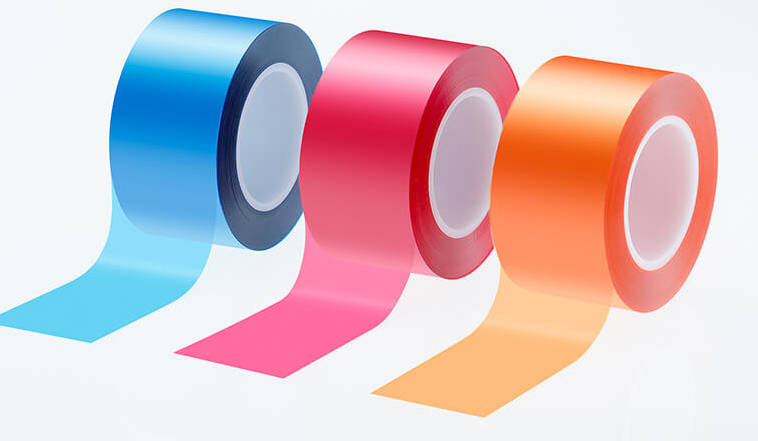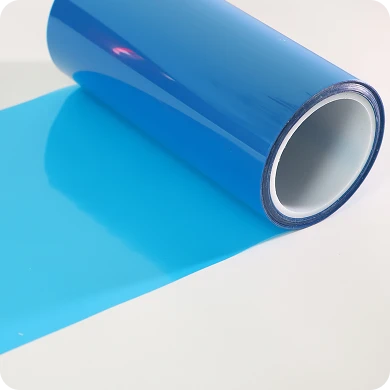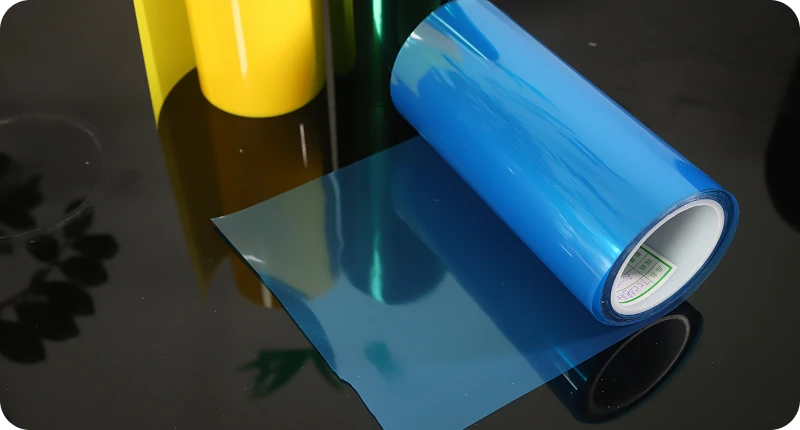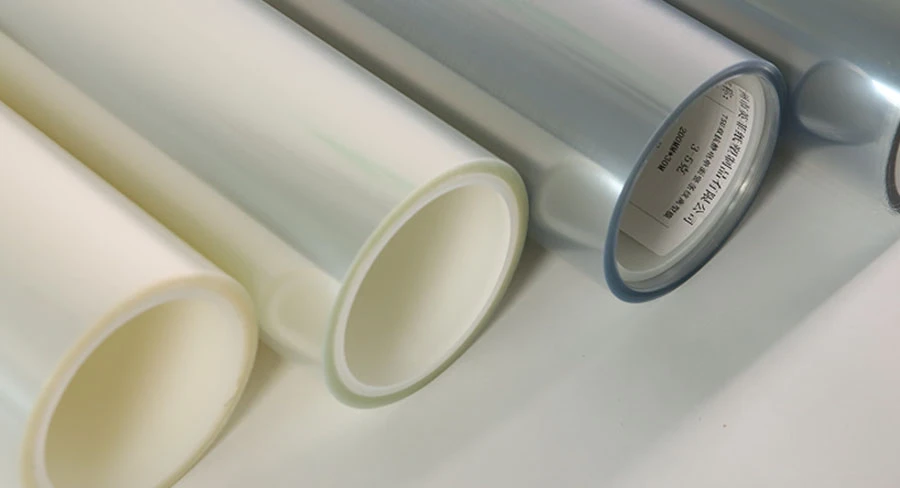
Embossed and textured Release Film serves two distinct industrial purposes: forming microscopic air egress channels in pressure-sensitive adhesives (PSAs) to prevent trapped bubbles during application, or acting as a flexible mold to transfer matte, satin, and micro-textured finishes onto cured resins, coatings, and composites. Choosing the right textured liner depends on three engineering factors: the geometry and depth of the surface topography, the thermal and mechanical stability of the base film, and the uniformity of the release coating across three-dimensional peaks and valleys.
This guide breaks down how air egress and surface replication work at the interface, compares embossed PET, PE, and PP substrates, diagnoses common production failures such as channel collapse and pattern flattening, and provides a practical specification checklist for B2B sampling and RFQs.
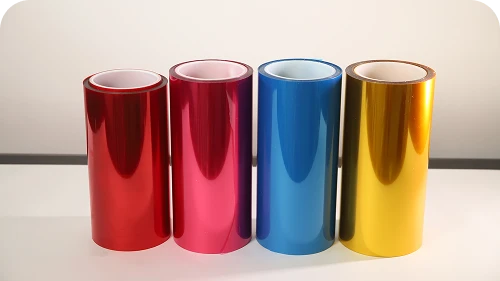
Two Industrial Functions of Textured Release Film: Air Egress vs. Surface Replication
Although both applications rely on inverse topography transfer—where the three-dimensional pattern on the liner creates a mirror image on the contacting material—the engineering objectives for air egress and surface replication are fundamentally different.
In air egress release liner applications, the goal is functional. The embossed liner presses a connected network of micro-channels into a soft pressure-sensitive adhesive. When the end user applies the graphic film or vinyl wrap, trapped air escapes through these channels under squeegee pressure, and the adhesive eventually flows to wet out the substrate.
In surface replication release film applications, the goal is cosmetic or structural. The textured liner contacts a liquid resin, wet coating, or uncured prepreg. Once the material cures or dries and the liner is peeled away, the replicated matte or micro-textured finish remains permanently on the surface of the finished part.
| Evaluation Dimension | Air Egress Channels (Functional) | Surface Replication (Cosmetic / Structural) |
|---|---|---|
| Contacting Material | Pressure-sensitive adhesives (acrylic, rubber, silicone PSAs) | Liquid resins, composite prepregs, PU/PVC synthetic leather, functional coatings |
| Primary Objective | Provide continuous pathways for air to escape during lamination or installation | Permanently impart a uniform matte, satin, or micro-structured finish |
| Critical Topography Metric | Channel connectivity, depth-to-adhesive-thickness ratio, and collapse resistance | Surface roughness uniformity, gloss consistency, and pattern fidelity |
| Post-Peel Behavior | Channels should collapse and wet out after application pressure is applied | Replicated texture must remain permanent after curing and demolding |
| Typical Industries | Automotive wraps, large-format signage, architectural decorative films | Composites, electronic films, synthetic leather, decorative laminates |
How Air Egress Channels Work in Pressure-Sensitive Adhesives
When a pressure-sensitive adhesive is coated directly onto an embossed release film—or laminated to it after drying—the adhesive conforms to the raised ridges of the liner. Once the liner is removed, those ridges leave behind recessed micro-channels across the adhesive face.
Micro-Channel Geometry: Diamond, Square Grid, and Random Patterns
The layout of the embossed pattern dictates how efficiently air travels to the edge of the film and how visible the pattern remains through the face stock:
- Diamond and Square Grid Patterns: Intersecting linear channels provide direct, predictable escape routes in multiple directions. They are widely used in automotive vinyl wraps and large-format fleet graphics where rapid air evacuation over large areas is required.
- Honeycomb and Hexagonal Patterns: Multi-directional junctions reduce the risk of air becoming trapped in dead ends when installers squeegee from different angles, while distributing adhesive contact area evenly.
- Micro-Embossed and Random Patterns: Finer, non-linear micro-channels are engineered to minimize visual distortion on thin, high-gloss, or clear face films where geometric grids might otherwise show through.
Balancing Air Escape Speed Against Adhesive Wet-Out and Telegraphing
Selecting pattern depth requires balancing two opposing risks. If the embossed ridges are too shallow relative to the adhesive thickness and softness, the adhesive may flow back and seal the channels before installation, leaving trapped bubbles. If the ridges are too deep, two problems occur:
- Telegraphing (Orange Peel): Deep adhesive voids can pull unevenly on thin or flexible face stocks, causing the grid pattern to become visible on the front glossy surface.
- Reduced Initial Tack and Wet-Out: Excessively deep channels reduce the immediate contact area between the adhesive and the target substrate, which can lower initial bond strength until sufficient pressure and dwell time allow the adhesive to flow.
| Application Condition | Recommended Topography Direction | Key Engineering Trade-Off |
|---|---|---|
| Thick, opaque vinyl or architectural film | Deeper, well-defined diamond or grid channels | Prioritizes fast air evacuation; thick face stock masks minor telegraphing |
| Thin, high-gloss automotive wrap film | Fine micro-embossed or low-profile channels | Prevents visual orange peel on glossy surfaces while maintaining air egress |
| Soft, high-tack PSA (low modulus) | Moderate depth with controlled winding tension | Requires careful storage control to prevent adhesive cold flow from sealing channels |
| Firm, high-cohesion PSA (high modulus) | Shallower, sharp-edged channels | Holds channel shape well during storage, but requires higher squeegee pressure to wet out |
Surface Replication Mechanics: Transferring Matte, Satin, and Micro-Textures
In casting, coating, and composite manufacturing, textured release film for matte surface replication functions as a disposable, high-precision molding surface. Rather than post-processing a cured part with mechanical sanding or chemical etching, manufacturers transfer the desired surface roughness directly during curing.
How Texture Transfers During Coating, Casting, and Composite Curing
The fidelity of surface replication depends on how well the liquid or semi-solid material wets the micro-topography of the matte release film before solidification. In solvent or waterborne coating lines, the wet coating fills the valleys of the textured liner and locks in the inverse profile as the solvent evaporates. In composite layup or autoclave curing, heat and pressure force the resin matrix against the textured film so that the cured laminate emerges with a consistent matte or satin finish.
Controlling Gloss Levels and Demolding Cleanliness
Achieving a uniform matte finish without damaging the cured surface requires controlling four sequential process stages:
- Surface Wetting and Contact: The resin or coating must have suitable viscosity and surface tension to flow into the liner’s micro-valleys without trapping micro-air bubbles, which cause localized pinholes or glossy spots.
- Thermal Stabilization During Cure: The release film must maintain its surface topography under curing heat and pressure. If the liner softens, the texture flattens and gloss increases unevenly across the web.
- Controlled Demolding: Deep or undercut micro-textures can create mechanical interlocking with rigid cured resins. Even with a low-surface-energy release coating, sharp undercuts can cause tearing, whitening (stress crazing), or high peel forces.
- Post-Peel Surface Inspection: Engineers typically verify gloss uniformity across the web width and check for release agent transfer, especially if the replicated surface will undergo downstream printing, painting, or bonding.
Selecting Base Film and Release Coating for 3D Topography
A textured release liner only performs as well as the combination of its base polymer and its release chemistry. The base film governs dimensional stability and pattern retention under heat and tension, while the release coating governs peel consistency across uneven surfaces.
Base Film Trade-Offs: Embossed PET vs. PE and PP Release Film
Different polymer substrates respond differently to embossing methods (such as inline thermal embossing, cast-extrusion embossing, or chemical/matte coating) and downstream converting temperatures.
| Base Film Type | Thermal Stability | Pattern Retention Under Tension | Conformability & Flexibility | Typical Suitable Processes |
|---|---|---|---|---|
| Embossed PET Release Film | High (suitable for oven drying and higher-temperature curing, depending on grade) | High; strong tensile modulus resists stretching and pattern distortion | Low to moderate (rigid) | High-temperature PSA drying ovens, composite curing, precision matte surface replication, electronic film casting |
| Embossed PE Release Film | Low to moderate (prone to thermal softening at elevated oven temperatures) | Moderate; sensitive to excessive winding tension and heat | High (soft and conformable) | Room-temperature lamination, cold-applied graphics, cost-sensitive air egress liners where high heat is not involved |
| Embossed PP Release Film | Moderate (higher than standard PE, lower than PET) | Moderate to good, depending on orientation (CPP vs. BOPP) | Moderate | Medium-temperature casting, synthetic leather processing, specific composite and adhesive applications |
Note: Exact temperature limits and mechanical properties depend on the specific polymer grade, film thickness, and embossing method, and should be confirmed with the supplier before production trials.
Release Coating Uniformity Across Peaks and Valleys
Applying a uniform release coating to a flat film is straightforward; applying it to a three-dimensional embossed surface introduces distinct coating challenges. During gravure or roll coating, liquid release agents can accumulate in the valleys (pooling or bridging) while leaving the peaks thinly coated.
- Thin Coating on Peaks: Leads to localized high peel force, adhesive transfer, or “zippy” release when stripping the liner.
- Pooling in Valleys: Can partially fill fine micro-textures, altering the replicated gloss level or reducing the effective depth of air egress channels.
- Silicone vs. Silicone-Free Considerations: Silicone release coatings are standard for most PSA air egress liners. However, in surface replication processes where the finished composite or coated surface must later be painted, bonded, or metallized, silicone migration can cause fisheyes or adhesion failure. In those cases, a silicone-free release coating or inherently low-surface-energy textured film should be evaluated.
When matching base polymers and coating chemistries to your line conditions, reviewing industrial release film solutions early in development helps align thermal resistance, coating uniformity, and target release force before ordering custom tooling.
Common Failure Modes: Channel Collapse, Pattern Flattening, and Uneven Release
Most field failures involving embossed and textured release liners trace back to a mismatch between the liner’s thermal/mechanical limits and the converter’s drying, winding, or storage conditions.
| Failure Symptom | Likely Root Cause | Corrective Action / Evaluation Step |
|---|---|---|
| Air egress channels disappear after roll storage | Adhesive cold flow filling the channels due to soft PSA modulus, high winding tension, or elevated warehouse temperature | Reduce rewind tension; lower storage temperature; evaluate a slightly deeper pattern or firmer adhesive formulation |
| Embossed pattern flattens after passing through drying oven | Base film (such as PE) softened near its thermal limit under web tension, triggering elastic memory recovery | Lower oven zone temperatures or web tension; switch to a higher-temperature base film such as embossed PET |
| Visible grid or orange-peel effect on glossy face film | Embossed pattern is too deep or pitch is too wide for a thin, conformable face stock | Transition to a finer micro-embossed or lower-profile air egress pattern; verify adhesive coat weight |
| Uneven, noisy (“zippy”) release or localized adhesive tear | Release coating skipped on pattern peaks, or mechanical interlocking in overly sharp/deep micro-valleys | Verify coating coverage across peaks and valleys; adjust release force grade or smooth the pattern profile |
| Inconsistent matte gloss or localized shiny spots on replicated surface | Trapped micro-air during wet coating, worn embossing roller, or uneven curing pressure | Adjust coating viscosity and wetting; inspect incoming liner gloss uniformity across the web width |
How to Specify Embossed and Textured Release Film for Sampling and RFQs
Because embossed liners interact closely with adhesive rheology, curing heat, and roll tension, generic requests for “matte release film” or “air egress liner” rarely yield a production-ready sample on the first try. Providing a structured specification sheet allows technical teams to recommend the right base film, pattern profile, and coating chemistry.
Procurement and Specification Checklist
Before issuing an RFQ or requesting evaluation rolls, confirm the following parameters:
- Process Conditions:
- Maximum exposure temperature and dwell time (drying oven, lamination nip, or curing cycle).
- Application method (direct wet coating onto the liner vs. dry lamination).
- Contacting chemistry (acrylic PSA, rubber PSA, silicone PSA, epoxy/urethane resin, or coating type).
- Film and Pattern Specifications:
- Preferred base film (PET, PE, PP, or open to supplier recommendation based on temperature).
- Target film thickness, roll width, roll length, and core inner diameter.
- Functional goal: air egress pattern (diamond, grid, micro-channel) or surface replication (target gloss level or roughness feel).
- Single-side or double-side release coating, and whether silicone-free chemistry is required.
- Lab Validation Tests for Incoming Samples:
- Thermal Retention Test: Pass the liner through representative oven heat and check pattern depth before and after.
- Aged Release Force Test: Measure peel force after heat and pressure aging against your actual adhesive or resin.
- Functional Performance Check: Run a real-world squeegee air-evacuation test (for PSAs) or a gloss/adhesion check on the demolded surface (for surface replication).
Selecting the right embossed or textured liner comes down to matching three variables—pattern geometry, base film heat resistance, and 3D release coating uniformity—to your exact process window. If you are qualifying a new air egress adhesive construction or a matte surface replication process, share your curing temperature, adhesive or resin chemistry, and target surface finish with the YINGFEI engineering team to explore suitable YINGFEI Release Film options and arrange evaluation samples.
Key Takeaways
- Two distinct functions: Embossed and textured release films either form temporary air egress micro-channels in pressure-sensitive adhesives or permanently transfer matte and micro-textured finishes onto cured resins and coatings.
- Geometry vs. appearance: Deeper air egress patterns speed up air evacuation but increase the risk of telegraphing (orange peel) on thin, high-gloss face films; pattern depth must match adhesive thickness and modulus.
- Base film drives thermal survival: Embossed PET offers higher thermal stability and tension resistance for drying ovens and composite curing, whereas embossed PE and PP are generally suited for lower-temperature or more conformable applications.
- 3D coating uniformity is critical: Uneven release coating across pattern peaks and valleys causes zippy release, adhesive tearing, or inconsistent matte gloss.
- Process-driven RFQs: Accurate sampling requires sharing curing temperatures, adhesive or resin chemistry, and whether silicone-free release is needed, rather than specifying pattern name alone.
FAQ
Does embossed release film reduce the final adhesion strength of a pressure-sensitive adhesive?
Embossed release film reduces the initial contact area immediately upon touch, which helps installers reposition graphics and push out trapped air. Once firm squeegee pressure is applied and the adhesive wets out the substrate over time, the micro-channels collapse and the adhesive typically builds toward its normal final bond strength, depending on adhesive modulus and application temperature.
Can embossed PE release film be used in high-temperature curing ovens?
Standard embossed PE release film has a lower softening point than PET and can lose its embossed pattern or stretch under web tension in high-temperature drying or curing ovens. For elevated-temperature processes, embossed PET or a heat-stabilized substrate is generally evaluated instead, subject to the exact oven temperature and dwell time.
What is the difference between mechanically embossed matte film and chemically matte release film?
Mechanically embossed matte film is produced by pressing a textured roller onto the polymer surface, which can create deeper, structured patterns suitable for both air egress and distinct tactile textures. Chemically matte release film uses a matte coating layer containing fine matting particles to create a uniform, low-gloss micro-surface, which is often used for consistent matte surface replication on thin coatings.
How should embossed release film rolls be stored to prevent pattern flattening?
Store rolls horizontally suspended by the core (or according to supplier packaging guidelines) in a climate-controlled environment away from direct heat sources. Avoid excessive roll weight, high rewind tension, or elevated warehouse temperatures, as combined pressure and heat can gradually flatten embossed ridges or cause laminated adhesives to cold-flow into air egress channels.