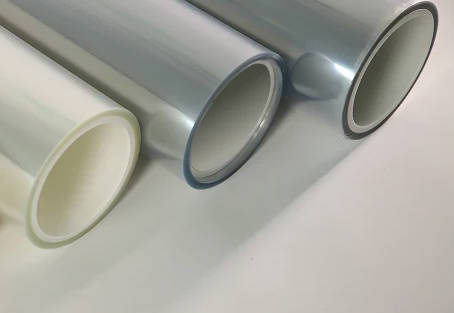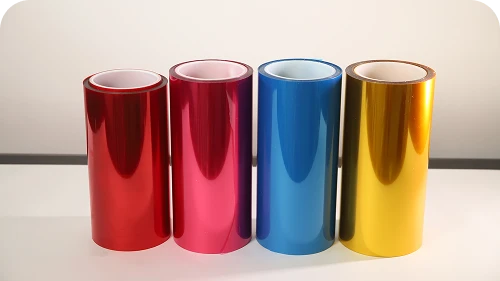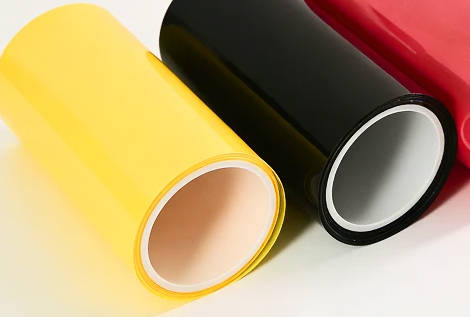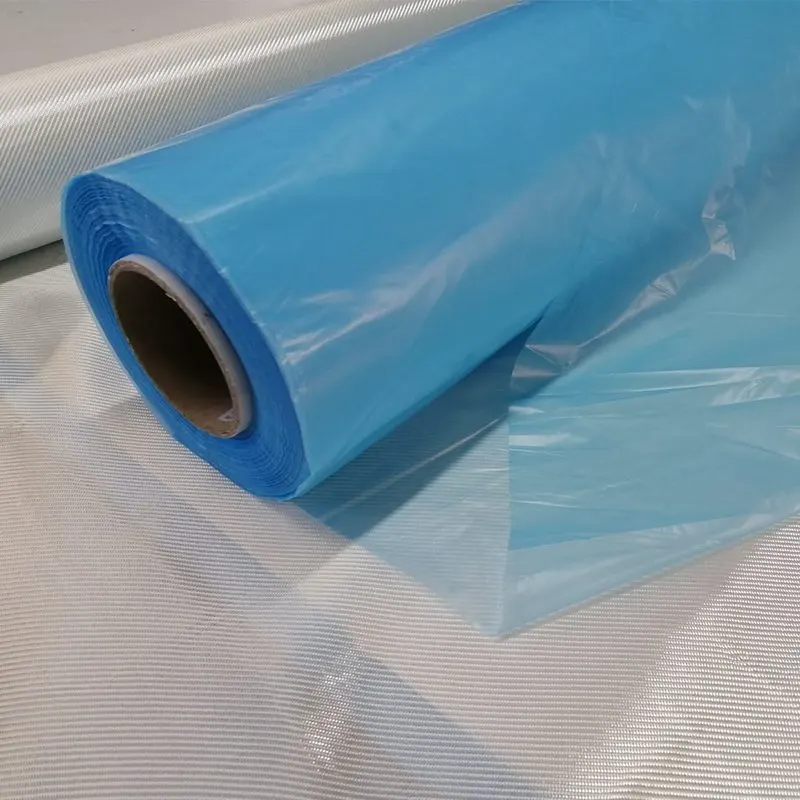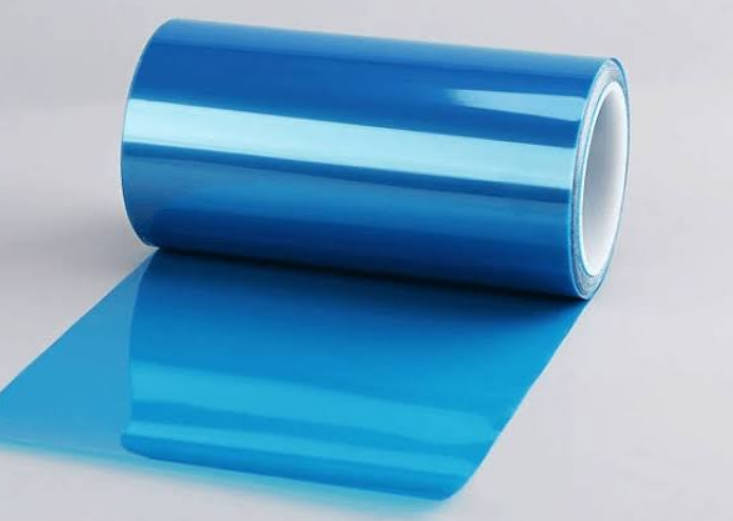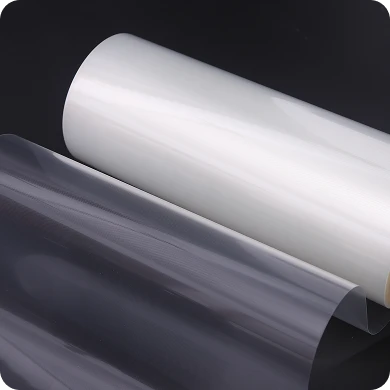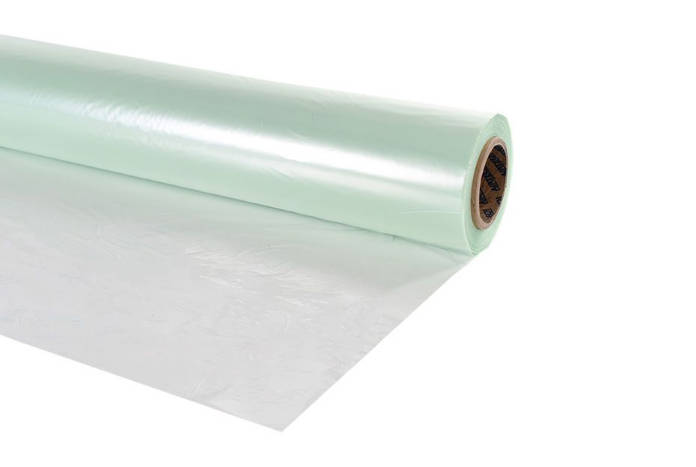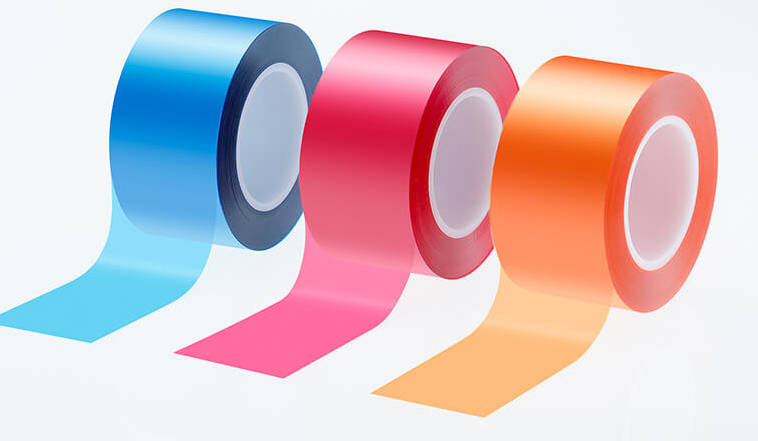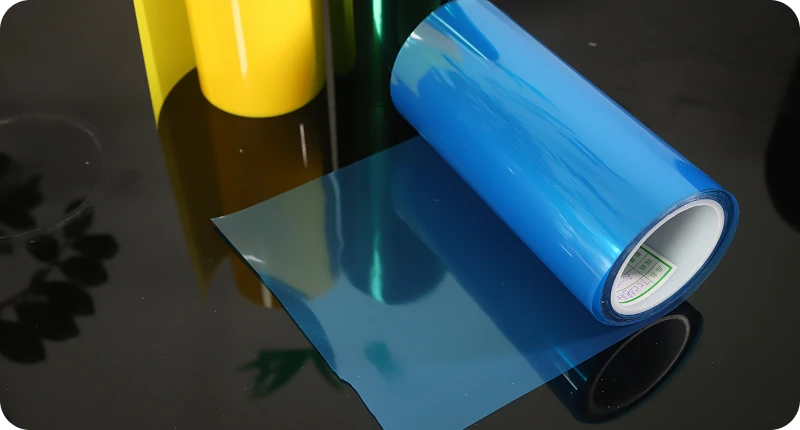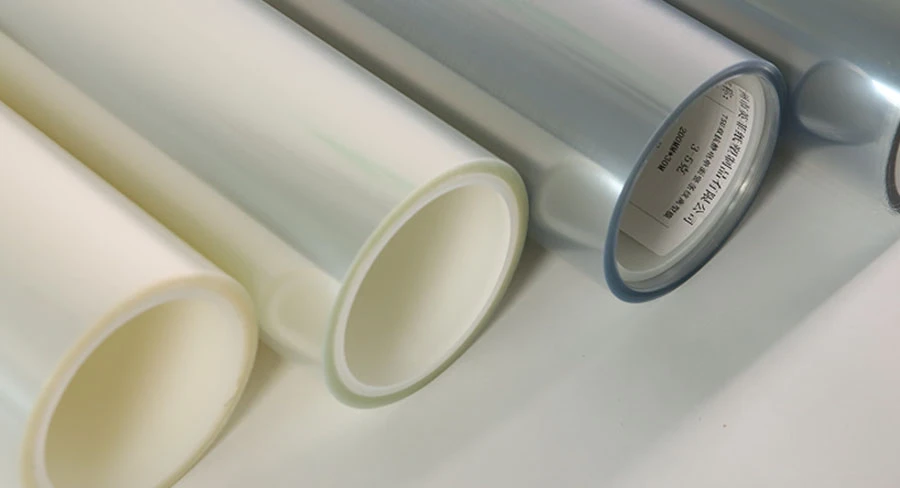
When precision die-cutting lines experience intermittent failures—such as liner cut-through, web snap, edge lift, or matrix stripping breaks—machine operators typically adjust anvil pressure, swap magnetic cylinders, or modify web tension. However, in rotary kiss-cutting operations with clearance tolerances tighter than 5 microns, the root cause often originates hundreds of miles away in the polyester film extrusion plant.
The baseline processing stability of a die-cutting job is largely determined during polymer melting, casting, and biaxial orientation. A high-performance PET release film for die-cutting does not begin at the silicone coating station; it begins at the extruder die lip. Variations in melt temperature, stretch ratios, cross-web gauge profiles, and heat-setting directly dictate whether a release liner maintains flatness and structural integrity under dynamic blade impact. Understanding how upstream BOPET extrusion settings manifest during converting allows process engineers and procurement teams to diagnose chronic defects and source substrates capable of holding tight dimensional tolerances.

The Anatomy of BOPET Extrusion: Where Substrate Uniformity Is Born
Biaxially Oriented Polyethylene Terephthalate (BOPET) is manufactured through a continuous, high-speed thermal and mechanical process. Virgin or recycled polyester chips are dried to prevent hydrolytic degradation, melted in an extruder, filtered through fine mesh screens, and forced through a flat slot die onto an electrostatic pinning casting drum.
| Stage | Process Phase | Key Mechanical & Thermal Mechanism | Downstream Quality Property Impact |
|---|---|---|---|
| 01 | PET Resin Drying & Extrusion | Dehumidifying PET chips to <30 ppm moisture; uniform screw shear melting | Prevents intrinsic viscosity (IV) drop, polymer chain scission, and melt brittleness |
| 02 | Melt Filtration & Flat Die Lip | Fine mesh filtration; automated thermal-bolt adjustments across the die lip | Eliminates gel inclusions and sets baseline transverse gauge profile uniformity |
| 03 | Chill Roll Casting & Electrostatic Pinning | Uniform electrostatic field pinning melt to chilled drum | Prevents air entrapment and guarantees baseline amorphous sheet density |
| 04 | Machine Direction Orientation (MDO) | Preheating rolls; longitudinal draw between differential speed nips (3.0:1–4.0:1) | Orients polymer chains along MD; sets tensile modulus and web-break resistance |
| 05 | Transverse Direction Orientation (TDO) | Diverging tenter clips in multi-zone heated oven (3.0:1–4.0:1) | Orients polymer chains across TD; balances cross-web tensile strength |
| 06 | Heat Setting & Crystallization Zone | High-temperature thermal annealing (>200°C) under mechanical restraint | Relaxes internal molecular stress; sets low thermal shrinkage rates (<1.5%) |
| 07 | In-line Surface Treatment & Winding | Corona discharge oxidation; controlled-tension turret winding | Establishes uniform surface energy (48–54 dynes/cm) for silicone adhesion |
1. Extrusion and Die Lip Control
The molten polymer is distributed across the web through an automatic thermal-bolt or piezoceramic die lip. If temperature profiling across the die lip fluctuates by even fractions of a degree Celsius, melt viscosity changes locally, introducing cross-web caliper non-uniformity before the sheet even cools.
2. Machine Direction Orientation (MDO)
The cast sheet passes through preheating rolls and enters a series of nip rollers rotating at differential speeds. Here, the film is stretched longitudinally at ratios typically between 3.0:1 and 4.0:1 under controlled temperatures. The MDO phase aligns polymer chains along the machine direction, defining the tensile strength and modulus required to resist web stretching under converter brake tension.
3. Transverse Direction Orientation (TDO) and Heat Setting
The longitudinally stretched film enters a multi-zone stenter oven, where mechanical clips grip the film edges and diverge, stretching the web sideways at ratios comparable to the MDO stage. Immediately following orientation, the film enters a high-temperature heat-setting zone (typically exceeding 200°C) under restrained dimensions. This step locks the crystalline morphology, relaxes internal molecular stress, and determines the ultimate thermal shrinkage properties of the sheet.
The Direct Impact: How Upstream Extrusion Settings Manifest on the Die-Cutting Line
When extrusion and orientation parameters deviate from strict targets, the resulting mechanical imbalances transfer downstream through silicone coating and into rotary or flatbed die-cutting presses.
Caliper Profile Variation and Kiss-Cutting Cut-Through
In multi-layer kiss-cutting (such as mobile device gaskets, OCA optical adhesives, or diagnostic test strips), the die blade cuts through the carrier adhesive and top face material, stopping precisely within the top third of the silicone release layer without bruising the underlying PET base film.
If the extrusion mill allows transverse gauge variation to exceed ±3% to ±5%, a die calibrated for the center of the web will experience insufficient cut depth at the thin lanes and liner bruising or puncture at the thick lanes. When an anvil cylinder strikes a high spot caused by an uneven die lip profile, the blade penetrates the liner core, resulting in web tear-through during high-speed matrix stripping.
Stretch Ratio Imbalance and Converting Registration Errors
BOPET film requires a calibrated balance between MD and TD mechanical properties. If the stretching ratio in the stenter frame is poorly synchronized with the longitudinal draw, the film exhibits unbalanced tensile modulus. Under the pulling tension of a rotary die-cutter, a liner with insufficient MD modulus elongates elastically under the nip rolls. When the die cuts down onto the stretched film and tension is subsequently released at the rewind station, the substrate snaps back to its relaxed state, causing dimensional drift, component curling, and registration pitch errors along the web.
Heat-Setting Inconsistencies and Web Distortion
Converting processes that involve inline curing ovens, thermal laminations, or heated printing stations expose the liner to elevated temperatures. If the BOPET film did not receive thorough, uniform crystallization during the stenter heat-setting phase, residual amorphous chains contract when reheated. Non-uniform shrinkage creates “puckering,” edge waviness, and diagonal bagginess, preventing the film from lying flat against magnetic die cylinders.
Upstream Extrusion Settings vs. Downstream Die-Cutting Defects
| Extrusion & Orientation Parameter | Physical Property Affected | Die-Cutting Symptom | Converting Risk Level |
|---|---|---|---|
| Die Lip Thermal Bolt Profile Drift | Cross-web thickness variation (Caliper non-uniformity) | Liner bruising, partial cut-through, inconsistent kiss-cut depth | Critical (Causes immediate press shutdown and web snap) |
| MDO Stretch Ratio Under-Orientation | Low MD tensile modulus & high elongation at yield | Web neck-in under tension, pitch registration error, label deformation | High (Leads to downstream automated dispensing failures) |
| TDO Edge-to-Center Temperature Gradient | Transverse molecular orientation variance | Edge curl, camber/bowing during slitting, feeding drift | Medium-High (Affects multi-lane rotary tooling stability) |
| Insufficient Heat-Setting Crystallization | Elevated thermal shrinkage rate (MD/TD) | Wrinkling during heated lamination, substrate curling after die-cut | High (Renders finished parts out-of-tolerance) |
| Improper Electrostatic Pinning at Cast Roll | Air entrapment, surface pockmarks, micro-density shifts | Localized coating voids, erratic release force, blade chatter | Medium (Causes matrix stripping tear and adhesive transfer) |
The Bridge: Silicone Coating Interplay with Extrusion Quality
A silicone release system cannot perform reliably on an inconsistent base film. The interface between the BOPET substrate and the cured polydimethylsiloxane (PDMS) network relies directly on base film surface energy, smoothness, and chemical cleanliness.
Converters requiring tight-tolerance release film solutions must ensure that substrate surface treatment is properly controlled:
- Surface Energy and Corona Treatment: During film extrusion or inline priming, corona discharge treatment oxidizes the PET surface, increasing surface tension (typically to 48–54 dynes/cm). If the corona treatment is uneven across the extrusion web, silicone anchoring fails locally. Under high-speed die-cutting, unanchored silicone rubs off (silicone migration), causing adhesive contamination or sudden “tight release” spikes that snap delicate matrix skeletons.
- Surface Roughness (Ra) and Release Stability: Extrusion formulations utilize inorganic anti-blocking additives (such as silica or calcium carbonate) to facilitate winding. If particle sizing is uncontrolled, surface peaks pierce through ultra-thin thermal or UV-cured silicone layers (often applied at thicknesses of 0.05 to 0.20 microns). These unshielded micro-peaks contact the adhesive layer directly, generating micro-lock points and release force fluctuation during high-speed kiss-cutting peeling.
Sourcing & Quality Control Checklist for Die-Cutting Converters
To prevent upstream substrate issues from impacting converting lines, technical buyers and quality engineers should evaluate potential suppliers using standardized material verifications.
Key Verification Parameters to Request on Material Test Reports (MTR / COA)
- Micron Thickness Profile: Request continuous optical or beta-gauge cross-web caliper profiles. For precision kiss-cutting applications, total gauge tolerance should stay strictly within verified limits (e.g., ±2% to ±3% depending on nominal gauge).
- Thermal Shrinkage Rates: Verify measured shrinkage values after thermal exposure (typically tested at 150°C for 30 minutes in circulating air). Values must show balanced, low contraction in both directions (e.g., MD < 1.5%, TD < 0.5% depending on specific processing setup).
- Tensile Strength and Elongation: Confirm consistent tensile modulus at 5% elongation (F-5 value) along the machine direction to guarantee web stability under converting tension brakes.
- Residual Monomer & Extractables: Ensure that thermal curing processes yield an extractable silicone fraction within acceptable limits (typically < 2% to 5%) to avoid downstream adhesive de-wetting.
- Optical Inspection Standards: Confirm continuous automated camera inspection at the slit rewinder to detect gel spots, scratches, and pinholes larger than defined threshold levels.
Technical Summary
The precision of a kiss-cut is not governed solely by the sharpness of a cutting die or the rigidity of an anvil block. It is intrinsically tied to the thermodynamic and mechanical history of the BOPET carrier film. Variations in die lip heating, biaxial stretch ratios, and stenter crystallization translate directly into thickness deviations, registration drift, and liner cut-through during die-cutting operations.
By establishing strict procurement benchmarks for base film caliper uniformity, mechanical modulus, and thermal shrinkage, converting engineers can eliminate chronic line shutdowns and secure reproducible processing windows. When sourcing substrates, collaborating directly with suppliers who maintain end-to-end control over extrusion, surface preparation, and silicone chemistry is the most direct path to maintaining consistent yields in high-speed, tight-tolerance die-cutting.
Key Takeaways
- The Root of Clearance Failure: In precision kiss-cutting operations, variations in extrusion die lip temperature introduce cross-web thickness fluctuations that directly trigger liner cut-through and web breaks.
- Orientation Dictates Registration: Machine Direction Orientation (MDO) provides the tensile modulus required to resist web stretch under tension; unbalanced stretching causes web neck-in and part pitch errors.
- Thermal History Governs Flatness: Inadequate crystallization during stenter heat-setting allows residual stress to remain in the PET film, leading to edge curl, puckering, and dimensional distortion during heated lamination.
- Coating Demands Surface Uniformity: Fluctuations in extrusion surface tension (dyne level) and excessive anti-block additive roughness directly compromise silicone layer continuity, causing localized release force spikes.
- Engineering Procurement Standard: Converters must demand comprehensive Material Test Reports (MTRs) detailing continuous transverse gauge profiles, directional thermal shrinkage rates, and surface roughness parameters before qualifying new liner lots.
FAQ
What causes release liner cut-through during rotary kiss-cutting?
Liner cut-through occurs when the total height of the cutting blade plus the clearance of the anvil roller exceeds the compressed thickness of the material stack. While tooling wear or improper pressure calibration can cause this, the most common root cause in high-precision converting is upstream cross-web caliper variation in the BOPET liner. If the base film contains thick spots exceeding the blade-to-anvil clearance window, the blade will penetrate into or through the liner backing.
How does MD and TD thermal shrinkage affect die-cut parts?
Polyester film that has not been properly heat-set during the transverse orientation (TDO) phase retains internal molecular stresses. When exposed to heat during downstream printing, coating, or laminating, the web shrinks unevenly along the Machine Direction (MD) and Transverse Direction (TD). This dimensional change results in edge curl, puckering, and severe registration drift during multi-station die-cutting.
Why does release force spike irregularly on some die-cut rolls?
Erratic release force (“tight release” or release jump) typically results from non-uniform silicone curing or surface roughness variations on the base PET film. If the base film’s surface energy drops or surface additives create protruding micro-peaks that silicone does not fully encapsulate, adhesive bonds directly to the polyester substrate, causing localized points of high release that tear fragile matrix waste strips.
What thickness tolerance should die-cutting converters look for in PET release liners?
For standard label converting, commercial tolerances of ±5% to ±7% are often adequate. However, for ultra-precision rotary die-cutting (such as electronics, gaskets, optical components, and multi-layer functional tapes), converters generally specify tight-tolerance liners held to ±2% to ±3% of nominal gauge across the master roll width.